

Shown: · With its frame:
 Preview

 Send
 Share
 Details
 Fact sheet


 Download
 Similars
 X-Ray
 Diaporama
 Q&A

 Stats
Mont Sainte-Victoire (Barnes) (Paul Cézanne, 1892)


Hand-painted in oil from $178 at 28 x 35 cm
Also available as Fine Art Print from $47
- Free Worldwide Express Shipping
- Delivered in 4 to 5 weeks
- 100-day returns, money back
- Rated 4.9/5 by 241 customers on ArtShopReviews.com
$ 269
Hand Made Oil Reproduction
Hand-painted oil on canvas in your size and frame, made to order by our artists. ( Impressionist Print Impressionist Oil Digital Copy
)
Size
·Pick from our preset sizes that match the artwork's original proportions.
Loading sizes...

width
height
Type the width and the height you need, to fit your frame or your wall. This is hand-painted, so for a size with a different shape the artist can paint a bit more around the picture, or cut a bit — you choose. We send you a digital mockup to approve before the painting starts. The picture shown on this page does not show the real result — only the mockup does.
 Read more
Standard
custom
CM
INCH
Finish
·
White $1

Blurside $1

Extended $1

P118B $10

P118H $10

P118W $10

P438Z $10

P508JH $12

P508YH $12

P805H $10

P805Z $10

P919BZ $10

P919G $10

P919XJ $10

P959ZH $10

P968JZ $12

W106C $8

W218G $10

W218JH $8

W218Y $10

W307PJ $10

W316G $10

W316PJ $8

W316Y $10

W398PJ $8

W4111J $10

W500HY $15

W500JH $15

W692G $12

W849H $8

W940BG $15

W953PJ $8
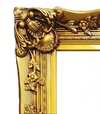
H24-GOLD $30
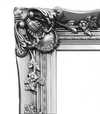
H24-SILVER $30
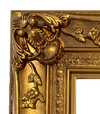
H36-GOLD $45
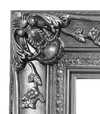
H36-SILVER $45
Shipped in a protective tube, ready for your own framer.
Above 105 cm the frame is shipped as a kit for a professional framer — read the details.
Extras
optionalWhat do the extras include?
Examples of what can be changed: Replace face with customer photo; Add pet (e.g., replace cat with dog); Include hidden message in background; Change background landscape or elements.
After order, TopImpressionists.com team will email client for instructions and provide a mockup preview
Worldwide Delivery () in 3/4 weeks instead of standard 4/5 weeks. (3 December). No compromise on quality.
Protective Varnish
Nameplate
Engraved Bronze Plaque Details
This elegant plaque features the artist's name and the title of the artwork, finely engraved for a timeless presentation.
It is made from bronze with a refined, elegant finish. The text is precisely laser-engraved for a sharp and permanent result. Measuring 9x2 cm, the plaque is compact yet easy to read. It's built to be durable and scratch-resistant, offering a professional, museum-quality look. Mounting is simple thanks to the included adhesive backing.
Transparent Acrylic Plaque Details
The plaque includes essential engraved details such as the artist's name, the title of the artwork, the date it was created, the type of media used-like oil on canvas or watercolor-a brief description of the piece, and a QR code that links to the complete artwork information.
It is crafted from clear acrylic, offering a sleek, modern appearance. The text is UV-engraved in black to ensure strong visual contrast. With a size of 10x15 cm, it ensures optimal readability. It comes equipped with two metal hooks for secure wall mounting. The plaque is designed to be weather-resistant, making it suitable for various environments, and it includes interactive features that work seamlessly with smartphone scanning.
Black Acrylic Plaque Details
This elegant plaque includes engraved information such as the artist's name, the title of the artwork, the date it was created, the type of media used (like oil on canvas or watercolor), a short description of the artwork, and a QR code for quick access to more information.
The plaque itself is made from refined black acrylic with a premium finish. The text is laser-engraved in white for high contrast and readability. Its size is 10x15 cm, designed to be easy to read. It comes with two metal hooks for professional mounting. The design is sleek and fits any interior style. It is also weather-resistant and durable, with built-in digital integration for mobile compatibility.
Glass option is only available in size under 110 CM
 Glass option is only available in size under 110 CM
- Free Worldwide Express Shipping
- High-Quality Linen Canvas
- Full Shipping Insurance
- Customs Tax Refund Guarantee
- True Color Matching Guarantee
- 100-day returns, money back
- 100% Money-Back Guarantee
- Bulk Discount Offer


Mont Sainte-Victoire (Barnes): Paul Cézanne and the Post-Impressionism moment
Interlocking planes of color and geometric shapes reveal the underlying structure of this mountain.
Paul Cézanne: biography
French Post-Impressionist who used color modulation and geometric forms to capture Mont Sainte-Victoire through repetitive, constructive strokes.
About the painting
The Enduring Majesty of Mont Sainte-Victoire
Paul Cézanne’s “Mont Sainte-Victoire” isn't merely a landscape painting; it’s an invitation into the artist’s mind, a meticulously constructed exploration of perception and form. Completed in 1902-04, this iconic work resides within The Barnes Foundation in Philadelphia, a testament to Cézanne’s profound connection with the Provençal mountain that dominated his artistic vision for decades. More than simply depicting a geographical feature, Cézanne sought to capture the *essence* of Mont Sainte-Victoire – its underlying structure, its relationship to space and light, and ultimately, its emotional resonance.
Cézanne’s approach shattered traditional landscape conventions. He rejected the academic pursuit of realistic representation, instead prioritizing a more subjective and geometric interpretation. The painting isn't a snapshot of a single moment in time; it’s a carefully orchestrated composition built from interlocking planes of color and subtly distorted forms. Notice how the mountain itself seems to emerge from the canvas, constructed with a series of parallel lines and overlapping shapes – a deliberate departure from the smooth, continuous contours favored by earlier generations of landscape painters. This fragmentation isn't haphazard; it’s a conscious effort to reveal the underlying structure of the scene, as if Cézanne were peeling back layers to expose its essential geometry.
A Post-Impressionist Revelation
“Mont Sainte-Victoire” firmly establishes Cézanne as a pivotal figure in the transition from Impressionism to Cubism. While influenced by the Impressionists’ focus on capturing fleeting moments of light and color, Cézanne moved beyond mere observation, delving into the formal elements of his subject. He employed techniques that would later be adopted by Picasso and Braque – breaking down objects into geometric shapes, flattening perspective, and presenting multiple viewpoints simultaneously. This wasn't a rejection of Impressionism entirely; rather, it was an evolution—a bold step toward a new way of seeing and representing the world.
The painting’s historical context is crucial to understanding its significance. Cézanne spent his later years in the hills overlooking Aix-en-Provence, returning repeatedly to Mont Sainte-Victoire as a source of inspiration. He painted it from numerous vantage points – near his brother's property, at the quarry, and on the slopes of Les Lauves – each iteration offering a slightly different perspective and contributing to a complex understanding of the mountain’s form. This sustained engagement with the subject resulted in a series of paintings that are both deeply personal and remarkably consistent in their underlying principles.
Decoding Symbolism and Emotion
Beyond its formal innovations, “Mont Sainte-Victoire” is rich in symbolic meaning. The mountain itself has long been associated with spirituality and contemplation – it’s the subject of numerous legends and religious pilgrimages. Cézanne imbues the landscape with a sense of timelessness and serenity, inviting the viewer to lose themselves in its vastness. The muted palette—dominated by blues, greens, and browns—contributes to this atmosphere of quietude, while the carefully placed trees and houses suggest a connection between humanity and nature.
The painting’s unfinished quality – visible brushstrokes and areas where the canvas is exposed – adds another layer of complexity. It suggests that Cézanne was never entirely satisfied with his representation of Mont Sainte-Victoire, constantly striving to capture its elusive essence. This sense of perpetual exploration reflects the artist's own intellectual curiosity and his unwavering commitment to pushing the boundaries of artistic expression. It’s a painting that rewards repeated viewing, revealing new details and nuances with each encounter.
TopImpressionists’s Reproduction: Bringing Cézanne to Life
At TopImpressionists, we are dedicated to preserving the integrity and beauty of Paul Cézanne's “Mont Sainte-Victoire.” Our hand-painted reproductions capture not only the painting’s visual details but also its emotional depth and artistic spirit. Each reproduction is meticulously crafted by skilled artists using traditional oil painting techniques, ensuring a faithful recreation of Cézanne’s original vision. We offer this masterpiece in various sizes to suit your individual needs and preferences.
Explore the legacy of Paul Cézanne and own a piece of art history with TopImpressionists's stunning reproduction of “Mont Sainte-Victoire.” Learn more about Paul Cézanne or browse our collection: View the Original Artwork.
Questions & Answers
Is this reproduction of Mont Sainte-Victoire (Barnes) painted by hand or printed?
Painted by hand: a trained painter copies Mont Sainte-Victoire (Barnes) in oil on linen canvas.
What size should I choose for Mont Sainte-Victoire (Barnes)?
Sizes run from 28.2 x 35.4 cm ($178) to 196.3 x 246.2 cm ($1593); the table on this page lists the main steps and their prices.
How long does delivery take?
Delivery takes 4 to 5 weeks, with free worldwide express shipping; an urgent production option is offered on this page. You can return it within 100 days for a full refund, with no condition.
Where is the original Mont Sainte-Victoire (Barnes)?
The original is in the collection of the Barnes Foundation, Philadelphia.
What medium did Paul Cézanne use for Mont Sainte-Victoire (Barnes)?
Oil.
Quick facts and art quiz
About Paul Cézanne

Paul Cézanne
1839 - 1906, France
About Paul Cézanne: life, works and biography
Quick facts about Paul Cézanne
- Artistic Movement Or Style: Post-Impressionism
- Artists Or Movements Influenced By This Artist:
- Cubism
- Pablo Picasso
- Georges Braque
- Fauvists
- Henri Matisse
- Artists Who Influenced This Artist: ['Eugène Delacroix']
- Full Name: Paul Cézanne
- Nationality: French
- Notable Artworks:
- The Bathers
- Mont Sainte-Victoire series
- Still Life with Apples and a Pot of Primroses
- Portrait of Émile Zola
- The Card Players
- Place Of Birth: Aix-en-Provence, France
- Date Of Birth: 1839
- Date Of Death: 1906
Related Artworks
Kindred canvases that echo this painting's light, palette and mood.


Explore artworks organized by themes, styles, and characteristics.


Paul Cézanne
Mont Sainte-Victoire (Barnes)
() ·
With its frame: · Hand-painted in oil on linen
Total