

Shown: · With its frame:
 Preview

 Send
 Share
 Details
 Fact sheet


 Download
 Similars
 X-Ray
 Diaporama
 Q&A

 Stats
Fog, Herblay, Opus 208 (Paul Signac, 1889)


Hand-painted in oil from $178 at 24 x 42 cm
Also available as Fine Art Print from $47
- Free Worldwide Express Shipping
- Delivered in 4 to 5 weeks
- 100-day returns, money back
- Rated 4.9/5 by 241 customers on ArtShopReviews.com
$ 269
Hand Made Oil Reproduction
Hand-painted oil on canvas in your size and frame, made to order by our artists. ( Impressionist Print Impressionist Oil Digital Copy
)
Size
·Pick from our preset sizes that match the artwork's original proportions.
Loading sizes...

width
height
Type the width and the height you need, to fit your frame or your wall. This is hand-painted, so for a size with a different shape the artist can paint a bit more around the picture, or cut a bit — you choose. We send you a digital mockup to approve before the painting starts. The picture shown on this page does not show the real result — only the mockup does.
 Read more
Standard
custom
CM
INCH
Finish
·
White $1

Blurside $1

Extended $1

P118B $10

P118H $10

P118W $10

P438Z $10

P508JH $12

P508YH $12

P805H $10

P805Z $10

P919BZ $10

P919G $10

P919XJ $10

P959ZH $10

P968JZ $12

W106C $8

W218G $10

W218JH $8

W218Y $10

W307PJ $10

W316G $10

W316PJ $8

W316Y $10

W398PJ $8

W4111J $10

W500HY $15

W500JH $15

W692G $12

W849H $8

W940BG $15

W953PJ $8
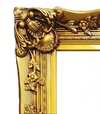
H24-GOLD $30
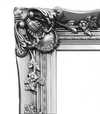
H24-SILVER $30
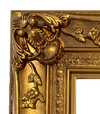
H36-GOLD $45
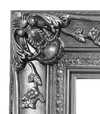
H36-SILVER $45
Shipped in a protective tube, ready for your own framer.
Above 105 cm the frame is shipped as a kit for a professional framer — read the details.
Extras
optionalWhat do the extras include?
Examples of what can be changed: Replace face with customer photo; Add pet (e.g., replace cat with dog); Include hidden message in background; Change background landscape or elements.
After order, TopImpressionists.com team will email client for instructions and provide a mockup preview
Worldwide Delivery () in 3/4 weeks instead of standard 4/5 weeks. (5 December). No compromise on quality.
Protective Varnish
Nameplate
Engraved Bronze Plaque Details
This elegant plaque features the artist's name and the title of the artwork, finely engraved for a timeless presentation.
It is made from bronze with a refined, elegant finish. The text is precisely laser-engraved for a sharp and permanent result. Measuring 9x2 cm, the plaque is compact yet easy to read. It's built to be durable and scratch-resistant, offering a professional, museum-quality look. Mounting is simple thanks to the included adhesive backing.
Transparent Acrylic Plaque Details
The plaque includes essential engraved details such as the artist's name, the title of the artwork, the date it was created, the type of media used-like oil on canvas or watercolor-a brief description of the piece, and a QR code that links to the complete artwork information.
It is crafted from clear acrylic, offering a sleek, modern appearance. The text is UV-engraved in black to ensure strong visual contrast. With a size of 10x15 cm, it ensures optimal readability. It comes equipped with two metal hooks for secure wall mounting. The plaque is designed to be weather-resistant, making it suitable for various environments, and it includes interactive features that work seamlessly with smartphone scanning.
Black Acrylic Plaque Details
This elegant plaque includes engraved information such as the artist's name, the title of the artwork, the date it was created, the type of media used (like oil on canvas or watercolor), a short description of the artwork, and a QR code for quick access to more information.
The plaque itself is made from refined black acrylic with a premium finish. The text is laser-engraved in white for high contrast and readability. Its size is 10x15 cm, designed to be easy to read. It comes with two metal hooks for professional mounting. The design is sleek and fits any interior style. It is also weather-resistant and durable, with built-in digital integration for mobile compatibility.
Glass option is only available in size under 110 CM
 Glass option is only available in size under 110 CM
- Free Worldwide Express Shipping
- High-Quality Linen Canvas
- Full Shipping Insurance
- Customs Tax Refund Guarantee
- True Color Matching Guarantee
- 100-day returns, money back
- 100% Money-Back Guarantee
- Bulk Discount Offer


Fog, Herblay, Opus 208: Paul Signac and the Neo-Impressionism moment
Paul Signac's "Fog, Herblay" (1889) exemplifies Pointillism with its delicate dots creating a serene, atmospheric river scene. A masterpiece of Neo-Impressionism.
Paul Signac: biography
French Neo-Impressionist known for luminous seascapes and rhythmic Pointillist dots that blend color through the viewer's eye.
About the painting
Fog, Herblay, Opus 208 – A Study in Atmospheric Resonance
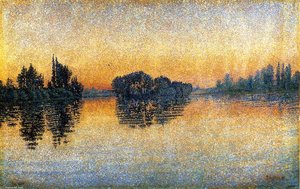
Paul Signac’s “Fog, Herblay,” painted in 1889, isn't merely a depiction of a riverside scene; it’s a meticulously constructed exploration of light and color, embodying the core tenets of Neo-Impressionism. This work, housed within the collection of TopImpressionists.com, offers a captivating glimpse into Signac’s innovative approach to capturing atmospheric effects – a technique he developed alongside Georges Seurat as Pointillism. The painting transports us to a quiet evening along the Seine near Herblay, a small town just northwest of Paris, where a dense fog blankets the river and surrounding trees, creating an almost palpable sense of stillness and mystery.
Signac’s method diverges dramatically from traditional Impressionistic brushstrokes. Instead of blending colors on the canvas, he employed thousands of tiny, distinct dots – meticulously placed to create optical mixtures in the viewer's eye. This “divisionism,” as it was known, allowed him to achieve a luminosity and vibrancy previously unattainable. The fog itself is rendered through an astonishingly delicate orchestration of blues, greens, and violets, each individual dot contributing to a shimmering, ethereal quality. Notice how the light seems to emanate from within the painting, rather than reflecting off surfaces; this is a direct result of Signac’s scientific approach to color theory, based on the work of Michel Eugène Chevreul.
The Scientific Underpinning of Impressionism
Signac's fascination with optics and color science stemmed from his deep respect for the work of Charles Renard, a French chemist who had studied the way the human eye perceives color. Renard’s research demonstrated that colors don't exist in isolation but rather interact with each other when viewed together. Signac embraced this concept wholeheartedly, believing that by isolating individual hues and allowing the viewer’s eye to blend them, he could create a more realistic and vibrant representation of light and atmosphere. This wasn’t simply an aesthetic choice; it was a deliberate attempt to codify painting as a scientific process – a revolutionary idea at the time.
The historical context is crucial to understanding “Fog.” Following the Impressionists, Signac and Seurat sought to move beyond capturing fleeting impressions of light and color. They were interested in analyzing how light itself was composed—how it interacted with objects and created visual effects. The late 1880s saw a growing interest in psychology and physiology, influencing artists to explore the workings of perception. “Fog” reflects this intellectual climate, demonstrating Signac’s commitment to understanding and replicating the complexities of visual experience.
Symbolism and Emotional Resonance
Beyond its technical brilliance, “Fog” possesses a profound emotional resonance. The scene evokes a sense of solitude and contemplation—a feeling intensified by the obscurity of the fog. The distant boats, barely discernible through the haze, suggest a world beyond reach, while the trees lining the river offer a subtle grounding element. There’s an inherent melancholy in the painting, yet it's tempered by the beauty of the light and color. The composition invites the viewer to step into the scene, to feel the dampness of the air and experience the quiet stillness of the evening.
The inclusion of two figures – a man and a woman – adds another layer of intrigue. They are positioned in the foreground, seemingly lost within the fog, suggesting a shared moment of introspection or perhaps a subtle narrative of connection. Their presence isn’t overtly dramatic; instead, they serve as anchors for our own emotions, prompting us to consider our place within this atmospheric landscape. The painting's overall effect is one of quiet beauty and contemplative melancholy—a testament to Signac’s mastery of color and his ability to capture the essence of a fleeting moment.
A Legacy in Reproduction
TopImpressionists.com offers meticulously crafted hand-painted reproductions of “Fog, Herblay,” ensuring that this iconic work can be enjoyed by a wider audience. Each reproduction faithfully captures Signac’s original technique and color palette, allowing you to experience the painting's luminous beauty firsthand. Whether adorning your living room wall or serving as a striking addition to a contemporary interior, this artwork is sure to evoke a sense of wonder and appreciation for the power of visual art.
Questions & Answers
Is this reproduction of Fog, Herblay, Opus 208 painted by hand or printed?
Painted by hand: a trained painter copies Fog, Herblay, Opus 208 in oil on linen canvas.
What size should I choose for Fog, Herblay, Opus 208?
Sizes run from 24.0 x 41.6 cm ($178) to 140.6 x 243.5 cm ($1175); the table on this page lists the main steps and their prices.
How long does delivery take?
Delivery takes 4 to 5 weeks, with free worldwide express shipping; an urgent production option is offered on this page. You can return it within 100 days for a full refund, with no condition.
Where is the original Fog, Herblay, Opus 208?
The original is in the collection of the Musée d'Orsay, Paris.
What medium did Paul Signac use for Fog, Herblay, Opus 208?
Acrylic On Canvas.
Quick facts and art quiz
About Paul Signac

Paul Signac
1863 - 1935, France
About Paul Signac: life, works and biography
Quick facts about Paul Signac
- Artistic Movement Or Style: Neo-Impressionism, Pointillism
- Artists Or Movements Influenced By This Artist:
- Henri Matisse
- André Derain
- Fauvism
- Cubism
- Artists Who Influenced This Artist:
- Claude Monet
- Georges Seurat
- Eugène Delacroix
- Full Name: Paul Victor Jules Signac
- Nationality: French
- Notable Artworks:
- Boulevard de Clichy
- The Red Buoy, Saint-Tropez
- The Jetty, Cassis, Opus 198
- Portrait of Felix Feneon
- Breakfast (The Dining Room)
- Place Of Birth: Paris, France
- Date Of Birth: 1863
- Date Of Death: 1935
Related Artworks
Kindred canvases that echo this painting's light, palette and mood.


Explore artworks organized by themes, styles, and characteristics.






Paul Signac
Fog, Herblay, Opus 208
() ·
With its frame: · Hand-painted in oil on linen
Total