
 Finished painting · 75 × 100 cm · Actual photos


 Preview

 Send
 Share
 Details
 Fact sheet


 Download
 Similars
 X-Ray
 Diaporama
 Q&A

 Stats
The Feast of the Bean King - Jacob Jordaens

- 75 x 100 cm
- Artwork Reference (Famous):
- The Feast of the Bean King


Experience the opulent Baroque feast by Jacob Jordaens—vibrant acrylic, rich reds and golds, a regal banquet scene. Own this historic masterpiece today.
 Read More
Flemish Baroque painter of boisterous tavern scenes and robust realism, known for expressive brushwork and crowded, lively banquets.
Stock Discount Oil Painting Available
In-stock hand-painted oil work ready to ship; add framing when you check out. ( )
































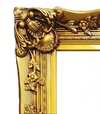
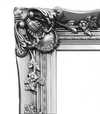
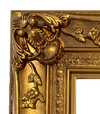
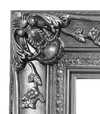


 Glass option is only available in size under 110 CM

The Feast of the Bean King - Jacob Jordaens
Stock Discount Oil Painting Available
Reproduction Size
-


Express Shipping
Express Worldwide Shipping. One week. (14 November).
Included
Total Price
$ 207
A Celebration of Aristocratic Merriment
The Feast of the Bean King-----0570 by Jacob Jordaens transports us back to the opulent heart of the Baroque era, capturing a moment of exuberant aristocratic life with breathtaking artistry. Painted in vibrant acrylic on canvas, this masterpiece exemplifies Jordaens’ signature style—dynamic compositions infused with masterful chiaroscuro that illuminate faces and objects against dramatic shadows. The artwork's subject matter centers around a lively banquet scene, populated by figures engaged in animated conversation and adorned with sumptuous attire. A regal elderly man commands the center stage, holding aloft a goblet overflowing with wine and crowned with gold—a potent symbol of status and celebratory grandeur. Jordaens’ meticulous attention to detail extends beyond mere representation; he strives to evoke an immersive experience for the viewer, mirroring the festive atmosphere of the period. The rich color palette—dominated by reds, golds, and browns—further enhances this emotional impact, reflecting the artistic conventions of Baroque painters. Technically, the painting showcases exceptional realism achieved through painstaking brushwork and a masterful understanding of perspective. Layers of acrylic paint create depth and texture, capturing subtle nuances of expression and movement. Collectors would appreciate this artwork for its historical significance as a testament to Flemish Baroque artistry and its enduring ability to convey the spirit of aristocratic celebration.Don’t miss out on owning a piece of art history!
Studio Hand Painted Artisanal Masterpieces Available Now
- Authentic Reproduction
- Framing Options Available
- Secure Delivery Worldwide
Questions & Answers
Is "The Feast of the Bean King - Jacob Jordaens" by Jacob Jordaens a portrait, landscape or square composition?
"The Feast of the Bean King - Jacob Jordaens" by Jacob Jordaens is a landscape composition. The proportions are worth checking before choosing a print size.
What is the creation date of "The Feast of the Bean King - Jacob Jordaens" by Jacob Jordaens?
"The Feast of the Bean King - Jacob Jordaens" dates from 2026. The date places the work within Jacob Jordaens's career and its era.
Does "The Feast of the Bean King - Jacob Jordaens" have an augmented reality preview?
"The Feast of the Bean King - Jacob Jordaens" by Jacob Jordaens can be previewed on your own wall with the artwork's AR Preview page, using augmented reality on a compatible device.
Artist Biography
Early Life, Family and Training
In the bustling streets of Antwerp, Jacob Jordaens entered a world of commerce and industry. Born in 1593, he was the first of eleven children born to Jacob Jordaens, a man who had found success as a linen merchant, and his wife, Barbara van Wolschaten. This prosperous upbringing provided the young boy with a stable foundation, though his path would eventually lead away from the trade of textiles and toward the pigments and brushes of the studio. His early years were shaped by the rhythms of a large, active household in the Spanish Netherlands.
The boy's ambition revealed itself early, and by the age of fourteen, he was already following the path of a craftsman. In 1607, he was registered in the local Guild of Saint Luke, entering the service of the master Adam van Noort. This apprenticeship was a formative period that demanded discipline and a keen eye for detail. Under Van Noort, Jordaens learned the essential mechanics of his craft, absorbing the technical secrets of composition and the handling of light that would define his later years. He was a dedicated student, and his talent was recognized by the guild long before he achieved full independence.
By 1615, the young man had reached a significant milestone in his professional life. He was accepted into the Antwerp Guild of Saint Luke as a master, specifically categorized as a waterscilder. This designation meant he was trained to work with tempera, a medium often used for preparing designs or creating works that required a certain clarity of form. This technical beginning laid the groundwork for a career that would see him move from the controlled application of tempera to the more expansive use of oil, always maintaining the robust connection to his native city.
Patrons, Workshop and Commissions
While his early years were spent mastering the brush under his teacher, Jordaens soon found himself navigating the social hierarchies of Antwerp. He did not seek the distant courts of Italy, finding instead a steady stream of work from the wealthy bourgeoisie and the local churches of his home city. These patrons provided the foundation for a prolific career, demanding works that spoke to the piety and the prosperity of the Flemish people. As his reputation grew, his reach extended far beyond the borders of the Spanish Netherlands. He eventually attracted the attention of royalty, securing commissions from King Charles I of England and Queen Christina of Sweden. Even the stadtholder class of the Dutch Republic sought his hand, bringing him into the service of high political circles.
To manage such a heavy burden of work, Jordaens maintained a busy studio where many pupils and assistants labored under his direction. In his later years, the demands of his commissions grew so great that he relied heavily on the assistance of his workshop to maintain his output. This industrious environment was not limited to canvas alone; he frequently collaborated with Brussels workshops to create designs for woven works. His ability to translate his compositions into these other mediums ensured his influence was felt in many households.
- The Feast of the Bean King (about 1638)
- Triumph of Frederik Hendrik (1647)
Technique and Artistic Style
Jordaens possessed a hand that favored the tangible and the real over the idealized dreams of the court. He worked with a loose and expressive brushwork, a method that allowed him to capture the immediate movement of a scene. To achieve a sense of deep luminosity, he employed a meticulous blending of oil paint with various glazing techniques. This careful layering gave his surfaces a certain glow, even when the subjects themselves were of a most earthly nature. His palette remained rooted in the soil, favoring warm and glowing tones that complemented his preference for robust realism.
Light was a primary tool in his service, used to sculpt the very air within his compositions. He embraced chiaroscuro, creating strong contrasts between light and shade that pulled the viewer into the drama of the moment. This interplay of shadow was never merely decorative; it gave weight to his figures, which were often substantial and even corpulent. He had a particular knack for painting faces flushed with health and vitality, capturing the redness of a cheek or the sweat of a laborer with a directness that felt startlingly alive. Through this command of light and form, he rendered the human experience in all its heavy, physical truth.
Key Works and Subject Matter
Jordaens possessed a restless imagination that found comfort in the most varied of themes. He moved with ease between the sacred and the profane, crafting biblical narratives that felt grounded in the tangible world, alongside mythological tales and complex allegories. His brush often turned toward the common man, capturing genre scenes and even illustrating the witty, spoken proverbs of Flanders. This ability to translate the spoken word and the everyday habits of his neighbors into visual form allowed him to speak directly to the people of Antwerp.
In his earlier years, he showed a particular talent for the dramatic tension of nocturnal scenes, as seen in his 1616 work, The Adoration of the Shepherds. As his career matured, he embraced the boisterous energy of social gatherings. His 1638 painting, The King Drinks, remains a profound example of this spirit, depicting a crowded, lively banquet where the joy of the feast is almost palpable. He did not shy away from the weight of mythic suffering either, as evidenced by his 1640 depiction of Prometheus Bound. Even when handling the solemnity of the Gospels, such as in his 1620 work, The Four Evangelists, he maintained a sense of human presence that distinguished his hand from those who sought only the ideal.
- The Adoration of the Shepherds (1616)
- The Four Evangelists (1620)
- The King Drinks (1638)
- Prometheus Bound (1640)
Circle, Rivals and Pupils
In the bustling art circles of the Antwerp school, Jordaens moved alongside the giants of his age. He lived and worked in the shadow of Peter Paul Rubens and Anthony van Dyck, yet he carved a space that was entirely his own. While his contemporaries often looked toward the courtly elegance of Italy, Jordaens found his inspiration in the works of Northern Italian painters like Jacopo Bassano, Paolo Veronese, and Caravaggio. He absorbed their dramatic light and their focus on the human form, yet he never felt the need to leave his native city to find his truth. After the passing of Rubens in 1640, Jordaens stepped forward to become the principal associate of the great master, maintaining the prestige of the Antwerp tradition through his own prolific hand.
His studio was a place of constant activity, a workshop that flourished as he grew in stature. He was a teacher of significant influence, guiding many through the rigors of his craft. Between 1621 and 1667, the Guild of Saint Luke officially recorded fifteen of his pupils, men who learned his methods of composition and his preference for a more direct, unrefined realism. These students carried his approach into the next generation, ensuring that his particular way of seeing the world would endure long after his own brush had fallen silent.
Legacy and Influence
The prestige of the Antwerp school of painting found a powerful champion in Jordaens, who stood alongside Rubens and Van Dyck as one of the three great figures to bring international renown to his home city. While his contemporaries often looked toward the courtly elegance of Italy, Jordaens found his strength in the soil of Flanders. His preference for the unrefined and the real allowed him to carve out a space that was entirely his own, one that celebrated the robust vitality of the human condition rather than the idealized grace of the aristocracy. This commitment to a more direct, earthy realism ensured that his presence in the Flemish Baroque was both distinct and enduring.
His influence traveled through the decades, finding a natural successor in the works of Jan Steen, who shared his fascination with the lively, often boisterous scenes of everyday life. By elevating the depiction of peasant festivals and tavern revelry, Jordaens challenged the traditional hierarchies of subject matter. He proved that the common man, with all his appetites and imperfections, was a subject worthy of grand scale and serious artistic attention. His classically inspired themes of abundance and human gathering left a lasting mark on the art world, teaching later painters how to find dignity and energy in the most mundane of celebrations.
Even today, those who stand before his canvases feel the pulse of the life he so carefully observed. His ability to capture a sense of movement and the warmth of a crowded room continues to draw viewers into his compositions. The energy he poured into his brushwork remains palpable, inviting a sense of shared human experience that transcends the centuries.
Where to See the Works Today
To witness the robust vitality of his brushwork, one must travel across the continent to the great halls of Europe. In Paris, the Louvre preserves his hand, while the Museo del Prado in Madrid offers a glimpse into his ability to render the human form with such substantial presence. Those who seek the spirit of the Flemish Baroque in its most direct and unrefined state might find it in the National Gallery of Denmark in Copenhagen. His presence is felt deeply in the Hermitage Museum in Saint Petersburg, where several of his compositions remain held in the collection.
The artist's reach extends far beyond the borders of his native Flanders. In the United States, the Metropolitan Museum of Art in New York holds his works, allowing a different audience to encounter his dramatic use of light and shadow. For those interested in the history of the Antwerp school, the Royal Museum of Fine Arts in Brussels remains a vital destination, housing paintings that reflect the energy of his many years of practice. His legacy is scattered across these great institutions, waiting for the curious eye to find them.
- The King Drinks (1638)
- The Four Evangelists (1620)
- Portrait of a Young Married Couple (1615)
- Prometheus Bound (1640)
- The Family of the Artist (1621)

Jacob Jordaens
1593 - 1678 , Belgium
Quick Facts
- Artistic Movement Or Style: Baroque
- Artists Or Movements Influenced By This Artist: ['Jan Steen']
- Artists Who Influenced This Artist:
- Adam van Noort
- Jacopo Bassano
- Paolo Veronese
- Caravaggio
- Full Name: Jacob Jordaens
- Nationality: Flemish
- Notable Artworks:
- The King Drinks
- The Bean King
- Prometheus Bound
- The Four Evangelists
- As the Old Sang the Young Play Pipes
- Place Of Birth: Antwerp, Belgium
- Date Of Birth: 1593
- Date Of Death: 1678
Related Articles

Masterpieces of Jacob Jordaens: The Top 25 Essential Artworks
Explore the top 25 masterpieces of Jacob Jordaens. Discover Flemish Baroque gems and iconic works. Explore the full collection online at TopImpressionists.com.

Belgian baroque painters
Masterpieces by Anthony van Dyck and Jacob Jordaens define Belgian baroque art. Explore the full collection online at TopImpressionists.com.

25 Must-See Masterpieces at the Royal Museums of Fine Arts of Belgium
Explore 25 iconic masterpieces from Brussels' Royal Museums. From Old Masters to Surrealism, discover the legends on TopImpressionists.com.
Explore artworks organized by themes, styles, and characteristics.


