
 Finished painting · 61 × 89 cm · Actual photos


 Preview

 Send
 Share
 Details
 Fact sheet


 Download
 Similars
 X-Ray
 Diaporama
 Q&A

 Stats
The Immaculate Conception - Peter Paul Rubens

- 61 x 89 cm
- Artwork Reference (Famous):
- Immaculate Conception


Discover Rubens’ The Immaculate Conception, a Baroque masterpiece in acrylic. Own this stunning wall art from TopImpressionists.com and elevate your space today.
 Read More
Flemish Baroque painter of muscular figures and dynamic compositions, known for luminous skin tones and energetic, swirling religious scenes.
Stock Discount Oil Painting Available
In-stock hand-painted oil work ready to ship; add framing when you check out. ( )
































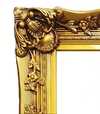
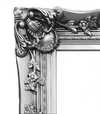
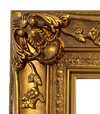
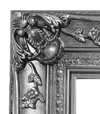


 Glass option is only available in size under 110 CM

The Immaculate Conception - Peter Paul Rubens
Stock Discount Oil Painting Available
Reproduction Size
-


Express Shipping
Express Worldwide Shipping. One week. (14 November).
Included
Total Price
$ 150
A Symphony of Light and Faith: Exploring The Immaculate Conception
“The Immaculate Conception,” painted by Sir Peter Paul Rubens, stands as an unparalleled exemplar of Baroque artistry—a movement that sought to overwhelm the senses and ignite the soul. More than just a depiction of biblical iconography, this canvas embodies the very essence of Baroque’s dramatic vision.
Subject Matter & Symbolism
Rubens meticulously portrays The Virgin Mary receiving divine grace, an event central to Catholic theology. The lily held aloft by Mary serves as potent visual shorthand for purity—a virtue revered throughout Christendom—while angelic attendants convey honor and triumph. Rubens skillfully weaves together mythological elements alongside religious themes, elevating the artwork beyond mere narrative illustration.
Emotional Impact & Artistic Technique
Rubens’ masterful brushstrokes capture an astonishing dynamism, mirroring the turbulent emotions inherent in Baroque painting. The radiant golden light illuminating Mary's figure isn’t merely illumination; it’s a conduit of divine grace—a technique that reflects Rubens’ profound understanding of color theory and his ability to evoke palpable feeling within the viewer.
Why Collectors Value This Masterpiece
“The Immaculate Conception” transcends time, captivating audiences with its grandeur and emotional depth. Its vibrant palette, coupled with Rubens' unparalleled compositional skill—particularly his pyramidal structure—creates a visual experience that is both intellectually stimulating and aesthetically sublime. It represents the pinnacle of Flemish Baroque painting and remains an enduring testament to Rubens’ genius.
Don’t miss this opportunity to own a genuine Studio Hand Painted Artisanal Masterpiece! Frame it beautifully and bring home a piece of art history. Explore Available Framing Options
Questions & Answers
Does "The Immaculate Conception - Peter Paul Rubens" by Peter Paul Rubens use strong contrasts or soft harmonies?
In "The Immaculate Conception - Peter Paul Rubens", a gentle contrast is paired with a discordant palette harmony.
Is "The Immaculate Conception - Peter Paul Rubens" part of a named collection?
"The Immaculate Conception - Peter Paul Rubens" belongs to the collection "Studio Hand Painted Art Available Now". The collection groups related works.
Who made "The Immaculate Conception - Peter Paul Rubens", and when?
Peter Paul Rubens made "The Immaculate Conception - Peter Paul Rubens" in 2026.
Artist Biography
Early Life, Family and Training
To understand the scale of Peter Paul Rubens, one must look at the displacement that defined his beginnings. Born on 28 June 1577 in Siegen, Germany, his early years were shaped by the religious instability of the era. His father, Jan Rubens, was a lawyer who fled religious persecution, a move that forced the family to navigate the shifting political landscapes of the time. This background of movement and survival provided a practical resilience that would later underpin his complex professional life. He was the son of Jan Rubens and Maria Pypelincks, and his upbringing was rooted in the social realities of the Southern Netherlands.
His technical foundation was built through a series of disciplined apprenticeships that moved him from basic landscape studies toward the complex iconography of history painting. In 1592, he began his training under Tobias Verhaecht, a landscape painter who provided the essential groundwork in composition. This was followed by a four-year apprenticeship with Adam van Noort, a specialist in portraiture and mythological scenes. These years were not merely about learning to hold a brush; they were about absorbing the structural mechanics of the Flemish tradition. By the time he began working with Otto van Veen between 1594 and 1598, Rubens had already acquired the technical vocabulary necessary to move beyond simple representation into the realm of sophisticated narrative art.
The Italian Awakening and Artistic Synthesis
In 1600, Rubens left the Low Countries for Italy, a move that fundamentally altered his visual language. He did not merely observe the Italian tradition; he absorbed it through eight years of direct engagement with the works of Michelangelo, Raphael, and Titian. This period was not a passive study. By serving the Duke of Mantua, he gained access to the high-stakes environment of Italian courtly art, where the demands of patronage required a sophisticated command of form and narrative. He took the anatomical precision of Michelangelo and the coloristic depth of Titian, stripping away the static qualities of the High Renaissance to create something more muscular and immediate.
The result was a synthesis that moved beyond imitation. Rubens took the classical ideals he encountered in Italy and infused them with a Flemish sense of vitality. He understood that movement required more than just depicted action; it required a specific tension in the human figure and a command of light that felt physical rather than merely decorative. When he returned to Antwerp in 1608, he brought back a style that was ready to dominate the European market. He had successfully merged the intellectual rigor of Italian humanism with a raw, energetic approach to composition.
- Prometheus Bound (completed 1612)
A Master of Many Forms
Rubens’s output was defined by a refusal to remain within a single genre. He operated with a versatility that allowed him to command the production of altarpieces, portraits, landscapes, and history paintings. This breadth was not a sign of scattered focus but a calculated expansion of his visual influence. He moved between the sacred and the secular with ease, applying his command of composition to everything from religious narratives to the intimate details of a sitter's likeness.
His reach extended into the commercial and decorative sectors of the seventeenth-century market. He was a prolific designer of cartoons for Flemish tapestry workshops, translating complex narratives into patterns for weavers. Beyond the canvas, his graphic work was essential to the publishing industry in Antwerp, where he designed frontispieces for local publishers. This ability to scale his vision from massive church commissions to small-scale printed works ensured his aesthetic presence was felt across different media.
Technique and Style
Rubens’s visual language is defined by a relentless sense of motion. He rejected static imagery in favor of energetic and dramatic arrangements that force the viewer to engage with the scene. This dynamism is not merely a compositional choice but a structural necessity in his work. By utilizing chiaroscuro, he sculpted human forms with a precision that emphasized musculature and physical presence. This interplay of light and shadow provides the weight necessary to ground his often swirling, high-energy subjects.
His approach to color and texture relies on a sophisticated layering process. He employed glazing, applying thin, translucent layers of pigment over thicker undercoats to achieve a depth of color that feels internal rather than surface-level. This technique allowed him to capture the specific luminosity of skin tones and the heavy weight of fabric. His style prioritized a sense of sensuality and physical vitality, ensuring that every figure possessed a palpable, breathing quality. He did not merely depict bodies; he engineered them through light and pigment to command attention.
- The Descent from the Cross (c. 1616-1617)
- The Raising of the Cross (1610-1611)
- The Judgement of Paris (c. 1636)
Patrons, Workshop and Commissions
Rubens operated with the precision of a high-stakes businessman, building one of the most successful artistic enterprises in European history. By 1610, he had opened his own studio in Antwerp, a move that transformed his practice from individual creation into a massive production engine. This was not a mere collection of assistants; it was a sophisticated operation designed to meet the relentless demands of his international clientele. He functioned as a central hub for talent, coordinating complex projects that required specialized skills to achieve his specific visual standards.
His professional status was cemented by his position as court painter to the Archduke and Archduchess in Brussels. This role provided more than just steady work; it placed him at the center of political and social power. To manage the sheer volume of his commissions, Rubens relied on a network of skilled collaborators. He integrated the talents of other significant artists into his workflow, including Frans Snyders, Paul de Vos, Jacob Jordaens, and Jan Brueghel the Elder. This collaborative model allowed him to execute massive, multi-layered compositions that a single hand could not have completed in a lifetime.
- The Descent from the Cross (c. 1616-1617)
- The Raising of the Cross (1610-1611)
- The Meeting of Marie de' Medici and Henry IV at Lyons (1625)
Later Years and Death
By 1630, Rubens had integrated his private life with his professional status through his marriage to Hélène Fourment. This union provided a steady presence in his Antwerp studio during a period when his responsibilities extended far beyond the canvas. He was not merely a painter but a high-stakes diplomat, navigating the complex political currents of Europe through missions to England, France, and Spain. These diplomatic endeavors required a level of intellectual agility and social maneuvering that matched his technical command of oil and pigment.
His productivity remained high even as his political duties intensified. He continued to paint prolifically, maintaining a massive output that sustained his reputation across the continent. The sheer volume of his work in these final years reflects a man who managed a vast artistic enterprise while simultaneously acting as a cultural intermediary for the Southern Netherlands. He remained active in the artistic and political life of Antwerp until his death on 30 May 1640.
Legacy and Influence
Rubens remains the most influential figure in the Flemish Baroque tradition. His work functioned as a bridge between the divine and the human, translating complex religious and mythological narratives into a visual language of physical presence. He did not merely paint scenes; he engineered spectacles of visual grandeur. This ability to command space and movement ensured his influence reached far beyond the borders of the Southern Netherlands.
The impact of his method on subsequent generations of artists is immeasurable. He established a standard for high-energy dynamism that later painters had to either adopt or react against. His studio functioned as a massive engine of production, setting a precedent for how large-scale artistic enterprises could operate across Europe. By synthesizing the classical grace of the Renaissance with a raw, muscular energy, he redefined the expressive potential of oil on canvas.

Peter Paul Rubens
1577 - 1640 , Germany
Quick Facts
- Artistic Movement Or Style: Baroque
- Artists Or Movements Influenced By This Artist:
- Anthony van Dyck
- Jacob Jordaens
- Eugène Delacroix
- Artists Who Influenced This Artist:
- Michelangelo
- Raphael
- Titian
- Tobias Verhaecht
- Adam van Noort
- Otto van Veen
- Full Name: Sir Peter Paul Rubens
- Nationality: Flemish
- Notable Artworks:
- The Descent from the Cross
- The Raising of the Cross
- The Judgement of Paris
- Prometheus Bound
- Self-portrait
- Place Of Birth: Siegen, Germany
- Date Of Birth: 1577
- Date Of Death: 1640
Related Articles

Masterpieces of Motion: The Top 25 Greatest Artworks by Peter Paul Rubens
Explore 25 iconic Baroque masterpieces by Peter Paul Rubens. Discover timeless art legends on TopImpressionists.com.

The Drama of Motion: Capturing the Power and Theatricality of Baroque Dynamism
Explore the breathtaking drama of Baroque art. From Caravaggio's chiaroscuro to Rubens' kinetic energy, discover how masters captured motion and emotion through light and shadow in this sophisticated guide for fine art enthusiasts.

25 Must-See Masterpieces at the Gemäldegalerie Berlin
Explore 25 iconic Old Masters from Berlin's Gemäldegalerie. From Baroque to Renaissance, discover the legends on TopImpressionists.com.
Explore artworks organized by themes, styles, and characteristics.


