Preview
 Send
Send Share
Share
 Details
 Guide
Guide

 Download
 Similars
 X-Ray
X-Ray Diaporama
 Stats
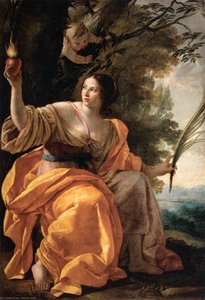
StatsParnassus or Apollo and the Muses (detail)


Simon Vouet's "Parnassus or Apollo and the Muses" depicts Apollo playing his lyre alongside nine goddesses representing poetic inspiration, showcasing Baroque artistry and reflecting classical ideals of beauty in a richly detailed panel painting.
 Read More
Explore the life & art of Simon Vouet (1590-1649), a pivotal French Baroque painter who introduced Italian styles & shaped 17th-century French art.
Hand Made Oil Reproduction
Hand-painted oil on canvas in your size and frame, made to order by our artists. ( Switch to Print Switch to Digital Image)




P118B $10

P118H $10

P118W $10

P438Z $10

P508JH $12

P508YH $12

P805H $10

P805Z $10

P919BZ $10

P919G $10

P919XJ $10

P959ZH $10

P968JZ $12

W106C $8

W218G $10

W218JH $8

W218Y $10

W307PJ $10

W316G $10

W316PJ $8

W316Y $10

W398PJ $8

W4111J $10

W500HY $15

W500JH $15

W692G $12

W849H $8

W940BG $15

W953PJ $8




Standard
custom
CM
INCH
Pick from our preset sizes that match the artwork's original proportions.
Loading sizes...

width
height
Type the width and the height you need, to fit your frame or your wall. This is hand-painted, so for a size with a different shape the artist can paint a bit more around the picture, or cut a bit — you choose. We send you a digital mockup to approve before the painting starts. The picture shown on this page does not show the real result — only the mockup does.
Examples of what can be changed: Replace face with customer photo; Add pet (e.g., replace cat with dog); Include hidden message in background; Change background landscape or elements.
After order, TopImpressionists.com team will email client for instructions and provide a mockup preview
After order, TopImpressionists.com team will email client for instructions and provide a mockup preview
Worldwide Delivery () in 3/4 weeks instead of standard 5 weeks. (28 October). No compromise on quality.

Free Worldwide Express Shipping

High-Quality Linen Canvas

Full Shipping Insurance

Customs Tax Refund Guarantee

True Color Matching Guarantee

100-Day Return Policy (Defects Only)

100% Money-Back Guarantee

Bulk Discount Offer
 Glass option is only available in size under 110 CM

Parnassus or Apollo and the Muses (detail)
Reproduction Medium
Reproduction Size
-


Total Price
$ 269
A Symphony of Light and Classical Ideal
In the delicate detail of Simon Vouet’s "Parnassus or Apollo and the Muses," we encounter a breathtaking moment of divine harmony captured in paint. This exquisite fragment serves as a window into the mid-17th century, a period where the French Baroque style began to flourish with unprecedented grace. The scene invites the viewer into a celestial gathering, focusing on a woman playing the harp with a serene, effortless poise. Dressed in a vibrant yellow gown that catches the light, her relaxed posture and crossed legs suggest a state of profound musical immersion. This is not merely a portrait of a musician; it is an evocative tableau designed to stir the soul and celebrate the heights of intellectual and artistic pursuit.
The technical mastery of Vouet is on full display through his sophisticated use of chiaroscuro. By masterfully manipulating the interplay between light and shadow, he breathes life into the textures of the scene—from the soft, luminous sheen of the woman's skin to the intricate, tactile details of the musical instruments. The light does not simply illuminate; it sculpts the figures, creating a sense of three-dimensional depth that draws the observer into this mythological realm. In the background, subtle figures observe the performance, their presence adding a layer of communal appreciation and quiet reverence to the composition.
Symbolism and the Baroque Spirit
Beyond its visual splendor, this detail of "Parnassus" is rich with the symbolic language of the Baroque era. The harp, central to this specific view, acts as a powerful emblem of harmony, eloquence, and the rhythmic balance of the universe. As part of a larger narrative involving Apollo Musagetes and his Muses, the painting celebrates the divine inspiration that flows through poetry, music, and dance. Every gesture and every instrument held by the surrounding figures serves as a testament to the various domains of artistic creation, weaving a complex tapestry of meaning that would have resonated deeply with the aristocratic patrons of Louis XIII.
For the discerning collector or interior designer, this work offers more than just aesthetic beauty; it provides an atmosphere of timeless elegance and intellectual depth. The painting embodies a transition from the dramatic tension of Caravaggio to a more refined, classical French sensibility. It is a piece that commands attention through its balanced composition and emotional resonance, making it an ideal centerpiece for spaces dedicated to contemplation, culture, and the appreciation of fine art history. To possess a reproduction of such a masterpiece is to bring a fragment of Mount Parnassus into one's own environment, surrounding oneself with the eternal light of the Muses.
Questions & Answers
What stage of Simon Vouet's development does "Parnassus or Apollo and the Muses (detail)" represent?
"Parnassus or Apollo and the Muses (detail)" belongs to the Mature Period of Simon Vouet's career. This classification relates the work to the artist's development.
Are there works similar to "Parnassus or Apollo and the Muses (detail)"?
The Similars page of "Parnassus or Apollo and the Muses (detail)" by Simon Vouet presents related artworks.
Which artistic current is "Parnassus or Apollo and the Muses (detail)" by Simon Vouet part of?
The movement associated with "Parnassus or Apollo and the Muses (detail)" by Simon Vouet is Baroque. This classification situates the work among related artists and artworks.
Artist Biography
Simon Vouet: A Pioneer of French Baroque Painting
- Born: January 9, 1590, Paris, France
- Died: June 30, 1649, Paris, France
Simon Vouet was a pivotal figure in the transition of French painting from Mannerism to the Baroque style. Born into an artistic family – his father Laurent was a painter and his brother Aubin also pursued art – Vouet received early training that laid the foundation for his future success. His grandson, Ludovico Dorigny, would continue the family’s artistic legacy.
Early Career and Italian Influences (1608-1627)
- Early Portraiture: Vouet began his career as a portraitist, demonstrating early talent.
- Travel to England (1608): At the young age of 14, he traveled to England to paint a commissioned portrait, showcasing his burgeoning reputation.
- Ottoman Empire and Venice: In 1611, Vouet joined the entourage of Baron de Sancy, French ambassador to the Ottoman Empire, again for portraiture work. This journey took him through Constantinople and then to Venice in 1612.
- Rome (1614-1627): His time in Rome proved transformative. He remained there for thirteen years, immersing himself in the vibrant artistic scene of the burgeoning Baroque period.
During his Italian sojourn, Vouet absorbed a diverse range of influences. He studied the dramatic lighting techniques pioneered by Caravaggio, embraced elements of Italian Mannerism, and meticulously analyzed the color palettes and di sotto in su (foreshortened perspective) employed by Paolo Veronese. He also drew inspiration from the works of Carracci, Guercino, Lanfranco, and Guido Reni, synthesizing these diverse styles into a unique artistic vision.
Development of Vouet’s Distinctive Style
- Election to Accademia di San Luca (1624): His success in Rome culminated in his election as president of the prestigious Accademia di San Luca, a testament to his skill and recognition within the Italian art world.
- Synthesis of Influences: Vouet’s style was characterized by its ability to absorb and distill various artistic influences. He didn't simply copy; he integrated these elements into a cohesive and distinctly Italianate Baroque aesthetic.
- Introduction of Baroque to France: Upon his return to France in 1627, Vouet played a crucial role in introducing the Italian Baroque style to French painting, significantly impacting the artistic landscape of the country.
Major Achievements and Legacy
- Premier Peintre du Roi: Vouet was appointed Premier peintre du Roi (First Painter to the King) – a position of considerable prestige and influence.
- Prolific Workshop: He maintained a large and active workshop, training numerous artists who would shape the subsequent generation of French painters.
- Notable Pupils: Among his most influential pupils were Charles Le Brun (who later organized all decorative painting at Versailles), Valentin de Boulogne, Charles Alphonse du Fresnoy, Pierre Mignard, Eustache Le Sueur, and Claude Mellan.
- Influence on French Art: Vouet’s impact extended beyond his own works; his students carried his style and techniques throughout France, establishing a distinctively Baroque school of painting. His influence is particularly evident in the grand decorative schemes commissioned by Louis XIV.
Historical Significance
Simon Vouet's legacy rests on his pivotal role as a bridge between Italian and French art. He successfully imported the dynamism and grandeur of the Italian Baroque, transforming it into a style that resonated with the tastes of the French court and aristocracy. His influence is undeniable in the development of French painting during the 17th century, and his contributions continue to be recognized by art historians today.

Simon Vouet
1590 - 1649 , France
Quick Facts
- Full Name: Simon Vouet
- Nationality: French
- Date Of Birth: 1590
- Date Of Death: 1649
- Place Of Birth: Paris, France
- Artistic Movement Or Style: Baroque painting
- Artists Who Influenced This Artist:
- Caravaggio
- Paolo Veronese
- Carracci
- Guercino
- Lanfranco
- Guido Reni
- Artists Or Movements Influenced By This Artist:
- Charles Le Brun
- Valentin de Boulogne
- French Baroque painting
Related Articles

Drama and Light: Discover the Captivating Grandeur of Baroque Art
Immerse yourself in the dramatic splendor of Baroque art. Explore the profound impact of light, shadow, and the Counter-Reformation through an expert historical lens, celebrating the masters who defined an era of unparalleled grandeur and emotional intensity.

Chiaroscuro & Emotion: Capturing the Dramatic Soul of Baroque Art
Explore the profound drama of Baroque art. Discover how masters used chiaroscuro and intense emotion to capture the soul of the 17th century through light, shadow, and spiritual grandeur in this expert art history guide.
Explore artworks organized by themes, styles, and characteristics.