

Най-обичаната картина на Benet Mercadé е Church of Cervara (Papal States) (1864), която се намира в Национален музей за изкуствата в Каталония, Барселона. Portrait of Teresita Wearing Blue Bows (1872) и Portrait of Senyora Anita (1874) следват след тях сред най-познатите картини на читателите. Нашият каталог съдържа 5 произведения на Benet Mercadé: ето 5-те най-известни, всяко с неговата година, неговия музей и това, което го прави незабравимо.
Класирани според нашия коефициент за популярност, който съчетава търсенията, посещенията и поръчките за всяко произведение. Обновено Октомври 2026. Всяка картина на тази страница може да бъде поръчана като ръчно рисувано маслено репродукция върху ленен хол или като висококачествен арт принт, изработен според избран от Вас размер.


2 музея, които притежават най-голям брой от картините на тази страница.
| Музеи | Град | Творения на Benet Mercadé | Картини от този списък |
|---|---|---|---|
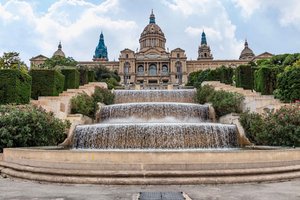 Национален музей за изкуствата в Каталония |
Барселона | 4 | Church of Cervara (Papal States), Portrait of Teresita Wearing Blue Bows, Portrait of Senyora Anita |
 Biblioteca Museu Víctor Balaguer |
Viladecans | 1 | Teresita |


Church of Cervara (Papal States) (1864), Национален музей за изкуствата в Каталония, Барселона. Следват Portrait of Teresita Wearing Blue Bows (1872) и Portrait of Senyora Anita (1874).
Benet Mercadé, роден в 1821, е на 43 години: Church of Cervara (Papal States) е от 1864 г.
В нашия каталог са включени 5 произведения на Benet Mercadé, датирани от 1864 до 1897.
Предимно в Национален музей за изкуствата в Каталония (Барселона) и Biblioteca Museu Víctor Balaguer (Viladecans); списъкът по-горе изброява всеки музей и неговите платна.
В 1870s, който включва 3 от 5 произведения на тази страница, Portrait of Teresita Wearing Blue Bows сред тях.
Най-старото платно тук е от Church of Cervara (Papal States) (1864); най-новото е от Teresita (1897).
В Национален музей за изкуствата в Каталония, Барселона се съхраняват 4 от произведенията на тази страница, сред които са Church of Cervara (Papal States), Portrait of Teresita Wearing Blue Bows и Portrait of Senyora Anita.
Да. Всяка картина на тази страница може да бъде поръчана от нейната собствена страница като ръчно рисувано маслено репродукция или като висококачествен арт-принт в избран от Вас размер.
In the quiet town of La Bisbal d'Empordà, a young boy watched his father apply gold leaf to ornaments, learning the delicate patience required of a gilder. This early exposure to the luster of metal and the precision of fine detail would later find its way into the brushstrokes of Benet Mercadé. His path was not one of immediate ease; in 1838, he arrived in Barcelona with little more than an ambition to learn. To sustain himself, he labored as a shoemaker's assistant, a humble existence that stood in stark contrast to the lofty halls of the Escola de la Llotja where he began his formal studies. During these formative years, he balanced the grit of manual labor with the technical experimentation of daguerreotypes and ornamental painting.
As his hands grew accustomed to the weight of the brush, his gaze moved toward Madrid. At the Escuela de Bellas Artes de San Fernando, he sought the guidance of Carlos Luis de Ribera, a teacher who helped refine his burgeoning talent. This period of academic rigor provided the foundation for a career that would eventually span the great art capitals of Europe. He was a man of movement, drifting from the classrooms of Spain to the streets of Paris and finally to the storied atmosphere of Rome. In the Italian capital, he found himself among a circle of Spanish painters and intellectuals, often gathering at the Antico Caffè Greco to discuss the changing tides of art.
The evolution of his style mirrored the shifting sensibilities of the nineteenth century. His early works bore the quiet, structured influence of the Nazarene movement, characterized by a focus on religious themes and clear, deliberate lines. This spiritual gravity is evident in his depictions of sacred figures, where a certain solemnity prevails. However, as he matured, the rigid boundaries of his earlier training began to soften into the more direct observations of Realism. He turned his attention toward historical scenes and portraits that sought to capture the weight of truth rather than idealized perfection.
His ability to render history was recognized on the grandest stages. In 1858, he presented works concerning Don Quixote and Christopher Columbus at the National Exhibition of Fine Arts, earning an honorable mention for his depiction of the explorer at La Rábida. The pinnacle of his international recognition arrived in 1866, when his painting, Traslación de San Francisco de Asís, earned him a Grand Prize in Paris. This work, which focused on the passing of a saint, demonstrated a mastery of composition that would later earn him a first-class medal in Madrid. Even as his eyesight began to fail him, forcing an eventual retreat from the canvas, he remained a pillar of the academic community, holding a professorship at the Escola de Bellas Artes de San Jorge.
Though his later years were marked by the physical struggle of declining vision, the impact of his work remained etched in the institutions of Catalonia. His paintings found homes in prestigious collections, including the Museu Nacional d’Art de Catalunya and the Museo Del Prado. He possessed a particular gift for portraits that felt alive with personality, such as his Retrato vermell de la señora Annita, where a restrained use of color allowed the sitter's character to emerge from the shadows.
Benet Mercadé left behind more than just canvases; he left a record of an era defined by the transition from romanticized tradition to the starker truths of modern life. His journey from a shoemaker's assistant in Barcelona to a celebrated professor and prize-winner in Paris remains a story of persistence. Even today, the streets of his birthplace bear his name, ensuring that the man who once captured the light of history is not forgotten by the land that raised him.