
A catalogue of High Medieval masters
Famous High Medieval Художници: A Catalogue of 96 Masters
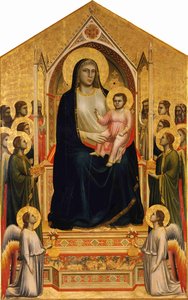
Among the High Medieval артисти, Джото (1267–1337) holds the first place, celebrated for Madonna in Maest (Ognissanti Madonna) и Последното съдилище (детайл 3) (Капела Скровегни (Арена капела), Падуа). Дучо ди Буонинсеня, Чимабуе, Чжао Менгфу и Чжу Си follow. The catalogue spans 96 masters, from Xu Daoning (born 970) to Huang Gongwang (born 1269), across 24 countries.
About this catalogue. This catalogue gathers the artists whose works our collection records as High Medieval, ordered by our fame ranking. Artists born after 1955 with no Wikidata record await verification. Beside each name, the number of our 32 languages in which Wikipedia devotes an article to the artist.


The collection in brief
High Medieval: the collection in brief
- 96Художници
- 970–1269Години на раждане
- 24Страни на раждане
- 3Жени
- 3Живи артисти
- 1429Работи в нашия каталог
- Музеи, притежаващи най-голям брой ключови произведения
- Метрополитън Музей на изкуствата (12), Cleveland Museum of Art (9), The Palace Museum (9), Национален дворец музей (8)
- Жените в този списък
- Herrad of Landsberg, Guan Daosheng, Hildegard von Bingen
Master by master
The catalogue: 96 High Medieval Художници


2of 96
Дучо ди Буонинсеня 1255–1319
Италианец Born in Сиена Сиенска школа, Треченто готика Wikipedia, 31 of 32 languages

Maestà, 1308-1311. Еволюцията на майсторския почерк на Дучио Ди Буонисегна е отчетливо видима в създадената през 1285 г. Rucellai Madonna (1285). Христос, прощаващ се с апостолите (1308).


3of 96
Чимабуе 1240–1302
Италианец Born in Флоренция Византиански и Ренесансов Wikipedia, 28 of 32 languages


4of 96
Чжао Менгфу 1254–1322
Китайска Born in Хужоу Живопис в стил литерати; Пейзажна живопис Wikipedia, 18 of 32 languages

Despite serving as a military official under Kublai Khan and subsequent Mongol rulers, Zhao Mengfu never relinquished his passion for scholarship and artistic pursuits.


Principal works · The hundred celebrated works
6of 96
Ма Юан 1160–1225
Китайска Born in Ханчжоу Школа Ма-Ся, династия Южна Сун Wikipedia, 19 of 32 languages


7of 96
Гуо Си 1020–1090
Китайска Born in Янчен Пейзажно рисуване от династия Северни Сонг Wikipedia, 16 of 32 languages


8of 96
Император Хуизун От Сун 1082–1135
Китайска Born in Каифен Династия Сун; калиграфия „Тънко злато“ Wikipedia, 19 of 32 languages


Principal works · The hundred celebrated works


10of 96
Гуидо Да Сиена 1230–1290
Френска Born in Италия Средновековна архитектура/дизайн Wikipedia, 17 of 32 languages


11of 96
Бонавентура Берлингиери 1210–1287
Италианска Born in Лука Византийски стил Wikipedia, 14 of 32 languages


12of 96
Master Mateo 1161–1217
Spanish Romanesque Sculpture

While his contemporaries often relied on stylized, flat figures, Mateo meticulously studied human anatomy and the complex behavior of drapery, achieving an astonishing accuracy in his depictions. His mastery of limestone carving was unparalleled, particularly through his use of a technique known as trabajo vivo.


Principal works · The hundred celebrated works


14of 96
Ми Феи 1051–1107
Китайска Born in Дзянсу Изкуство от династия Сун Wikipedia, 17 of 32 languages


15of 96
Lorenzo Maitani 1255–1330
Italian Born in Siena Gothic & Renaissance

The historical significance of Lorenzo Maitani lies in his role as a transformative force in the Italian landscape.


16of 96
Li Gonglin 1049–1106
Born in Tongcheng Song Dynasty painting Wikipedia, 9 of 32 languages

Li Gonglin’s painting style is often described as a deliberate revival of earlier traditions, particularly those of the Five Dynasties period (907-960). He consciously rejected the prevailing trends of his time – the opulent and decorative styles favored by many court painters. Unlike many artists who enjoyed patronage from the imperial court or wealthy collectors, Li Gonglin’s path was one of scholarly independence and deliberate stylistic choices rooted in a deep reverence for earlier masters.


17of 96
Ма Лин 1180–1256
Китайски Born in Баодин Техника на рисуване „без кости“ (boneless) Wikipedia, 7 of 32 languages


18of 96
Yi Kyu-Bo 1168–1241
Korean Confucianism

Simultaneously, he championed stylistic innovation, rejecting the rigid conventions favored by some of his peers and advocating for expressive freedom within Hanmun forms. This dual commitment to tradition and creativity distinguishes Yi Kyu-Bo as a singular voice in Korean literary history—a figure who simultaneously honored the past while forging new paths toward artistic excellence. Rooted in Confucian ethics—emphasizing filial piety, righteousness, benevolence, and ritual propriety—his poetry reflects a deep engagement with moral dilemmas and explores the human condition through the lens of ethical contemplation.
19of 96
Gislebertus 1120–1135
French Romanesque Sculpture

While biographical details remain scarce, scholars believe he was trained at Cluny Abbey, arguably the epicenter of European monastic art and intellectual life at the time. While his roots are firmly planted in the Romanesque tradition of Cluny, his expressive power and narrative complexity hint at the burgeoning naturalism that would later define Gothic art.


20of 96
Badīʿ Az-Zaman Abu L-ʿIzz Ibn IsmāʿĪl Ibn Ar-Razāz Al-Jazarī 1136–1206
Muslim Born in Jazirat Ibn Omar Islamic Golden Age Engineering

He represents a pivotal figure in the Golden Age of Islam, a period characterized by intellectual flourishing and groundbreaking innovation across diverse fields.


21of 96
Giunta Pisano 1190–1260
Italian Born in Pisa Renaissance style Wikipedia, 10 of 32 languages

The Crucifix of San Raniero demonstrates this perfectly, showcasing the artist’s ability to convey both physical pain and spiritual anguish with astonishing realism. Tempera on Wood: Giunta primarily utilized tempera paint applied to wooden panels, a technique common in Italy at the time. Artists like the Master of the Blue Crucifixes, the Master of the Treasury, and Vicino da Pistoia are believed to have been influenced by his work.


22of 96
Xia Gui 1195–1224
Song dynasty Born in Hangzhou Wikipedia, 16 of 32 languages

The surviving works of Xia Gui include various genres, such as small album leaves and hand scrolls. His technique often featured perfectly balanced diagonal compositions where void and solid mass played equally important roles. Xia Gui was a Chinese landscape painter of the Song dynasty, most likely born in Hangzhou, People's Republic of China.


24of 96
Li Tang 1050–1130
Song dynasty Born in Meng Prefecture Academy-style landscape Wikipedia, 15 of 32 languages

Li Tang perfected the "axe-cut" brushstroke, a technique that fundamentally altered the visual language of Chinese landscape painting. They strike the silk or paper like a chisel hitting wood, carving out the rugged textures of the natural world. Southern Song painters Xia Gui and Ma Yuan studied his compositions and techniques, absorbing his approach to space and form.
On view at The physical remnants of Li Tang's brushwork reside primarily within major institutional collections.

25of 96
Qian Xuan 1235–1305
Chinese Born in Wuxing District Fur and feathers painting; Song realism blended with archaic Tang style Wikipedia, 12 of 32 languages

The historical significance of Qian Xuan lies in his ability to use art as a vessel for memory and identity.


26of 96
Matthew Paris 1200–1259
English Medieval Art

In the quiet halls of St Albans, Matthew Paris found a way to make the fleeting moments of his century immortal.


27of 96
Jingdezhen Ceramic Kiln роден 1004
Chinese Born in Jingdezhen Imperial porcelain

Fueled by royal patronage and a strategic location along the vital trade routes connecting China with Central Asia and Persia, Jingdezhen became a crucible of cultural exchange.

28of 96
Herrad of Landsberg 1130–1196
Wikipedia, 16 of 32 languages

As she rose through the ecclesiastical ranks to become the Abbess of Hohenburg, she navigated a world where female intellect was often confined to the shadows of the cloister, yet she used her position to illuminate the minds of her fellow nuns through a breathtaking synthesis of theology, science, and visual art. Though she passed away on July 25, 1195, after twenty-eight years of influential leadership, her voice remains audible through the surviving pages of her Garden.


29of 96
Fujiwara No Teika, Fujiwara No Sadaie 1162–1241
Japanese Born in Kyoto Waka poetry

His relationship with the imperial court, particularly his complex bond with the Retired Emperor Go-Toba, was a saga of high artistic commissions followed by the sting of political banishment.

30of 96
Joannes Koulix роден 1101
Byzantine Born in standardized city name Manuscript illumination

Creating such a masterpiece demanded immense patience and skill. Parchment, made from animal skin, was prepared meticulously before receiving the artist’s hand. Johannes Koulix’s ‘Epistle to the Hebrews’ leaf stands as a poignant reminder of the artistic achievements of the Byzantine era.

31of 96
Břetislav I 1002–1055
Czech Medieval Coin Art

By marrying Judith, the daughter of the Bavarian noble Henry of Schweinfurt, Bretislav forged an essential link to the Holy Roman Empire, elevating the prestige of the Bohemian throne and securing vital alliances that would protect his borders against encroaching rivals.
32of 96
Villard De Honnecourt 1200–1266
French Gothic architecture

His designs demonstrate an understanding of geometry, proportion, and structural principles—elements inherited from ancient knowledge and refined through centuries of practice. However, he also incorporated elements from other sources: the writings of classical mathematicians like Euclid, the techniques employed by medieval workshops, and perhaps even contemporary innovations in engineering.


33of 96
Fujiwara No Sadanaga 1139–1202
Japanese Born in Kyoto Waka poetry

He wasn't simply describing landscapes; he was using them as vehicles for exploring inner states of being. His most famous poem, included in the renowned Hyakunin Isshu anthology, vividly depicts mist rising over dew-kissed pines on an autumn evening—a motif that resonated deeply with later artists and poets. He also adopted Fujiwara no Ietaka, a pupil of Shunzei, continuing the lineage of poetic excellence.

34of 96
Zhang Zeduan 1085–1145
Chinese Empire Born in Zhucheng shan shui Wikipedia, 15 of 32 languages

His approach moved beyond mere representation to establish a structural language for depicting the natural and built environments. He focused on the intersection of human industry and the landscape, using specific methods to ensure architectural accuracy. They show how subsequent generations of painters from the Ming and Qing dynasties interpreted his specific visual language.
On view at Tracing the physical presence of Zhang Zeduan's output requires looking toward two major institutions in East Asia.
Principal works · The hundred celebrated works
35of 96
Sū Hànchén 1094–1172
Chinese Born in Kaifeng Song Dynasty painting

Su Hanchen’s reputation rests primarily upon his figure paintings. His subjects were often drawn from domestic life – children at play, women engaged in scholarly pursuits or gentle pastimes. Su Hanchen’s legacy lies in his ability to elevate the ordinary to the extraordinary, reminding us of the beauty and dignity inherent in the human experience.

36of 96
Saigyō Hōshi 1118–1190
Japanese Born in Kyoto

Saigyō Hōshi, born in Kyoto in 1118, was far more than a mere monk; he was a wandering poet whose verses captured the very heartbeat of the Japanese wilderness.


37of 96
Gaddo Gaddi 1240–1312
Italian Born in Florence Gothic Art

Notable achievements attributed to him include: The Completion of Mosaics: His skilled hand contributed to the magnificent mosaics adorning the facade of Santa Maria Maggiore in Rome, showcasing a command over light and permanence.


38of 96
Huang Gongwang 1269–1354
Yuan dynasty Born in Changzhou Literati painters (wenrenhua) Wikipedia, 12 of 32 languages

Huang Gongwang’s approach to the landscape was a deliberate departure from the rigid conventions of the era's Academy. Rather than adhering to the formal structures of his contemporaries, he sought a more personal expression of the natural world. Huang Gongwang remains a central figure in the history of Chinese landscape painting, embodying the wenrenhua ideal of the literati painter.


39of 96
Рай Куниъки 1219–1298
Japanese Born in Kyoto Bizen tradition

The Rai School’s Philosophy: The Rai school's ethos centered on achieving “Tamahagane” – hammered iron – a process painstakingly refining raw ore into exceptionally pure steel.
40of 96
Meliore Of Jacopo 1255–1285
Italian Medieval Italian art

This work, depicting Christ alongside the Virgin, Saint Peter, Saint Paul, and Saint John the Evangelist, represents a significant departure from his earlier geometric roots, embracing a style that is reminiscent of the great Cimabue. Madonna and Child (Art Institute of Chicago): An early work that demonstrates his foundational skill in capturing the tender, human connection within divine subjects. The historical significance of Meliore di Jacopo lies in his role as a bridge between the stiff, symbolic traditions of the early Middle Ages and the burgeoning humanism of the Italian Renaissance.
41of 96
Guan Daosheng 1262–1319
Chinese Born in Huzhou Bamboo painting, Calligraphy Wikipedia, 15 of 32 languages

Although few works are definitively attributed solely to Guan Zhongji due to historical challenges in authentication – a common issue with artists from this period – her influence is undeniable.


42of 96
Philippe le Bel 1268–1314
French Born in Fontainebleau

His efforts to consolidate royal power, though often controversial—particularly his suppression of the Knights Templar and conflicts with the papacy—laid the groundwork for a more unified and centralized France.

43of 96
Coppo di Marcovaldo 1225–1276
Italian Born in Florence Italo-Byzantine Art Wikipedia, 12 of 32 languages

Though his life ended in 1276, the echoes of Coppo di Marcovaldo’s innovation resonated through the centuries.


44of 96
Fujiwara No Tadaie(Teika) 1033–1091
Japanese Born in Kyoto Heian period art

Examples of his work have been designated by the Japanese government as “National Treasures,” “Important Art Objects,” and “Important Cultural Properties”—testaments to their artistic merit and historical significance.

45of 96
Kuo, River 1031–1095
Chinese Born in Hangzhou Song Dynasty Science & Philosophy

While history often remembers the name Shen Kuo as the towering intellectual giant of the Song Dynasty—a man whose mind spanned the celestial mechanics of the stars and the magnetic pull of the earth—the contemporary artistic identity of River Kuo breathes new life into this ancestral legacy.


47of 96
Мухаммад Ибн Амар 1031–1086
Британска Born in Силве Ботаническа илюстрация

(виж в AllPaintingsStore). За по-дълбоко разбиране на живота и творбата на Ибн Амар, разгледайте неговата биография в wikipedia.org. (прочети повече). Посетете Museo Hospital de la Caridad (Севиля, Испания), музей, представящ впечатляваща колекция от изкуство и артефакти.


49of 96
Sakyō No Daibu Akisuke 1090–1155
American Born in Kyoto Hip Hop/Electronic

The 1090 Club project represents perhaps the most significant achievement in 1090 Blokk Boyz’s career.

50of 96
Magnus Sigurdsson Or Sigurd Haraldsson 1115–1155
Norwegian Born in Oslo Medieval Kingship

Their periods as kings were characterized by constant negotiation, military campaigns, and the forging – and breaking – of alliances.

51of 96
Kamo No Shigeyasu 1119–1191
Japanese Born in Kyoto Waka poetry

Kamo no Shigeyasu's impact extends beyond his specific poetic achievements.

53of 96
Hemachandra 1088–1172
Born in Dhandhuka Wikipedia, 10 of 32 languages

Hemachandra was a prolific scholar and monk of the Śvetāmbara school of Jainism. Born in Dhandhuka, India, he was a man of immense intellect, earning the title kalikālasarvajña, meaning "the knower of all knowledge in his times." His vast contributions spanned numerous disciplines, including mathematics, history, philosophy, poetry, and grammar.
Principal works · The hundred celebrated works
 Leaf from a Jain Manuscript: Yoga-shastra: Jain monk with Disciple and Two Laymen, Two Nuns and a Laywoman below (verso)
 Leaf from a Jain Manuscript: Yoga-shastra: Text (recto); Leaf from a Jain Manuscript: Yoga-shastra: Jain monk with Disciple and Two Laymen, Two Nuns and a Laywoman below (verso)
 Leaf from a Jain Manuscript: Yoga-shastra: Text (recto)
- 6The 6 works of Hemachandra
54of 96
Bolesław Iv The Curly 1138–1173
Polish Born in Krakow Medieval Art

In the turbulent landscape of twelfth-century Poland, where the echoes of the Piast dynasty's greatness still resonated, Bolesław IV the Curly emerged not merely as a ruler, but as a transformative force. Following the untimely passing of his elder brothers, Leszek and Casimir, Bolesław ascended to the dukedom of Masovia, stepping into a political arena fraught with tension and the looming shadow of his half-brother, Władysław II the Exile.

55of 96
Fujiwara No Koreyuki 1139–1175
Japanese Born in Zama Heian calligraphy & poetry

He is best known for his exquisite calligraphy on scrolls featuring poems from the Wakan Roeishu, a renowned anthology of Japanese and Chinese verses compiled in the early eleventh century. These were not simply copies; Koreyuki imbued each character with a subtle energy, demonstrating mastery over brushstroke variation and spatial composition.


56of 96
Adelhog 1170–1190
German Born in Hildesheim Medieval Art

The legacy of Adelhog can be summarized through several key contributions to the medieval landscape: Integration of Iconography: He successfully merged religious symbolism, such as the lily and the cross, with functional objects like coinage. Cultural Connectivity: Through his education in Toulouse, he acted as a conduit for French artistic influences within the German ecclesiastical tradition. While much of his early education remains shrouded in the mists of time, historical records point toward his training at the Toulouse Cathedral in France.
57of 96
Urtu Saqaltu 1190–1244
Khitan Born in Beijing Literati painting, Confucian tradition

Crucially, Chucai’s work was inseparable from his calligraphy. The use of gold leaf – particularly evident in works like “Landscape with Tower” – added an element of luxury and spiritual significance, elevating the paintings beyond mere representations of the world to symbolic expressions of higher ideals. Recognizing his intelligence, diplomatic skills, and understanding of both Chinese and Khitan cultures, the young Mongol leader brought him into his inner circle in 1218.

58of 96
Fernando Martins De Bulhões 1195–1231
Portuguese Born in Lisbon Religious Art

This image symbolizes his deep love for Christ and his role as a protector of children. Paintings often portray him as a humble Franciscan friar, radiating an aura of peace and devotion. He was canonized less than a year after his death in 1231 – an astonishingly swift recognition of his sanctity by the Catholic Church.

59of 96
Lanxi Daolong 1213–1278
Chinese Born in Lanxi Zen Buddhism, Calligraphy

Major Achievements: Founded Kenchō-ji, the first Rinzai Zen monastery in Japan.

60of 96
Master Of Bigallo роден 1218
Italian Proto-Renaissance

Pinpointing the exact dates of his career is challenging, though scholars generally place his activity between 1215/20 and 1265. Early evidence suggests he was already active by 1230, producing a “ Madonna and Child ” panel now housed in the Fiesole Cathedral. He represents a crucial link between the Gothic and Renaissance periods, embodying the transition from stylized representation to more naturalistic depiction.
61of 96
Master Of Cabestany 1130–1180
Italian Romanesque

What sets the Master of Cabestany apart is not merely the quality of his work—though that is undeniably exceptional—but also its surprisingly broad geographic distribution. This itinerant nature suggests a highly organized workshop capable of undertaking commissions across diverse regions. The Master of Cabestany did not emerge from a vacuum.


62of 96
Hōgen En’I 1240–1300
Japanese Born in Kyoto Yamato-e & Emakimono

His era was one of profound transition, where the rugged energy of the Kamakura period met the refined aesthetic sensibilities of the Yamato-e tradition. Though centuries have passed since hōgen en’i laid down his brushes, his influence remains an indelible part of the Japanese artistic soul.

63of 96
Issan Ichinei 1247–1317
Chinese Born in Linhai Zen Buddhism, Gozan Bungaku

His dedication to Chan brought him under the tutelage of Yuxi Ruzhi, and eventually, he became abbot of Puji Monastery on Putuoshan Island.
Principal works · The hundred celebrated works
64of 96
Xianyu Shu 1256–1301
Chinese Born in Yuyang Yuan Dynasty Poetry & Calligraphy

Xianyu Shu, also known as Boji (1256-1301), stands as a compelling figure bridging the worlds of poetry, calligraphy, connoisseurship, and official life during the Yuan Dynasty.
Principal works · The hundred celebrated works
65of 96
Бенедекто Антелами 1150–1230
Born in Lombardy Romanesque

The technical prowess displayed by Antelami reflects a pivotal moment in medieval art history. The historical significance of Benedetto Antelami lies in his role as a foundational pillar of Italian sculpture. An Italian architect and sculptor of the Romanesque school, Antelami stands as a monumental figure whose creative spirit bridged the gap between the sturdy traditions of late antiquity and the emerging fluidity of the Gothic era.


66of 96
Saionji Kinhira 1264–1315
Japanese Born in Kyoto Calligraphy

Family Affiliation: Saionji Family (descended from Fujiwara no Kinzane).

67of 96
Qingmao Gulin 1262–1329
Chinese Born in Leying Zen Calligraphy, Wanshi-ha Poetry

Bold Brushstrokes: Qingmao Gulin’s signature style is characterized by its bold and expressive brushstrokes. Elegance and Beauty: Despite the boldness of his strokes, his calligraphy is also celebrated for its elegance and beauty, serving as an inspiration to subsequent generations of artists. He not only produced stunning works of art but also contributed significantly to the intellectual and artistic landscape of his time through his involvement in the Wanshi-ha poetry movement.

68of 96
Hildegard von Bingen 1098–1179
German

Between 1158 and 1163, she composes Liber Vitae Meritorum. The themes of spiritual combat and the triumph of virtue are further explored in The Book of the Rewards of Life. A number of scholars consider her to be the founder of scientific natural history in Germany.


69of 96
Fachang 1210–1269
Chinese Born in Beijing Chan Buddhist Painting

The Zen monks traveling between China and Japan became the primary conduits for his vision, carrying his ink washes into the heart of Japanese aesthetic development.


70of 96
Filippo Rusuti 1255–1325
Italian Roman School

While often overshadowed by luminaries like Giotto and Duccio, Rusuti's contribution to Byzantine -influenced fresco decoration offers invaluable insight into the intellectual and aesthetic currents shaping medieval Italy. The Basilica of St Mary Major mosaic project was Rusoti’s first major commission and it cemented him as a prominent artist of his time. The career of Filippo Rusuti spanned nearly four decades, a period that witnessed a dramatic shift in artistic styles and techniques within Italy.
Principal works · The hundred celebrated works

Principal works · The hundred celebrated works

72of 96
Memmo di Filippuccio 1263–1326
Italian Born in Siena International Gothic

By 1303, municipal records place him actively engaged in significant civic commissions, most notably within the Town Hall of San Gimignano.

73of 96
Su Dongpo 1037–1101
Chinese Born in Meishan Song Dynasty calligraphy and poetry

The essence of Su Dongpo lies in the seamless integration of his intellectual depth with his aesthetic output.


74of 96
Yi Yuanji 1000–1064
Chinese Born in Changsha Northern Song Dynasty Wikipedia, 7 of 32 languages

In the vibrant artistic landscape of the Northern Song Dynasty, few names resonate with as much specialized brilliance as Yi Yuanji. While many of his contemporaries sought beauty in idealized landscapes or poetic abstractions, Yi Yuan_yuanji embarked on a different, more visceral journey. The Emperor Yingzong himself was so moved by Yi's prowess that he commissioned a monumental work titled The Picture of a Hundred Gibbons.

75of 96
Nicolas Of Verdun 1130–1205
Flemish [Gothic art](https://www.britannica.com/art/Gothic-art)[Romanesque art](https://www.britannica.com/art/Romanesque-art)[Mosan school](https://www.britannica.com/topic/Mosan-school)

The shrine’s general design and the figures of the prophets are widely attributed to Nicolas, showcasing his mastery of metal sculpture and his growing interest in classical forms. The Shrine of the Three Kings is remarkable for its expressive power and dynamic composition. Nicolas of Verdun’s impact on medieval art extends far beyond his individual creations.


76of 96
Wuxue Zuyuan 1226–1286
Chinese Born in Hangzhou Zen Buddhist ink art and calligraphy

His posthumous title, Bukko Kokushi, or the "National Preceptor of the Buddha's Radiance," serves as a testament to the immense respect and spiritual authority he commanded.


78of 96
Lombard Master 1096–1160
Italian Born in Novara Late Gothic to Renaissance Art

His devotion to the saints is equally palpable in works such as Saint Anthony Abbot and the Saint Martyr Deacon Panel.


79of 96
Liu Songnian 1174–1224
Chinese Born in Hangzhou Southern Song Dynasty Wikipedia, 7 of 32 languages

Furthermore, Liu was influenced by other artists like Gion Nankai, a prominent Nanga painter who brought a more expressive and emotionally charged approach to landscape painting.


80of 96
Master of Taüll 1100–1199
Born in Roda de Isábena Wikipedia, 7 of 32 languages

The name of the person who painted the walls of Sant Climent remains lost to time, leaving only the title of the Master of Taüll to mark their presence. The focus remained on the central figure, a Christ in Majesty, seated upon a throne and surrounded by the symbols of the four Evangelists.


81of 96
Wen Tong 1018–1079
Song dynasty Born in Yanting County Scholar's painting (shi ren hua) Wikipedia, 10 of 32 languages

The significance of Wen Tong lies in his rejection of the professionalized, commercialized art market of his era.
Principal works · The hundred celebrated works
82of 96
Wang Xi 1096–1119
Chinese Blue-green landscape Wikipedia, 10 of 32 languages

Wang Ximeng was a Chinese painter active during the Northern Song dynasty. A remarkable prodigy, he was a student at the imperial court's school of paintings. His talent was recognized by Emperor Huizong of Song, who saw his potential and personally taught him.
83of 96
Fujiwara Nobuzane 1176–1266
Japanese Born in Kyoto Nise-e, Yamato-e, Kamakura period Wikipedia, 8 of 32 languages

The nise-e style relied on thin, angular outlines to define form. To capture the soul of his subjects, he used a more economical method for the face, employing sketchy, sparse lines to evoke individual features and personality. Beyond the poetry sets, several other works are attributed to his hand or influenced by his direction: Portrait of Sugawara no Michizane in Formal Attire: A study in the dignity of courtly dress.


85of 96
Naumburg Master 1200–1300
French High Gothic Wikipedia, 10 of 32 languages

He was active in the towns of Noyon, Amiens, and Reims around 1225, absorbing the High Gothic style that defined the era. By around 1230, he was working at Mainz Cathedral. In these portraits, such as those of Margrave Eckard II of Meissen and his consort Uta von Ballenstedt, the stone takes on a human quality.
On view at Tracing the physical remains of his hand requires traveling across several locations.
86of 96
Li Jie 1035–1110
Chinese Born in Xinzheng Tribal Art Wikipedia, 9 of 32 languages

Jie’s paintings are infused with Buddhist iconography—lotuses symbolizing purity and enlightenment, dragons representing imperial power and auspiciousness—reflecting the dominant religious beliefs of his era. Jie's meticulous technique—characterized by subtle gradations of color and masterful brushwork—elevates his landscapes to a realm of sublime beauty. Scholarly debate centers on Jie's artistic inspiration, with prominent linguists like Edwin G.


87of 96
Dietisalvi di Speme 1201–1291
Born in Siena Wikipedia, 8 of 32 languages

The evolution of Dietisalvi's style is visible through his surviving works, moving toward a greater similarity with the work of Giunta Pisano and Cimabue, as well as the freer strokes of Guido da Siena. His technique showed a movement toward a more substantial depiction of bodies and a greater attention to color.
Principal works · The hundred celebrated works
88of 96
Margaritone d'Arezzo 1240–1290
Italian Born in Arezzo Byzantine influence Wikipedia, 8 of 32 languages

Margarito d’Arezzo, a name whispered through the annals of 13th-century Italian painting, remains an elusive figure despite leaving behind a surprisingly substantial body of work. Unlike many artists of his era, Margarito consistently signed his creations, offering a rare personal connection across the centuries. His work was largely forgotten until its rediscovery by Giorgio Vasari in the 16th century.


89of 96
Gao Kegong 1248–1310
Chinese Landscapes Wikipedia, 9 of 32 languages

Gao Kegong remains a significant figure for anyone studying the shifting aesthetics of the Yuan dynasty. His technical foundation was built upon the heavy influence of Mi Fu and Mi Youren. The stylistic influence of Dong Yuan and Ju Ran.
Principal works · The hundred celebrated works

90of 96
Cui Bai 1000–1074
Chinese Born in Fengyang County Northern Song Dynasty painting Wikipedia, 8 of 32 languages

Cui Bai (崔白), a name synonymous with the delicate vitality of the Northern Song Dynasty, stands as a pivotal figure whose brushwork breathed new life into the classical traditions of China.
Principal works · The hundred celebrated works
91of 96
Su Hanchen 1101–1161
Song dynasty Born in Kaifeng Wikipedia, 7 of 32 languages

Su Hanchen lived during the Song dynasty, a period of significant change in China. Born in Kaifeng, he spent much of his life in Zhejiang. His talent was recognized early by the imperial court, where he served as a Painter-in-Attendance for Emperor Huizong.


92of 96
Xu Daoning 970–1052
Chinese Born in Xi'an Northern Song Dynasty Wikipedia, 7 of 32 languages

Daoning’s artistic journey was profoundly shaped by Li Cheng (李成, 919–967), one of the most celebrated landscape painters of the Mid-Song period. This deliberate choice reflects a growing interest in capturing not just what was seen, but also what was felt – a core tenet of Song Dynasty aesthetics. Daoning deeply admired Li Cheng's masterful use of atmospheric perspective – the subtle gradations of color and tone that create a sense of depth and distance – and meticulously emulated his techniques.

93of 96
Zhao Boju 1120–1182
Chinese Blue-and-green landscape painting Wikipedia, 6 of 32 languages

Zhao Boju’s brushwork was defined by a meticulous precision that bridged the gap between different eras of Chinese tradition. This fusion allowed him to balance the vividness of his palette with the subtle gradations of monochromatic ink, creating compositions that were both detailed and refined.


94of 96
Fujiwara no Takanobu 1142–1205
Japanese Born in Kyoto nise-e (likeness picture) portraits Wikipedia, 7 of 32 languages

His son, Nobuzane, takes up the mantle, ensuring that the specific visual language Takanobu developed continues to influence the courtly and portrait traditions.
95of 96
Ren Renfa 1254–1327
Born in China Tang dynasty style Wikipedia, 6 of 32 languages

Ren Renfa was an expert of irrigation works, artist, and a government official of the Yuan dynasty. Born in Qinglong Town, Songjiang, he also served as a hydrological engineer, where his work included dredging an area in what is now Beijing to improve the water supply and leading a team to build embankments after the Yellow River burst its banks.


96of 96
Kōkei
Wikipedia, 7 of 32 languages

Under his direction, the Four Heavenly Guardians and the Six Patriarchs of Hossō take shape.
Principal works · The hundred celebrated works

Plates
Celebrated High Medieval paintings
Chronology
A High Medieval chronology in paintings
- 1055
- 1072
- 1085
- 1124
- 1180
- 1188
- 1203
- 1205
- 1230
- 1235
- 1235
- 1240
- 1250
- 1265
Notes and figures
The catalogue in figures
| Japan | 13 |
|---|---|
| Italy | 12 |
| People's Republic of China | 12 |
| China | 12 |
| Италия | 9 |
| Китай | 7 |
| France | 3 |
| Song dynasty | 3 |
| 10th век | 1 |
|---|---|
| 11th век | 24 |
| 12th век | 31 |
| 13th век | 39 |
| Метрополитън Музей на изкуствата | 12 |
|---|---|
| Cleveland Museum of Art | 9 |
| The Palace Museum | 9 |
| Национален дворец музей | 8 |
| Художествена галерия на Йейлския университет | 4 |
| Tokugawa Art Museum | 3 |
| Rhode Island School of Design Museum of Art | 3 |
| Pinacoteca Nazionale | 2 |
Index of artists
List of the 96 High Medieval артисти
- 1
 Джото1267–1337
- 2Дучо ди БуонинсеняИталианец · 1255–1319
- 3ЧимабуеИталианец · 1240–1302
- 4Чжао МенгфуКитайска · 1254–1322
- 5
 Чжу СиКитайска · 1130–1200
- 6Ма ЮанКитайска · 1160–1225
- 7Гуо СиКитайска · 1020–1090
- 8Император Хуизун От СунКитайска · 1082–1135
- 9
 МукиКитайска · 1210–1269
- 10Гуидо Да СиенаФренска · 1230–1290
- 11Бонавентура БерлингиериИталианска · 1210–1287
- 12Master MateoSpanish · 1161–1217
- 13
 Джовани ПизаноИталианска · 1248–1318
- 14Ми ФеиКитайска · 1051–1107
- 15Lorenzo MaitaniItalian · 1255–1330
- 16Li Gonglin1049–1106
- 17Ма ЛинКитайски · 1180–1256
- 18Yi Kyu-BoKorean · 1168–1241
- 19GislebertusFrench · 1120–1135
- 20Badīʿ Az-Zaman Abu L-ʿIzz Ibn IsmāʿĪl Ibn Ar-Razāz Al-JazarīMuslim · 1136–1206
- 21Giunta PisanoItalian · 1190–1260
- 22Xia GuiSong dynasty · 1195–1224
- 23
 Никола ПизаноИталианец · 1230–1284
- 24Li TangSong dynasty · 1050–1130
- 25Qian XuanChinese · 1235–1305
- 26Matthew ParisEnglish · 1200–1259
- 27Jingdezhen Ceramic KilnChinese · роден 1004
- 28Herrad of Landsberg1130–1196
- 29Fujiwara No Teika, Fujiwara No SadaieJapanese · 1162–1241
- 30Joannes KoulixByzantine · роден 1101
- 31Břetislav ICzech · 1002–1055
- 32Villard De HonnecourtFrench · 1200–1266
- 33Fujiwara No SadanagaJapanese · 1139–1202
- 34Zhang ZeduanChinese Empire · 1085–1145
- 35Sū HànchénChinese · 1094–1172
- 36Saigyō HōshiJapanese · 1118–1190
- 37Gaddo GaddiItalian · 1240–1312
- 38Huang GongwangYuan dynasty · 1269–1354
- 39Рай КуниъкиJapanese · 1219–1298
- 40Meliore Of JacopoItalian · 1255–1285
- 41Guan DaoshengChinese · 1262–1319
- 42Philippe le BelFrench · 1268–1314
- 43Coppo di MarcovaldoItalian · 1225–1276
- 44Fujiwara No Tadaie(Teika)Japanese · 1033–1091
- 45Kuo, RiverChinese · 1031–1095
- 46
 Арнолфо Ди КамбиоКитайска · 1245–1310
- 47Мухаммад Ибн АмарБританска · 1031–1086
- 48
 Zheng Yuan1056–1093
- 49Sakyō No Daibu AkisukeAmerican · 1090–1155
- 50Magnus Sigurdsson Or Sigurd HaraldssonNorwegian · 1115–1155
- 51Kamo No ShigeyasuJapanese · 1119–1191
- 52
 Fujiwara no TameyoriJapanese · 1128–1201
- 53Hemachandra1088–1172
- 54Bolesław Iv The CurlyPolish · 1138–1173
- 55Fujiwara No KoreyukiJapanese · 1139–1175
- 56AdelhogGerman · 1170–1190
- 57Urtu SaqaltuKhitan · 1190–1244
- 58Fernando Martins De BulhõesPortuguese · 1195–1231
- 59Lanxi DaolongChinese · 1213–1278
- 60Master Of BigalloItalian · роден 1218
- 61Master Of CabestanyItalian · 1130–1180
- 62Hōgen En’IJapanese · 1240–1300
- 63Issan IchineiChinese · 1247–1317
- 64Xianyu ShuChinese · 1256–1301
- 65Бенедекто Антелами1150–1230
- 66Saionji KinhiraJapanese · 1264–1315
- 67Qingmao GulinChinese · 1262–1329
- 68Hildegard von BingenGerman · 1098–1179
- 69FachangChinese · 1210–1269
- 70Filippo RusutiItalian · 1255–1325
- 71
 Тоба СоджоФренска · 1053–1140
- 72Memmo di FilippuccioItalian · 1263–1326
- 73Su DongpoChinese · 1037–1101
- 74Yi YuanjiChinese · 1000–1064
- 75Nicolas Of VerdunFlemish · 1130–1205
- 76Wuxue ZuyuanChinese · 1226–1286
- 77
 Buonamico Buffalmacco1262–1340
- 78Lombard MasterItalian · 1096–1160
- 79Liu SongnianChinese · 1174–1224
- 80Master of Taüll1100–1199
- 81Wen TongSong dynasty · 1018–1079
- 82Wang XiChinese · 1096–1119
- 83Fujiwara NobuzaneJapanese · 1176–1266
- 84
 Пиетро КавалалиниИталиенец · 1240–1330
- 85Naumburg MasterFrench · 1200–1300
- 86Li JieChinese · 1035–1110
- 87Dietisalvi di Speme1201–1291
- 88Margaritone d'ArezzoItalian · 1240–1290
- 89Gao KegongChinese · 1248–1310
- 90Cui BaiChinese · 1000–1074
- 91Su HanchenSong dynasty · 1101–1161
- 92Xu DaoningChinese · 970–1052
- 93Zhao BojuChinese · 1120–1182
- 94Fujiwara no TakanobuJapanese · 1142–1205
- 95Ren Renfa1254–1327
- 96Kōkei
The visitor asks
Frequently asked questions
Who is the most famous High Medieval артист?
Джото (#1) is first in this ranking, followed by Дучо ди Буонинсеня (#2) and Чимабуе (#3).
Who are the top 5 High Medieval артисти?
Джото (#1), Дучо ди Буонинсеня (#2), Чимабуе (#3), Чжао Менгфу (#4) и Чжу Си (#5).
Where are the great works of High Medieval art today?
The museums holding the most key works of this list are Метрополитън Музей на изкуствата (12), Cleveland Museum of Art (9) и The Palace Museum (9).
Which country produced the most High Medieval артисти?
Japan: 13 of the 96 артисти in this list were born there, then Italy (12) и People's Republic of China (12).
Who are the great High Medieval артисти of Italy?
The highest-ranked артисти born in Italy are Lorenzo Maitani (#15), Giunta Pisano (#21), Gaddo Gaddi (#37), Coppo di Marcovaldo (#43) и Master Of Bigallo (#60).
Which city produced the most High Medieval артисти?
Kyoto: 12 of the артисти in this list were born there.
How did High Medieval артисти paint?
“As a descendant of the Song imperial family, he carried the weight of a fallen dynasty within his very blood, a fact that likely informed the profound nostalgia and scholarly depth found in his brushwork.” — from our biography of Чжао Менгфу (#4).
Who are the most famous female High Medieval артисти?
This list includes 3 women: Herrad of Landsberg (#28), Guan Daosheng (#41) и Hildegard von Bingen (#68).
Who are the great High Medieval артисти of Japan?
The highest-ranked артисти born in Japan are Fujiwara No Teika, Fujiwara No Sadaie (#29), Fujiwara No Sadanaga (#33), Saigyō Hōshi (#36), Fujiwara No Tadaie(Teika) (#44) и Sakyō No Daibu Akisuke (#49).
Who are the most famous living High Medieval артисти?
The highest-ranked living артисти in this list are Jingdezhen Ceramic Kiln (#27), Joannes Koulix (#30) и Master Of Bigallo (#60).
Who are the pioneers of High Medieval art?
The earliest-born артист in this list is Xu Daoning (#92), born in 970.
Where can I buy High Medieval art?
Our catalogue holds 1,429 works by these артисти. Each one can be ordered as a hand-painted oil reproduction or a print.
Reading room
Essays on TopImpressionists.com
Further rooms