Ателие — Безплатна доставка по целия свят — Срок на доставка: 2–6 седмици
      Жан Арп, 1886 – 1966

      Жан Арп: 100-те най-известни картини

      От всички картини на Жан Арп, Human Concretion (1935) е най-известната; тя се намира в MoMA - Музеят на модерното изкуство, Ню Йорк. След тях непосредствено следват Forest и Head with mustache (1926). Сред 156 произведения на Жан Арп в нашия каталог, тези 100 са най-известните, всяко от тях представенo с неговата дата, музея и историята си.

      Класирани според нашия коефициент за популярност, който съчетава търсенията, посещенията и поръчките за всяко произведение. Обновено Октомври 2026.

      Портрет на Жан Арп
      Жан Арп · 1886 – 1966
      Роден · починал
      1886 – 1966, Страсбург
      Движение
      Dadaism
      Работи в нашия каталог
      156
      Най-известни
      Human Concretion (1935)
      Най-много творби в
      Музеят на Израел

      10-те най-известни картини на Жан Арп

      Human Concretion (1935) на Жан Арп
      1

      Human Concretion

      In the hauntingly beautiful photograph "Human Concretion," we are invited into a monochromatic dreamscape where the boundaries between the physical and the abstract dissolve. Captured in 1935, this work serves as a profound meditation on the human essence, stripped of its individual identity to reveal something more primal and universal. The composition centers upon a series of smooth, rounded forms that suggest the presence of heads or torsos, yet they…

      Картини на Жан Арп, подредени от 11 до 100

      Птици в аквариума (1920) на Жан Арп
      #12

      Птици в аквариума

      1920 · MoMA - Музеят на модерното изкуство

      Детайлен анализ на творбата „Птици в аквариум“ от Жан Арп „Птици в аквариум“, създадена през 1920 г., е произведение на изкуството, което пленява със своята абстрактна красота и…

      Sculpture de Silence, Corneille на Жан Арп
      #32

      Sculpture de Silence, Corneille

      Galleria Civica di Arte Moderna e Contemporanea Torino

      Jean Arp's "Sculpture de Silence, Corneille," a remarkable piece from 1942 crafted in rose-colored limestone, transcends the boundaries of traditional sculpture. It isn’t merely an object occupying space;…

      Слънцето Преродено (1966) на Жан Арп
      #37

      Слънцето Преродено

      1966 · Музеят на Израел

      Открийте „Слънцето Преродено“ от Жан Баптист Линьар дьо Ремс „Слънцето Преродено“ е минималистична абстрактна композиция, представена в кръгъл кадър върху мека тюркозеена светлина. Тя съдържа три различни геометрични…

      Constellation на Жан Арп
      #38

      Constellation

      A Celestial Dance: Exploring Jean (Hans) Arp’s *Constellation* This captivating artwork, *Constellation*, by Jean (Hans) Arp is a prime example of his pioneering contribution to abstract art. Executed…

      Alou with Talons на Жан Арп
      #39

      Alou with Talons

      Ca' Pesaro - Международна галерия за модерно изкуство

      Jean Arp’s “Alou with Talons,” created in 1942 during the tumultuous years of World War II, is more than just a sculpture; it's a distilled embodiment of the…

      Най-често рисувано от Жан Арп

      Четирите найчесто срещани сюжета на тези платна, всеки с най-обичания си пример.

      Къде са изложени картините на Жан Арп

      7 музея, които притежават най-голям брой от картините на тази страница.

      Музеи Град Творения на Жан Арп Картини от този списък
      Музеят на Израел, ЙерусалимМузеят на Израел Йерусалим 5 Meeting in the Egg (Rencontre dans l'oeuf), Untitled Project (for a rug or tapestry), Untitled Project
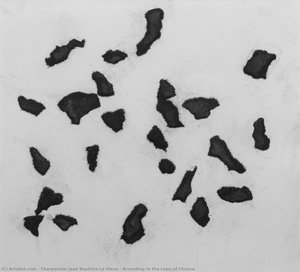
      Tate Modern, ЛондонTate Modern Лондон 5 Moustaches, Constellation According to the Laws of Chance, According to the Laws of Chance
      MoMA - Музеят на модерното изкуство, Ню ЙоркMoMA - Музеят на модерното изкуство Ню Йорк 2 Human Concretion, Птици в аквариума
      Musée d'Art Moderne et Contemporain de Strasbourg, StrasbourgMusée d'Art Moderne et Contemporain de Strasbourg Strasbourg 1 Cravates et tête ou Configuration au chef perdu
      Galleria Civica di Arte Moderna e Contemporanea Torino, ТориноGalleria Civica di Arte Moderna e Contemporanea Torino Торино 1 Sculpture de Silence, Corneille
      Ca' Pesaro - Международна галерия за модерно изкуство, ВенецияCa' Pesaro - Международна галерия за модерно изкуство Венеция 1 Alou with Talons
      Statens Museum for Kunst, КопенхагенStatens Museum for Kunst Копенхаген 1 Untitled (198)

      Десетилетие по десетилетие: най-значимите платна на Жан Арп

      1. 1910s
      2. 1920s
      3. 1930s
        Human Concretion (1935) на Жан Арп
        1 от 100

        Human Concretion

        Възраст 44 – 53 · MoMA - Музеят на модерното изкуство

        In the hauntingly beautiful photograph "Human Concretion," we are invited into a monochromatic dreamscape where the boundaries between the physical and the abstract dissolve. Captured in 1935, this…

      4. 1950s
      5. 1960s

      Вашите въпроси относно картините на Жан Арп, отговорени

      Коя е най-известната картина на Жан Арп?Прочетете отговора

      Human Concretion (1935), MoMA - Музеят на модерното изкуство, Ню Йорк. Следват Forest и Head with mustache (1926).

      На каква възраст е бил Жан Арп по време на създаването на Human Concretion?Прочетете отговора

      Жан Арп, роден в 1886, е на 49 години: Human Concretion е от 1935 г.

      С кои десет картини е най-известен Жан Арп?Прочетете отговора

      Human Concretion, Forest, Head with mustache, Meeting in the Egg (Rencontre dans l'oeuf), Untitled Project (for a rug or tapestry), Untitled Project, Human Concretion 2, Column of dream, Cut No. 10. Shadow Cloud и Nadir. Всяко платно в горната класация е придружено с годината на създаване и музея, в който се намира.

      Колко са известните картини на Жан Арп?Прочетете отговора

      В нашия каталог са включени 156 произведения на Жан Арп, датирани от 1914 до 1966.

      В кои музеи се съхраняват най-известните картини на Жан Арп?Прочетете отговора

      Предимно в Музеят на Израел (Йерусалим), Tate Modern (Лондон) и MoMA - Музеят на модерното изкуство (Ню Йорк); списъкът по-горе изброява всеки музей и неговите платна.

      В кои години Жан Арп е създал най-известните си шедьоври?Прочетете отговора

      В 1920s, който включва 6 от 100 произведения на тази страница, Head with mustache сред тях.

      Кои са първото и последното известни картини на Жан Арп?Прочетете отговора

      Най-старото платно тук е от Before my Birth (1914); най-новото е от The Sun Recircled (1966).

      Кои теми се повтарят най-често в картините на Жан Арп?Прочетете отговора

      Animals (6), Abstract sculpture (5) и Men (4), разпределени в 100 произведения на тази страница.

      Към коهoто художествено направление принадлежи Жан Арп?Прочетете отговора

      Dadaism, както показват картините на тази страница.

      Какво мога да видя от Жан Арп в Музеят на Израел?Прочетете отговора

      В Музеят на Израел, Йерусалим се съхраняват 5 от произведенията на тази страница, сред които са Meeting in the Egg (Rencontre dans l'oeuf), Untitled Project (for a rug or tapestry) и Untitled Project.

      Жан Арп: историята на художника

      Jean Arp: A Pioneer of Organic Abstraction

      • Early Life and Artistic Education
      • Dadaism and the Birth of Biomorphic Forms
      • Surrealist Visions and Sculptural Explorations
      • Recognition and Legacy

      Early Life and Artistic Education

      Hans Peter Wilhelm Arp, born September 16, 1886, in Strasbourg, Germany—now Alsace, France—was a German-French sculptor, painter, and poet whose artistic vision was profoundly shaped by his dual heritage. His parents, a French mother and a German father, instilled within him an inherent curiosity about diverse cultures and perspectives, fostering a lifelong fascination with the interplay between tradition and innovation. From a young age, Arp demonstrated exceptional talent for drawing and painting, initially honing his skills at the École des Arts et Métiers in Strasbourg—a school renowned for its progressive approach to art education—before furthering his studies at Weimar Kunstschule and subsequently at the Académie Julian in Paris. These formative experiences exposed him to influential artistic movements of the time, including Impressionism and Cubism, laying the groundwork for his distinctive style. Notably, he befriended Carl Arp, his uncle, a landscape painter who encouraged him to pursue his artistic ambitions with unwavering determination. This familial connection would prove instrumental in nurturing his creative spirit throughout his life.

      Dadaism and the Birth of Biomorphic Forms

      The outbreak of World War I irrevocably altered Arp’s trajectory, propelling him toward Dada—a revolutionary artistic movement born from disillusionment with the senseless violence and perceived moral failings of European society. Rejecting rational thought and established conventions, Dada artists embraced chaos as a response to existential dread. Arp joined forces with fellow Dadaists in Zurich, Switzerland, including Hugo Ball, Tristan Tzara, Marcel Janco, and Alfred Grünwald—a collective united by their desire to dismantle artistic dogma and challenge societal norms. During this period, he experimented with chance operations—a technique rooted in Dada’s rejection of conscious control—creating “chance collages” by dropping paper fragments onto a surface and adhering them where they landed. Simultaneously, Arp embarked on an exploration of biomorphic forms—abstract shapes resembling organic life—which would become a defining characteristic of his oeuvre. Influenced by the writings of Henri Bergson and inspired by the burgeoning field of biology, he sought to capture the essence of nature’s dynamism and complexity, rejecting geometric precision in favor of fluid curves and undulating surfaces.

      Surrealist Visions and Sculptural Explorations

      As Dada waned, Arp transitioned toward Surrealism—a movement championed by André Breton that delved into the realm of dreams and the subconscious. Embracing automatism—the spontaneous creation of images without conscious intention—he sought to liberate artistic expression from rational constraints. He collaborated closely with Sophie Taeuber-Arp, whom he married in 1922, fostering a symbiotic relationship that fueled their creative endeavors. Together, they produced groundbreaking sculptural installations and explored innovative techniques for combining art and architecture. Arp’s sculptural output expanded beyond biomorphic forms, incorporating materials such as marble, bronze, and glass—each medium serving to amplify his artistic vision. His monumental sculptures—particularly *Le Soleil recerclé* (“The Sun Surrounded”), commissioned for the Harvard Graduate Center—became emblems of Surrealist aesthetics and solidified Arp’s reputation as a visionary artist.

      Recognition and Legacy

      Jean Arp received increasing acclaim throughout his career, culminating in the Grand Prize for Sculpture at the Venice Biennale in 1954—a testament to his enduring influence on the art world. Major retrospectives organized by the Museum of Modern Art in New York (1958) and the Musée National d’Art Moderne in Paris (1962) further cemented his legacy as one of the foremost sculptors of his generation. His work continues to inspire artists today, demonstrating a remarkable ability to transcend stylistic boundaries and engage viewers on an emotional level. Arp's pioneering exploration of organic abstraction—his embrace of chance operations—and his unwavering commitment to capturing the beauty and mystery of nature—remain central to his artistic legacy.

      Всички 156 произведения на Жан Арп →