Ателие — Безплатна доставка по целия свят — Срок на доставка: 2–6 седмици
      Симоне Мартини, 1284 – 1344

      The 100 Most Famous Симоне Мартини Paintings, Ranked

      The best-loved painting by Симоне Мартини is Благовещението и двама светили (1333), which hangs in the Галерия Уфици, Флоренция. Благовестието и двама свети (детайл) (1333) and Анотация с Дева Мария и Свети Марта и Свети Ансанус (1333) come next among the canvases readers know best. Our catalogue holds 151 works by Симоне Мартини: here are the 100 most famous, each with its year, its museum and what makes it memorable.

      Класирани според нашия коефициент за популярност, който съчетава търсенията, посещенията и поръчките за всяко произведение. Обновено Октомври 2026. Each painting on this page can be ordered as an oil reproduction painted by hand on linen canvas, or as a fine art print, made to the size you choose.

      Портрет на Симоне Мартини
      Симоне Мартини · 1284 – 1344
      Роден · починал
      1284 – 1344, Сиена
      Движение
      Интернационална готика
      Работи в нашия каталог
      151
      Най-известни
      Благовещението и двама светили (1333)
      Най-много творби в
      Палацо Публико

      Top 10 Симоне Мартини paintings: the canvases everyone knows

      Благовещението и двама светили (1333) на Симоне Мартини
      1

      Благовещението и двама светили

      1333 · Акрил върху платно · Галерия Уфици, Флоренция

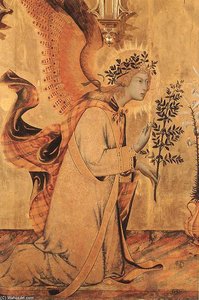
      В осветените зали на галерия Уфици съществува момент, замръзнал във времето – божествено преплитане на небето и земята, уловено от майсторските ръце на Симоне Мартини и Липо Мемо. Благовещението със свети Маргарита и свети Ансанус, нарисувано през 1333 г., не е просто религиозен панел; то е зашеметяваща симфония от сиенска готическа елегантност. Когато човек погледне това шедьовър, окото веднага се привлича от сияйната златна задна пласт – луминесцентно пространство, което…

      Благовестието и двама свети (детайл) (1333) на Симоне Мартини
      2

      Благовестието и двама свети (детайл)

      1333 · Акрил върху платно · Галерия Уфици, Флоренция

      Визия за благодатта: Дешифриране на Благовестието на Симоне Мартини Твореното през 1333 г. произведение на Симоне Мартини, «Благовестието и двама свети (детайл)», е много повече от просто религиозен сюжет; то е блестящо свидетелство за елегантността и изтънченост на международния готически стил. Разположена в престижната галерия Уфици във Флоренция, тази темпера на панел улавя един ключов момент в историята на изкуството, пресичащ границата между византийската традиция и зародилия се Ренесанс. Разкриване…

      Анотация с Дева Мария и Свети Марта и Свети Ансанус (1333) на Симоне Мартини
      3

      Анотация с Дева Мария и Свети Марта и Свети Ансанус

      1333 · Темпера върху дървена основа · Галерия Уфици, Флоренция

      The painting "Annunciation with St. Margaret and St. Ansanus" by Simone Martini, a masterpiece housed within the Uffizi Gallery in Florence, is more than just a depiction of a biblical event; it’s an immersive experience—a testament to the burgeoning Renaissance spirit filtered through the exquisite lens of Sienese Gothic artistry. Completed around 1333, this triptych immediately captivates with its luminous colors, intricate details, and profound sense of spiritual serenity. It's…

      St Clare and St Elizabeth of Hungary (1317) на Симоне Мартини
      4

      St Clare and St Elizabeth of Hungary

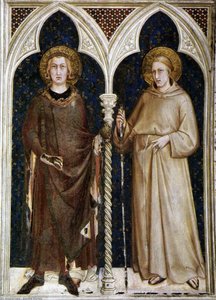
      1317 · Fresco

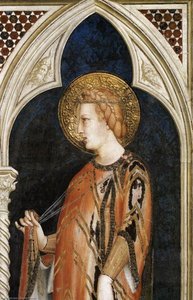
      This breathtaking fresco, measuring 215 x 185 cm, offers an unparalleled glimpse into the artistic genius of Simone Martini, a pivotal figure bridging the medieval and Renaissance periods. Painted in 1317, “St Clare and St Elizabeth of Hungary” is more than just a religious depiction; it’s a testament to the Sienese Master's profound understanding of elegance, grace, and the subtle power of visual storytelling. The scene captures two iconic saints…

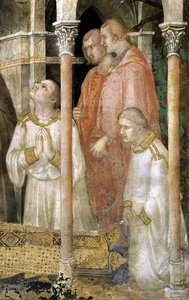
      Алтарь на Св. Луиса от Тулуза (детайл) (1317) на Симоне Мартини
      5

      Алтарь на Св. Луиса от Тулуза (детайл)

      1317 · Темпера върху дървена основа · Museo di Capodimonte, Неапол

      „Алтарь на Св. Луиса от Тулуза (детайл)“ служи като зашеметяващ прозорец към сърцето на средновековната преданост, улавяйки самата същност на сиенския готически стил. Създадено около 1317 г. от несравнимия Симоне Мартини, това произведение е много повече от обикновена религиозна реликвия; то е майсторски клас по дворен еленгант и духовна интимност. В този деликатен детайл ставаме свидетели на сцена, пропиъта с дълбока благодат, където границите между земното и божественото изглеждат размити…

      Девата при Благовещението (1333) на Симоне Мартини
      6

      Девата при Благовещението

      1333 · Акрил върху платно · Конѝнликъй Музѝей на Шъоне Кунстън Антьвъпър, Антверпен

      Визия на Скорб и Благодар: „Девата при Анонцията“ от Симеон Матиня Това интимно посвещено живописно произведение от Симеон Матиня, създадено през 1333 г., предлага пронизителен поглед към емоционалния свят на късната Средновековна епоха. С размери само 23 x 14 см, неговият малък размер крие дълбоката духовна тежест, която носи – свидетелство за майсторството на Матиня в преместването на сложни емоции в изящни композиции. Стил и Исторически Контекст Симеон Матиня беше…

      Saint Martin Renounces his Weapons (detail) (1312) на Симоне Мартини
      7

      Saint Martin Renounces his Weapons (detail)

      1312 · Oil On Canvas

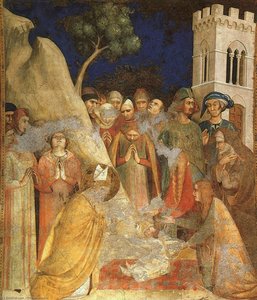
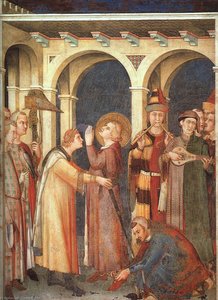
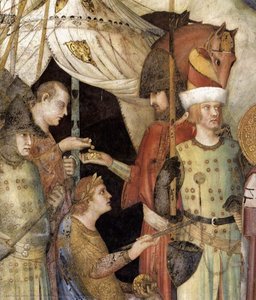
      This exquisite detail from Simone Martini's monumental panel, painted in 1312, offers a profound glimpse into the heart of medieval piety and artistic innovation. Measuring 68 x 56 cm, this work transcends mere representation; it’s an embodiment of spiritual transformation, meticulously rendered with the hallmark elegance that defined Martini’s career. The scene depicts Saint Martin, a pivotal figure in Christian tradition, as he dramatically relinquishes his military possessions – a…

      Saint Martin Renounces his Weapons (detail) (1312) на Симоне Мартини
      8

      Saint Martin Renounces his Weapons (detail)

      1312 · Oil On Canvas

      This exquisite detail from Simone Martini’s “Saint Martin Renounces His Weapons,” painted in 1312, offers a profound glimpse into the heart of Sienese artistic achievement during the early 14th century. More than just a depiction of a biblical narrative – the moment Saint Martin distributes his armor to a peasant – it is a carefully constructed tableau brimming with symbolic weight and technical mastery. Martini, a master of elegance and…

      Алтарна картина на Блажен Агостино Новоло (детайл) (1324) на Симоне Мартини
      9

      Алтарна картина на Блажен Агостино Новоло (детайл)

      1324 · Акрил върху платно · Pinacoteca Nazionale, Сиена

      Шедьовърът на Симоне Мартини: Прозорец към артистичната душа на Сиена Симоне Мартини, светило на сиенската школа на живописта, ни е подарил „Алтарният олтар на Блажен Агостино Новоло (детайл)“ – зашеметяващо свидетелство за неговото несравними умения и артистична визия. Тази темпера на дърво, дело от 132 дъб, с размери 65 x 67 см, се намира в момента в Pinacoteca Nazionale di Siena в Италия и капсулира самата същност на международния готически…

      Maestà (Madonna with Angels and Saints) (1315) на Симоне Мартини
      10

      Maestà (Madonna with Angels and Saints)

      1315 · Acrylic On Canvas · Палацо Публико, Сиена

      In the heart of Siena, within the hallowed halls of the Palazzo Pubblico, resides a masterpiece that transcends the boundaries of mere paint and plaster. Simone Martini’s Maestà is not simply a fresco; it is a breathtaking window into the divine, a monumental achievement of the 14th century that continues to stir the souls of all who behold it. As one gazes upon this vast composition, they are immediately swept…

      More Симоне Мартини canvases, 11 to 100

      Madonna and Child (1325) на Симоне Мартини
      #12

      Madonna and Child

      1325

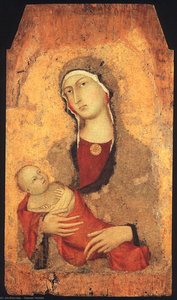
      The air within this small, intimate space feels heavy with a quiet, holy stillness. Within a warm, burnished gold background that suggests a divine, eternal realm, the Virgin…

      Bring this light home →
      Maestà (detail) (1315) на Симоне Мартини
      #14

      Maestà (detail)

      1315 · Палацо Публико

      To gaze upon the detail of Simone Martini’s Maestà is to step through a portal into the golden age of Sienese Gothic art. Created around 1315, this fresco…

      Девата и Младенчето (1325) на Симоне Мартини
      #15

      Девата и Младенчето

      1325 · Isabella Stewart Gardner Museum

      Приближете се, за да усетите тихата интимност на тази панелна живопис. Тук Дева Мария държи Младенчето Христос на фона от текстурирано злато, повърхност, която сякаш излъчва собствена мека,…

      Bring this light home →
      Maestà (detail) (1315) на Симоне Мартини
      #16

      Maestà (detail)

      1315 · Палацо Публико

      The year is 1315, and within the vibrant heart of Siena, Italy, Simone Martini was meticulously crafting a masterpiece that would forever alter the course of European art.…

      Bring this light home →
      Благословенството на Агастин Новело (1324) на Симоне Мартини
      #18

      Благословенството на Агастин Новело

      1324 · Pinacoteca Nazionale

      Елегантна Световност и Духовно Възхищение: Алтарписът на Блажен Агастин Новело от Симеон Матиня Симеон Матиня е ключова фигура в прехода от средновековното към Ренесансовия изкуствен свят. Той не…

      Order this canvas →
      Virgin and Child with Saints (1320) на Симоне Мартини
      #19

      Virgin and Child with Saints

      1320 · Isabella Stewart Gardner Museum

      The gold leaf catches the light, a flat and shimmering sky that holds no clouds. Within this luminous expanse, the Virgin Mary sits in the central panel, her…

      Order this canvas →
      Алтарь на Св. Луи из Тулуза (1317) на Симоне Мартини
      #20

      Алтарь на Св. Луи из Тулуза

      1317 · Museo di Capodimonte

      В тихите зали на Museo Nazionale di Capodimonte в Неапол се намира картина, която надхвърля простото изображение; тя е потапяне в сърцето на благочестието, изкуството и двураската елегантност…

      Have it painted by hand →
      Burial of St Martin (detail) (1312) на Симоне Мартини
      #21

      Burial of St Martin (detail)

      1312

      A Window into Fourteenth-Century Devotion Simone Martini’s *Burial of St. Martin (detail)* isn't merely a fragment of a larger fresco; it is a poignant distillation of faith, grief,…

      Maestà (detail of the medallions) (1315) на Симоне Мартини
      #24

      Maestà (detail of the medallions)

      1315 · Палацо Публико

      To gaze upon the Maestà (detail of the medallions) is to step through a portal into the golden age of Siena. Created around 1315 by the incomparable Simone…

      Saint Andrew (1326) на Симоне Мартини
      #26

      Saint Andrew

      1326 · Метрополитън Музей на изкуствата

      Saint Andrew Simone Martini’s Saint Andrew is more than just a portrait; it's a window into the artistic fervor of Siena in 1326, embodying the humanist spirit burgeoning…

      Order this canvas →
      Маеста (детайл) (1315) на Симоне Мартини
      #27

      Маеста (детайл)

      1315 · Палацо Публико

      Ефирното сияние на сиенската елегантност Да погледнете този детайл от Маеста на Симоне Мартини означава да преминете през проклинащ прозорец към духовното сърце на четирсесетолетска Сиена. Картината не…

      Маета (1315) на Симоне Мартини
      #29

      Маета

      1315 · Палацо Публико

      Синема Мартини и Делото на Магдалена – Символ на Благодатта и Елегантството на Средата на XIV Век Маетата на Синема Мартини е едно от най-значимите произведения на изкуството…

      Order this canvas →
      Guidoriccio da Fogliano (detail) (1328) на Симоне Мартини
      #31

      Guidoriccio da Fogliano (detail)

      1328 · Палацо Публико

      To gaze upon this exquisite detail from Simone Martini’s Guidoriccio da Fogliano is to step through a portal into the golden age of Sienese artistry. Painted around 1328,…

      Polyptych (detail) (1320) на Симоне Мартини
      #32

      Polyptych (detail)

      1320 · Фицвилям Колеж

      In the delicate fragment known as Polyptych (detail), we are invited to witness a profound moment of spiritual intimacy captured by the master Simone Martini. This captivating glimpse…

      Bring this light home →
      Maestà (detail) (1315) на Симоне Мартини
      #33

      Maestà (detail)

      1315 · Палацо Публико

      A Glimpse of Divine Majesty: Simone Martini’s *Maestà* (Detail) Subject & Composition: This exquisite detail originates from a larger altarpiece, the *Maestà*, commissioned for the Palazzo Pubblico in…

      Have it painted by hand →
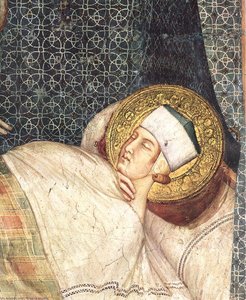
      The Dream of St. Martin (detail) (1312) на Симоне Мартини
      #35

      The Dream of St. Martin (detail)

      1312

      Discover this stunning fresco detail at WahooArt and explore high-quality reproductions to bring Simone Martini’s visionary artistry into your home.

      Св. Иван Евангелист (1330) на Симоне Мартини
      #37

      Св. Иван Евангелист

      1330 · Barber Institute of Fine Arts

      „Св. Иван Евангелист“ на Симоне Матини, изписан около 1330 г., не е просто изображение на библейска фигура; то е извънгадна дестилация от сиенската придворна елегантност и дълбока духовна…

      Have it painted by hand →
      Window (1312) на Симоне Мартини
      #40

      Window

      1312

      Simone Martini’s Window: A Fragment of Siena’s Gothic Soul The painting “Window” by Simone Martini—a masterpiece executed in 1312—isn't merely an image; it’s a portal into the artistic…

      Order this canvas →
      Boston Polyptych (1321) на Симоне Мартини
      #43

      Boston Polyptych

      1321 · Isabella Stewart Gardner Museum

      To stand before the Boston Polyptych is to step through a gilded portal into the spiritual heart of fourteenth-century Siena. Completed in 1321 by the incomparable master Simone…

      Have it painted by hand →
      Алтарен олтар на Блажени Агостино Нововело (детайл) (1324) на Симоне Мартини
      #44

      Алтарен олтар на Блажени Агостино Нововело (детайл)

      1324 · Pinacoteca Nazionale

      Художественият почерк на Симоне Матиня се крие в неговото майсторско владеене на техниката темпера върху дърво — метод, който изискваше неимоверно търпение, прецизност и безпрецедентно разбиране за цвета…

      Have it painted by hand →
      Благословението на Спасителя (тимпаниум) и Мадонната на смирението (лунет) (1341) на Симоне Мартини
      #45

      Благословението на Спасителя (тимпаниум) и Мадонната на смирението (лунет)

      1341 · Notre-Dame des Doms

      Визия на Божествена Благодар: „Благословение на Спасителя“ на Симоне Матиня „Благословение на Спасителя (Тимпаниум) и Богородица на Смирението (Лунет)“, изписано от Симоне Матиня през 1341 г., стои като…

      Order this canvas →
      Saint Andrew (?) на Симоне Мартини
      #46

      Saint Andrew (?)

      Музей на изкуствата във Бостън

      The golden light of a celestial realm radiates from behind an elderly man, his presence fixed in a moment of quiet, holy contemplation. This figure, identified as Saint…

      Have it painted by hand →
      Meditation (detail) (1312) на Симоне Мартини
      #47

      Meditation (detail)

      1312

      Simone Martini's "Meditation," meticulously rendered in 1312, offers a poignant glimpse into the devotional practices and aesthetic sensibilities of Siena during the early 14th century. This intimate detail…

      Order this canvas →
      St Catherine and St Lucy (1320) на Симоне Мартини
      #49

      St Catherine and St Lucy

      1320 · Berenson Collection

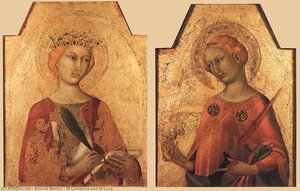
      Simone Martini's “St Catherine and St Lucy,” painted circa 1320-25 in Siena, Italy, stands as a cornerstone of International Gothic art—a style characterized by exquisite detail, luminous color…

      Bring this light home →
      Maestà (detail of the medallions) (1315) на Симоне Мартини
      #50

      Maestà (detail of the medallions)

      1315 · Палацо Публико

      A Window into Medieval Devotion: Exploring Simone Martini’s Maestà The fresco “Maestà” by Simone Martini, completed around 1315 in Siena, Italy, transcends mere visual representation; it embodies the…

      Crucifix (1321) на Симоне Мартини
      #51

      Crucifix

      1321

      This arresting depiction of the crucifixion, attributed to the masterful hand of Simone Martini, transcends mere religious iconography; it is a profound meditation on faith, suffering, and the…

      Have it painted by hand →
      Saint Judas Thaddeus (1315) на Симоне Мартини
      #53

      Saint Judas Thaddeus

      1315 · Национална галерия на изкуствата

      The apostle appears in a bust-length portrait, his head tilted slightly as he gazates beyond the frame. He holds a red book, likely representing scripture, against a flat,…

      Order this canvas →
      Маета (1315) на Симоне Мартини
      #54

      Маета

      1315 · Палацо Публико

      Синема Мартини и Детайл от Магдалената Магдалената на Синема Мартини е произведение на изкуството, което се превърна в символ на средновековната европейска култура и религия. Създаден през 1315…

      Bring this light home →
      Christ on the Cross (1340) на Симоне Мартини
      #56

      Christ on the Cross

      1340 · Harvard Art Museums

      The figure hangs against a flat expanse of gold leaf. This light does not come from a sun or a candle; it radiates from the background itself, an…

      Order this canvas →
      Saint James Major (1315) на Симоне Мартини
      #59

      Saint James Major

      1315 · Национална галерия на изкуствата

      Step closer to observe the quiet dignity of this figure. This small panel, painted around 1315 to 1320, presents Saint James Major not as a distant deity, but…

      Bring this light home →
      A Saint Holding a Book (1337) на Симоне Мартини
      #62

      A Saint Holding a Book

      1337 · Бирмингамски музей и художествена галерия

      A single figure, a saint, occupies an octagonal frame, captured from the waist up. He turns slightly to his left, eyes cast downward in contemplation. A luminous gold…

      Have it painted by hand →
      St. Luke (1330) на Симоне Мартини
      #63

      St. Luke

      1330 · Музей Джейн Пол Гети

      The figure of Luke the Evangelist appears in a moment of quiet study, his gaze directed downward toward an open manuscript. He wears a red tunic beneath a…

      Order this canvas →
      Saint Matthew (1315) на Симоне Мартини
      #64

      Saint Matthew

      1315 · Национална галерия на изкуствата

      A bust-length portrait of Saint Matthew occupies the center of this wood panel. The figure is an older man with wavy hair and a grey beard. He wears…

      Have it painted by hand →
      Polyptych of Santa Caterina (detail) (1319) на Симоне Мартини
      #68

      Polyptych of Santa Caterina (detail)

      1319 · Museo Nazionale di San Matteo

      A Window into Siena’s Spiritual Heart: Exploring Simone Martini's Polyptych of Santa Caterina Simone Martini’s *Polyptych of Santa Caterina*, completed in 1319, stands as a testament to the…

      Order this canvas →
      Saint Ansanus (1326) на Симоне Мартини
      #69

      Saint Ansanus

      1326 · Метрополитън Музей на изкуствата

      A vertical, bust-length portrait depicts Saint Ansanus against a textured gold leaf background. The subject possesses a pale complexion, large eyes, and wavy reddish-blonde hair. A circular golden…

      Have it painted by hand →
      Saint Simon (1315) на Симоне Мартини
      #70

      Saint Simon

      1315 · Национална галерия на изкуствата

      A waist-up portrait of Saint Simon occupies the center of this wood panel painting. The figure possesses short, wavy brown hair and a well-groomed beard. His gaze is…

      Bring this light home →
      Madonna of Mercyercy на Симоне Мартини
      #72

      Madonna of Mercyercy

      In the heart of the Sienese Golden Age, around 1305, Simone Martini breathed life into a masterpiece that would become an enduring icon of spiritual tenderness: the Madonna…

      Bring this light home →
      Consecration of the Chapel (1317) на Симоне Мартини
      #74

      Consecration of the Chapel

      1317

      In the quiet, hallowed corridors of the Basilica di San Domenico in Siena, there exists a fragment of time captured in pigment and plaster—a moment where the earthly…

      Saint Bartholomew (1317) на Симоне Мартини
      #76

      Saint Bartholomew

      1317

      A Saintly Portrait: Unveiling Simone Martini’s *Saint Bartholomew* This captivating panel depicts *Saint Bartholomew*, a work originating from the workshop of the celebrated Sienese artist Simone Martini in…

      Bring this light home →
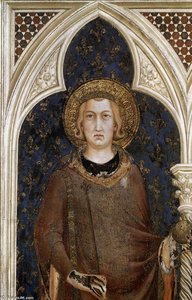
      St Ladislaus, King of Hungary (1326) на Симоне Мартини
      #77

      St Ladislaus, King of Hungary

      1326 · Museo della Consolazione

      A Regal Vision: Simone Martini’s St. Ladislaus This exquisite panel painting by Simone Martini, created in 1326, presents a captivating depiction of St. Ladislaus, King of Hungary. Measuring…

      Bring this light home →
      St Anthony of Padua and St Francis (1317) на Симоне Мартини
      #80

      St Anthony of Padua and St Francis

      1317

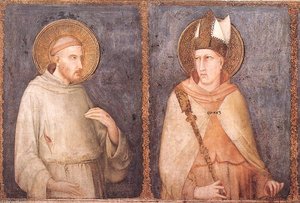
      In the serene fresco St Anthony of Padua and St Francis, created in 1317, two men stand side by side within a composition framed by two arches. The…

      St. Catherine of Alexandria (1322) на Симоне Мартини
      #81

      St. Catherine of Alexandria

      1322 · Национална галерия на Канада

      The Saint Catherine of Alexandria Polyptych emerges from the shadows of the fourteenth century, a work that carries the name Polyptych of Santa Caterina. In this composition, Simone…

      Have it painted by hand →
      Meditation (scene 6) (1312) на Симоне Мартини
      #83

      Meditation (scene 6)

      1312

      Painted circa 1312, “Meditation (Scene 6)” emerges from Siena during its golden age – a period marked by economic prosperity fueled by wool trade and a fervent devotion…

      Order this canvas →
      St. Martin is Knighted (detail) (8) (1312) на Симоне Мартини
      #85

      St. Martin is Knighted (detail) (8)

      1312

      In the delicate detail of St. Martin is Knighted, we are transported to the year 1312, stepping through a portal into the refined atmosphere of the Sienese school.…

      Window (1312) на Симоне Мартини
      #88

      Window

      1312

      The artwork, titled Window, is a stained glass window dating to 1312. The piece features a central painting of Jesus Christ standing on a cross. This figure is…

      Polyptych (detail) (1320) на Симоне Мартини
      #89

      Polyptych (detail)

      1320 · Фицвилям Колеж

      The Luminous Grace of a Sienese Vision In the heart of the fourteenth century, amidst the golden glow of Siena, Simone Martini breathed life into a celestial realm…

      Order this canvas →
      Miraculous Mass (detail) (1312) на Симоне Мартини
      #90

      Miraculous Mass (detail)

      1312

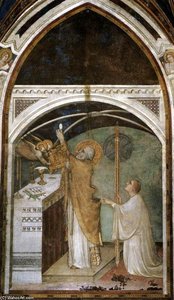
      In the delicate detail of Simone Martini’s Miraculous Mass, a profound moment of spiritual encounter is captured through the masterful use of line and color. This fresco detail,…

      Miraculous Mass (scene 7) (1312) на Симоне Мартини
      #92

      Miraculous Mass (scene 7)

      1312

      In the middle level of the San Martino Chapel within the Lower Church of San Francesco in Assisi, the fresco Miraculous Mass (scene 7) presents a religious narrative…

      Miracle of Fire (scene 8) (1312) на Симоне Мартини
      #93

      Miracle of Fire (scene 8)

      1312

      In the hallowed stillness of the Basilica di San Francesco in Assisi, there exists a window into the profound spiritual landscape of the fourteenth century. Simone Martini’s “Miracle…

      Bring this light home →
      Guidoriccio da Fogliano (detail) (1328) на Симоне Мартини
      #95

      Guidoriccio da Fogliano (detail)

      1328 · Палацо Публико

      The fragment presented here—a meticulously rendered detail from Simone Martini's "Guidoriccio da Fogliano"—offers a captivating window into the world of 14th-century Siena. More than just a portrait, this…

      Bring this light home →
      Blessing Christ (1317) на Симоне Мартини
      #96

      Blessing Christ

      1317 · Museo di Capodimonte

      Simone Martini's "Blessing Christ," painted in 1317, is more than simply a depiction of a religious scene; it’s a profound expression of the burgeoning elegance and devotional fervor…

      Order this canvas →
      St Mary Magdalen and St Catherine of Alexandria (1317) на Симоне Мартини
      #97

      St Mary Magdalen and St Catherine of Alexandria

      1317

      The fresco St Mary Magdalen and St Catherine of Alexandria, attributed to Simone Martini and painted around 1317, serves as a profound meditation on piety and righteousness. Within…

      St. Martin is Knighted (detail) (1312) на Симоне Мартини
      #100

      St. Martin is Knighted (detail)

      1312

      In the delicate brushstrokes of Simone Martini’s St. Martin is Knighted, we find more than a mere historical record; we encounter a window into the soul of fourteenth-century…

      Симоне Мартини's canvases, period by period

      What Симоне Мартини painted most

      The four subjects that return most often on these canvases, each with its best-loved example.

      Where Симоне Мартини's canvases hang

      8 музея, които притежават най-голям брой от картините на тази страница.

      Музеи Град Творения на Симоне Мартини Картини от този списък
      Палацо Публико, СиенаПалацо Публико Сиена 17 Maestà (Madonna with Angels and Saints), Maestà (detail), Maestà (detail)
      Pinacoteca Nazionale, СиенаPinacoteca Nazionale Сиена 9 Алтарна картина на Блажен Агостино Новоло (детайл), Благословенството на Агастин Новело, Алтарен олтар на Блажени Агостино Нововело (детайл)
      Галерия Уфици, ФлоренцияГалерия Уфици Флоренция 5 Благовещението и двама светили, Благовестието и двама свети (детайл), Анотация с Дева Мария и Свети Марта и Свети Ансанус
      Национална галерия на изкуствата, УокшънтънНационална галерия на изкуствата Уокшънтън 5 Saint Judas Thaddeus, Saint James Major, Saint Matthew
      Museo di Capodimonte, НеаполMuseo di Capodimonte Неапол 4 Алтарь на Св. Луиса от Тулуза (детайл), Алтарь на Св. Луи из Тулуза, Altar of St Louis of Toulouse (without predella)
      Isabella Stewart Gardner Museum, БостънIsabella Stewart Gardner Museum Бостън 4 Девата и Младенчето, Virgin and Child with Saints, Boston Polyptych
      Метрополитън Музей на изкуствата, Ню ЙоркМетрополитън Музей на изкуствата Ню Йорк 4 Saint Andrew, Saint Ansanus
      Фицвилям Колеж, КембриджФицвилям Колеж Кембридж 3 Polyptych (detail), Polyptych (detail)

      Симоне Мартини's best-loved canvas of each decade

      1. 1310s
        St Clare and St Elizabeth of Hungary (1317) на Симоне Мартини
        Canvas 4 of 100

        St Clare and St Elizabeth of Hungary

        Възраст 26 – 35

        This breathtaking fresco, measuring 215 x 185 cm, offers an unparalleled glimpse into the artistic genius of Simone Martini, a pivotal figure bridging the medieval and Renaissance periods.…

      2. 1320s
        Алтарна картина на Блажен Агостино Новоло (детайл) (1324) на Симоне Мартини
        Ranked 9 of 100

        Алтарна картина на Блажен Агостино Новоло (детайл)

        Възраст 36 – 45 · Pinacoteca Nazionale

        Шедьовърът на Симоне Мартини: Прозорец към артистичната душа на Сиена Симоне Мартини, светило на сиенската школа на живописта, ни е подарил „Алтарният олтар на Блажен Агостино Новоло (детайл)“…

      3. 1330s
        Благовещението и двама светили (1333) на Симоне Мартини
        Canvas 1 of 100

        Благовещението и двама светили

        Възраст 46 – 55 · Галерия Уфици

        В осветените зали на галерия Уфици съществува момент, замръзнал във времето – божествено преплитане на небето и земята, уловено от майсторските ръце на Симоне Мартини и Липо Мемо.…

      4. 1340s
        Благословението на Спасителя (тимпаниум) и Мадонната на смирението (лунет) (1341) на Симоне Мартини
        45 of 100

        Благословението на Спасителя (тимпаниум) и Мадонната на смирението (лунет)

        Възраст 56 – 60 · Notre-Dame des Doms

        Визия на Божествена Благодар: „Благословение на Спасителя“ на Симоне Матиня „Благословение на Спасителя (Тимпаниум) и Богородица на Смирението (Лунет)“, изписано от Симоне Матиня през 1341 г., стои като…

      About Симоне Мартини's canvases: your questions answered

      What is the best-known painting by Симоне Мартини?Read the answer

      Благовещението и двама светили (1333), Галерия Уфици, Флоренция. Благовестието и двама свети (детайл) (1333) and Анотация с Дева Мария и Свети Марта и Свети Ансанус (1333) follow.

      What age was Симоне Мартини when Благовещението и двама светили was painted?Read the answer

      Симоне Мартини, born in 1284, was 49 years old: Благовещението и двама светили dates from 1333.

      What are the 10 most famous paintings by Симоне Мартини?Read the answer

      Благовещението и двама светили, Благовестието и двама свети (детайл), Анотация с Дева Мария и Свети Марта и Свети Ансанус, St Clare and St Elizabeth of Hungary, Алтарь на Св. Луиса от Тулуза (детайл), Девата при Благовещението, Saint Martin Renounces his Weapons (detail), Saint Martin Renounces his Weapons (detail), Алтарна картина на Блажен Агостино Новоло (детайл) и Maestà (Madonna with Angels and Saints). Each canvas in the ranking above comes with its year and its museum.

      How many works did Симоне Мартини paint in all?Read the answer

      151 works by Симоне Мартини are in our catalogue, dated 1311 to 1341.

      Where can I see Симоне Мартини's most famous canvases?Read the answer

      Mostly in Палацо Публико (Сиена), Pinacoteca Nazionale (Сиена) и Галерия Уфици (Флоренция); the list above names each museum and its canvases.

      When did Симоне Мартини paint the best-loved canvases?Read the answer

      In 1310s, which gave 52 of the 100 works on this page, St Clare and St Elizabeth of Hungary among them.

      Which are Симоне Мартини's earliest and latest famous canvases?Read the answer

      The earliest canvas here is Мадона в слава с музикални ангели (детайл) (1311); the latest is Благословението на Спасителя (тимпаниум) и Мадонната на смирението (лунет) (1341).

      What did Симоне Мартини paint most often?Read the answer

      Medieval art (43), Simone martini (27) и Religious iconography (16), across the 100 works on this page.

      Which medium did Симоне Мартини paint in most often?Read the answer

      Tempera On Panel, used in 25 of the 100 works on this page.

      Which movement is Симоне Мартини's painting part of?Read the answer

      Интернационална готика и Готика, as the canvases on this page show.

      Which Симоне Мартини canvases hang at the Палацо Публико?Read the answer

      The Палацо Публико, Сиена holds 12 of the works on this page, among them Maestà (Madonna with Angels and Saints), Maestà (detail) и Maestà (detail).

      Can I buy a reproduction of a Симоне Мартини canvas?Read the answer

      Yes. Every painting on this page can be ordered from its own page as an oil reproduction painted by hand, or as a fine art print, in the size you choose.

      Симоне Мартини: a life in paint

      The Life and Identity of Simone Martini

      Born in Siena, Italy, around 1284, Simone Martini lived a life that mirrored the shifting tides of his era. Known also as Simone di Martino, he was a central figure in the development of early Italian painting. His presence in the art world was felt from the heart of Tuscany to the papal courts of France, marking him as a man whose reach extended far beyond his birthplace. He was a painter who understood the language of his time, moving through the religious and civic centers of Europe with a steady, purposeful hand.

      His identity was deeply tied to the city of Siena, a place of commerce and deep devotion. This environment helped shape a man who could navigate both the sacred requirements of a church and the sophisticated tastes of a royal court. He was not a solitary figure working in isolation; his life was woven into the social and intellectual fabric of the fourteenth century. His connections even reached the famous poet Petrarch, suggesting a life spent among the thinkers and leaders of the age.

      The scope of his life can be understood through the various cities where he left his mark, including:

      • Siena, Italy
      • Naples, Italy
      • Orvieto, Italy
      • Assisi, Italy
      • Avignon, France

      Early Life, Family and Training

      Born in Siena, Italy, around 1284, Simone Martini grew up in a city where art was the language of both faith and civic pride. While the exact details of his childhood remain somewhat obscured by time, his path into the world of painting seems to have been guided by the hands of the masters. He was likely a pupil of Duccio di Buoninsegna, the leading artist of Siena, whose influence helped shape the early sensibilities of the young man who would eventually redefine the Sienese style.

      Family connections played a significant part in his life and professional circle. He was the brother of Donato, and his social and artistic ties were further strengthened through his marriage. In 1324, he wed Giovanna, the daughter of Memmo di Filippuccio. This union brought him into a close-knit network of creators, as his brother-in-law was the artist Lippo Memmi. These relationships likely provided more than just companionship; they offered a shared language of technique and a collaborative spirit that would characterize much of the artistic activity in Siena during this era.

      Artistic Activity in Siena and Tuscany

      By 1315, Simone Martini was already making his mark on the civic life of Siena. That year, he painted the Maestà fresco for the Palazzo Pubblico, the seat of the city's government. This work placed him at the center of Sienese public life, working within the halls where the city's leaders met. His presence in the region grew steadily as he moved between the city and its surrounding territories, establishing a reputation that would soon carry him far beyond the walls of Siena.

      His hands were busy with various commissions throughout the following decade. In 1319, he completed the Saint Catherine of Alexandria Polyptych in Pisa. As his career progressed, his reach extended to other Tuscan towns, including Orvieto, where he was active in 1320. These years were a period of constant movement and steady production, as he navigated the needs of different religious and civic patrons across the landscape.

      The work he produced during this time reflected a growing familiarity with the specific demands of his patrons. Around 1324, he was commissioned to paint the Blessed Agostino Novello Altarpiece. This period of his life was defined by this steady rhythm of travel and creation, as he moved through the hills and valleys of Tuscany, leaving behind a trail of painted surfaces that documented his presence in the region.

      Patrons, Workshop and Commissions

      Simone Martini’s career was shaped by the shifting centers of power across Italy and France. In his early years, he worked closely with the Government of the Nine in Siena, decorating the halls of the Palazzo Pubblico. This civic connection provided a steady foundation for his growing reputation. His reach eventually extended to the royal courts, such as when he was commissioned by the House of Anjou in Naples in 1317. These early roles allowed him to move between the religious and the political, finding work that required both spiritual depth and a sense of courtly grace.

      His reputation for elegance eventually brought him to the highest levels of European patronage. In 1336, he accepted a significant commission from Pope Benedict XII. This appointment led him to Avignon, where he was tasked with creating frescoes for the Papal Palace. Living in the heart of the papal court, he moved within an intellectual circle that included the poet Petrarch. This period of his life was marked by a transition from the local traditions of Tuscany to the sophisticated, international tastes of the French court.

      • Saint Louis of Toulouse Crowning His Brother Robert of Anjou, 1317
      • Maestà, 1315

      Artistic Style and Technique

      Simone Martini worked with a delicate sensibility that favored grace over the heavy, monumental forms found in Florence. He was an architect of elegance, focusing on the way a line could flow across a surface to create a sense of movement. His compositions often featured elongated figures and soft, decorative details that gave his work a courtly refinement. This aesthetic was shaped by the arrival of French influences through the Via Francigena, specifically the intricate patterns found in manuscript illumination and the fine textures of ivory carving. He did not simply adopt these foreign styles; he blended them with the traditions of Siena to create a visual language that felt both sophisticated and deeply spiritual.

      To achieve the luminous quality of his colors, Martini relied on the tempera technique. He used egg yolk as a binder for his pigments, a method that allowed for precise, fine brushwork and a lasting clarity. This technical precision was essential for the intricate ornamentation he favored. In his paintings, the interplay of light and color was used to convey emotion through subtle shifts in posture and gesture rather than through dramatic scale. His ability to balance these decorative elements with a sense of narrative clarity allowed him to depict complex religious scenes with a quiet, poetic intensity.

      Key Works and Masterpieces

      Martini’s hands were busy throughout his travels, leaving behind works that reflect the shifting needs of his patrons. In 1317, he worked on the Altar of St Louis of Toulouse, a piece that depicts the saint alongside his brother, Robert of Anjou. This work, now held in the Museo Nazionale di Capodimonte in Naples, captures a moment of familial and spiritual connection. His ability to handle complex narratives was evident in the Saint Catherine of Alexandria Polyptych, which he produced in 1319.

      As his reputation grew, so did the scale and intimacy of his subjects. In 1333, he painted the Annunciation with St. Margaret and St. Ansanus, a work currently housed in the Galleria degli Uffizi in Florence. This piece demonstrates his ability to balance religious devotion with a sense of courtly grace. Even in his later years, his brush remained steady. In 1342, he completed the Christ Discovered in the Temple, a painting that can be found in the Walker Art Gallery in Liverpool.

      Later Years and Death

      The later years of Martini's life were marked by a significant shift in geography and social circles. Around 1334 or 1335, he moved from the familiar landscapes of Tuscany to Avignon, France. This transition placed him in a center of European power, where he worked closely with the Papal court. His presence in Avignon allowed him to move within highly intellectual circles, forming a friendship with the humanist poet Petrarch. This connection between the visual arts and the burgeoning humanism of the era was a defining feature of his time in France.

      While in Avignon, his work continued to reflect the sophisticated tastes of his patrons. Some accounts suggest he even painted a portrait of Laura de Noves, the woman who served as Petrarch's lifelong muse, though that specific work has been lost to history. His time in the French court was a period of high-level engagement, far removed from the provincial life of his early training. He remained active in this cosmopolitan environment until his death in July 1344. He passed away in Avignon, leaving behind a body of work that had already begun to bridge the gap between different European traditions.

      Legacy and Enduring Influence

      Simone Martini helped bridge the gap between the medieval era and the Renaissance. His presence in the art world signaled a shift toward a new way of seeing, moving away from the heavy, monumental forms of the past. By bringing the Sienese style across the mountains, he helped Sienese painting penetrate French territory, allowing his specific aesthetic to take root in new lands. This movement helped spread the International Gothic style throughout Europe, influencing how artists across the continent approached line and decoration.

      The reach of his work extended far beyond his own lifetime. Generations of artists followed the paths he cleared, adopting the grace and refined detail that defined his hand. His ability to blend the spiritual with a certain courtly elegance left a mark on the development of European painting. Even as styles changed, the way he used color and silhouette remained a point of reference for those who came after him.

      Where to See the Works Today

      To encounter the physical presence of Martini's art, one must travel through the landscapes of Italy and beyond. In Siena, the Palazzo Pubblico holds the Maestà fresco, a work that has occupied its space since 1315. Seeing it in the seat of the city's government allows for a sense of the scale and civic importance his paintings once held. In Naples, the Museo di Capodimonte preserves the Altar of St Louis of Toulouse, a piece that reflects the artist's ability to handle complex religious narratives through color and form.

      His reach extended far beyond the borders of Tuscany. In Florence, the Galleria degli Uffizi contains the Annunciation with St. Margaret and St. Ansanus, created in 1333. This work provides a look at the delicate, flowing lines that defined his approach during his years of high activity. For those traveling to the United Kingdom, the Walker Art Gallery in Liverpool houses Christ Discovered in the Temple, a work from 1342 that shows his skill even in his later years.

      Всички 151 произведения на Симоне Мартини →