Ателие — Безплатна доставка по целия свят — Срок на доставка: 2–6 седмици
      Валентин Серов, 1865 – 1911

      100-те най-известни картини на Валентин Серов

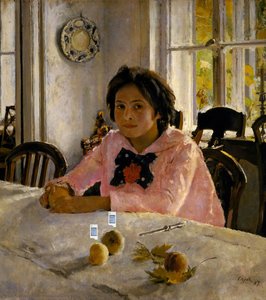
      Момиче с праскови (1887) е картината, с която Валентин Серов е най-известен; тя се намира в Третяковска галерея, Москва. Portrait of Anton Chekhov (1903) и Portrait of Henrietta Girshman (1907) допълват трио от най-обичаните платна. В нашия каталог са включени 289 произведения на Валентин Серов. Ето 100-те най-известни, с годината, музея и историята на всяко платно.

      Класирани според нашия коефициент за популярност, който съчетава търсенията, посещенията и поръчките за всяко произведение. Обновено Октомври 2026. Всяка картина на тази страница може да бъде поръчана като ръчно рисувано маслено репродукция върху ленен хол или като висококачествен арт принт, изработен според избран от Вас размер.

      Портрет на Валентин Серов
      Валентин Серов · 1865 – 1911
      Роден · починал
      1865 – 1911, Санкт Петербург
      Движение
      Realism
      Работи в нашия каталог
      289
      Най-известни
      Момиче с праскови (1887)
      Най-много творби в
      Национална художествена галерея в Армения

      Десетте най-обичани картини на Валентин Серов

      Момиче с праскови (1887) на Валентин Серов
      1

      Момиче с праскови

      1887 · Масло върху платно · Третяковска галерея, Москва

      В тихата светлина на 1887 г. Валентин Серов улавя един преходен момент от детството в своята картина, Момиче с праскови. Сцената е съсредоточена върху единадесетгодишната Вера Мамонтова, младо момиче, чието присъствие изпълва пространството с чувство на спокойствие. Тя седи на масата, с непоколебим и мислещ поглед, докато следобедното слънце пробива през стаята. Този портрет е нещо повече от просто прилика; той е прозорец към един специфичен, личен следобед, прекаран в…

      Portrait of Henrietta Girshman (1907) на Валентин Серов
      3

      Portrait of Henrietta Girshman

      1907 · Oil On Canvas

      Valentin Serov’s “Portrait of Henrietta Girshman,” painted in 1907, is more than just a likeness; it's a carefully constructed tableau that invites the viewer to step into a private moment. Executed with a masterful blend of realism and impressionistic techniques, the painting captures the quiet intimacy of a woman preparing herself – perhaps for an evening out, or simply lost in contemplation – within the luxurious confines of her dressing…

      Winter in Abramtsevo (1886) на Валентин Серов
      4

      Winter in Abramtsevo

      1886 · Oil On Canvas

      We are looking at Winter in Abramtsevo, a landscape painting by Valentin Serov. Created in 1886, this work captures a quiet moment within the Russian countryside. The original title of the piece is Зима в Абрамцево. It remains a significant example of Serov's early engagement with the natural world and the specific atmosphere of the Abramtsevo area.

      Portrait of Pavel Tretyakov (1899) на Валентин Серов
      8

      Portrait of Pavel Tretyakov

      1899 · Watercolor · Третяковска галерея, Москва

      Valentin Alexandrovich Serov presents Portrait of Pavel Tretyakov through a vertical composition that focuses on the subject from the waist up. Positioned slightly off-center, the middle-aged man is depicted with his arms crossed, a stance that establishes a sense of introspective stillness. The subject is set against a non-descript, washed background, which creates a shallow depth and pushes the figure toward the foreground.

      Валентин Серов: платна от 11 до 100 в класирането

      Най-често рисувано от Валентин Серов

      Четирите найчесто срещани сюжета на тези платна, всеки с най-обичания си пример.

      Къде са изложени картините на Валентин Серов

      6 музея, които притежават най-голям брой от картините на тази страница.

      Музеи Град Творения на Валентин Серов Картини от този списък
      Национална художествена галерея в Армения, ЕреванНационална художествена галерея в Армения Ереван 3 Wife of Kostroma manifacture's director, The Grand Eagle Cup, Portrait of Maria Akimova
      Третяковска галерея, МоскваТретяковска галерея Москва 11 Момиче с праскови, Portrait of Pavel Tretyakov
      Национален музей във Варшава, ВаршаваНационален музей във Варшава Варшава 4 Portrait of a woman, A Breton woman.
      National Art Museum of The Republic of Belarus, MinskNational Art Museum of The Republic of Belarus Minsk 1 Portrait of O. F. Tomara
      Kiev National Picture Gallery, KyivKiev National Picture Gallery Kyiv 1 Elizaveta Alexeevna Krasilshikova
      Finnish National Gallery, ХелзинкиFinnish National Gallery Хелзинки 1 Still Life

      Най-известното платно на Валентин Серов, десетилетие след десетилетие

      1. 1870s
        Still Life (1879) на Валентин Серов
        78 от 100

        Still Life

        Възраст 5 – 14 · Finnish National Gallery
      2. 1880s
        Момиче с праскови (1887) на Валентин Серов
        1 от 100

        Момиче с праскови

        Възраст 15 – 24 · Третяковска галерея

        В тихата светлина на 1887 г. Валентин Серов улавя един преходен момент от детството в своята картина, Момиче с праскови. Сцената е съсредоточена върху единадесетгодишната Вера Мамонтова, младо…

      3. 1890s
        Portrait of Pavel Tretyakov (1899) на Валентин Серов
        Класиран 8 от 100

        Portrait of Pavel Tretyakov

        Възраст 25 – 34 · Третяковска галерея

        Valentin Alexandrovich Serov presents Portrait of Pavel Tretyakov through a vertical composition that focuses on the subject from the waist up. Positioned slightly off-center, the middle-aged man is…

      4. 1900s
        Portrait of Anton Chekhov (1903) на Валентин Серов
        2 от 100

        Portrait of Anton Chekhov

        Възраст 35 – 44

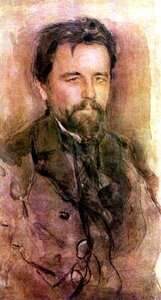
        is a work by the Russian artist Valentin Serov. Executed in 1903, the painting presents a focused study of the subject, a man characterized by a prominent beard.…

      5. 1910s
        Naked woman (1910) на Валентин Серов
        Класиран 41 от 100

        Naked woman

        Възраст 45 – 46

      Картините на Валентин Серов, въпрос по въпрос

      С кое платно е най-известен Валентин Серов?Прочетете отговора

      Момиче с праскови (1887), Третяковска галерея, Москва. Следват Portrait of Anton Chekhov (1903) и Portrait of Henrietta Girshman (1907).

      Момиче с праскови: на каква възраст беше Валентин Серов, когато е нарисувана?Прочетете отговора

      Валентин Серов, роден в 1865, е на 22 години: Момиче с праскови е от 1887 г.

      Кои са десетте най-известни картини на Валентин Серов?Прочетете отговора

      Момиче с праскови, Portrait of Anton Chekhov, Portrait of Henrietta Girshman, Winter in Abramtsevo, George the Victorious, Autumn evening. Domotkanovo, Bathing a Horse, Portrait of Pavel Tretyakov, Self-Portrait и Portrait of the Artist Pavel Tchistyakov. Всяко платно в горната класация е придружено с годината на създаване и музея, в който се намира.

      Колко картини е създал Валентин Серов?Прочетете отговора

      В нашия каталог са включени 289 произведения на Валентин Серов, датирани от 1879 до 1911.

      Къде се намират най-известните платна на Валентин Серов днес?Прочетете отговора

      Предимно в Национална художествена галерея в Армения (Ереван), Третяковска галерея (Москва) и Национален музей във Варшава (Варшава); списъкът по-горе изброява всеки музей и неговите платна.

      Кога Валентин Серов е създал най-известните си картини?Прочетете отговора

      В 1900s, който включва 35 от 100 произведения на тази страница, Portrait of Anton Chekhov сред тях.

      Кое е най-ранното и кое е най-късното платно на известния Валентин Серов?Прочетете отговора

      Най-старото платно тук е от Still Life (1879); най-новото е от Portrait of N.P. Lamanova (1911).

      Кои са най-често изобразяваните сюжети на Валентин Серов?Прочетете отговора

      Famous people (50), Portraits (49) и Men (24), разпределени в 100 произведения на тази страница.

      Коя техника е най-представена в картините на Валентин Серов?Прочетете отговора

      Oil On Canvas, използван в 5 от 100 произведения на тази страница.

      С кое художествено направление е свързан(а) Валентин Серов?Прочетете отговора

      Realism и Impressionism, както показват картините на тази страница.

      Кои картини на Валентин Серов се съхраняват в Национална художествена галерея в Армения?Прочетете отговора

      В Национална художествена галерея в Армения, Ереван се съхраняват 3 от произведенията на тази страница, сред които са Wife of Kostroma manifacture's director, The Grand Eagle Cup и Portrait of Maria Akimova.

      Къде мога да купя репродукция от картина на Валентин Серов?Прочетете отговора

      Да. Всяка картина на тази страница може да бъде поръчана от нейната собствена страница като ръчно рисувано маслено репродукция или като висококачествен арт-принт в избран от Вас размер.

      Запознайте се с художника: Валентин Серов

      A Life Immersed in Art and Aristocracy

      Valentin Alexandrovich Serov, born into a world already resonating with artistic brilliance on January 19, 1865, in Saint Petersburg, was destined to become one of Russia’s most celebrated portraitists. His lineage itself spoke volumes – the son of composer Alexander Serov and Valentina Bergman, also a gifted musician, young Valentin grew up enveloped by creativity. This nurturing environment wasn't merely about exposure; it instilled within him a deep appreciation for harmony, form, and emotional expression—qualities that would profoundly shape his artistic vision. From an early age, he was encouraged to explore his talents, receiving initial instruction in Paris and Moscow under the watchful eye of Ilya Repin, a master of realist painting. This foundational training emphasized observation, meticulous detail, and a commitment to capturing the essence of human character. Later studies at the St. Petersburg Academy of Arts with Pavel Chistyakov further honed his technical skills, grounding him in classical principles while simultaneously fostering an emerging individuality. Serov’s upbringing wasn't solely artistic; it was also deeply intertwined with Russia’s elite circles, providing access to a world he would later immortalize on canvas.

      The Blossoming of a Portraitist: Early Works and Influences

      Serov’s early period is marked by an extraordinary sensitivity to light and atmosphere, evident in works like Girl with Peaches (1887) and Girl Covered by the Sun (1888). These paintings, now iconic treasures of the Tretyakov Gallery, weren't simply portraits; they were studies in fleeting moments, capturing the ephemeral beauty of childhood. The loose brushwork and vibrant color palette hinted at an Impressionistic sensibility, yet remained firmly rooted in a realist tradition. He wasn’t merely depicting likenesses but conveying a sense of spontaneity and inner life. This ability to capture psychological depth became a hallmark of his style. He absorbed influences from the Old Masters during visits to European museums, studying Rembrandt, Velázquez, and Veronese, learning their techniques for rendering light, shadow, and texture. The artistic colony at Abramtsevo also played a crucial role in his development, exposing him to new ideas and fostering collaborations with fellow artists like Mikhail Vrubel and Konstantin Korovin. These interactions broadened his horizons and encouraged experimentation. His portraits of the 1890s – Konstantin Korovin, Isaac Levitan, and Nikolai Leskov – demonstrate a growing confidence in his ability to convey not just physical appearance but also the intellectual and emotional character of his subjects.

      Navigating Tradition and Modernity: A Shifting Style

      As Serov matured, his artistic style underwent a subtle yet significant transformation. While he continued to receive commissions from Russia’s aristocracy – portraits of Grand Duke Pavel Alexandrovich, S.M. Botkin, and Felix Yusupov attest to this – his approach became more nuanced and psychologically penetrating. He moved away from the purely descriptive towards a deeper exploration of character, often employing a restrained palette dominated by blacks, greys, and browns to emphasize mood and introspection. From 1900 onwards, Serov’s work began to reflect a growing engagement with modernism, though he never fully abandoned his commitment to realism. He became involved with the influential art association *Mir Iskusstva* (“World of Art”), which championed new artistic trends and challenged traditional conventions. This association exposed him to Art Nouveau aesthetics and encouraged experimentation with form and composition. His portrait of Maxim Gorky (1904) exemplifies this shift, presenting a powerful and unconventional depiction of the writer as a man of the people. He skillfully balanced his academic training with emerging artistic currents, creating a unique style that was both sophisticated and emotionally resonant.

      Major Achievements and Recognition

      Serov’s career spanned several decades, during which he produced an astonishingly diverse body of work. His portraits are particularly celebrated for their psychological insight and technical mastery. He achieved widespread recognition within Russia and internationally, exhibiting his paintings in major galleries and museums across Europe. His works were lauded by critics and fellow artists alike, solidifying his reputation as one of the leading portraitists of his generation. Notably, he was elected to the St. Petersburg Academy of Arts in 1903, a prestigious honor that reflected his standing within the Russian art world. His contributions extended beyond painting; he served on the board of the Tretyakov Gallery and actively promoted the development of Russian art education. His influence can be seen in the work of numerous artists who followed him, demonstrating the lasting impact of his artistic vision.

      Legacy and Lasting Impact

      Valentin Serov’s untimely death on December 5, 1911, at the age of 46, cut short a brilliant career, but his legacy endures as one of Russia's most important portrait painters. He left behind a body of work that not only captured the likenesses of his contemporaries but also offered profound insights into Russian society and culture at a pivotal moment in history. His ability to combine technical mastery with psychological depth set him apart from his peers, and his paintings continue to captivate audiences today.
      • He bridged the gap between realism and modernism.
      • His portraits offer invaluable glimpses into the lives of Russia’s elite.
      • His influence can be seen in the work of subsequent generations of Russian artists.

      Всички 289 произведения на Валентин Серов →