The Architect of Dutch Light
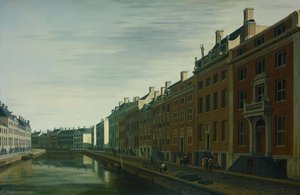
Gerrit Adriaenszoon Berckheyde stands as a pivotal figure in the Dutch Golden Age, celebrated primarily for his breathtaking cityscapes that capture the essence of Haarlem and Amsterdam with unparalleled precision and luminosity. Unlike many contemporaries who favored dramatic vistas or idealized landscapes, Berckheyde meticulously rendered urban scenes—particularly those featuring monumental buildings bathed in diffused sunlight—establishing himself as one of the foremost practitioners of Dutch Classicism. His work embodies a profound respect for observation and technical mastery, reflecting the artistic ideals of his era through a lens of clarity and architectural grandeur.
Born in Haarlem around 1638, Berckheyde’s early life remains somewhat shrouded in mystery; historians like Arnold Houbraken struggled to pinpoint his father's profession beyond being a bookbinder, suggesting a modest upbringing that nonetheless fostered an exceptional talent. He apprenticed under his elder brother, Job Adriaenszoon Berckheyde, who himself was mentored by the legendary Frans Hals—a connection that underscores the rich artistic traditions shaping Berckheyde’s formative years. The brothers embarked on a transformative journey to Germany in the 1650s, immersing themselves in the artistic milieu of Cologne, Bonn, Mannheim, and Heidelberg, where they were awarded a golden medal for their contributions to art and scholarship.
Mastery of Urban Grandeur
Despite aspirations for courtly patronage and an aristocratic lifestyle, Berckheyde’s temperament proved ill-suited to the complexities of high society, prompting his return to Haarlem. Upon joining the Haarlem Guild of Saint Luke in 1660, his position within the artistic community was solidified, signaling a period of prolific output and innovation. His studio became a hub for creativity, attracting fellow artists like Oudendijck and fostering a collaborative spirit that propelled his collective success. Influenced heavily by the meticulous architectural precision of Pieter Saenredam, Berckheyde developed a signature style characterized by spacious views and an almost mathematical accuracy in depicting the structural bones of the city.
His canvases often serve as windows into the bustling heart of the Netherlands. In works such as The Grote Markt in Haarlem, he portrays the vibrant urban life of the era, with the prominent St. Bavokerk church dominating the background. Through his masterful use of light, he transforms stone and brick into living entities, capturing the way sunlight dances across cobblestones and illuminates the facades of grand buildings. This ability to marry architectural rigidity with atmospheric softness is what defines his greatest achievements.
Legacy of the Golden Age
The historical significance of Berckheyde lies in his ability to elevate the cityscape from mere documentation to a high art form. His paintings, such as A Hunting Party near the Hofvijver in The Hague, demonstrate how he could integrate human activity and landscape elements into his architectural compositions without losing the sense of monumental stillness. He did not merely paint buildings; he painted the atmosphere of an era defined by prosperity, order, and civic pride.
As a master of Dutch Classicism, Berckheyde left behind a legacy that continues to fascinate art historians and enthusiasts alike. His contribution to the genre of architectural painting remains unparalleled, providing a luminous record of the Dutch Golden Age's most iconic urban landscapes. Through his eyes, we see a world of structured beauty, where every shadow and sunbeam contributes to a timeless narrative of light and stone.