

Z všech obrazů autora Hermann tom Ring je nejznámější dílo Christ on the Cross (1560); visí v City Museum of Münster, Münster. Hned za nimi následují Triptych of the Last Judgement and the Triumph of Death (1552) a Portrait of Ermengard von Rietberg (1564). Z 21 děl umělce Hermann tom Ring v našem katalogu je těchto 21 nejuznávanějších, z nichž každé je uvedeno s datem vzniku, muzeem a příběhem.
Seřazeno podle našeho skóre popularity, které kombinuje počet vyhledávání, návštěv a objednávek u každého díla. Aktualizováno listopad 2026. Každý obraz na této stránce lze objednat jako ručně malovanou olejovou reprodukci na lněném plátně, nebo jako umělecký tisk vyrobený v požadovaném rozměru.


5 muzea, v nichž je umístěno nejvíce obrazů z této stránky.
| Muzeum | Město | Díla autora Hermann tom Ring | Obrazy z tohoto seznamu |
|---|---|---|---|
 Bavarské státní sbírky malby |
Mnichov | 14 | Sibylla Hellespontica, Sibylla Delphica, Sibylla Samia |
 Westfälisches Landesmuseum |
Münster | 3 | The Last Judgement, Portrait of Gottfried von Raesfeld, Family Portrait of John II of Rietberg |
 City Museum of Münster |
Münster | 1 | Christ on the Cross |
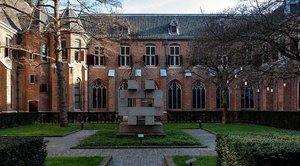 Museum Catharijneconvent |
Utrecht | 1 | Triptych of the Last Judgement and the Triumph of Death |
 Národní muzeum ve Varšavě |
Varšava | 1 | Portrait of Katharina von Hatzfeld |


Christ on the Cross (1560), City Museum of Münster, Münster. Následují Triptych of the Last Judgement and the Triumph of Death (1552) a Portrait of Ermengard von Rietberg (1564).
Hermann tom Ring, narozen 1521, měl 39 let: dílo Christ on the Cross pochází z roku 1560.
Christ on the Cross, Triptych of the Last Judgement and the Triumph of Death, Portrait of Ermengard von Rietberg, The Last Judgement, Portrait of Gottfried von Raesfeld, Portrait of Katharina von Hatzfeld, Sibylla Hellespontica, Sibylla Delphica, Sibylla Samia a Milesius. U každého plátna v uvedeném žebříčku je uveden rok jeho vzniku a muzeum, ve kterém se nachází.
V našem katalogu je 21 děl umělce Hermann tom Ring, datovaných od 1552 do 1587.
Většinou v Bavarské státní sbírky malby (Mnichov), Westfälisches Landesmuseum (Münster) a City Museum of Münster (Münster); výše uvedený seznam obsahuje názvy jednotlivých muzeí a jejich pláten.
V období 1560s, které tvoří 4 z 21 děl na této stránce, mezi nimi i Christ on the Cross.
Nejstarší plátno se zde datuje do Triptych of the Last Judgement and the Triumph of Death (1552); nejnovější je z Portrait of Katharina von Hatzfeld (1587).
Muzeum Bavarské státní sbírky malby, Mnichov se vlastní 14 děl z této stránky, mezi nimiž jsou i Sibylla Hellespontica, Sibylla Delphica a Sibylla Samia.
Ano. Každý obraz na této stránce lze objednat z jeho vlastní stránky jako ručně malovanou olejovou reprodukci nebo jako umělecký tisk v požadovaném rozměru.
In the heart of Münster, amidst the shifting tides of the German Renaissance, the life of Hermann tom Ring unfolded as a testament to artistic lineage and devotion. Born on January 2, 1521, Hermann was not merely an individual creator but a vital link in a profound familial chain of talent. As the son of the esteemed Ludger tom Ring the Elder, his very foundation was laid in the workshop of a master. This early immersion in the craft allowed him to inherit a sophisticated understanding of both the technical rigors of painting and the spiritual weight required for ecclesiastical commissions. His journey took him far beyond the borders of his birthplace, as his formative years as a journeyman led him through the vibrant artistic landscapes of the Netherlands, where the influence of Flemish precision and light would forever haunt the edges of his brushwork.
Upon his return to Münster around 1544, Hermann established himself not just as a painter, but as a cornerstone of the local artistic community. His presence was marked by a profound commitment to the Catholic faith, a dedication that saw him transform the interiors of local churches with works of immense gravity and grace. He did not limit his vision to the canvas alone; his artistry breathed life into the very architecture of his era, designing intricate chimneys, gables, and delicate carvings that integrated fine art into the domestic and sacred structures of Westphalia. His mastery was such that he rose through the ranks of the Painters' Guild, serving as Second Master in 1556 and eventually ascending to the prestigious position of Master in 1569, a role he held with distinction until his passing in 1596.
The oeuvre of Hermann tom Ring is characterized by a seamless blend of religious fervor and meticulous craftsmanship. While much of his documented work was dedicated to the service of the Church, his ability to capture the human condition was equally profound. His early self-portrait remains a poignant window into his developing identity, showcasing a burgeoning confidence in capturing the nuances of the face. This skill extended to his larger liturgical projects, most notably his contributions to the Überwasserkirche. There, he breathed life into the wings of the High Altar and rendered the Evangelists with a devotion that sought to bridge the gap between the earthly viewer and the divine subject.
His artistic development was deeply intertwined with the works of his predecessors and contemporaries. One cannot discuss Hermann without acknowledging the shadow and light cast by his father, whose monumental projects in Münster Cathedral provided a blueprint for Hermann's own religious narratives. In many ways, Hermann’s work served as both a continuation and a refinement of this tradition. His ability to navigate the complexities of the Renaissance style—balancing the emerging realism of the North with the enduring symbolic language of the late Middle Ages—allowed him to create works that were both intellectually stimulating and emotionally resonant for the faithful.
Beyond the grand altarpieces, the breadth of his talent included:
The historical importance of Hermann tom Ring lies in his role as a guardian of artistic tradition during a period of immense religious and social upheaval. As the Reformation swept through German lands, Hermann’s steadfast dedication to Catholic iconography helped preserve a specific visual language within the Münster region. He was a bridge between the era of his father's monumental reconstructions and the maturing Renaissance style of the late sixteenth century. Through his leadership in the Painters' Guild, he ensured that the technical excellence of the Ring family lineage would continue to influence the next generation of Westphalian artists.
Though time has weathered many of the physical structures he once adorned, the spirit of his work remains etched in the cultural memory of Germany. He stands as a figure of remarkable stability and creative vigor, an artist who found his greatest purpose in the intersection of beauty, craft, and faith. His life reminds us that true mastery is often a dialogue between the lessons of the past and the innovations of the present, a dialogue he conducted with unparalleled grace until his death in 1596.