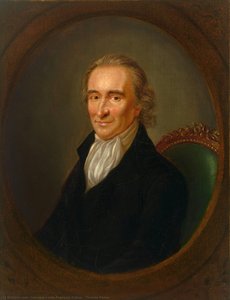
The Soul of an Era: The Life and Legacy of Laurent Dabos
In the grand tapestry of French art history, few painters captured the turbulent transition from the twilight of the monarchy to the dawn of the Napoleonic age as poignantly as Laurent Dabos. Born in the vibrant city of Toulouse in 1761, Dabos emerged not merely as a chronicler of faces, but as a visual poet of his era's most profound shifts. His journey into the heart of the Parisian art scene was paved by rigorous classical training under the esteemed François André Vincent, a master whose influence gifted Dabos with a command over neoclassical precision. This foundation allowed him to marry the disciplined draughtsmanship of the old world with a burgeoning emotional depth that would become his hallmark.
The artistry of Dabos was deeply intertwined with the personal and the professional. His creative life was enriched by his marriage to Jeanne Bernard, an accomplished artist in her own right, whose shared passion for the canvas created a domestic sanctuary of artistic pursuit. This synergy of talent likely fortified his ability to navigate the complex social and political landscapes of late 18th-century France. As he moved through the prestigious exhibitions of his time, such as the Exposition de la Jeunesse in 1788, Dabos began to establish a reputation that transcended simple portraiture, moving toward a more profound narrative style that could hold the weight of history itself.
Mastery of Narrative and Emotion
To gaze upon a work by Laurent Dabos is to witness a masterclass in the balance between historical grandeur and intimate human vulnerability. While his technical skill allowed him to render the intricate textures of royal attire and the cold steel of military regalia, it was his ability to capture the psychological interiority of his subjects that truly set him apart. His paintings often serve as windows into moments of profound transition, where the fate of nations is reflected in the eyes of a single individual.
His oeuvre is defined by several monumental themes:
- The Weight of Monarchy: In works such as his depiction of Louis XVI writing his will, Dabos captures the heavy, suffocating atmosphere of an era ending. The painting is less a political statement and more a study of solitude and the quiet anxiety of a man facing the inevitable tide of revolution.
- The Poetics of Grief: Through pieces like Mary of England, Queen of France, Lamenting the Death of Her Husband, Louis XII, Dabos demonstrates his ability to use neoclassical composition to elevate personal sorrow into a universal expression of loss, utilizing light and shadow to deepen the sense of mourning.
- The Glory of Empire: Conversely, Dabos was able to pivot toward the epic scale required by the Napoleonic era. His painting The Return of the Grande Armée serves as a dynamic, sweeping tribute to the triumph of Napoleon’s forces after Waterloo, showcasing his capacity for large-scale historical genre painting that celebrates movement, energy, and national pride.
A Lasting Impression on French Art
The significance of Laurent Dabos lies in his role as a bridge between two worlds. He stood at the intersection of the refined, idealized traditions of the 18th century and the more dramatic, emotionally charged sensibilities that would eventually pave the way for Romanticism. His work does not merely document events; it preserves the emotional temperature of the French people during one of the most transformative periods in human history.
Though his life concluded in 1835, the resonance of his brushstrokes remains. By documenting the intimate moments of kings and the sweeping movements of armies with equal reverence, Dabos ensured that the fleeting emotions of his time were etched into the permanence of art. Today, his legacy continues to inspire those who seek to understand the human heart amidst the grand theater of history, making his works essential touchstones for anyone studying the profound evolution of French painting.
Otázky a odpovědi
V jakém historickém období působil/a Laurent-Louis-François Dabos?
Laurent-Louis-François Dabos působil v období – Raná modernita. Toto období historicky vymezuje uměleckou činnost tohoto autora.
V jakém městě a z jaké země pochází Laurent-Louis-François Dabos?
Laurent-Louis-François Dabos se narodil(a) ve městě Toulouse v zemi France.
Kde mohu vidět díla umělce Laurent-Louis-François Dabos v chronologickém pořadí?
Díla umělce Laurent-Louis-François Dabos můžete prohlédnout v chronologickém pořadí na stránce Časová osa děl.
Kde najdu díla umělce Laurent-Louis-François Dabos uspořádaná podle tématu?
Abeceda témat umělce Laurent-Louis-François Dabos je stránka, která mapuje díla daného umělce podle jejich témat.
Mohu si díla umělce Laurent-Louis-François Dabos seřadit podle barvy?
Stránka Spektrální index organizuje díla umělce Laurent-Louis-François Dabos podle barvy.
Kde a kdy se narodil/a Laurent-Louis-François Dabos?
Laurent-Louis-François Dabos se narodil(a) ve městě Toulouse v roce 1761.
Odkud pochází Laurent-Louis-François Dabos?
Laurent-Louis-François Dabos se narodil(a) v zemi France.