

Nejoblíbenějším dílem autora Otto van Rees je H. Benoit Labre (1916), které je vystaveno v instituci Museum Catharijneconvent, Utrecht. Následují Christ Heals the Blind (1925) a Preparatory Study for a Station of the Cross (1949) z platen, která čtenáři znají nejlépe. Náš katalog obsahuje 3 děl umělce Otto van Rees: zde je 3 nejznámějších, z nichž každé uvádí svůj rok vzniku, muzeum a důvod, proč je nezapomenutelné.
Seřazeno podle našeho skóre popularity, které kombinuje počet vyhledávání, návštěv a objednávek u každého díla. Aktualizováno listopad 2026.


Muzeum s největším počtem obrazů na této stránce.
| Muzeum | Město | Díla autora Otto van Rees | Obrazy z tohoto seznamu |
|---|---|---|---|
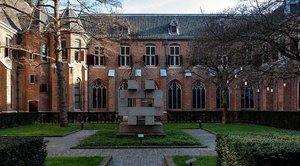 Museum Catharijneconvent |
Utrecht | 3 | H. Benoit Labre, Christ Heals the Blind, Preparatory Study for a Station of the Cross |


H. Benoit Labre (1916), Museum Catharijneconvent, Utrecht. Následují Christ Heals the Blind (1925) a Preparatory Study for a Station of the Cross (1949).
Otto van Rees, narozen 1884, měl 32 let: dílo H. Benoit Labre pochází z roku 1916.
V našem katalogu je 3 děl umělce Otto van Rees, datovaných od 1916 do 1949.
Většinou v Museum Catharijneconvent (Utrecht); výše uvedený seznam obsahuje názvy jednotlivých muzeí a jejich pláten.
Nejstarší plátno se zde datuje do H. Benoit Labre (1916); nejnovější je z Preparatory Study for a Station of the Cross (1949).
Muzeum Museum Catharijneconvent, Utrecht se vlastní 3 děl z této stránky, mezi nimiž jsou i H. Benoit Labre, Christ Heals the Blind a Preparatory Study for a Station of the Cross.
Born in Freiburg im Breisgau, Germany, Otto van Rees was a prolific artist whose career spanned several decades. After finishing high school, he moved to Paris in 1904, where he lived and worked alongside his wife, Adya Dutilh. During his time in Paris, he was part of a vibrant artistic circle, residing in the Bateau Lavoir and spending summers in Fleury-en-Bière. His work underwent significant transformations, moving from neo-impressionistic experiments focused on sunlight and perspective toward a concentration on volume and form, evolving from physic cubism to analytic cubism.
During the first world war, Van Rees relocated to Ascona, Switzerland. In 1915, he held a famous exhibition at the gallery Tanner in Zürich alongside Arp, an event now viewed as the beginning of Dada in Zürich. Art dealer Henri Kahnweiler noted that Van Rees brought the collage technique from Paris to Zürich. Later, in 1928, he constructed a house in Losone, near Ascona, featuring a ground plan of a circle and a square.
Following the death of his oldest daughter in France, Van Rees spent increasing amounts of time in Holland, eventually moving there in 1934. In the Netherlands, he was regarded as a mentor by young painters. His artistic output was diverse, encompassing various roles such as:
His mural paintings embellished numerous public buildings in Holland, including churches, railway stations, courthouses, ministries, and theatres. He died in Utrecht, Holland.