The Life and Origins of Paul LaCroix
Born in France in 1827, Paul LaCroix carried a lineage of European sensibility that would eventually find a new home across the Atlantic. Though his roots were tied to the traditions of his birthplace, he became a painter of the American school, bridging the distance between his origins and the burgeoning art scenes of the New World. His life was marked by a steady movement toward the growing urban centers of the mid-nineteenth century, seeking a place where his particular vision could take hold.
As he moved through his years, his path led him to the bustling streets of New York City, where he remained until his death in 1869. This period of his life saw him navigating the complexities of a rapidly changing society, yet his focus remained fixed on the quiet observation of the world around him. He possessed an exquisite sensitivity to color and form, a quality that guided his hand through every study of light and shadow. This innate understanding of how light rests upon a surface allowed him to find depth in the most humble of subjects.
His existence was defined by this pursuit of visual truth. From his early years in France to his final days in New York, Paul LaCroix sought to capture the essence of his subjects through a meticulous eye. He did not merely observe; he felt the weight and texture of the objects he placed before him, translating the physical reality of nature into a permanent, painted record.
Technique and Artistic Style
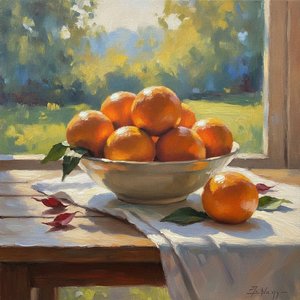
In his early years, LaCroix favored a restrained approach to the canvas. His initial works were defined by simple and austere lines, seeking a certain clarity in their arrangement. As he matured, this restraint gave way to a more ambitious spirit. By the late 1860s, his compositions had grown in scale and complexity, moving away from those early, quiet studies toward a more grand and opulent manner of painting. He found his greatest success in the creation of lush still lifes, where he could focus his attention on the textures of the natural world.
His brush captured the heavy weight of fruit, the delicate petals of flowers, and the solid presence of vegetables. He possessed a particular talent for miniature painting, a discipline requiring immense precision, alongside his larger landscape works. To mark his creations, he often employed a distinctive signature, joining the letters P and L into a single, conjoined mark: PLacroix. This personal touch accompanied his most successful depictions of abundance, where light and form worked together to bring the simplest subjects to life.
Artistic Influences and Masterful Compositions
The hand of the masters guided much of his creative impulse, as he sought to find his own voice through the traditions of those who came before him. He looked toward Jean-Baptiste-Siméon Chardin, finding a kindred spirit in the way the elder painter treated the humble objects of a kitchen. From Chardin, he learned to utilize sober stone table tops as a stage, providing a neutral and grounded surface that allowed his subjects to command the viewer's attention. This choice of setting gave his arrangements a sense of quiet dignity and weight.
As his ambition grew, his compositions began to shift away from such austerity, drawing instead from the more expansive spirit of Severin Roesen. He adopted more grandiose and ambitious schemes from Roesen, moving toward intricate, cascading arrangements of flora and fruit. These later works embraced a sense of abundance, often featuring a striking interplay of light and shadow that sculpted the forms of his subjects. He used light to catch the glint of a grape or the curve of a fruit, creating a sense of depth that made the canvas feel tangible.