Ateliér — Doprava po celém světě zdarma — Dodání za 2–6 týdnů
      Eugène Delacroix, 1798 – 1863

      The 100 Most Famous Eugène Delacroix Paintings, Ranked

      The best-loved painting by Eugène Delacroix is Svoboda vedoucí lidstvo (1831), which hangs in the Louvre, Paříž. Masakr na Chios (1824) and Smrt Sardanapala (1827) come next among the canvases readers know best. Our catalogue holds 604 works by Eugène Delacroix: here are the 100 most famous, each with its year, its museum and what makes it memorable.

      Seřazeno podle našeho skóre popularity, které kombinuje počet vyhledávání, návštěv a objednávek u každého díla. Aktualizováno říjen 2026. Each painting on this page can be ordered as an oil reproduction painted by hand on linen canvas, or as a fine art print, made to the size you choose.

      Portrét Eugène Delacroix
      Eugène Delacroix · 1798 – 1863
      Narozen · zemřel
      1798 – 1863, Saint-Maurice
      Směr
      Romantismus
      Díla v našem katalogu
      604
      Nejslavnější
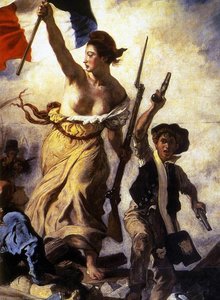
      Svoboda vedoucí lidstvo (1831)
      Nejvíce děl v
      Louvre

      Top 10 Eugène Delacroix paintings: the canvases everyone knows

      Svoboda vedoucí lidstvo (1831) od Eugène Delacroix
      1

      Svoboda vedoucí lidstvo

      1831 · Olej na plátně · Louvre, Paříž

      Mistrovské dílo romantismu Dílo „Svoboda vedoucí lidstvo“ od Eugena Delacroixova je ikonickým symbolem francouzského romantismu, který v sobě zachycuje nefalšovitého ducha revoluce a neúprosnou boj za svobodu. Toto monumentální plátno z roku 1830 oslavuje červenou revoluci, která svrhl krále Karla X., což představovalo zásadní zlom v dějinách Francie. Umělecké dílo je mocným spojením historického narativu a emocionální intenzity, díky čemuž se stává naprostým pokladem pro milovníky umění i sběratele. Dynamická…

      Masakr na Chios (1824) od Eugène Delacroix
      2

      Masakr na Chios

      1824 · Akryl na plátně · Louvre, Paříž

      Eugène Delacroix's "The Massacre at Chios" isn’t merely a painting; it’s a visceral scream rendered in oil, a monumental testament to the brutality and injustice inflicted upon the Greek people during their struggle for independence. Completed in 1824, this colossal canvas – measuring over four meters tall – plunges the viewer directly into the heart of a horrific event: the Ottoman Empire's merciless assault on the island of Chios. More…

      Smrt Sardanapala (1827) od Eugène Delacroix
      3

      Smrt Sardanapala

      1827 · Olej na plátně · Louvre, Paříž

      Eugène Delacroixův mistrovský obraz z roku 1827 je monumentální a intenzivně dramatické zobrazení posledních okamžiků Sardanapala, posledního krále Asýrie. Inspirací pro tento obraz byla hra stejného jména od Lorda Byrona. Nejedná se pouhou historickou scénu; je to pohlcující zážitek do světa opulentního chaosu a blížící se zkázy – kvintesence síly romantismu vyvolávat silné emoce.

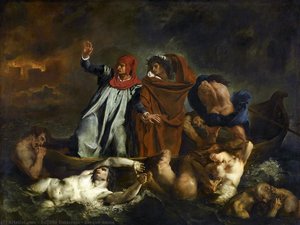
      Danteho barque od Eugène Delacroix
      4

      Danteho barque

      Olej na plátně

      Obraz živě vykresluje trápící cestu Danteho a Vergilia přes řeku Styx, kterou vede przewozník Charon. Z temných hlubin se vynošuje chaotická masa mučených duší, které se kroutí a zoufale vyciąhají ruce, přičemž jejich zoufalství je až hmatatelné. Virgil, stoický a odhodlaný, uklidňuje vyděšeného Danteho, zatímco plaví se bouřlivými vodami směrem k ohnivému městu Dis – vizuální reprezentaci samotného Pekla. Tato scéna není pouhou doslovnou ilustrací, nýbrž interpretací Danteho vize, která…

      Alžírské ženy ve svých apartmánech, - (180x229) (1834) od Eugène Delacroix
      5

      Alžírské ženy ve svých apartmánech, - (180x229)

      1834 · Olejová barva

      V grandiosním gobelínu devatenáctého století je málo vláken tak živých nebo tak emocionálně nabitých, jako těch, která vyvlekl Eugène Delacroix. Jeho mistrovské dílo z roku 1834, "Alžírské ženy ve svých apartmánech, - (180x229)", slouží jako hluboké odmítnutí chladné, vypočítané racionality, která definovala neoklasicistickou éru. Místo toho nás Delacroix zve do světa smyslového potěšení a šeptaných tajemství. Tento obraz není pouze ztvárněním scény v haremu; je to pečlivě vypracovaná meditace o…

      Greece on the Ruins of Missolonghi (1826) od Eugène Delacroix
      6

      Greece on the Ruins of Missolonghi

      1826 · Acrylic · Musée des Beaux-Arts de Bordeaux, Bordeaux

      Greece on the Ruins of Missolonghi: A Romantic Echo of Liberation Eugène Delacroix’s “Greece on the Ruins of Missolonghi,” completed in 1826, stands as a monumental testament to Romantic idealism and its fervent embrace of historical narrative. Currently residing at the Musée des Beaux-Arts de Bordeaux, this canvas transcends mere depiction; it embodies the spirit of a nation yearning for freedom during the tumultuous Greek War of Independence. The painting’s…

      Orphan Girl at the Cemetery od Eugène Delacroix
      7

      Orphan Girl at the Cemetery

      Oil On Canvas · Grand Palais, Paris

      Ferdinand Victor Eugène Delacroix's Orphan Girl at the Cemetery, rendered in muted tones and imbued with a palpable sense of sorrow, offers a poignant glimpse into the heart of Romanticism. Measuring 65 x 54 cm, this intimate portrait transcends mere representation; it’s a carefully constructed meditation on loss, memory, and the enduring weight of the past. Painted circa 1830-1835, during Delacroix's most intensely productive period, the work exemplifies his shift…

      Arabské koně bojující ve stáji (1860) od Eugène Delacroix
      8

      Arabské koně bojující ve stáji

      1860 · Olej na plátně · Louvre, Paříž

      Drama konického střetu Dílo Eugéna Delacroixova „Arabské koně bojující ve stáji“ zachycuje okamžik intenzivní akce a chaosu v uzavřeném prostoru. Obraz zobrazuje dva vztyčená koně zapasující v boji, obklopené lidskými postavami zapojenými do různých aktivit. Tato dynamická scéna je zasazena do pozadí stájí či stodoly, kde architektonické prvky, jako jsou dřevěné trámy a stěny, dodávají celému vyprávění hloubku a kontext. Mistrovské dílo romantismu Delacroixův styl je ryze romantický, což se…

      Liberty Leading the People, Louv (1830) od Eugène Delacroix
      9

      Liberty Leading the People, Louv

      1830

      Eugène Delacroix’s 1830 masterpiece, Liberty Leading the People, is far more than a historical depiction; it's an enduring and visceral allegory of freedom. Measuring an imposing 260 x 325 cm, this oil on canvas commands attention at the Musée du Louvre in Paris, radiating energy and embodying the spirit of French republicanism.

      Únos Rebeky (1846) od Eugène Delacroix
      10

      Únos Rebeky

      1846 · Olej na plátně · Metropolitan Museum of Art, New York

      Dílo Eugène Delacroixova „Únos Rebeky“, dokončené v roce 1846, stojí jako jeden z pilířů francouzského romantismu – směru definovaného vášnivými emocemi a milostným vztahem k dramatickému vyprávění. Je to mnohem víc než jen zobrazení biblického příběhu adaptovaného ze Scottova románu Ivanhoe; je to viscerální reakce na historické události a svědectví o Delacroixově bezkonkurenční umělecké vizi.

      More Eugène Delacroix canvases, 11 to 100

      Frédéric Chopin (1838) od Eugène Delacroix
      #11

      Frédéric Chopin

      1838 · Louvre

      Eugène Delacroix’s Frédéric Chopin is more than just a portrait; it's an embodiment of Romantic idealism distilled into the stark beauty of black and white. Created in 1838…

      Bring this light home →
      Christ on the Sea of Galilee (1841) od Eugène Delacroix
      #13

      Christ on the Sea of Galilee

      1841 · Nelson-Atkins Museum of Art

      In the annals of Romanticism, few works capture the raw, unbridled tension between human vulnerability and divine authority as poignantly as Eugène Delacroix’s Christ on the Sea of…

      Bring this light home →
      Horse Frightened by a Storm (1824) od Eugène Delacroix
      #15

      Horse Frightened by a Storm

      1824 · Szépművészeti Múzeum

      Ferdinand Victor Eugène Delacroix’s “Horse Frightened by a Storm,” painted in 1824, is more than just a depiction of a terrified animal; it’s a visceral embodiment of Romanticism's…

      Bring this light home →
      Hamlet a jeho matka (1849) od Eugène Delacroix
      #19

      Hamlet a jeho matka

      1849 · Metropolitan Museum of Art

      Dílo „Hamlet a jeho matka“ od Eugène Delacroix, dokončené v roce 1849, představuje dojmově silnou destilaci ikonické Shakespearovy tragédie. Je to mnohem víc než jen zobrazení klíčové scény…

      Bring this light home →
      Death of Sardanapalus (1844) od Eugène Delacroix
      #20

      Death of Sardanapalus

      1844 · Philadelphia Museum of Art

      The scene is centered upon an elevated, red-draped divan where a figure reclines amidst a swirling mass of bodies and objects. This central figure, the Assyrian king Sardanapalus,…

      Have it painted by hand →
      The Abduction of Rebecca (1858) od Eugène Delacroix
      #22

      The Abduction of Rebecca

      1858 · Louvre

      In the heart of French Romanticism, Eugène Delacroix captured a moment of pure, unadulterated drama in The Abduction of Rebecca. This monumental oil painting serves as a visceral…

      Order this canvas →
      Self-Portrait with Cap (1832) od Eugène Delacroix
      #23

      Self-Portrait with Cap

      1832 · Louvre

      In this 1832 graphite drawing, the artist turns the lens inward. The composition is tightly cropped, focusing on the torso and head to create an immediate sense of…

      Order this canvas →
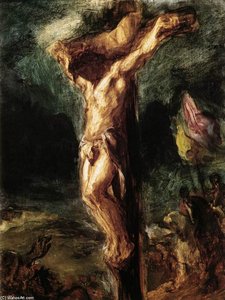
      Christ on the Cross (sketch) (1845) od Eugène Delacroix
      #25

      Christ on the Cross (sketch)

      1845 · Museum Boijmans Van Beuningen

      Eugène Delacroix's “Christ on the Cross (sketch),” created in 1845 and now housed within the Museum Boijmans Van Beuningen in Rotterdam, isn’t merely a preparatory study; it’s a…

      Have it painted by hand →
      Christ on the Cross (1853) od Eugène Delacroix
      #27

      Christ on the Cross

      1853 · National Gallery

      Eugène Delacroix's "Christ on the Cross," painted in 1853, isn’t merely a depiction of a biblical event; it’s a visceral experience. This monumental canvas, now residing within the…

      Have it painted by hand →
      The Good Samaritan (1852) od Eugène Delacroix
      #29

      The Good Samaritan

      1852 · Victoria and Albert Museum

      In this 1852 oil painting, the viewer is placed at eye level, directly facing a scene of profound human vulnerability. The composition centers on a man in a…

      Order this canvas →
      The Barque of Dante od Eugène Delacroix
      #30

      The Barque of Dante

      The Barque of Dante Delacroix’s *The Barque of Dante*, completed in 1822, stands as a pivotal moment in the artistic landscape of France—a defiant rejection of Neoclassical restraint…

      Bring this light home →
      Lion Hunt (1861) od Eugène Delacroix
      #31

      Lion Hunt

      1861 · Art Institute of Chicago

      In the grand tapestry of French Romanticism, few works pulse with as much raw, unbridled energy as Eugène Delacroix’s “Lion Hunt.” Completed in 1861, this monumental oil painting…

      Order this canvas →
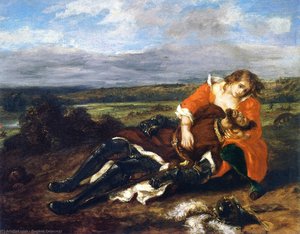
      The Death of Lara (1847) od Eugène Delacroix
      #33

      The Death of Lara

      1847

      Eugène Delacroix’s “The Death of Lara,” painted in 1847, is not merely a depiction of sorrow; it's an immersive experience of raw emotion, a testament to the Romantic…

      Order this canvas →
      Christ on the Sea of Galilee (1853) od Eugène Delacroix
      #36

      Christ on the Sea of Galilee

      1853 · Foundation E.G. Bührle Collection

      A Tempestuous Testament to Faith: Eugène Delacroix’s “Christ on the Sea of Galilee” Delacroix's "Christ on the Sea of Galilee," painted in 1853, stands as a cornerstone of…

      Order this canvas →
      The Death of Ophelia (1838) od Eugène Delacroix
      #37

      The Death of Ophelia

      1838 · Neue Pinakothek

      The Death of Ophelia by Eugène Delacroix Eugène Delacroix’s “The Death of Ophelia” stands as an emblem of Romantic art—a visceral portrayal of grief, beauty, and the tragic…

      Have it painted by hand →
      Lion Hunt (1855) od Eugène Delacroix
      #40

      Lion Hunt

      1855 · Nationalmuseum

      Eugène Delacroix's *Lion Hunt*, painted in 1855, is more than a depiction of a thrilling chase; it’s a visceral explosion of Romantic energy captured on panel. Currently residing…

      Have it painted by hand →
      Lion Devouring a Rabbit (1851) od Eugène Delacroix
      #42

      Lion Devouring a Rabbit

      1851 · Louvre

      Eugène Delacroix, one of the most renowned French Romantic painters, created the captivating painting Lion Devouring a Rabbit in 1851. This oil on canvas masterpiece is housed at…

      Have it painted by hand →
      Mlle Rose (1817) od Eugène Delacroix
      #44

      Mlle Rose

      1817 · Louvre

      In the heart of the Louvre Museum resides a masterpiece that whispers rather than shouts, a painting that captures the very essence of a quiet, stolen moment. Eugène…

      Bring this light home →
      The Death of Lara (1858) od Eugène Delacroix
      #46

      The Death of Lara

      1858

      A Scene of Noble Demise: Delacroix’s ‘The Death of Lara’ Eugène Delacroix's 1858 masterpiece, *The Death of Lara*, is a powerful and poignant depiction of mortality, inspired by…

      Order this canvas →
      Christ on the Sea of Galilee (1840) od Eugène Delacroix
      #47

      Christ on the Sea of Galilee

      1840

      In the annals of French Romanticism, few canvases command the viewer's attention with such visceral intensity as Eugène Delacroix’s Christ on the Sea of Galilee. Painted during a…

      Order this canvas →
      The Road to Calvary (1847) od Eugène Delacroix
      #48

      The Road to Calvary

      1847

      In the grand tapestry of nineteenth-century French art, few works command the viewer's attention with such visceral intensity as Eugène Delacroix’s "The Road to Calvary." Completed in 1847,…

      Bring this light home →
      Massakern pa Chios - - (1824) od Eugène Delacroix
      #49

      Massakern pa Chios - -

      1824

      A Torrent of Emotion: Delacroix’s *The Massacre at Chios* Eugène Delacroix's *The Massacre at Chios* (1824) is not merely a painting; it’s a visceral cry against the brutality…

      Have it painted by hand →
      The Lamentation (1849) od Eugène Delacroix
      #54

      The Lamentation

      1849

      Ferdinand Victor Eugène Delacroix’s “The Lamentation,” painted in 1849, isn't merely a depiction of Christ’s death; it’s a visceral plunge into profound sorrow and spiritual anguish. This monumental…

      Have it painted by hand →
      Jewish Bride (1832) od Eugène Delacroix
      #56

      Jewish Bride

      1832 · Louvre

      In the grand tapestry of French Romanticism, few threads shine with as much warmth and soulful depth as Eugène Delacroix’s 1832 masterpiece, “Jewish Bride.” To gaze upon this…

      Order this canvas →
      Christ on the Cross (1839) od Eugène Delacroix
      #57

      Christ on the Cross

      1839 · Kunsthalle Bremen

      Eugène Delacroix's “Christ on the Cross,” painted in 1835, is not merely a depiction of a pivotal religious event; it’s a visceral exploration of human suffering and sacrifice.…

      Order this canvas →
      Aeneas and Anchises (1815) od Eugène Delacroix
      #58

      Aeneas and Anchises

      1815 · Kunstpalast

      Ferdinand Victor Eugène Delacroix's preparatory sketch for ‘Aeneas and Anchises,’ a work rendered on off-white paper with charcoal and graphite, offers a captivating glimpse into the creative process…

      Bring this light home →
      Self-Portrait as Ravenswood (1821) od Eugène Delacroix
      #60

      Self-Portrait as Ravenswood

      1821 · Musée Eugène Delacroix

      Eugène Delacroix’s “Self-Portrait as Ravenswood,” painted in 1821, is more than a simple depiction of an artist gazing into the distance; it’s a profound meditation on identity, performance,…

      Have it painted by hand →
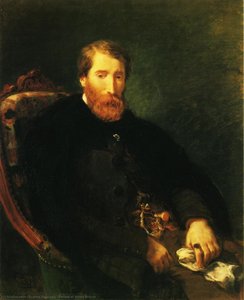
      Portrait of Alfred Bruyas (1853) od Eugène Delacroix
      #61

      Portrait of Alfred Bruyas

      1853 · Musée Fabre

      Portrait of Alfred Bruyas Alfred Delacroix’s Portrait of Alfred Bruyas stands as a testament to Romantic artistic vision and the burgeoning fascination with capturing the individual spirit within…

      Bring this light home →
      Horses at a Fountain (1862) od Eugène Delacroix
      #62

      Horses at a Fountain

      1862 · Philadelphia Museum of Art

      Eugène Delacroix's "Horses at a Fountain," painted in 1862, stands as a pivotal work within the Romantic movement, offering a vibrant tableau that transcends mere representation to become…

      Bring this light home →
      Women of Algiers (1832) od Eugène Delacroix
      #63

      Women of Algiers

      1832

      The work before us is Women of Algiers, an oil on canvas painted by Eugène Delacroix. Created in 1834, this piece emerged from the artist's intense observations during…

      Order this canvas →
      The Lamentation (1847) od Eugène Delacroix
      #64

      The Lamentation

      1847 · Muzeum umění v Bostonu

      A Scene of Profound Grief: Delacroix’s *The Lamentation* Eugène Delacroix's *The Lamentation*, painted in 1847, is a deeply moving depiction of the sorrow surrounding Christ’s descent from the…

      Bring this light home →
      Přízrak hrabě de Mornaye (1832) od Eugène Delacroix
      #65

      Přízrak hrabě de Mornaye

      1832 · Louvre

      Eugén Delacroix, klíčová postava francouzského romantismu, nám v díle *Count de Mornay's Apartment* (1832) nabízí neobvykle intimní scénu. Na rozdíl od jeho monumentálních historických obrazů, tato práce představuje…

      Order this canvas →
      Paganini (1831) od Eugène Delacroix
      #66

      Paganini

      1831 · The Phillips Collection

      In the heart of the Romantic era, few images capture the intersection of musical genius and visual drama as profoundly as Eugène Delacroix’s 1831 masterpiece, Paganini. This is…

      Order this canvas →
      Lioness Ready to Spring (1863) od Eugène Delacroix
      #67

      Lioness Ready to Spring

      1863 · Louvre

      In the realm of French Romantic painting, few artists have left as indelible a mark as Eugène Delacroix. His works are characterized by their vivid colors and dynamic…

      Bring this light home →
      The Women of Algiers od Eugène Delacroix
      #70

      The Women of Algiers

      Musée d'art et d'histoire de Saint-Brieuc

      A Vision of Sensuality and Exoticism: Delacroix’s “The Women of Algiers” “The Women of Algiers,” painted by Eugène Delacroix in 1834, stands as a cornerstone of Romantic art—a…

      Order this canvas →
      Women of Algiers (1833) od Eugène Delacroix
      #73

      Women of Algiers

      1833

      In the delicate, monochromatic lines of Eugène Delacroix’s 1833 drawing, Women of Algiers, we are invited to step into a quiet, stolen moment from a distant world. While…

      Bring this light home →
      The Return of Christopher Columbus (1839) od Eugène Delacroix
      #74

      The Return of Christopher Columbus

      1839 · Toledo Museum of Art

      Eugène Delacroix’s “The Return of Christopher Columbus” isn't merely a historical painting; it’s a visceral embodiment of the Romantic spirit, a swirling vortex of color and emotion that…

      Order this canvas →
      Apollo Slays Python (1850) od Eugène Delacroix
      #75

      Apollo Slays Python

      1850 · Van Goghovo muzeum

      In this significant work from 1850, Eugène Delacroix addresses the monumental task of decorating the ceiling of the Galerie d'Apollon in the Louvre. The painting, titled Apollo Slays…

      Bring this light home →
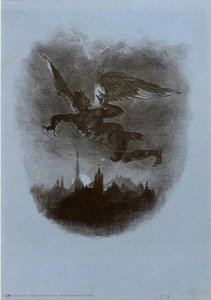
      Mephistopheles Aloft (1826) od Eugène Delacroix
      #76

      Mephistopheles Aloft

      1826

      Mephistopheles Aloft: A Symphony of Shadow and Flame Eugène Delacroix’s “Mephistopheles Aloft,” completed in 1826, stands as a cornerstone of Romantic art—a dramatic distillation of Goethe's Faustian myth…

      Bring this light home →
      Horses Fighting in a Stable (1860) od Eugène Delacroix
      #78

      Horses Fighting in a Stable

      1860 · Musée d'Orsay

      Ferdinand Victor Eugène Delacroix’s “Horses Fighting in a Stable,” painted circa 1860, isn't merely a depiction of horses locked in combat; it’s a visceral eruption of raw emotion,…

      Bring this light home →
      The Lion Hunt (1858) od Eugène Delacroix
      #79

      The Lion Hunt

      1858 · Muzeum umění v Bostonu

      In the heart of the French Romantic movement, Eugène Delacroix captured a moment of raw, unbridled vitality in his masterpiece, The Lion Hunt. Completed around 1858, this work…

      Bring this light home →
      Apollo zabíjí Pythona (1850) od Eugène Delacroix
      #81

      Apollo zabíjí Pythona

      1850 · Louvre

      „Apollo zabíjí Python“ Eugéna Delacroixe není pouhou shromážděním klasické legendy; je to ponoření do srdce starověkého řeckého věření, živoucí svědectví o věčném boji mezi řádem a chaosem, světlem…

      Bring this light home →
      Still-Life with Lobster (1826) od Eugène Delacroix
      #82

      Still-Life with Lobster

      1826 · Louvre

      Eugène Delacroix's "Still-Life with Lobster" is a striking example of the Romantic movement’s influence on still life painting. While traditionally considered a genre focused on depicting inanimate objects,…

      Order this canvas →
      Summer - Diana and Actaeon (1856) od Eugène Delacroix
      #83

      Summer - Diana and Actaeon

      1856 · Muzeum umění v São Paulu Assis Chateaubriand

      For those seeking a high-quality reproduction of this iconic masterpiece, visit Eugène Delacroix: Summer - Diana and Actaeon on AllPaintingsStore. Furthermore, the Museo de Arte de Sao Paulo…

      Have it painted by hand →
      The Lion Hunt (1859) od Eugène Delacroix
      #84

      The Lion Hunt

      1859

      Ferdinand Victor Eugène Delacroix's "The Lion Hunt," completed in 1859, is not merely a depiction of a hunting scene; it’s a visceral embodiment of Romanticism’s core tenets –…

      Order this canvas →
      Horse Frightened by a Storm (1824) od Eugène Delacroix
      #85

      Horse Frightened by a Storm

      1824 · Szépművészeti Múzeum

      A Tempestuous Encounter: Delacroix’s ‘Horse Frightened by a Storm’ Eugène Delacroix's 1824 watercolour, *Horse Frightened by a Storm*, is a dynamic and emotionally charged work that exemplifies the…

      Have it painted by hand →
      The Women of Algiers (detail) (1834) od Eugène Delacroix
      #89

      The Women of Algiers (detail)

      1834 · Louvre

      Eugène Delacroix's “Women of Algiers in their Apartment” (Femmes d’Alger dans leur appartement), painted in 1834 and residing now within the hallowed halls of the Louvre, is not…

      Order this canvas →
      Study for Marphisa (1850) od Eugène Delacroix
      #91

      Study for Marphisa

      1850 · Michael C. Carlos Museum

      Eugène Delacroix, a name synonymous with French Romanticism, possessed an unparalleled ability to ignite the canvas with passion and movement. While celebrated for grand historical narratives like "Liberty…

      Bring this light home →
      Frédéric chopin, louvre (1838) od Eugène Delacroix
      #93

      Frédéric chopin, louvre

      1838

      Delacroix's Reverie: Capturing Chopin’s Soul Eugène Delacroix’s Frédéric Chopin is more than just a portrait; it's an embodiment of Romantic idealism—a profound meditation on artistic genius and the…

      Order this canvas →
      Odalisque (1857) od Eugène Delacroix
      #94

      Odalisque

      1857

      Eugène Delacroix’s *Odalisque*, completed in 1857, is more than simply a portrait; it’s an immersive experience, a carefully constructed tableau that transports the viewer to the opulent and…

      Have it painted by hand →
      The Riding Lesson (1854) od Eugène Delacroix
      #95

      The Riding Lesson

      1854

      The Riding Lesson Eugène Delacroix’s Riding Lesson stands as a cornerstone of Romantic art—a vivid tableau capturing the dynamism and passion characteristic of the era. Created in 1854,…

      Order this canvas →
      Tiger Hunt (1854) od Eugène Delacroix
      #97

      Tiger Hunt

      1854 · Louvre

      Eugène Delacroix's "Tiger Hunt," painted in 1854, isn’t merely a depiction of a hunt; it’s a visceral explosion of movement, color, and raw emotion. This monumental canvas, now…

      Order this canvas →
      King Roderick (1833) od Eugène Delacroix
      #99

      King Roderick

      1833 · Kunsthalle Bremen

      Ferdinand Victor Eugène Delacroix's “King Roderick,” painted in 1833, isn’t merely a portrait; it’s a visceral embodiment of defeat and the fading grandeur of an empire. Born from…

      Have it painted by hand →

      Eugène Delacroix's canvases, period by period

      What Eugène Delacroix painted most

      The four subjects that return most often on these canvases, each with its best-loved example.

      Where Eugène Delacroix's canvases hang

      8 muzea, v nichž je umístěno nejvíce obrazů z této stránky.

      Muzea Město Díla autora Eugène Delacroix Obrazy z tohoto seznamu
      Louvre, PařížLouvre Paříž 42 Svoboda vedoucí lidstvo, Masakr na Chios, Smrt Sardanapala
      Muzeum umění v Bostonu, BostonMuzeum umění v Bostonu Boston 4 Summer: Diana Surprised at her Bath by Actaeon, The Lamentation, The Lion Hunt
      Philadelphia Museum of Art, PhiladelphiaPhiladelphia Museum of Art Philadelphia 4 Death of Sardanapalus, Still Life with Flowers and Fruit, Horses at a Fountain
      Musée Eugène Delacroix, PařížMusée Eugène Delacroix Paříž 27 Faust with Margarete in Prison (detail), Self-Portrait as Ravenswood, Faust Trying to Seduce Margarete (detail)
      Metropolitan Museum of Art, New YorkMetropolitan Museum of Art New York 12 Únos Rebeky, Hamlet a jeho matka, Madame Henri François Riesener (Félicité Longrois, 1786–1847)
      Musée Fabre, MontpellierMusée Fabre Montpellier 9 Daniel dans la fosse aux lions, Women of Algiers in Their Apartmente, Portrait of Alfred Bruyas
      Szépművészeti Múzeum, BudapešťSzépművészeti Múzeum Budapešť 4 Horse Frightened by a Storm, Horse Frightened by a Storm
      Musée d'Orsay, PařížMusée d'Orsay Paříž 4 Lioness Stalking Its Prey (also known as Lioness Standing by a Tree), Horses Fighting in a Stable

      Eugène Delacroix's best-loved canvas of each decade

      1. 1810s
        Mlle Rose (1817) od Eugène Delacroix
        Ranked 44 of 100

        Mlle Rose

        Věk 12 – 21 · Louvre

        In the heart of the Louvre Museum resides a masterpiece that whispers rather than shouts, a painting that captures the very essence of a quiet, stolen moment. Eugène…

      2. 1820s
        Masakr na Chios (1824) od Eugène Delacroix
        Ranked 2 of 100

        Masakr na Chios

        Věk 22 – 31 · Louvre

        Eugène Delacroix's "The Massacre at Chios" isn’t merely a painting; it’s a visceral scream rendered in oil, a monumental testament to the brutality and injustice inflicted upon the…

      3. 1830s
        Svoboda vedoucí lidstvo (1831) od Eugène Delacroix
        1 of 100

        Svoboda vedoucí lidstvo

        Věk 32 – 41 · Louvre

        Mistrovské dílo romantismu Dílo „Svoboda vedoucí lidstvo“ od Eugena Delacroixova je ikonickým symbolem francouzského romantismu, který v sobě zachycuje nefalšovitého ducha revoluce a neúprosnou boj za svobodu. Toto…

      4. 1840s
        Únos Rebeky (1846) od Eugène Delacroix
        Canvas 10 of 100

        Únos Rebeky

        Věk 42 – 51 · Metropolitan Museum of Art

        Dílo Eugène Delacroixova „Únos Rebeky“, dokončené v roce 1846, stojí jako jeden z pilířů francouzského romantismu – směru definovaného vášnivými emocemi a milostným vztahem k dramatickému vyprávění. Je…

      5. 1850s
      6. 1860s
        Arabské koně bojující ve stáji (1860) od Eugène Delacroix
        Canvas 8 of 100

        Arabské koně bojující ve stáji

        Věk 62 – 65 · Louvre

        Drama konického střetu Dílo Eugéna Delacroixova „Arabské koně bojující ve stáji“ zachycuje okamžik intenzivní akce a chaosu v uzavřeném prostoru. Obraz zobrazuje dva vztyčená koně zapasující v boji,…

      About Eugène Delacroix's canvases: your questions answered

      What is the best-known painting by Eugène Delacroix?Read the answer

      Svoboda vedoucí lidstvo (1831), Louvre, Paříž. Masakr na Chios (1824) and Smrt Sardanapala (1827) follow.

      What age was Eugène Delacroix when Svoboda vedoucí lidstvo was painted?Read the answer

      Eugène Delacroix, born in 1798, was 33 years old: Svoboda vedoucí lidstvo dates from 1831.

      What are the 10 most famous paintings by Eugène Delacroix?Read the answer

      Svoboda vedoucí lidstvo, Masakr na Chios, Smrt Sardanapala, Danteho barque, Alžírské ženy ve svých apartmánech, - (180x229), Greece on the Ruins of Missolonghi, Orphan Girl at the Cemetery, Arabské koně bojující ve stáji, Liberty Leading the People, Louv a Únos Rebeky. Each canvas in the ranking above comes with its year and its museum.

      How many works did Eugène Delacroix paint in all?Read the answer

      604 works by Eugène Delacroix are in our catalogue, dated 1815 to 1863.

      Where can I see Eugène Delacroix's most famous canvases?Read the answer

      Mostly in Louvre (Paříž), Muzeum umění v Bostonu (Boston) a Philadelphia Museum of Art (Philadelphia); the list above names each museum and its canvases.

      When did Eugène Delacroix paint the best-loved canvases?Read the answer

      In 1850s, which gave 24 of the 100 works on this page, Lioness Stalking Its Prey (also known as Lioness Standing by a Tree) among them.

      Which are Eugène Delacroix's earliest and latest famous canvases?Read the answer

      The earliest canvas here is Aeneas and Anchises (1815); the latest is Lioness Ready to Spring (1863).

      What did Eugène Delacroix paint most often?Read the answer

      Drama (13), Mythology (8) a Horses (7), across the 100 works on this page.

      Which medium did Eugène Delacroix paint in most often?Read the answer

      Oil On Canvas, used in 41 of the 100 works on this page.

      Which movement is Eugène Delacroix's painting part of?Read the answer

      Romantismus, as the canvases on this page show.

      Which Eugène Delacroix canvases hang at the Louvre?Read the answer

      The Louvre, Paříž holds 22 of the works on this page, among them Svoboda vedoucí lidstvo, Masakr na Chios a Smrt Sardanapala.

      Can I buy a reproduction of a Eugène Delacroix canvas?Read the answer

      Yes. Every painting on this page can be ordered from its own page as an oil reproduction painted by hand, or as a fine art print, in the size you choose.

      Eugène Delacroix: a life in paint

      Život a umění Eugène Delacroix

      V Charenton-Saint-Maurice nedaleko Paříže je vzduch těžký váhou měnící se éry, když se 26. dubna 1798 na svět přichází Ferdinand Victor Eugène Delacroix. On v devatenáctém století pouze nežije; on definuje jeho emocionální puls. Jako vůdce francouzské romantické školy odmítá Eugène Delacroix chladné, vypočítané linie předchozí generace. Hledá něco nestálnějšího, něco bouřlivějšího. Jeho štětec se pohybuje s neklidnou energií, která zrcadlí společenské otřesy ve Francii, a vyměňuje akademickou střízlivost za syrový, individualistický vyjádření lidské existence.

      Jeho kariéra je řetězcem intenzivních střetů mezi vizí a realitou. Prochází krajinou politických povstání a osobních vášní, přičemž se často ocitá v centru těch nejturbulentnějších okamžiků své éry. Do konce svého života, který dožil 13. srpna 1863, zásadně změní trajektorii evropského malířství. Zanechává po sobě odkaz pohybu a barvy, který zpochybňuje samotné základy klasické tradice.

      Rané roky, rodina a vzdělání

      Kořeny rodovodu, kterým byl Eugène Delacroix, se opírají o fascinující spojení řemeslné zručnosti a diplomacie. Jeho matka, Victoire Oebenová, byla dcerou mistra nábytek Jean-François Oeben. Jeho otec, Charles-François Delacroix, se pohyboval v nejvlivnějších kruzích, což se jasně odráželo v sociálním postavení celé rodiny. Eugène vyrůstal ve společnosti tří svých výrazně starších sourozenců: Charles-Henriho, Henrietty a Henriho. Tento věkový rozdíl proměnil jeho domov spíše v prostředí plné dospělých osobností než v dětský pokoj plný vrstevníků.

      Jeho vzdělávací cesta se ubírala skrze francouzský akademický systém. Studoval na lyceích Louis-le-Grand a Pierre Corneille v Rouen. Tato léta studia položila intelektuální základy pro jeho pozdější umělecké výzkumy. Přechod ze studenta na skutečného umělce nastal pod vedením Pierre-Narcisse Guérina. Guérin, významný neoklasicistický malbař, poskytl formální trénink nezbytný pro proniknutí do pařížského uměleckého světa. Ačkoliv Guérin kladl důraz na přísná pravidla neoklasicismu, semena zcela odlišného, hluboce emocionálního přístupu se již tehdy skrze tuto přísnou akademickou výchovu začínala klíčit.

      Patronáž a uměleckí ochránci

      Trajektorie Delacroixovy kariéry našla svůj pevný bod ve stínu Charlese-Maurice de Talleyrand-Périgorda. Talleyrand, muž s nesmírným politickým vlivem, byl blízkým přítelem rodiny a postavou, která se o mladého umělce uplatila jako o svého duchovního syna. Toto vztah poskytoval mnohem víc než jen společenské postavení; nabízel přímou cestu do nejvyšších sfér francouzského vlivu. Zatímco Talleyrand manévroval mezi proměnlivými politickými vlnami a sloužil jak Restaurování, tak králi Ludvíku Filipovi, zajistil, aby Eugène Delacroix zůstal zakotven v samotném srdci pařížského života. Díky němu umělec obdržoval četné anonymní zakázky, což umožnilo jeho dílu kolovat v elitních kruzích pod závojem diskrétnosti.

      Ochrana se sahala až do politických mechanismů poloviny devatenáctého století. Charles Auguste Louis Joseph, véna de Morny, působil jako další vitální štít pro malíře. Tento systém podpory umožnil Delacroixovi orientovat se v krajině měnících se estetických hodnot a politických otřesů. Ačkoliv styl umělce často bránil ustalému řádu, jeho přístup k mocným patronům mu poskytoval stabilitu nezbytnou k realizaci jeho specifické vize romantismu. Tyto vazby překlenuly propast mezi ateliérem a státem a zajistily, aby jeho přítomnost v uměleckém světě zůstala neochvějná i přes turbulence tehdejší éry.

      Transformující cesta do Severní Afriky

      Rok 1832 představuje náhlý zlom v životní i umělecké dráze, kterou vykročil Eugène Delacroix. V rámci diplomatické mise za sulemánem Maroka se vydává na cestu do Severní Afriky. Nejde však o pouhou turistickou prohlídku; je to období intenzivního pozorování a hlubokého vnímání. Během svého pobytu v Alžírsku na něj nezapomenutelným dojmem zapůsobila tamní krajina i lidé. Prochází těmito teritorii a pohlcuje světlo i obřady světa, který se od pařížských salonů liší v každém detailu.

      Rozsah jeho tvorby během těchto měsíců je ohromující. Vytvoří přes 100 obrazů a kreseb, ve kterých zachytí podstatu celého regionu prostřednictvím rychlých skic i dokončených děl. Tyto studie slouží k víc než jen k dokumentaci cesty; pomáhají přímo formovat orientalismus. Jeho vize Orientu je vybudována právě z těchto přímých encounterů, které transformují způsob, jakým evropské umění vnímá život v Severní Africe. Skici a obrazy z tohoto období poskytují vizuální jazyk zcela novému uměleckému proudu.

      Technika a expresivní styl

      Plátno se pod jeho štětcem mění v prostor napětí a tření. Eugène Delacroix odmítá rigidní, čisté linie neoklasicismu a místo nich volí volnější tahy štětcem a těžké, bohaté textury. Nad přesností kresby upřednostňuje chromatickou intenzitu a emocionální vyjádření. Světlo a stín zde jen tak neosvitezují; ony přímo sochařsky modelují. Díky využití chiaroscura vytesává tvary přímo z temnoty, čímž vytváří pocit hloubky a psychické váhy. Tento přístup se vzdaluje akademickému požadavku na dokonalé kontury a místo toho sází na okamžitý, pronikavý dopad barvy.

      Jeho vliv zasahuje až do samotné mechaniky vidění. Studiem optických efektů barvy vyvíjí jazyk světla, který později zásadně ovlivní dílo impresionistů. Tento důraz na to, jak oko vnímá proměnlivé odstíny, představuje odklon od statických kompozic jeho předchůdců. Kromě monumentálních olejomaleb je jeho ruka stejně precizní i v jiných médiích. Jako vynikající litograf překládá komplexní narativy do ohromujících grafických děl, když ilustruje díla Williama Shakespearea či Johannna Wolfganga von Goetheho.

      Klíčová díla a ikonická maestra

      Rok 1825 představuje v jeho tvorbě náhlý a zásadní zlom. Vznikají Popravu doge Marína Faliera a Odalisku , díla, která zvěstují odklon od rigidních omezení předchozí éry. Tyto kusy kladou důraz na emocionální intenzitu a vzdalují se od akademické preciznosti. Chaos a vášeň se stávají hlavními tvůrci jeho plátna.

      Rozsah jeho ambicí se dále rozšiřuje s dílem Smrt Sardanapal. Scéna inspirovaná Lordem Byronem vybuchuje v grandiózním spektaklu dekadentní destrukce. Je to monumentální ztvárnění vnitřního i vnějšího neklidu. Do roku 1830 se pak jeho pohled obrací k politickému pulzu Francie. Svoboda vede lid zachycuje červencovou revoluci a využívá alegorickou postavu k ztělesnění ducha rebelie a národní identity. Kompozice je dynamická a vtahuje diváka přímo do středu boje.

      Jeho zrak se nakonec upírá k severoafrikovské krajině. V roce 1834 dokončuje Ženy v Alžíru. Toto dílo odráží vliv jeho cest a zachycuje pocit atmosféry prostřednictvím specifického využití světla a barvy. Jeho tahy štětcem zůstávají volné, upřednostňují vyjádření nálady před precizním detalem jeho předchůdců.

      • Poprava doge Marína Faliera (1825)
      • Odaliska (1825)
      • Svoboda vede lid (1830)
      • Ženy v Alžíru (1834)

      Odkaz a trvalý vliv

      Změna v evropském malířství našla své kořeny v jeho unikátním koutku štětce. Prioritizováním optických efektů barvy před nehybnou přesností čáry dokázal Eugène Delacroix rozložit dominanci neoklasicismu. Tento odklon vytvořil nezbytné tření pro vznik impresionismu a postimpresionismu. Jeho experimenty s chromatickou intenzitou a volnými, expresivními tahy štětcem poskytly vzor těm, kteří se později snažili zachytit světlo a atmosféru prostřednictvím čistého barevného projevu.

      Jeho fascinace exotikou a tím, co je „jiné“, vyvolala vlnu, která se šířila až do konce 19. století. Tato vášeň pro severoafricánské krajiny a tradice poskytla nezbytný impulz pro symbolistické hnutí. Echa jeho vize prostupují hluboko do moderní éry a ovlivňují řadu umělců, včetně Henriho Matisseho, Wassilyho Kandinského a Paula Kleeho. Eugène Delacroix zůstává mostem mezi érami, často řazeným mezi poslední staré mistry malířství.

      Kde dnes spatřovat jeho díla

      Stopy Delacroixova života zůstávají pevně ukotveny v Paříži. V Musée national Eugène Delacroix se atmosféra mění z veřejného prostoru do intimní, soukromé sféry. Toto muzeum sídlí v posledním bytě umělce a uchovává samotné studio, ve kterém tvořil. Návštěvníci procházejí prostory, kde kdysi stály jeho palety a stojany, obklopeni jeho kresbami a osobními předměty, které si vybral během svých cest do Severní Afriky.

      Kromě tohoto intimního prostředí dominuje jeho přítomnost i sálům Louvru. Zde se rozměry jeho vize neuvěřitelně rozšiřují. Muzeum uchovává mnoho jeho hlavních děl, včetně monumentálních pláten, která definovala romantické hnutí. Na druhém boku Atlantiku má významnou zastávku Metropolitan Museum of Art v New Yorku, které v jeho tvorbě udržuje významnou reprezentaci, čímž zajišťuje, že jeho vliv sahá daleko za hranice Francie. Ve Spojeném království pak Fitzwilliamovo muzeum v Cambridge hostí Odalisku, dílo, které podtrhuje jeho fascinaci tím exotickým.

      Dosah jeho štětce se sahá i do dalších specializovaných sbírek. V Musée Fabre v Montpellieru je stále vystavena Portrét Alfreda Bruyase, který nabízí pohled do společenských kruhů jeho éry. Vidět jeho dílo znamená setkat se s fyzickými pozůstatky života stráveného neustálým pronásledováním světla a barvy napříč kontinenty.

      • The Death of Sardanapalus
      • Liberty Leading the People
      • The Women of Algiers

      Všechna díla od Eugène Delacroix: 604 →