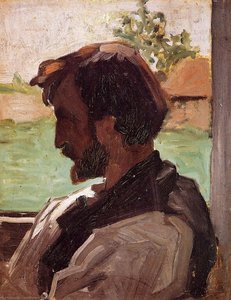
Ateliér — Doprava po celém světě zdarma — Dodání za 2–6 týdnů
      Frédéric Bazille, 1841 – 1870

      88 nejslavnějších obrazů autora Frédéric Bazille, seřazených podle popularity

      Nejoblíbenějším dílem autora Frédéric Bazille je Plážové koupání (1869), které je vystaveno v instituci Fogg Art Museum, Cambridge. Následují Rodinné setkání (1867) a The Pink Dress (1864) z platen, která čtenáři znají nejlépe. Náš katalog obsahuje 88 děl umělce Frédéric Bazille: zde je 88 nejznámějších, z nichž každé uvádí svůj rok vzniku, muzeum a důvod, proč je nezapomenutelné.

      Seřazeno podle našeho skóre popularity, které kombinuje počet vyhledávání, návštěv a objednávek u každého díla. Aktualizováno říjen 2026. Každý obraz na této stránce lze objednat jako ručně malovanou olejovou reprodukci na lněném plátně, nebo jako umělecký tisk vyrobený v požadovaném rozměru.

      Portrét Frédéric Bazille
      Frédéric Bazille · 1841 – 1870
      Narozen · zemřel
      1841 – 1870, Montpellier
      Směr
      Impressionist landscape
      Díla v našem katalogu
      88
      Nejslavnější
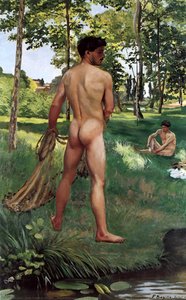
      Plážové koupání (1869)
      Nejvíce děl v
      Musée Fabre

      Nejlepší 10 obrazů: Frédéric Bazille – plátna, která zná každý

      Plážové koupání (1869) od Frédéric Bazille
      1

      Plážové koupání

      1869 · Olej na plátně · Fogg Art Museum, Cambridge

      Jean Frédéric Bazille: Životní oslava mladosti Jean Frédéric Bazille (1841–1870) byl francouzský impresionistický malíř, jehož dílo zůstalo krátké, ale významné – rychlá záře talentu, která byla tragicky ukončena předčasným úmrtím. Narodil se v Montpellieru ve Francii 6. prosince 1841 roku do bohaté protestantské rodiny zapojené do vinařství, což naznačovalo život mimo svět umění – jeho rodiče si přáli jeho finanční zabezpečení a zároveň podporovali jeho zájem o lékařské studium společně…

      Rodinné setkání (1867) od Frédéric Bazille
      2

      Rodinné setkání

      1867 · Olej na plátně · Musée d'Orsay, Paříž

      Jean Frédéric Bazillova "Rodinná Sjednocení" (La Réunion Familiale) je obraz, který v srdci diváka vyvolává hluboké emoce. Tato vibrující a detailně zobrazená scéna zachycuje živý sociální shromáždění venku, vytvořenou v roce 1867. Bazilla s mistrovským štětcem vykreslil scénu pod velkým stromem, kde se rodina a přátelé baví a užívají si volný čas. Obraz je bohatý na detaily – složité vzory a textury, které oživují každou linii a každý odstín. Je…

      The Pink Dress (1864) od Frédéric Bazille
      3

      The Pink Dress

      1864 · Acrylic On Canvas · Musée d'Orsay, Paříž

      Marilyn Monroe’s “Pink Dress,” designed by William Travilla for Howard Hawks’ 1953 film *Gentlemen Prefer Blondes*, transcends mere costume; it embodies an enduring symbol of glamour, ambition, and the seductive allure of Hollywood. The dress itself—a shocking pink silk satin gown adorned with black satin lining and a large bow—represents more than just fabric and embellishments; it encapsulates a pivotal moment in cinematic history and continues to fascinate audiences today.

      La Toilette (1870) od Frédéric Bazille
      4

      La Toilette

      1870 · Acrylic On Canvas · Musée Fabre, Montpellier

      The Painting's Significance and Context La Toilette, an oil-on-canvas painting by Jean Frédéric Bazille, is a remarkable work of art that showcases the artist's skill in capturing intimate moments. Created in 1869-1870, this painting is one of Bazille's last works before his untimely death in the Franco-Prussian War. Composition and Symbolism The painting depicts three women in a room, with one woman lying on a bed while the other two…

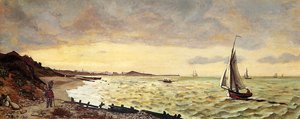
      Landscape on the Shore of Lez (1870) od Frédéric Bazille
      5

      Landscape on the Shore of Lez

      1870 · Oil

      Landscape on the Shore of Lez is a significant work by Frédéric Bazille, an artist whose life was marked by a brief but intense period of creativity. Born in 1841, Bazille’s career was tragically cut short when he died in 1870. This particular painting, completed in June 1870, represents one of his final artistic statements. It is a large landscape that the artist himself described as an eclogue, a term…

      The Family Gathering (1867) od Frédéric Bazille
      6

      The Family Gathering

      1867 · Oil On Canvas · Musée d'Orsay, Paříž

      To stand before The Family Gathering is to step directly into a sun-dappled afternoon of pure, unscripted joy. This painting by Jean Frédéric Bazille captures more than just a social assembly; it arrests the very essence of conviviality. One feels the gentle warmth emanating from the canvas, as if the viewer has stumbled upon this private moment in time. The composition is masterfully arranged beneath the generous canopy of a…

      Portrait of an Unknown Sitter as a Troubadour (1875) od Frédéric Bazille
      10

      Portrait of an Unknown Sitter as a Troubadour

      1875 · Oil On Canvas · Dallas Museum of Art, Dallas

      In this intimate oil portrait, we find ourselves drawn into a quiet, private moment with a young man. The composition is a close-up, bust-length study that pushes the subject toward the viewer through a dramatic use of chiaroscuro. A deep, nearly black background provides a void from which the sitter emerges, illuminated by a highly directional light source. This light catches the contours of his face, leaving the other side…

      Více pláten od Frédéric Bazille, od 11 do 88

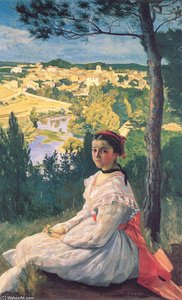
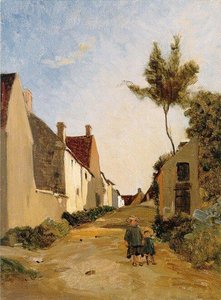
      View of the Village (1868) od Frédéric Bazille
      #18

      View of the Village

      1868 · Musée Fabre

      Jean Frédéric Bazille’s “View of the Village,” painted in 1868, stands as a quintessential example of the Impressionist spirit—a movement that sought to capture fleeting impressions of light…

      Nechte si to namalovat ručně →
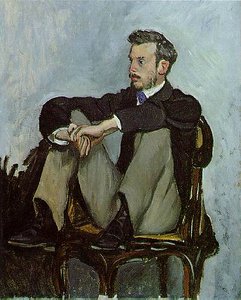
      Portrait of Renoir (1867) od Frédéric Bazille
      #20

      Portrait of Renoir

      1867 · Musée d'Orsay

      Jean Frédéric Bazille's “Portrait of Renoir” stands as a testament to the burgeoning Impressionist movement, capturing not merely an likeness but also a palpable sense of contemplative emotion.…

      Přineste toto světlo k sobě domů →
      Reclining Nude (1864) od Frédéric Bazille
      #23

      Reclining Nude

      1864 · Musée Fabre

      Jean Frédéric Bazille's 'Reclining Nude,' painted in 1864, is more than just a depiction of the human form; it’s a carefully constructed evocation of serenity and sensual grace,…

      Objednat toto plátno →
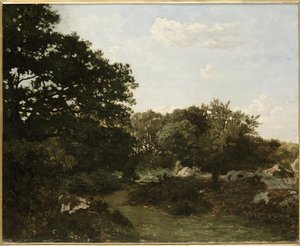
      Fontainebleau forest (1865) od Frédéric Bazille
      #24

      Fontainebleau forest

      1865 · Musée d'Orsay

      In this 1865 oil on canvas, we find ourselves standing at the edge of the Fontainebleau forest. The composition is asymmetrical, drawing the eye toward a dense, dark…

      Objednat toto plátno →
      Portrait of Edouard Blau (1866) od Frédéric Bazille
      #25

      Portrait of Edouard Blau

      1866 · National Gallery of Art

      “Portrait of Édouard Blau,” painted by Jean Frédéric Bazille in 1866, stands as a testament to the burgeoning Impressionist movement's fascination with capturing fleeting moments of light and…

      Objednat toto plátno →
      Self Portrait (1870) od Frédéric Bazille
      #26

      Self Portrait

      1870

      In this poignant Self Portrait, painted in 1870, we encounter Frédéric Bazille not merely as a painter, but as a man caught in the delicate transition between youthful…

      Objednat toto plátno →
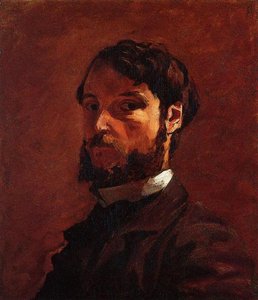
      Self-Portrait (1867) od Frédéric Bazille
      #28

      Self-Portrait

      1867 · Minneapolis Institute of Art

      Self-Portrait is an oil on canvas painting by the artist Frédéric Bazille. Created in France, this work belongs to the Impressionism movement. The subject of the painting is…

      Objednat toto plátno →
      Queens Gate at Aigues-Mortes (1867) od Frédéric Bazille
      #63

      Queens Gate at Aigues-Mortes

      1867 · Metropolitan Museum of Art

      Jean Frédéric Bazille's "Queens Gate at Aigues-Mortes," painted in 1867, isn’t merely a depiction of a medieval fortification; it’s an exquisite distillation of Impressionist philosophy and a poignant…

      Objednat toto plátno →
      Landscape at Chailly (1865) od Frédéric Bazille
      #65

      Landscape at Chailly

      1865 · Art Institute of Chicago

      Jean Frédéric Bazille’s “Landscape at Chailly,” painted in 1865, isn't merely a depiction of a Swiss hillside; it’s a distilled essence of Impressionist philosophy—a fleeting capture of light,…

      Nechte si to namalovat ručně →
      Toilet (1870) od Frédéric Bazille
      #70

      Toilet

      1870 · Musée Fabre

      Painted in 1870, tragically just months before Jean Frédéric Bazille's untimely death at the age of twenty-nine, *Toilet* (La Toilette) is a pivotal work within the burgeoning Impressionist…

      Nechte si to namalovat ručně →
      Portrait of Renoir (1867) od Frédéric Bazille
      #82

      Portrait of Renoir

      1867 · Clevelandské muzeum umění

      The Portrait of Renoir is an oil on canvas figure portrait created by the artist Frédéric Bazille. Executed in 1867, this work depicts Pierre-Auguste Renoir, who was a…

      Nechte si to namalovat ručně →
      Edouard Blau (1869) od Frédéric Bazille
      #83

      Edouard Blau

      1869 · National Gallery of Art

      This oil on canvas work, titled Edouard Blau, was executed by the French artist Frédéric Bazille. It offers a quiet study of the sitter, a French dramatist, critic,…

      Nechte si to namalovat ručně →

      Plátna umělce Frédéric Bazille podle jednotlivých období

      Co nejčastěji maloval Frédéric Bazille

      Čtyři témata, která se na těchto plátnech nejčastěji objevují, každé s jedním z jejich nejoblíbenějších příkladů.

      Kde visí plátna umělce Frédéric Bazille

      8 muzea, v nichž je umístěno nejvíce obrazů z této stránky.

      Muzea Město Díla autora Frédéric Bazille Obrazy z tohoto seznamu
      Musée Fabre, MontpellierMusée Fabre Montpellier 23 La Toilette, The Scoter, Petite Italienne chanteuse des rues
      Musée d'Orsay, PařížMusée d'Orsay Paříž 8 Rodinné setkání, The Pink Dress, The Family Gathering
      National Gallery of Art, WashingtonNational Gallery of Art Washington 6 Portrait of Edmond Maitre, Portrait of Edouard Blau, Edmond Maître
      Minneapolis Institute of Art, MinneapolisMinneapolis Institute of Art Minneapolis 2 Self-Portrait, The Banks of the Lez
      Art Institute of Chicago, ChicagoArt Institute of Chicago Chicago 2 Landscape at Chailly, Self Portrait with Palette
      Fogg Art Museum, CambridgeFogg Art Museum Cambridge 1 Plážové koupání
      Muzeum umění Houston, HoustonMuzeum umění Houston Houston 1 Le petit jardinier, ca Museum of Fine Arts,
      Dallas Museum of Art, DallasDallas Museum of Art Dallas 1 Portrait of an Unknown Sitter as a Troubadour

      Nejoblíbenější plátno každého desetiletí od Frédéric Bazille

      1. 1850s
      2. 1860s
        Plážové koupání (1869) od Frédéric Bazille
        1 z 88

        Plážové koupání

        Věk 19 – 28 · Fogg Art Museum

        Jean Frédéric Bazille: Životní oslava mladosti Jean Frédéric Bazille (1841–1870) byl francouzský impresionistický malíř, jehož dílo zůstalo krátké, ale významné – rychlá záře talentu, která byla tragicky ukončena…

      3. 1870s
        La Toilette (1870) od Frédéric Bazille
        Plátno 4 z 88

        La Toilette

        Věk 29 let · Musée Fabre

        The Painting's Significance and Context La Toilette, an oil-on-canvas painting by Jean Frédéric Bazille, is a remarkable work of art that showcases the artist's skill in capturing intimate…

      O plátnech umělce Frédéric Bazille: odpovědi na vaše otázky

      Kterým nejslavnějším dílem je Frédéric Bazille?Přečtěte si odpověď

      Plážové koupání (1869), Fogg Art Museum, Cambridge. Následují Rodinné setkání (1867) a The Pink Dress (1864).

      Kolik let bylo Frédéric Bazille, když byl/a namalován/a dílo Plážové koupání?Přečtěte si odpověď

      Frédéric Bazille, narozen 1841, měl 28 let: dílo Plážové koupání pochází z roku 1869.

      Kterých 10 nejslavnějších obrazů má Frédéric Bazille?Přečtěte si odpověď

      Plážové koupání, Rodinné setkání, The Pink Dress, La Toilette, Landscape on the Shore of Lez, The Family Gathering, The Scoter, Le petit jardinier, ca Museum of Fine Arts,, Saint-Saveur a Portrait of an Unknown Sitter as a Troubadour. U každého plátna v uvedeném žebříčku je uveden rok jeho vzniku a muzeum, ve kterém se nachází.

      Kolik děl celkem namaloval/a Frédéric Bazille?Přečtěte si odpověď

      V našem katalogu je 88 děl umělce Frédéric Bazille, datovaných od 1859 do 1870.

      Kde mohu vidět nejznámější plátna umělce Frédéric Bazille?Přečtěte si odpověď

      Většinou v Musée Fabre (Montpellier), Musée d'Orsay (Paříž) a National Gallery of Art (Washington); výše uvedený seznam obsahuje názvy jednotlivých muzeí a jejich pláten.

      Kdy Frédéric Bazille namaloval své nejoblíbenější obrazy?Přečtěte si odpověď

      V období 1860s, které tvoří 54 z 88 děl na této stránce, mezi nimi i Plážové koupání.

      Která jsou nejstarší a nejnovější slavná plátna umělce Frédéric Bazille?Přečtěte si odpověď

      Nejstarší plátno se zde datuje do Mystic marriage of Saint Catherine (1859); nejnovější je z La Toilette (1870).

      Co nejčastěji maloval/a Frédéric Bazille?Přečtěte si odpověď

      Portraits (6), Men (6) a Man (5) napříč 88 díly na této stránce.

      Kterou techniku používal(a) Frédéric Bazille nejčastěji?Přečtěte si odpověď

      Oil On Canvas, použito u 22 z 88 děl na této stránce.

      Kterému směru patří obraz autora Frédéric Bazille?Přečtěte si odpověď

      Impressionist landscape, jak dokazují plátna na této stránce.

      Která plátna od Frédéric Bazille visí v Musée Fabre?Přečtěte si odpověď

      Muzeum Musée Fabre, Montpellier se vlastní 23 děl z této stránky, mezi nimiž jsou i La Toilette, The Scoter a Petite Italienne chanteuse des rues.

      Mohu si koupit reprodukci plátna od Frédéric Bazille?Přečtěte si odpověď

      Ano. Každý obraz na této stránce lze objednat z jeho vlastní stránky jako ručně malovanou olejovou reprodukci nebo jako umělecký tisk v požadovaném rozměru.

      Frédéric Bazille: život v barvách

      The Brief Radiance of Jean Frédéric Bazille

      Jean Frédéric Bazille’s story is one of immense promise tragically cut short, a fleeting yet significant contribution to the burgeoning Impressionist movement. Born in Montpellier, France, on December 6, 1841, into a prosperous Protestant family involved in wine production, Bazille initially seemed destined for a life far removed from the world of art. His parents, while supportive, insisted he pursue medical studies alongside his artistic inclinations – a compromise reflecting the societal expectations of the time and their desire for his financial security. This duality would shape his early years, dividing his attention between anatomical dissection and the captivating allure of color and light. However, it was within the vibrant atmosphere of Paris, where he relocated in 1862 to continue his medical training, that Bazille’s artistic path truly began to unfold.

      Forging a Path Amongst Giants

      Paris proved to be a crucible for young Bazille. He quickly fell in with a circle of artists who would become synonymous with Impressionism: Claude Monet, Pierre-Auguste Renoir, and Alfred Sisley. Studying under Charles Gleyre provided him with formal training, but it was the shared passion and radical ideas exchanged amongst these friends that truly ignited his artistic vision. Bazille’s financial stability – a fortunate contrast to the often precarious existence of his companions – allowed him to generously support them, offering studio space and materials. This generosity wasn't merely practical; it stemmed from a deep camaraderie and belief in their collective potential. He became a vital hub for this emerging group, fostering an environment of experimentation and mutual encouragement. His early works, like *The Pink Dress* (c. 1864), already demonstrate a keen eye for capturing fleeting moments and the effects of light – hallmarks that would define Impressionism. He wasn’t simply mimicking established styles; he was actively participating in the creation of something entirely new. The influence of Eugène Delacroix, with his bold color palettes and dramatic compositions, is subtly present in Bazille's early work, yet he quickly moved beyond academic conventions to embrace a more modern sensibility.

      A Style Defined by Light and Friendship

      Bazille’s artistic style, though developing rapidly, possessed a unique character within the broader Impressionist aesthetic. While sharing their fascination with *plein air* painting – working outdoors to directly capture the nuances of natural light – his compositions often exhibited a more structured quality than Monet’s or Renoir’s. He frequently combined figure painting with landscape, placing his subjects thoughtfully within their environment, as seen in masterpieces like *Family Reunion* (1867-1868). This work is not merely a depiction of familial gathering; it's an exploration of light filtering through the trees, animating the scene and imbuing it with a sense of warmth and intimacy. His paintings weren’t just about *what* he saw, but *how* he saw it – the emotional resonance evoked by color, form, and light. He was deeply influenced by Eugène Delacroix, whose vibrant use of color resonated with his own artistic sensibilities, yet he moved beyond academic conventions to embrace a more modern sensibility. Bazille’s approach to capturing human figures in natural settings was particularly innovative; he sought to integrate them seamlessly into the landscape, creating a sense of harmony and atmosphere.

      A Life Interrupted: Legacy and Remembrance

      The blossoming career of Jean Frédéric Bazille was brutally interrupted by the Franco-Prussian War in 1870. Driven by a sense of patriotic duty, he joined a Zouave regiment just months after the conflict erupted. Tragically, he was killed in action on November 28, 1870, at the young age of 28, near Beaune-la-Rolande. His death sent shockwaves through the artistic community, robbing them of a talented friend and generous benefactor. His premature demise meant his work remained relatively unknown for many years. However, in recent decades, Bazille’s contributions have been increasingly recognized and celebrated. Today, his paintings are held in prestigious museums like the Musée d'Orsay in Paris, and reproductions allow art lovers worldwide to experience the beauty and innovation of his vision. Bazille’s legacy extends beyond his artistic output; he embodies the spirit of youthful idealism, unwavering dedication, and the power of friendship that defined the early days of Impressionism. He remains a poignant reminder of the potential lost, yet also a testament to the enduring impact of a brief but brilliant career.

      Key Works and Influences

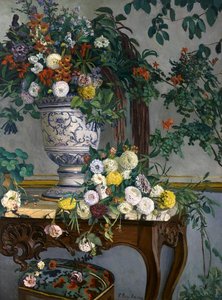
      Bazille’s artistic output was surprisingly limited during his lifetime – approximately sixty paintings are attributed to him. *The Pink Dress* (1864), a vibrant depiction of a young woman in a pink dress, is considered one of his most important early works, showcasing his burgeoning talent for capturing fleeting moments and the effects of light. *Family Reunion* (1867-1868) exemplifies his ability to integrate figures into landscapes with remarkable sensitivity, creating a sense of atmosphere and emotion. His work also demonstrates an interest in still life – particularly arrangements featuring flowers and fruit – often rendered with a delicate attention to detail. Bazille’s artistic development was significantly influenced by several key figures: Eugène Delacroix, whose dramatic use of color and dynamic compositions provided a foundation for Bazille's own style; Charles Gleyre, his formal training instructor who introduced him to the techniques of academic painting; and, crucially, his close friends Claude Monet, Pierre-Auguste Renoir, and Alfred Sisley, with whom he shared ideas and experimented with new approaches to painting. The legacy of these friendships profoundly shaped Bazille’s artistic trajectory.

      A Final Note

      Despite his tragically short life, Frédéric Bazille left an indelible mark on the development of Impressionism. His innovative approach to capturing light, atmosphere, and human figures in natural settings paved the way for future generations of artists. His story serves as a reminder that even the briefest of flames can illuminate the path for others, and that the most enduring legacies are often forged in the crucible of friendship and artistic collaboration.

      Všechna díla od Frédéric Bazille: 88 →