Ateliér — Doprava po celém světě zdarma — Dodání za 2–6 týdnů
      Joaquín Sorolla, 1863 – 1923

      The 100 Most Famous Joaquín Sorolla Paintings, Ranked

      The best-loved painting by Joaquín Sorolla is Walk on the Beach (Paseo a orillas del mar) (1909), which hangs in the Sorolla Museum, Madrid. Valencia beach in the morning light (1908) and Yo soy el pan de la vida (also known as I am the Bread of Life) (1897) come next among the canvases readers know best. Our catalogue holds 969 works by Joaquín Sorolla: here are the 100 most famous, each with its year, its museum and what makes it memorable.

      Seřazeno podle našeho skóre popularity, které kombinuje počet vyhledávání, návštěv a objednávek u každého díla. Aktualizováno říjen 2026. Each painting on this page can be ordered as an oil reproduction painted by hand on linen canvas, or as a fine art print, made to the size you choose.

      Portrét Joaquín Sorolla
      Joaquín Sorolla · 1863 – 1923
      Narozen · zemřel
      1863 – 1923, Valencie
      Směr
      Impressionistická krajina
      Díla v našem katalogu
      969
      Nejslavnější
      Walk on the Beach (Paseo a orillas del mar) (1909)
      Nejvíce děl v
      Hispanic Society Museum - Library

      Top 10 Joaquín Sorolla paintings: the canvases everyone knows

      Walk on the Beach (Paseo a orillas del mar) (1909) od Joaquín Sorolla
      1

      Walk on the Beach (Paseo a orillas del mar)

      1909 · Oil On Canvas · Sorolla Museum, Madrid

      A Sun-Drenched Moment: Joaquín Sorolla’s “Walk on the Beach” Joaquín Sorolla y Bastida, a name synonymous with the vibrant luminosity of Spanish light and life, gifted us with countless canvases brimming with joy and an almost palpable sense of summer. Among his most beloved works stands "Walk on the Beach" (Paseo a la orilla del mar), painted in 1909, a captivating tableau that transcends mere representation to become a profound…

      Valencia beach in the morning light (1908) od Joaquín Sorolla
      2

      Valencia beach in the morning light

      1908 · Oil On Canvas · Hispanic Society Museum - Library, New York

      In the soft, burgeoning glow of a Mediterranean dawn, Joaquín Sorolla y Bastida captures more than just a landscape; he captures the very breath of life. Valencia Beach in the Morning Light, completed in 1908, stands as a breathtaking testament to Spanish Impressionism, inviting the viewer to step into a world where the boundary between sea and sky dissolves into pure luminosity. As one gazes upon this masterpiece, there is…

      Yo soy el pan de la vida (also known as I am the Bread of Life) (1897) od Joaquín Sorolla
      3

      Yo soy el pan de la vida (also known as I am the Bread of Life)

      1897 · Oil On Canvas

      Joaquín Sorolla y Bastida's "Yo soy el pan de la vida," also known as "I am the Bread of Life," is a monumental oil on canvas painting completed in 1897. Measuring an impressive 415 x 533 cm, this artwork depicts a pivotal moment from the New Testament – Jesus Christ addressing a large crowd near the Sea of Galilee. The scene is dynamic and bustling, filled with numerous figures rendered…

      The Pink robe od Joaquín Sorolla
      4

      The Pink robe

      Oil On Canvas

      To step into the world of Joaquín Sorolla y Bastida is to step directly into the radiant warmth of a Mediterranean afternoon. His masterpiece, "The Pink Robe," transcends mere depiction; it embodies the very essence of Impressionism, capturing a moment suspended in time—a quiet dialogue between two women bathed in the golden glow of sunlight. Painted circa 1908-1909, this artwork offers an unparalleled glimpse into Sorolla's masterful vision, where light…

      Extremadura, The Market (1917) od Joaquín Sorolla
      5

      Extremadura, The Market

      1917 · Oil On Canvas · Hispanic Society Museum - Library, New York

      In the grand tapestry of Spanish Impressionism, few works capture the pulse of a nation as vibrantly as Joaquín Sorolla y Bastida’s “Extremadura, The Market.” Completed in 1917, this monumental oil on canvas is far more than a mere depiction of commerce; it is a breathtaking window into the soul of rural Spain. As part of his celebrated Vision of Spain series, Sorolla transcends the boundaries of traditional genre painting…

      Procházka podél pobřeží (1909) od Joaquín Sorolla
      6

      Procházka podél pobřeží

      1909 · Olej na plátně · Sorolla Museum, Madrid

      Dílo Joaquína Sorolli y Bastidy s názvem „Procházka podél pobřeží“, namalované v roce 1909, není pouhým zobrazením letního odpoledne; je to vyvražení světla, pohybu a pomíjivé krásy každodenního života. Vzniklo v období obrovských uměleckých úspěchú španělského malíře – po jeho oslavovaných výstavách v Americe – a představuje zásadní posun v Sorollově stylu. Jeho přístup se přibližoval k impresionistickému a evokativnímu vyjádření, přičemž si zachoval svou charakteristickou mistrovství v zachycování živých…

      The Smugglers (1919) od Joaquín Sorolla
      7

      The Smugglers

      1919 · Oil On Canvas

      To gaze upon Joaquín Sorolla y Bastida’s 1919 masterpiece, "The Smugglers," is to step directly into the radiant embrace of a Spanish summer. This expansive canvas, measuring an impressive 84 x 165 cm, does far more than merely depict a coastal scene; it serves as a profound sensory experience, capturing the very soul of the Mediterranean coast near Ibiza. Sorolla, often revered as the "Master of Light," utilizes the shimmering…

      Lighthouse walk at Biarritz (1906) od Joaquín Sorolla
      8

      Lighthouse walk at Biarritz

      1906 · Oil On Canvas · Muzeum umění v Bostonu, Boston

      In the luminous masterpiece Lighthouse Walk at Biarritz, Joaquín Sorolla y Bastida invites us into a world where the boundaries between reality and impression dissolve into a golden haze. Completed in 1906, this breathtaking canvas is far more than a mere depiction of a seaside stroll; it is a profound celebration of the Spanish Belle Époque, captured with an unparalleled mastery of light. As we gaze upon the scene, we…

      Clotilde on the Beach (1904) od Joaquín Sorolla
      9

      Clotilde on the Beach

      1904 · Acrylic On Canvas · Sorolla Museum, Madrid

      Joaquín Sorolla’s “Clotilde on the Beach,” painted in 1904, isn't merely a depiction of a seaside scene; it’s an immersion into the heart of Spanish summer – a vibrant distillation of light, color, and the quiet joy of family life. Sorolla, a master of *plein air* painting, captures a fleeting moment with breathtaking immediacy, transporting the viewer to the warm sands of Valencia's Playa de El Cabanyal. The canvas breathes…

      Messalina in the Arms of the Gladiator (1886) od Joaquín Sorolla
      10

      Messalina in the Arms of the Gladiator

      1886 · Oil

      The ground is a bed of scattered flora and heavy silence. A woman lies motionless, her hair woven with blossoms that seem to hold the weight of her stillness. She is a pale shape against the earth, appearing either lost in a deep unconsciousness or surrendered to death. Above her, a man looms, his presence defined by the sharp edge of a knife held in his hand. The outdoor setting…

      More Joaquín Sorolla canvases, 11 to 100

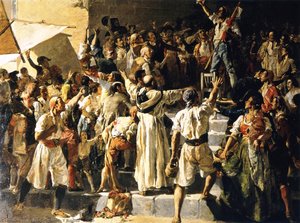
      The Cry of El Palleter (1884) od Joaquín Sorolla
      #12

      The Cry of El Palleter

      1884 · Palau de la Generalitat

      To step into the world of Joaquín Sorolla y Bastida is to surrender oneself to the radiant warmth of the Mediterranean sun. In his 1884 masterpiece, "The Cry…

      Order this canvas →
      Promenade by the Sea (1909) od Joaquín Sorolla
      #13

      Promenade by the Sea

      1909

      A Symphony of Light and Leisure: Exploring Joaquín Sorolla’s Promenade by the Sea Joaquín Sorolla y Bastida stands as one of Spain's most beloved Impressionist painters, celebrated for…

      Bring this light home →
      Self-portrait (1909) od Joaquín Sorolla
      #16

      Self-portrait

      1909 · Sorolla Museum

      Joaquín Sorolla y Bastida's 1909 self-portrait is more than just a likeness; it’s a potent distillation of the artist’s life, his spirit, and the very essence of Spain…

      Have it painted by hand →
      Siesta (1911) od Joaquín Sorolla
      #20

      Siesta

      1911 · Sorolla Museum

      Joaquín Sorolla y Bastida (1863 – 1923) stojí jako jeden z nejslavnějších španělských impresionistů, malíř, jehož plátna zachycují podstatu středomořského života s bezprecedentní luministickou září a okamžitostí. Jeho…

      Bring this light home →
      Rocks of the Cape, Javea (1905) od Joaquín Sorolla
      #23

      Rocks of the Cape, Javea

      1905 · Hispanic Society Museum - Library

      To gaze upon Joaquín Sorolla y Bastida’s 1905 masterpiece, "Rocks of the Cape, Javea," is to step directly into the radiant embrace of a Spanish summer. This oil…

      Bring this light home →
      Valencian Fisherwomen (1915) od Joaquín Sorolla
      #27

      Valencian Fisherwomen

      1915

      This oil on canvas painting by Joaquín Sorolla depicts a bustling scene on the coast, where a group of women stands in the water near several boats. The…

      Order this canvas →
      Měsíční sítě (1893) od Joaquín Sorolla
      #28

      Měsíční sítě

      1893

      Joaquín Sorolla y Bastida – jméno synonymum pro zářivý světlo a živou energii Španělska – byl víc než jen malíř; byl pečlivým kronikářem duše své země. Narodil se…

      Have it painted by hand →
      Swimmers, Javea (1905) od Joaquín Sorolla
      #32

      Swimmers, Javea

      1905

      The painting depicts two people swimming in the ocean. The first person is positioned on the left side of the canvas, while the second person is on the…

      Order this canvas →
      My Kids (1897) od Joaquín Sorolla
      #39

      My Kids

      1897

      Joaquín Sorolla y Bastida’s "My Kids" is not merely a depiction of three children; it is an effusion of pure, untainted joy captured on canvas. Completed in 1897,…

      Have it painted by hand →
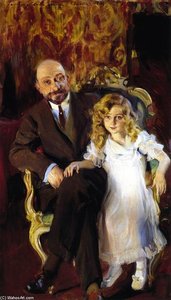
      Manuel B. Cossio (1908) od Joaquín Sorolla
      #40

      Manuel B. Cossio

      1908

      Subject and Composition The canvas presents a dignified figure, Manuel B. Cossio, rendered in a crisp suit and tie that speaks of early twentieth‑century Spanish professionalism. His stern…

      Have it painted by hand →
      Tipos de Salamanca (1912) od Joaquín Sorolla
      #41

      Tipos de Salamanca

      1912

      A Study in Spanish Identity Three figures are arranged within a shallow, formal space, dressed in traditional Spanish attire. The composition centers on these individuals, utilizing organic lines…

      Bring this light home →
      Rybař z Valencie (1916) od Joaquín Sorolla
      #42

      Rybař z Valencie

      1916

      Tvorba "Valencijského rybáře" od Joaquína Sorollyho není jen zobrazením scény, ale hlubokým ponorem do srdce španělského světla a života. Namalovaná v roce 1895, tato pozoruhodná práce zachycuje chvíli…

      Have it painted by hand →
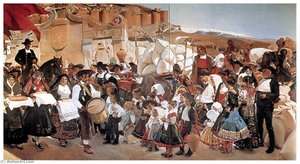
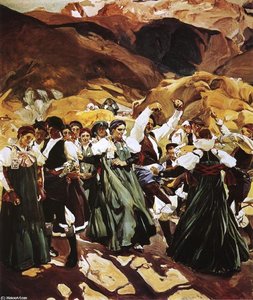
      The Jota (Aragon) (1914) od Joaquín Sorolla
      #43

      The Jota (Aragon)

      1914 · Hispanic Society Museum - Library

      A Symphony of Light and Spanish Spirit: Joaquín Sorolla’s “The Jota (Aragon)” Joaquín Sorolla y Bastida, a painter inextricably linked with the radiant heart of Spain, gifted us…

      Have it painted by hand →
      The Painter's Studio (1888) od Joaquín Sorolla
      #50

      The Painter's Studio

      1888

      To stand before Joaquín Sorolla y Bastida's The Painter's Studio is to step directly into a moment suspended in golden light, a breath held within the vibrant tapestry…

      Bring this light home →
      After a Bathe od Joaquín Sorolla
      #53

      After a Bathe

      Hispanic Society Museum - Library

      Joaquin Sorolla y Bastida stands as one of Spain’s most beloved painters, celebrated for his luminous canvases that effortlessly blend realism with an ethereal quality—a hallmark of his…

      Order this canvas →
      The Two Sisters (1909) od Joaquín Sorolla
      #54

      The Two Sisters

      1909 · Art Institute of Chicago

      In the luminous realm of Joaquín Sorolla y Bastida, light is not merely an element of the landscape; it is the very soul of the canvas. His 1909…

      Bring this light home →
      Fiesta Gallega od Joaquín Sorolla
      #57

      Fiesta Gallega

      Joaquín Sorolla y Bastida's *Fiesta Gallega* (1907) is more than just a depiction of a rural Spanish gathering; it’s an embodiment of the vibrant spirit of Spain itself.…

      Have it painted by hand →
      La bendicion de Isaac od Joaquín Sorolla
      #58

      La bendicion de Isaac

      In the profound stillness of La bendición de Isaac, Joaquín Sorolla y Bastida captures a pivotal moment from Hebrew tradition. The painting depicts the patriarch Isaac, now aged…

      Order this canvas →
      At the Pool in the Artist (1898) od Joaquín Sorolla
      #60

      At the Pool in the Artist

      1898 · Museo de Arte de Ponce

      Joaquín Sorolla y Bastida’s “At the Pool in the Artist’s Garden,” painted in 1898, isn’t merely a depiction of a summer afternoon; it’s an immersion into the very…

      Have it painted by hand →
      The Siesta (1911) od Joaquín Sorolla
      #62

      The Siesta

      1911

      Joaquin Sorolla y Bastida’s “The Siesta,” completed in 1911, transcends mere depiction; it embodies a philosophy – the deliberate embrace of stillness and beauty found within the simplest…

      Bring this light home →
      Maria la guapa (1914) od Joaquín Sorolla
      #64

      Maria la guapa

      1914

      Joaquín Sorolla's 1914 painting, *Maria la Guapa*, isn't merely a portrait; it’s an immersion into the heart of Spain’s golden age. This captivating work, depicting a young woman…

      Order this canvas →
      Sea Idyll (1908) od Joaquín Sorolla
      #65

      Sea Idyll

      1908 · Hispanic Society Museum - Library

      Joaquin Sorolla y Bastida, a pivotal figure in late 19th and early 20th century Spanish art, possessed an extraordinary gift for capturing the ephemeral beauty of light and…

      Order this canvas →
      The Kiss (1899) od Joaquín Sorolla
      #66

      The Kiss

      1899

      The Kiss by Joaquín Sorolla Y Bastida: A Moment of Spanish Light Subject Matter: Joaquin Sorolla’s “The Kiss” is an exquisite portrayal of intimacy and reverence, depicting a…

      Have it painted by hand →
      My Children (1904) od Joaquín Sorolla
      #67

      My Children

      1904 · Museo Sorolla

      Joaquín Sorolla’s “My Children,” painted in 1904, isn't merely a portrait; it’s an immersion into the heart of a sun-drenched Spanish afternoon. The scene unfolds within a modest…

      Have it painted by hand →
      Children on the Seashore (1903) od Joaquín Sorolla
      #68

      Children on the Seashore

      1903 · Philadelphia Museum of Art

      The Painting's Essence Joaquín Sorolla y Bastida's Children on the Seashore, created in 1903, is a beautiful depiction of children playing on the beach near the ocean. The…

      Have it painted by hand →
      Maria Planas de Gil (1906) od Joaquín Sorolla
      #69

      Maria Planas de Gil

      1906

      Joaquín Sorolla's ‘Maria Planas de Gil,’ painted in 1906, is more than simply a portrait; it’s an exquisite distillation of the Spanish light that defined his oeuvre and…

      Have it painted by hand →
      Ramón Pérez de Ayala (1920) od Joaquín Sorolla
      #71

      Ramón Pérez de Ayala

      1920 · Hispanic Society Museum - Library

      In the luminous realm of Spanish Impressionism, few works capture the intersection of human character and atmospheric brilliance as profoundly as Joaquín Sorolla y Bastida’s 1920 masterpiece, Ramón…

      Order this canvas →
      The Return from the Fishing (1898) od Joaquín Sorolla
      #73

      The Return from the Fishing

      1898 · Národní muzeum krásných umění

      Joaquín Sorolla y Bastida's “The Return from the Fishing,” completed in 1898, isn’t merely a depiction of a seaside scene; it’s an embodiment of Impressionism at its finest—a…

      Have it painted by hand →
      Under the awning, Zarauz (1910) od Joaquín Sorolla
      #74

      Under the awning, Zarauz

      1910 · Saint Louis Art Museum

      Joaquin Sorolla y Bastida's "Under the Awnings, Zarauz," painted in 1910, is a captivating Impressionist work that transports viewers to a sun-drenched beach scene in Spain. Housed within…

      Have it painted by hand →
      Fisherwomen (1911) od Joaquín Sorolla
      #75

      Fisherwomen

      1911

      Introduction to the Artist and Painting Joaquín Sorolla y Bastida, a renowned Spanish painter, is celebrated for his vivid depictions of everyday life in Spain. One of his…

      Order this canvas →
      Penitents, Holy Week, Seville (1914) od Joaquín Sorolla
      #76

      Penitents, Holy Week, Seville

      1914 · Hispanic Society Museum - Library

      Joaquín Sorolla y Bastida's "Penitents, Holy Week, Seville," painted in 1914, is a captivating oil on canvas that transports viewers to the heart of Spain’s deeply rooted religious…

      Bring this light home →
      Swimmers, Jávea (1905) od Joaquín Sorolla
      #77

      Swimmers, Jávea

      1905 · Sorolla Museum

      Joaquin Sorolla y Bastida's "Swimmers, Jávea," painted in 1905, isn’t merely a depiction of two women enjoying the Mediterranean Sea; it’s an exquisite distillation of light, movement, and…

      Bring this light home →
      Paris Boulevard (1885) od Joaquín Sorolla
      #79

      Paris Boulevard

      1885 · Sorolla Museum

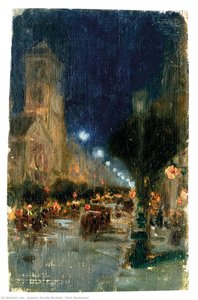
      Joaquin Sorolla y Bastida’s “Paris Boulevard,” painted in 1885, isn’t merely a depiction of a city street at night; it’s an immersive experience. Captured during his formative years…

      Have it painted by hand →
      Joaquín (1917) od Joaquín Sorolla
      #80

      Joaquín

      1917 · Sorolla Museum

      Joaquín Sorolla’s 1917 painting, “Joaquín,” isn't merely a likeness; it’s a carefully constructed tableau vivant, capturing the essence of early 20th-century Spanish society and the burgeoning spirit of…

      Bring this light home →
      La siesta (1912) od Joaquín Sorolla
      #82

      La siesta

      1912

      Joaquín Sorolla’s “La Siesta,” painted in 1912, is more than just a depiction of women resting outdoors; it's an embodiment of the Spanish spirit – a celebration of…

      Have it painted by hand →
      Wounded foot (1909) od Joaquín Sorolla
      #84

      Wounded foot

      1909

      Joaquín Sorolla y Bastida's “Wounded Foot,” painted in 1909, transcends mere depiction; it embodies the very essence of Impressionism and offers a poignant glimpse into the spirit of…

      Order this canvas →
      Seville, the Bullfighters (1915) od Joaquín Sorolla
      #85

      Seville, the Bullfighters

      1915 · Hispanic Society Museum - Library

      Seville, the Bullfighters is a captivating oil on panel painting created in 1915 by the renowned Spanish artist Joaquín Sorolla y Bastida. Measuring an impressive 350 x 231…

      Order this canvas →
      Mending the Sail (1896) od Joaquín Sorolla
      #86

      Mending the Sail

      1896

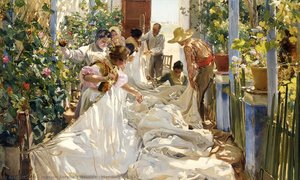
      Joaquín Sorolla Y Bastida, a name synonymous with the radiant light and vibrant energy of Spain, was more than just a painter; he was a chronicler of his…

      Order this canvas →
      La vuelta de la pesca (1894) od Joaquín Sorolla
      #88

      La vuelta de la pesca

      1894

      Introduction Joaquín Sorolla y Bastida, a renowned Spanish painter, created the captivating oil on canvas painting titled La Vuelta de la Pesca. This artwork is a testament to…

      Have it painted by hand →
      Maria in a Red Blouse (1910) od Joaquín Sorolla
      #90

      Maria in a Red Blouse

      1910

      Joaquin Sorolla’s “Maria in a Red Blouse,” painted in 1910, is more than just a portrait; it's an exquisite distillation of light, emotion, and the Spanish spirit. This…

      Order this canvas →
      On the coast of Biarritz (1906) od Joaquín Sorolla
      #91

      On the coast of Biarritz

      1906

      The painting depicts a lively seaside scene, capturing the essence of leisure and summertime joy. At its core is a group of figures – three prominent individuals standing…

      Order this canvas →
      Beneath the Canopy od Joaquín Sorolla
      #93

      Beneath the Canopy

      Joaquín Sorolla y Bastida's "Beneath the Canopy" is more than just a depiction of a sun-drenched beach; it’s an embodiment of the Spanish spirit – vibrant, joyful, and…

      Order this canvas →
      untitled (2616) od Joaquín Sorolla
      #95

      untitled (2616)

      In this breathtaking untitled masterpiece by the legendary Spanish Impressionist Joaquín Sorolla y Bastida, the viewer is invited to step into a sun-drenched sanctuary where time seems to…

      Bring this light home →
      Running along the beach (1908) od Joaquín Sorolla
      #96

      Running along the beach

      1908

      Joaquín Sorolla y Bastida's "Running along the beach," painted in 1908, is more than just a picturesque depiction of seaside leisure; it’s a masterful distillation of light, movement,…

      Order this canvas →
      Don Rafael Altamira y Crevea (1913) od Joaquín Sorolla
      #97

      Don Rafael Altamira y Crevea

      1913 · Hispanic Society Museum - Library

      Don Rafael Altamira y Crevea sits in a centered, three-quarter length pose, his presence defined by a heavy, luminous red mozzetta that anchors the composition. The portrait captures…

      Have it painted by hand →
      On the Coast of Valencia (1898) od Joaquín Sorolla
      #99

      On the Coast of Valencia

      1898 · Národní muzeum krásných umění

      The painting On the Coast of Valencia by Joaquin Sorolla Y Bastida is a beautiful depiction of people on the beach with boats in the water. Created in…

      Bring this light home →
      The Alcazar at Seville od Joaquín Sorolla
      #100

      The Alcazar at Seville

      Joaquín Sorolla y Bastida's “The Alcazar at Seville” is more than just a depiction of a magnificent building; it’s an immersive experience, a palpable distillation of light and…

      Bring this light home →

      Joaquín Sorolla's canvases, period by period

      What Joaquín Sorolla painted most

      The four subjects that return most often on these canvases, each with its best-loved example.

      Where Joaquín Sorolla's canvases hang

      8 muzea, v nichž je umístěno nejvíce obrazů z této stránky.

      Muzea Město Díla autora Joaquín Sorolla Obrazy z tohoto seznamu
      Hispanic Society Museum - Library, New YorkHispanic Society Museum - Library New York 113 Valencia beach in the morning light, Extremadura, The Market, Rocks of the Cape, Javea
      Sorolla Museum, MadridSorolla Museum Madrid 72 Walk on the Beach (Paseo a orillas del mar), Procházka podél pobřeží, Clotilde on the Beach
      Národní muzeum krásných umění, Buenos AiresNárodní muzeum krásných umění Buenos Aires 8 The Return from the Fishing, On the Coast of Valencia
      Museo del Prado, MadridMuseo del Prado Madrid 10 Aureliano de Beruete y Moret, Jr.
      J. Paul Getty Museum, Los AngelesJ. Paul Getty Museum Los Angeles 6 Courtyard of the Dances, Alcazar of Sevilla
      Musée d'Orsay, PařížMusée d'Orsay Paříž 4 The Return from Fishing: Hauling the Boat (study)
      Art Institute of Chicago, ChicagoArt Institute of Chicago Chicago 2 The Two Sisters
      Muzeum umění v Bostonu, BostonMuzeum umění v Bostonu Boston 1 Lighthouse walk at Biarritz

      Joaquín Sorolla's best-loved canvas of each decade

      1. 1880s
        Messalina in the Arms of the Gladiator (1886) od Joaquín Sorolla
        Ranked 10 of 100

        Messalina in the Arms of the Gladiator

        Věk 17 – 26

        The ground is a bed of scattered flora and heavy silence. A woman lies motionless, her hair woven with blossoms that seem to hold the weight of her…

      2. 1890s
      3. 1900s
        Walk on the Beach (Paseo a orillas del mar) (1909) od Joaquín Sorolla
        Canvas 1 of 100

        Walk on the Beach (Paseo a orillas del mar)

        Věk 37 – 46 · Sorolla Museum

        A Sun-Drenched Moment: Joaquín Sorolla’s “Walk on the Beach” Joaquín Sorolla y Bastida, a name synonymous with the vibrant luminosity of Spanish light and life, gifted us with…

      4. 1910s
        Extremadura, The Market (1917) od Joaquín Sorolla
        Canvas 5 of 100

        Extremadura, The Market

        Věk 47 – 56 · Hispanic Society Museum - Library

        In the grand tapestry of Spanish Impressionism, few works capture the pulse of a nation as vibrantly as Joaquín Sorolla y Bastida’s “Extremadura, The Market.” Completed in 1917,…

      5. 1920s
        Ramón Pérez de Ayala (1920) od Joaquín Sorolla
        71 of 100

        Ramón Pérez de Ayala

        Věk 57 – 60 · Hispanic Society Museum - Library

        In the luminous realm of Spanish Impressionism, few works capture the intersection of human character and atmospheric brilliance as profoundly as Joaquín Sorolla y Bastida’s 1920 masterpiece, Ramón…

      About Joaquín Sorolla's canvases: your questions answered

      What is the best-known painting by Joaquín Sorolla?Read the answer

      Walk on the Beach (Paseo a orillas del mar) (1909), Sorolla Museum, Madrid. Valencia beach in the morning light (1908) and Yo soy el pan de la vida (also known as I am the Bread of Life) (1897) follow.

      What age was Joaquín Sorolla when Walk on the Beach (Paseo a orillas del mar) was painted?Read the answer

      Joaquín Sorolla, born in 1863, was 46 years old: Walk on the Beach (Paseo a orillas del mar) dates from 1909.

      What are the 10 most famous paintings by Joaquín Sorolla?Read the answer

      Walk on the Beach (Paseo a orillas del mar), Valencia beach in the morning light, Yo soy el pan de la vida (also known as I am the Bread of Life), The Pink robe, Extremadura, The Market, Procházka podél pobřeží, The Smugglers, Lighthouse walk at Biarritz, Clotilde on the Beach a Messalina in the Arms of the Gladiator. Each canvas in the ranking above comes with its year and its museum.

      How many works did Joaquín Sorolla paint in all?Read the answer

      969 works by Joaquín Sorolla are in our catalogue, dated 1881 to 1920.

      Where can I see Joaquín Sorolla's most famous canvases?Read the answer

      Mostly in Hispanic Society Museum - Library (New York), Sorolla Museum (Madrid) a Národní muzeum krásných umění (Buenos Aires); the list above names each museum and its canvases.

      When did Joaquín Sorolla paint the best-loved canvases?Read the answer

      In 1910s, which gave 34 of the 100 works on this page, Extremadura, The Market among them.

      Which are Joaquín Sorolla's earliest and latest famous canvases?Read the answer

      The earliest canvas here is Seascape, Ships in the Port (1881); the latest is Ramón Pérez de Ayala (1920).

      What did Joaquín Sorolla paint most often?Read the answer

      Sunlight (18), Spain (17) a Beach scene (14), across the 100 works on this page.

      Which medium did Joaquín Sorolla paint in most often?Read the answer

      Oil On Canvas, used in 85 of the 100 works on this page.

      Which movement is Joaquín Sorolla's painting part of?Read the answer

      Impressionistická krajina, as the canvases on this page show.

      Which Joaquín Sorolla canvases hang at the Hispanic Society Museum - Library?Read the answer

      The Hispanic Society Museum - Library, New York holds 11 of the works on this page, among them Valencia beach in the morning light, Extremadura, The Market a Rocks of the Cape, Javea.

      Can I buy a reproduction of a Joaquín Sorolla canvas?Read the answer

      Yes. Every painting on this page can be ordered from its own page as an oil reproduction painted by hand, or as a fine art print, in the size you choose.

      Joaquín Sorolla: a life in paint

      Rané roky, rodina a formování talentu

      Joaquín Sorolla Y Bastida přišel na svět 27. února 1863 ve španělské Valencii. Jako nejstarší dítě řemeslníka Joaquína Sorolli a jeho manželky Concepción Bastida byl obDAREN do světa, který mu však brzy připravil první těžkou zkoušku. Život mladého chlapce byl poznamenán náhlým a tíživým tichem, když v srpnu 1865 zabrala epidemie cholery oba jeho rodiče. Tato tragédie zanechala Joaquína a jeho sestru Conchu jako sirotky. O jejich osud se však postarali matčini teta a strýk, řemeslník, kteří jim poskytli stabilitu a bezpečí, jež bratři a sestra potřebovali pro svůj další růst.

      Jiskra uměleckého talentu se v jeho mladistvých letech ve Valencii projevila velmi brzy. První lekce výtvarného umění odebral ve svém rodném městě, kde v něm vyklípal přirozený talent, který nešlo ignorovat. Tato raná výchova položila pevné základy pro jeho formální vzdělání pod vedením uznávaných umělců, jako byli Cayetano Capuz a José Benlliure. Právě tito mentoři pomohli vypracovat technické dovednosti, které mu v budoucnu umožnily překonat hranice místní scény a vyrazit za širšími horizonty uměleckého světa.

      Život a kariéra v Madridě

      V roce 1888 se Joaquín oženil za Clotilde García del Castillo, ženu, kterou znal už od dob svého mládí, kdy pracoval ve studiu jejího otce. Jejich společný život se v roce 1890 přesunul do Madridu, což byl milník, který znamenal zásadní kapitolu v jeho osobním i profesním rozvoji. Jak se usazovali v hlavním městě, jejich rodina se rozrůstala, a do roku 1895 se k nim přidali Maria, Joaquín a Elena. Tato léta byla obdobím budování nejen domácí pohody, ale i pověsti, která se nakonec vytrácejela daleko za hranice Španělska.

      Během desetiletí následujících po přestěhování do Madridu se Sorollův zájem přesunul směrem k tvorbě velkoformátových pláten. Většinu svého času věnoval práci na monumentálních quitech, které sahaly od mytologických a historických scén až po orientalistická témata a sociální studie. Jeho ambice se zrcadlila v měřítku jeho děl, když se snažil prostřednictvím svého štětce vyprávět komplexní příběhy. Toto období intenzivní tvorby přineslo rozšíření jeho slávy prostřednictvím řady mezinárodních výstav. Své dílo prezentoval v salonech po celé Evropě i v Americe, včetně měst jako Paříž, Benátky, Mnichov, Berlín či Chicago.

      Klíčová díla a zásadní úspěchy

      Zlomový okamžik v jeho kariéře nastal s vytvořením díla Sad Inheritance v roce 1899. Toto monumentální plátno, zobrazující děti koupající se v moři, bylo představeno na Světové výstavě v Paříži. Práce mu přinesla úroveň uznání, která mu navždy změnila život a vedla k tomu, že byl v roce 1900 jmenován rytířem Legie cti. Ve stejném roce získal na pařížské výstavě Grand Prix a medaili za zásluhy, čímž definitivně vstoupil na světovou scénu.

      Jeho úspěch v prvních letech nového století neustále rostl. V roce 1901 mu byla udělena medaile za zásluhy na Národní výstavě v Madridu. Tyto pocty odrážely jeho schopnost pohybovat se mezi tíživými sociálními tématy a zářivými, sluncem zalitými scénami, které mu nakonec daly trvalou reputaci. Jeho působnost se rozšířila daleko za hranice Španělska, neboť jeho schopnost zachytit světlo a život mu zajistila zakázky od významných mezinárodních institucí.

      Jedním z jeho nejambicióznějších projektů byla zakázka na vytvoření série Vision of Spain pro Hispánskou společnost v Americe. Tato série monumentálních děl mu umožnila vyjádřit jeho hluboké pouto k vlasti prostřednictvím velkolepé vizuální vyprávění. Jeho kariérou byly tyto okamžiky vrcholného úspěchu poznamenány, kdy se jeho technické mistrovství setkalo s hlubokým pocitem poslání.

      • Sad Inheritance (1899)
      • Vision of Spain

      Technika a umělecký styl

      Sorollův způsob práce působil stejně neklidně a živě jako samo Středomíří. Byl to malíř, který vyhledával přímočarost přírody a téměř všechna svá díla vytvářel en plein air. Tato oddanost malování pod otevřeným nebem mu umožnila čelit proměnlivým živlům v jejich nejčistší podobě. Jeho cílem nebylo pouze zachytit scénu; usiloval o to, aby uchopil samotný způsob, jakým světlo interaguje se světem, zejména to, jak tančí na hladině sluncem zalité vody a osvětluje kůži jeho postav. Jeho tahy štětcem byly volné a energické, využívající tlusté, expresivní údery, které dokázaly přenést pomíjivý pohyb slunečního světla přímo na plátno.

      Jeho technické zaměření bylo často rozpolceno mezi to intimní a to monumentální. S naprostou přirozeností dokázal vykreslit tichý portrét i tak, aby se vyrovnal s rozsáhlými sociálními či historickými tématy. V jeho práci s krajinou je patrná zvláštní obratnost; často umisťoval postavy do záře jasného španělského slunce, které zdá se rozpouštět hranice mezi mořem a nebesy. Tento přístup proměňoval obyčejné okamžiky v něco, co působilo okamžitě a jako by to dýchalo. Soustředil se na textury každodenního života a využíval světlo k definování tvarů lidí i prostředí, ve kterém se pohybovali.

      Poslední roky a smrt

      Poslední roky života, které prožil Joaquín Sorolla Y Bastida, byly poznamenány monumentálním úkolem, jenž vyžadoval nesmírnou fyzickou i mentální vytrvalost. Velkou část tohoto období věnoval práci na svých monumentálních freskách, projektu, který od něj vyžadoval naprostou soustředěnost a veškerou jeho sílu. Dílo své vrcholné tvorby dokázal dokončit v červnu 1919, kdy vstoupil poslední panel těchto rozsáhlých pláten, což představovalo zásadní uzavření jeho bohaté tvůrčí éry.

      Osud však jeho schopnost malovat brzy narušily zdravotní komplikace. V roce 1920 utrpěl mrtvici, což byl zásadní moment, který omezil jeho malířskou činnost a nevratně změnil tempo jeho života. Toto období rekonvalescence bylo tichým, melancholickým odklonem od těch energických, venkovních etap tvorby, jež definovaly jeho mladší roky. Joaquín Sorolla Y Bastida zemřel 10. srpna 1923. Byl pohřben na hřbitově v Valencii, ve své domovině, a tak se vrátil do regionu, který byl po celý život i v jeho umění tak neoddělitelnou součástí jeho duše.

      Odkaz a nesmrtelný vliv

      Dozvuk tvůrčího působení, kterého se stal Joaquín Sorolla Y Bastida, se rozšířil daleko za pobřeží jeho rodného Španělska. Jeho význam v mezinárodním uměleckém světě byl definitivně potvrzen členstvím v řadě prestižních institucí, mezi nimiž patřila Pařížská akademie krásných umění, Národní akademie krásných umění v Lisabonu či Real Academia de Bellas Artes de San Carlos ve Valencii. Tato ocenění odrážejí neuvěřitelnou schopnost umělce úspěšně překlenout propast mezi hlubokou lokální identitou a globálním uznáním. Byl oslavován jako „Oblíbený syn Valencie“ – titul, který do sebe nese hluboký význam a svědčí o neoddělitelném poutu mezi malířem a specifickým, zářivým světlem jeho domovskeho regionu.

      Dnes jsou jeho plátna uchovávána v prestižních sbírkách po celém Španělsku, v Evropě i v Americe. Schopnost, s jakou dokázal přenést neustálý pohyb moře a hřejivé dotepy slunečního světla na plochu plátna, zajistila, že jeho vize zůstane trvalou součástí kolektivního vědomí. Jeho díla jsou i v současnosti předmětem studií i obdivu v nejvýznamnějších muzeích světa, čímž si udržují přítomnost, která přesahuje celé kontinenty. Jeho vliv je stále patrný v tom, jak mistrovsky dokázal zachytit jedinečnou esenci místa a světla, čímž zanechal po sobě bohatý umělecký odkaz, který zůstává živou a nepostraditelnou součástí světové kulturní krajiny.

      • Sad Inheritance (1899)
      • Children on the Seashore (1903)
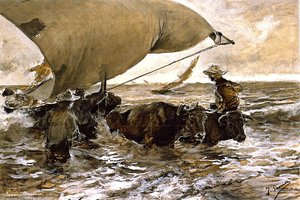
      • The Return from Fishing; Hauling the Boat (1894)

      Kde dnes spatřit jeho díla

      Pro ty, kteří si přejí vykročit cestou prostorymi, jež formovaly jeho život, nabízí Museo Sorolla v Madridu vzácný pohled do jeho soukromého světa. Toto unikátní muzeum věnované jednomu umělci sídlí v jeho bývalém domě a ateliéru, čímž zachovává atmosféru místa, kde žil a tvořil. V těchto stěnách lze nalézt intimní díla, jako je Moje děti, která nabízejí pohled na jeho osobní vazby, vzdálené od monumentálních zakázek, které definovaly jeho kariéru.

      Jeho vliv sahá daleko za hranice Španělska a proniká do významných světových sbírek. V New Yorku uchovává mnoho jeho děl Hispanic Society Museum - Library, což zajišťuje zachování významné části jeho tvorby pro všechny cestovatele do Spojených států. Jeho přítomnost je stejně silně cítit v Evropě, zejména v Paříži, kde Musée d'Orsay hlídá obraz Návrat z rybolovu; Tážení člunu.

      • Moje děti, Museo Sorolla, Madrid
      • Návrat z rybolovu; Tážení člunu, Musée d'Orsay, Paříž

      Všechna díla od Joaquín Sorolla: 969 →