Ateliér — Doprava po celém světě zdarma — Dodání za 2–6 týdnů
      Paul Nash, 1889 – 1946

      100 nejslavnějších obrazů autora Paul Nash, seřazených podle popularity

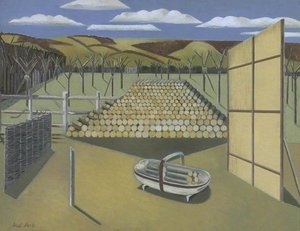
      Nejoblíbenějším dílem autora Paul Nash je The Separation of Light from Darkness (1924). Následují The Stackyard (1925) a Sunflower and sun (1942) z platen, která čtenáři znají nejlépe. Náš katalog obsahuje 111 děl umělce Paul Nash: zde je 100 nejznámějších, z nichž každé uvádí svůj rok vzniku, muzeum a důvod, proč je nezapomenutelné.

      Seřazeno podle našeho skóre popularity, které kombinuje počet vyhledávání, návštěv a objednávek u každého díla. Aktualizováno říjen 2026. Každý obraz na této stránce lze objednat jako ručně malovanou olejovou reprodukci na lněném plátně, nebo jako umělecký tisk vyrobený v požadovaném rozměru.

      Portrét Paul Nash
      Paul Nash · 1889 – 1946
      Narozen · zemřel
      1889 – 1946, Kensington
      Směr
      Surrealism
      Díla v našem katalogu
      111
      Nejslavnější
      The Separation of Light from Darkness (1924)
      Nejvíce děl v
      Národní galerie Kanady

      Nejlepší 10 obrazů: Paul Nash – plátna, která zná každý

      The Separation of Light from Darkness (1924) od Paul Nash
      1

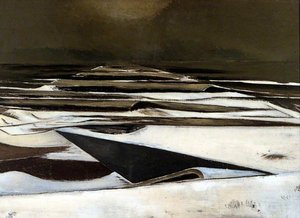
      The Separation of Light from Darkness

      1924 · Woodcut

      We are looking at The Separation of Light from Darkness, a work created by Paul Nash in 1924. This piece emerged during a significant period in the artist's development, following his formative years in the United Kingdom. Nash was born in Kensington, United Kingdom, in 1889, and his perspective was shaped by the landscapes and environments of his home country.

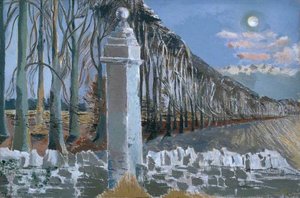
      Landscape of the Moon's Last Phase (1944) od Paul Nash
      4

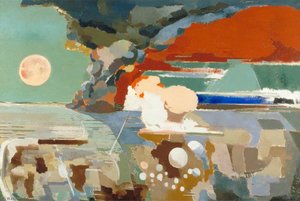
      Landscape of the Moon's Last Phase

      1944 · Oil On Canvas · Walker Art Gallery, Liverpool

      Paul Nash’s Landscape of the Moon's Last Phase transports the viewer to a moment suspended between night and dawn, a breathtaking tableau dominated by the soft, yet profound, luminescence of a waning moon. This painting is more than a mere depiction of nature; it is an atmospheric meditation on cycles—the ebb and flow of light, life, and time itself. The composition draws the eye across a sweeping vista where foreground…

      Circle of the Monoliths (1938) od Paul Nash
      5

      Circle of the Monoliths

      1938 · Oil On Canvas · Leeds Art Gallery, Leeds

      Paul Nash's “Circle of the Monoliths,” painted in 1938, isn’t merely a landscape; it’s a meticulously constructed dreamscape, a potent distillation of memory, myth, and the unsettling beauty of the British countryside. This remarkable work, housed at Leeds Museums and Galleries, invites viewers into a realm where familiar forms are fractured, perspectives shift, and an ancient, almost primeval energy permeates every detail. Nash, deeply influenced by William Blake’s visionary poetry…

      The Creation of the Firmament (1924) od Paul Nash
      6

      The Creation of the Firmament

      1924 · Woodcut

      In this 1924 woodcut, we witness a moment of profound, almost violent transition. The work, part of a series of illustrations for the book Genesis, moves away from the figurative to explore the very mechanics of existence. It is a stark, monochromatic vision where the separation of light from darkness is rendered not as a gentle dawn, but as a rhythmic, angular tension. The composition is dominated by a series…

      The Creation of Land (1924) od Paul Nash
      7

      The Creation of Land

      1924 · Woodcut

      The Creation of Land emerges from the shadows of a profound transformation. Created by Paul Nash in 1924, this work exists as a singular moment within a larger, rhythmic sequence. It belongs to a series of woodcuts that draw their strength from the biblical Genesis, capturing the very instant when the world begins to take shape through a jerky, frightening cataclysm. The landscape does not merely appear; it erupts.

      Oxford During the War (1942) od Paul Nash
      8

      Oxford During the War

      1942 · Oil On Canvas · Worcester College, Oxford

      Paul Nash’s "Oxford During the War," painted in 1942, is far more than a mere depiction of an English landscape; it is a profound meditation on endurance. The canvas captures a scene steeped in the palpable tension of wartime, yet simultaneously breathes with an almost defiant tranquility. One gazes upon the foreground, drawn immediately to the imposing presence of the parked tank—a stark emblem of military reality—which anchors the composition.…

      The Diving Stage (1928) od Paul Nash
      9

      The Diving Stage

      1928 · Oil On Canvas · Britský radový fond, Londýn

      The Haunting Stillness of “The Diving Stage” Paul Nash’s “The Diving Stage,” painted in 1928, isn't merely a depiction of a seaside structure; it’s a meticulously crafted tableau of isolation, anticipation, and the unsettling beauty of suspended time. Emerging from the British Council Collection, this work transcends its subject matter to become a profound meditation on human presence within a vast, indifferent landscape. The painting immediately commands attention with its…

      The Creation of the Starry Firmament (1924) od Paul Nash
      10

      The Creation of the Starry Firmament

      1924 · Woodcut

      The Creation of the Starry Firmament is a significant woodcut by the British artist Paul Nash. Created in 1924, this work emerged from a period of intense creative development for the artist. It was produced as part of a series of illustrations for the book Genesis, a project that sought to visualize the biblical narrative through a modern, abstracted lens. The piece captures a moment of cosmic emergence, translating the…

      Více pláten od Paul Nash, od 11 do 100

      November Moon (1942) od Paul Nash
      #88

      November Moon

      1942 · Fitzwilliamovo muzeum

      In the quietude of 1942, amidst a world gripped by the profound tensions of global conflict, Paul Nash captured a moment of profound stillness in his evocative masterpiece,…

      Objednat toto plátno →
      Telecommunications (1934) od Paul Nash
      #89

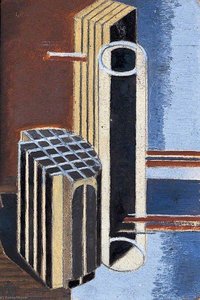
      Telecommunications

      1934 · Walker Art Gallery

      Paul Nash’s 1934 painting, “Telecommunications,” isn’t merely a still life; it’s a carefully constructed visual argument about the burgeoning anxieties and promises of modernity. Rendered in a restrained…

      Nechte si to namalovat ručně →
      Druid Landscape (1938) od Paul Nash
      #91

      Druid Landscape

      1938 · Britský radový fond

      Paul Nash’s Druid Landscape, painted in 1938, isn't merely a depiction of a landscape; it’s an immersion into a carefully constructed dreamscape. Created during a period of profound…

      Nechte si to namalovat ručně →
      Dymchurch Steps od Paul Nash
      #93

      Dymchurch Steps

      Národní galerie Kanady

      The oil on canvas titled Dymchurch Steps is a work by the British artist Paul Nash. This piece was painted and re-worked between 1924 and 1944. It measures…

      Objednat toto plátno →
      Chestnut Waters od Paul Nash
      #94

      Chestnut Waters

      Národní galerie Kanady

      Paul Nash presents Chestnut Waters, an oil on canvas that captures a specific, quiet moment in the English landscape. The work originated in 1923 and was later reworked…

      Nechte si to namalovat ručně →
      Landscape (verso) od Paul Nash
      #100

      Landscape (verso)

      Fitzwilliamovo muzeum

      In the quiet corners of art history, few works capture the delicate equilibrium between the tangible world and the ethereal spirit quite like Paul Nash’s Landscape (verso). This…

      Objednat toto plátno →

      Plátna umělce Paul Nash podle jednotlivých období

      Co nejčastěji maloval Paul Nash

      Čtyři témata, která se na těchto plátnech nejčastěji objevují, každé s jedním z jejich nejoblíbenějších příkladů.

      Kde visí plátna umělce Paul Nash

      8 muzea, v nichž je umístěno nejvíce obrazů z této stránky.

      Muzea Město Díla autora Paul Nash Obrazy z tohoto seznamu
      Národní galerie Kanady, OttawaNárodní galerie Kanady Ottawa 9 A Night Bombardment, Void, Night Fighter
      Government Art Collection, LondýnGovernment Art Collection Londýn 5 Pink Hyacinth, Riviera Window, Cros de Cagnes, Landscape
      Britský radový fond, LondýnBritský radový fond Londýn 4 The Diving Stage, Eclipse of the Sunflower, Druid Landscape
      Leeds Art Gallery, LeedsLeeds Art Gallery Leeds 3 Circle of the Monoliths, Still Life with Bog Cotton, The Shore
      Fitzwilliamovo muzeum, CambridgeFitzwilliamovo muzeum Cambridge 3 Coronilla (recto), November Moon, Landscape (verso)
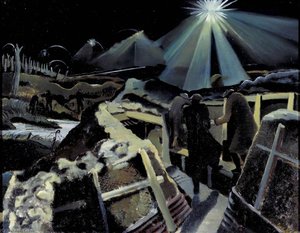
      Imperial War Museums, LondýnImperial War Museums Londýn 6 Follow the Fuhrer Above the Clouds, Battle of Germany
      Art Gallery of New South Wales, SydneyArt Gallery of New South Wales Sydney 2 Sunflower and sun, Mimosa Wood
      Walker Art Gallery, LiverpoolWalker Art Gallery Liverpool 2 Landscape of the Moon's Last Phase, Telecommunications

      Nejoblíbenější plátno každého desetiletí od Paul Nash

      1. 1910s
      2. 1920s
        The Separation of Light from Darkness (1924) od Paul Nash
        Plátno 1 z 100

        The Separation of Light from Darkness

        Věk 31 – 40

        We are looking at The Separation of Light from Darkness, a work created by Paul Nash in 1924. This piece emerged during a significant period in the artist's…

      3. 1930s
        Circle of the Monoliths (1938) od Paul Nash
        5 z 100

        Circle of the Monoliths

        Věk 41 – 50 · Leeds Art Gallery

        Paul Nash's “Circle of the Monoliths,” painted in 1938, isn’t merely a landscape; it’s a meticulously constructed dreamscape, a potent distillation of memory, myth, and the unsettling beauty…

      4. 1940s

      O plátnech umělce Paul Nash: odpovědi na vaše otázky

      Kterým nejslavnějším dílem je Paul Nash?Přečtěte si odpověď

      The Separation of Light from Darkness (1924), následovaný dílem The Stackyard (1925) a Sunflower and sun (1942).

      Kolik let bylo Paul Nash, když byl/a namalován/a dílo The Separation of Light from Darkness?Přečtěte si odpověď

      Paul Nash, narozen 1889, měl 35 let: dílo The Separation of Light from Darkness pochází z roku 1924.

      Kterých 10 nejslavnějších obrazů má Paul Nash?Přečtěte si odpověď

      The Separation of Light from Darkness, The Stackyard, Sunflower and sun, Landscape of the Moon's Last Phase, Circle of the Monoliths, The Creation of the Firmament, The Creation of Land, Oxford During the War, The Diving Stage a The Creation of the Starry Firmament. U každého plátna v uvedeném žebříčku je uveden rok jeho vzniku a muzeum, ve kterém se nachází.

      Kolik děl celkem namaloval/a Paul Nash?Přečtěte si odpověď

      V našem katalogu je 111 děl umělce Paul Nash, datovaných od 1914 do 1945.

      Kde mohu vidět nejznámější plátna umělce Paul Nash?Přečtěte si odpověď

      Většinou v Národní galerie Kanady (Ottawa), Government Art Collection (Londýn) a Britský radový fond (Londýn); výše uvedený seznam obsahuje názvy jednotlivých muzeí a jejich pláten.

      Kdy Paul Nash namaloval své nejoblíbenější obrazy?Přečtěte si odpověď

      V období 1920s, které tvoří 35 z 100 děl na této stránce, mezi nimi i The Separation of Light from Darkness.

      Která jsou nejstarší a nejnovější slavná plátna umělce Paul Nash?Přečtěte si odpověď

      Nejstarší plátno se zde datuje do The Orchard (1914); nejnovější je z Solstice of the Sunflower (1945).

      Co nejčastěji maloval/a Paul Nash?Přečtěte si odpověď

      Landscape (20), Geometric shapes (8) a British art (8) napříč 100 díly na této stránce.

      Kterou techniku používal(a) Paul Nash nejčastěji?Přečtěte si odpověď

      Oil On Canvas, použito u 8 z 100 děl na této stránce.

      Kterému směru patří obraz autora Paul Nash?Přečtěte si odpověď

      Surrealism, jak dokazují plátna na této stránce.

      Která plátna od Paul Nash visí v Národní galerie Kanady?Přečtěte si odpověď

      Muzeum Národní galerie Kanady, Ottawa se vlastní 9 děl z této stránky, mezi nimiž jsou i A Night Bombardment, Void a Night Fighter.

      Mohu si koupit reprodukci plátna od Paul Nash?Přečtěte si odpověď

      Ano. Každý obraz na této stránce lze objednat z jeho vlastní stránky jako ručně malovanou olejovou reprodukci nebo jako umělecký tisk v požadovaném rozměru.

      Paul Nash: život v barvách

      Paul Nash: Věštcem krajiny a svědkem války

      Paul Nash, jehož plné jméno znělo John Northcote Nash, se narodil v Londýně roku 1889 do rodiny právníka a ženy s projevujícími se psychickými problémy. Tato raná zkušenost s nestabilitou a přesun do klidného Buckinghamshire formovala jeho citlivost k krajině a jejímu skrytému dramatu. Nashova tvorba, která se prolínala modernismem a tradičními technikami, je hluboce zakořeněna v anglické krajině, ale zároveň překračuje hranice realistického zobrazení a proniká do sféry symbolu a emocí. Jeho bratr John Nash byl také malíř a ilustrátor, což přispělo k formování jeho uměleckého vkusu a ambicí. V mládí studoval na Slade School of Fine Art, kde se i přes jisté obtíže s figurálním kreslením specializoval na krajinomalbu, nacházeje inspiraci v prastarých památkách – pohřebních mohylách, hradbách z doby železné a monumentálních skalních útvarů jako jsou Wittenham Clumps. Tyto prvky staré historie se staly nedílnou součástí jeho vizuálního jazyka, evokujíc pocit tajemství a dávné moudrosti. Vliv William Blakea a J.M.W. Turnera je v Nashových raných pracích zřetelný – stejně jako oni hledal v krajině hlubší významy a snažil se zachytit její transcendentní kvality.

      Od modernismu k surrealistickým náznakům

      Nashova tvorba prošla výrazným vývojem. Zpočátku se držel formálnějšího, dekorativního stylu, ale postupně se jeho dílo stávalo stále více abstraktním a experimentálním. Vliv Giorgia de Chirica, italského malíře spojeného s metafyzickým realismem, ho v roce 1928 zásadně ovlivnil a přivedl do blízkosti surrealismu. Nash se však nikdy plně nezařadil mezi surrealisty; jeho práce spíše obsahují prvky symboliky a snů zasazené do realistického prostředí anglické krajiny. Začal umisťovat běžné předměty – staré stroje, rozbité zrcadla, opuštěné budovy – do svých maleb, čímž jim propůjčoval novou identitu a symbolický význam. Tyto objekty se stávaly součástí krajiny, ale zároveň ji narušovaly a podněcovaly k zamyšlení nad pomíjivostí času a lidské existence. Nashova schopnost kombinovat moderní estetiku s tradičními tématy krajinomalby ho odlišovala od jeho současníků a učinila ho jedním z klíčových představitelů britského modernismu.

      Válečný svědek: Záznamy o utrpení a devastaci

      Nashova tvorba nabrala zcela nový rozměr s vypuknutím první světové války. Jako oficiální válečný umělec se zúčastnil bojů na západní frontě a zachytil hrůzy a devastaci války v sérii ikonických obrazů, jako je "The Menin Road". Jeho díla nejsou oslavou hrdinství nebo triumfu; spíše zobrazují pustinu a beznaděj, kterou válka zanechala na krajině i duších vojáků. Nash se vyhýbal dramatickým scénám boje a soustředil se na zachycení atmosféry opuštěnosti a ztráty – rozbité stroje, šedivé bahenní pláně, mrtvé stromy. Jeho obrazy jsou plné melancholie a tíživého ticha, které rezonují s traumatem války. Během druhé světové války vytvořil sérii "Aerial Creatures", antropomorfních zobrazení letadel havarovaných v krajině. Tyto díla, i přes svou bizarnost, odrážejí Nashovu rostoucí znepokojivost nad technologickým pokrokem a jeho dopadem na lidstvo a přírodu.

      Dědictví a význam

      Paul Nash zemřel roku 1946 v Boscombe, zanechávaje po sobě bohaté umělecké dědictví. Jeho práce jsou dnes považovány za klíčové reprezentace britského modernismu a surrealismu. Nashova schopnost spojovat tradiční krajinomalbu s modernistickou estetikou a symbolikou ho učinila jedním z nejvýznamnějších umělců své doby. Jeho válečná díla jsou ikonickými záznamy o hrůzách války, zatímco jeho civilní obrazy zkoumají vztah mezi člověkem a přírodou s hlubokým psychologickým vhledem. Nash byl také spoluzakladatelem skupiny Unit One, která hrála významnou roli v rozvoji britského umění 30. let. Jeho tvorba ovlivnila generace umělců a jeho díla jsou vystavována v předních galeriích a muzeích po celém světě, jako je Tate Britain a Imperial War Museum. Nashova práce i nadále rezonuje s diváky díky své kráse, symbolice a hlubokému pochopení lidské existence.

      Všechna díla od Paul Nash: 111 →