Ateliér — Doprava po celém světě zdarma — Dodání za 2–6 týdnů
      Simon Vouet, 1590 – 1649

      100 nejslavnějších obrazů autora Simon Vouet, seřazených podle popularity

      Nejoblíbenějším dílem autora Simon Vouet je Venus a Adonis (1642), které je vystaveno v instituci J. Paul Getty Museum, Los Angeles. Následují The Muses of Urania and Calliope (1634) a Annunciation (1640) z platen, která čtenáři znají nejlépe. Náš katalog obsahuje 166 děl umělce Simon Vouet: zde je 100 nejznámějších, z nichž každé uvádí svůj rok vzniku, muzeum a důvod, proč je nezapomenutelné.

      Seřazeno podle našeho skóre popularity, které kombinuje počet vyhledávání, návštěv a objednávek u každého díla. Aktualizováno říjen 2026. Každý obraz na této stránce lze objednat jako ručně malovanou olejovou reprodukci na lněném plátně, nebo jako umělecký tisk vyrobený v požadovaném rozměru.

      Portrét Simon Vouet
      Simon Vouet · 1590 – 1649
      Narozen · zemřel
      1590 – 1649, Paříž
      Směr
      French baroque
      Díla v našem katalogu
      166
      Nejslavnější
      Venus a Adonis (1642)
      Nejvíce děl v
      Louvre

      Nejlepší 10 obrazů: Simon Vouet – plátna, která zná každý

      Venus a Adonis (1642) od Simon Vouet
      1

      Venus a Adonis

      1642 · Akryl na plátně · J. Paul Getty Museum, Los Angeles

      Venus and Adonis – A Baroque Symphony of Desire and Mortality Simon Vouet’s “Venus and Adonis,” completed in 1642, transcends mere depiction; it embodies the very essence of French Baroque art—a masterful fusion of Italian influences and profound artistic sensitivity. This iconic scene draws directly from Ovid's *Metamorphoses*, capturing the dramatic confrontation between Venus, goddess of love, and Adonis, a youthful hunter tragically seduced by her allure, foreshadowing his impending…

      The Muses of Urania and Calliope (1634) od Simon Vouet
      2

      The Muses of Urania and Calliope

      1634 · Acrylic On Canvas · National Gallery of Art, Washington

      Simon Vouet’s “The Muses Urania and Calliope”: A Symphony of Baroque Grace Simon Vouet (1590-1649) stands as a pivotal figure in the artistic landscape of 17th-century France, marking the decisive transition from Mannerism to the opulent grandeur of the Baroque style. His legacy resides not merely in his prolific output but also in his unwavering dedication to mastering Italian influences—a pursuit that fundamentally reshaped French painting and cemented Vouet’s place…

      Annunciation (1640) od Simon Vouet
      3

      Annunciation

      1640 · Oil On Canvas · Galleria degli Uffizi, Florencie

      Simon Vouet's "Annunciation," painted in 1640, is more than just a religious depiction; it’s a masterful orchestration of light, shadow, and human emotion. This captivating work transports the viewer to an intimate interior space, where the momentous announcement of Mary’s divine conception unfolds with breathtaking drama. The painting immediately draws the eye to the kneeling figure of the Virgin Mary, bathed in a warm, golden glow emanating from the right…

      The Fortuneteller (detail) (1617) od Simon Vouet
      4

      The Fortuneteller (detail)

      1617 · Oil On Canvas · Galleria Nazionale d'Arte Antica, Řím

      In the heart of 1617, amidst the vibrant and transformative atmosphere of Roman artistic circles, Simon Vouet captured a moment of profound human connection in his masterpiece, The Fortuneteller. This work, particularly when viewed in its intimate details, serves as much more than a mere portrait; it is an emblem of the burgeoning Baroque style that was beginning to reshape the visual landscape of Europe. The scene unfolds with a…

      Sleeping Venus (1630) od Simon Vouet
      5

      Sleeping Venus

      1630 · Acrylic On Canvas · Szépművészeti Múzeum, Budapešť

      Simon Vouet's "Sleeping Venus," painted around 1630, is not merely a depiction of a reclining nude; it’s an exquisite distillation of Renaissance ideals and the burgeoning Baroque aesthetic. This captivating work transcends simple portraiture, offering instead a profound meditation on beauty, repose, and the delicate balance between earthly pleasure and spiritual contemplation. The painting immediately draws the viewer into a world of hushed tranquility, inviting us to share in the…

      Allegory of Virtue (1634) od Simon Vouet
      6

      Allegory of Virtue

      1634 · Acrylic On Canvas · Louvre, Paříž

      Simon Vouet’s “Allegory of Virtue,” completed around 1634, stands as a testament to the burgeoning Baroque aesthetic infiltrating French artistic circles during Louis XIII's reign. More than just a portrait—though it undeniably depicts a woman radiating grace and authority—the painting delves into profound philosophical concepts rooted in humanist ideals prevalent at the time.

      The Entombment (1638) od Simon Vouet
      7

      The Entombment

      1638 · Oil On Canvas · Fitzwilliamovo muzeum, Cambridge

      Simon Vouet's "The Entombment," painted in 1635–1638, is not merely a depiction of a biblical scene; it’s an exquisitely rendered meditation on grief, faith, and the profound dignity of sacrifice. This monumental work, currently residing within the collection of the Fitzwilliam Museum in Cambridge, transcends its subject matter to become a powerful testament to the Baroque era's ability to evoke intense emotion through masterful technique and carefully considered symbolism. Vouet,…

      Angels with Attributes of the Passion: Angel Holding the Vessel and Towel for washing the hands of Pontius Pilate (1624) od Simon Vouet
      8

      Angels with Attributes of the Passion: Angel Holding the Vessel and Towel for washing the hands of Pontius Pilate

      1624 · Oil · Minneapolis Institute of Art, Minneapolis

      A single celestial figure emerges from a deep, near-black void, commanding the space with an intimate and monumental presence. This angel, caught in a moment of profound spiritual devotion, gazes upward with eyes full of soulful contemplation or sorrow. The light descends from the upper left, carving the figure out of the darkness and casting soft, tender shadows across a face etched with emotion. Every detail feels immediate, from the…

      Saint John (1623) od Simon Vouet
      9

      Saint John

      1623 · Oil On Canvas · Philadelphia Museum of Art, Philadelphia

      A young man turns his face toward a light that remains unseen. His eyes, wide and searching, catch a glimmer that pulls his gaze upward, away from the dark, murky depths of the background. Thick, dark curls frame a pale face, creating a sharp contrast against the heavy shadows that swallow the space around him. He is caught in a moment of sudden, quiet realization. The light does not merely…

      Virgin and Child, with an Angel (1642) od Simon Vouet
      10

      Virgin and Child, with an Angel

      1642 · Oil On Panel · Philadelphia Museum of Art, Philadelphia

      The light falls softly upon the skin of the Virgin Mary, catching the curve of her cheek and the small, smooth hands of the Christ Child. They sit within a triangular arrangement that anchors the composition, surrounded by the deep shadows of a dense woodland. An angel leans into this intimate circle, its robes glowing with warm yellows and golds that contrast against the heavy, dark trees behind them. At…

      Více pláten od Simon Vouet, od 11 do 100

      Madonna with Child (1625) od Simon Vouet
      #11

      Madonna with Child

      1625 · Státní Ermitáž

      The room falls away into a deep, near-black shadow, leaving only two figures bathed in a soft, directional light. From the upper left, a gentle glow spills across…

      Objednat toto plátno →
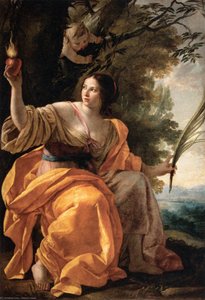
      Heavenly Charity (1640) od Simon Vouet
      #14

      Heavenly Charity

      1640 · Louvre

      A Beacon of Baroque Virtue: Simon Vouet’s Heavenly Charity Simon Vouet's "Heavenly Charity," completed around 1640, stands as a cornerstone of French Baroque painting—a testament to Louis XIII’s…

      Přineste toto světlo k sobě domů →
      Allegory (1640) od Simon Vouet
      #15

      Allegory

      1640 · Musei Capitolini

      Simon Vouet executed Allegory during his residency in Rome, a period spanning from 1614 to 1627. The work was commissioned by Marcello Sacchetti, a 17th-century Italian merchant and…

      Přineste toto světlo k sobě domů →
      Sacrifice of Isaac (1642) od Simon Vouet
      #17

      Sacrifice of Isaac

      1642 · Milwaukee Art Museum

      The painting titled Sacrifice of Isaac is a work of religious art. It is attributed to the French artist Simon Vouet (1590-1649) and Pierre Patel, the Elder (1605-1676).…

      Objednat toto plátno →
      The Muse Clio (1640) od Simon Vouet
      #22

      The Muse Clio

      1640 · Staatliche Kunsthalle Karlsruhe

      The Muse Clio is an oil on canvas painting by the artist Simon Vouet. Created about 1640, this work depicts the mythological figure Clio, who is recognized as…

      Objednat toto plátno →
      Vanitas (1621) od Simon Vouet
      #24

      Vanitas

      1621 · Národní muzeum ve Varšavě

      In Vanitas, Simon Vouet centers the composition on a tight, intimate encounter between two figures. A young woman and an older man emerge from a deep, near-black background…

      Přineste toto světlo k sobě domů →
      Toilet of Venus (1628) od Simon Vouet
      #64

      Toilet of Venus

      1628 · Cincinnati Art Museum

      To gaze upon Simon Vouet’s Toilet of Venus is to step directly into a moment suspended in opulent leisure—a scene dripping with the sensuality and refined drama characteristic…

      Objednat toto plátno →
      The Rape of Europa (1640) od Simon Vouet
      #67

      The Rape of Europa

      1640 · Thyssen-Bornemisza Museum

      To gaze upon Simon Vouet's depiction of The Rape of Europa is to step directly into the charged, dramatic heart of the Baroque era. This canvas is not…

      Objednat toto plátno →
      St Catherine (1614) od Simon Vouet
      #69

      St Catherine

      1614 · Palazzo del Quirinale

      To stand before Simon Vouet's depiction of St Catherine is to step directly into the vibrant, emotionally charged atmosphere of early seventeenth-century Paris. This portrait captures more than…

      Nechte si to namalovat ručně →
      Prince Marcantonio Doria (1621) od Simon Vouet
      #70

      Prince Marcantonio Doria

      1621 · Louvre

      In the hallowed halls of the Musée du Louvre, there exists a window into the soul of the seventeenth century, captured through the masterful brushstrokes of Simon Vouet.…

      Objednat toto plátno →
      The Holy Family (1630) od Simon Vouet
      #79

      The Holy Family

      1630 · Kunsthalle Bremen

      In the heart of the seventeenth century, as the rigid structures of Mannerism began to dissolve under the weight of a new, more visceral era, Simon Vouet emerged…

      Nechte si to namalovat ručně →
      Allegory of Peace (1627) od Simon Vouet
      #82

      Allegory of Peace

      1627 · Galleria Nazionale d'Arte Antica

      Completed in 1627, Allegory of Peace by Simon Vouet offers a profound look into the intellectual fervor and humanist aspirations of the seventeenth century. This work emerged during…

      Objednat toto plátno →
      Allegory of Wealth (1630) od Simon Vouet
      #83

      Allegory of Wealth

      1630 · Louvre

      Simon Vouet's 1630 *Allegory of Wealth* is not merely a painting; it’s an immersive experience, a meticulously crafted tableau that speaks volumes about the values and aspirations of…

      Objednat toto plátno →
      Caritas Romana od Simon Vouet
      #92

      Caritas Romana

      Národní muzeum ve Varšavě

      In Caritas Romana, Simon Vouet presents a quiet, emotionally charged encounter between two figures. The composition centers on a woman cradling an older, bearded man, creating an intimate…

      Objednat toto plátno →
      St Jerome and the Angel (1622) od Simon Vouet
      #93

      St Jerome and the Angel

      1622 · National Gallery of Art

      Simon Vouet’s “St. Jerome and the Angel,” painted in 1622, is more than just a depiction of a biblical scene; it's a carefully constructed meditation on divine guidance,…

      Objednat toto plátno →
      The Fortune Teller (1617) od Simon Vouet
      #94

      The Fortune Teller

      1617 · Galleria Nazionale d'Arte Antica

      Simon Vouet's "The Fortune Teller," painted in 1617, isn’t merely a portrait; it’s a carefully constructed tableau brimming with intrigue and a palpable sense of the mystical. Housed…

      Nechte si to namalovat ručně →
      LE CHRIST EN CROIX od Simon Vouet
      #95

      LE CHRIST EN CROIX

      Louvre

      is a significant work by the French Baroque painter Simon Vouet. The composition centers on the crucifixion of Jesus Christ, a central event of the New Testament. The…

      Objednat toto plátno →

      Plátna umělce Simon Vouet podle jednotlivých období

      Co nejčastěji maloval Simon Vouet

      Čtyři témata, která se na těchto plátnech nejčastěji objevují, každé s jedním z jejich nejoblíbenějších příkladů.

      Kde visí plátna umělce Simon Vouet

      8 muzea, v nichž je umístěno nejvíce obrazů z této stránky.

      Muzea Město Díla autora Simon Vouet Obrazy z tohoto seznamu
      Louvre, PařížLouvre Paříž 20 Allegory of Virtue, Heavenly Charity, POLYMNIE, MUSE DE L'ELOQUENCE
      Szépművészeti Múzeum, BudapešťSzépművészeti Múzeum Budapešť 5 Sleeping Venus, Parnassus or Apollo and the Muses, Parnassus or Apollo and the Muses (detail)
      National Gallery of Art, WashingtonNational Gallery of Art Washington 4 The Muses of Urania and Calliope, The Muses Urania and Calliope, Madonna and Child
      Galleria Nazionale d'Arte Antica, ŘímGalleria Nazionale d'Arte Antica Řím 4 The Fortuneteller (detail), Allegory of Peace, The Fortune Teller
      Národní muzeum ve Varšavě, VaršavaNárodní muzeum ve Varšavě Varšava 4 Vanitas, Caritas Romana
      Los Angeles County Museum of Art, Los AngelesLos Angeles County Museum of Art Los Angeles 3 Model for Altarpiece in St. Peter's, Model for Altarpiece in St. Peter's
      Minneapolis Institute of Art, MinneapolisMinneapolis Institute of Art Minneapolis 2 Angels with Attributes of the Passion: Angel Holding the Vessel and Towel for washing the hands of Pontius Pilate, Angels with Attributes of the Passion, the Superscription from the Cross
      Philadelphia Museum of Art, PhiladelphiaPhiladelphia Museum of Art Philadelphia 2 Saint John, Virgin and Child, with an Angel

      Nejoblíbenější plátno každého desetiletí od Simon Vouet

      1. 1610s
        The Fortuneteller (detail) (1617) od Simon Vouet
        Plátno 4 z 100

        The Fortuneteller (detail)

        Věk 20 – 29 · Galleria Nazionale d'Arte Antica

        In the heart of 1617, amidst the vibrant and transformative atmosphere of Roman artistic circles, Simon Vouet captured a moment of profound human connection in his masterpiece, The…

      2. 1620s
      3. 1630s
        The Muses of Urania and Calliope (1634) od Simon Vouet
        Plátno 2 z 100

        The Muses of Urania and Calliope

        Věk 40 – 49 · National Gallery of Art

        Simon Vouet’s “The Muses Urania and Calliope”: A Symphony of Baroque Grace Simon Vouet (1590-1649) stands as a pivotal figure in the artistic landscape of 17th-century France, marking…

      4. 1640s
        Venus a Adonis (1642) od Simon Vouet
        1 z 100

        Venus a Adonis

        Věk 50 – 59 · J. Paul Getty Museum

        Venus and Adonis – A Baroque Symphony of Desire and Mortality Simon Vouet’s “Venus and Adonis,” completed in 1642, transcends mere depiction; it embodies the very essence of…

      O plátnech umělce Simon Vouet: odpovědi na vaše otázky

      Kterým nejslavnějším dílem je Simon Vouet?Přečtěte si odpověď

      Venus a Adonis (1642), J. Paul Getty Museum, Los Angeles. Následují The Muses of Urania and Calliope (1634) a Annunciation (1640).

      Kolik let bylo Simon Vouet, když byl/a namalován/a dílo Venus a Adonis?Přečtěte si odpověď

      Simon Vouet, narozen 1590, měl 52 let: dílo Venus a Adonis pochází z roku 1642.

      Kterých 10 nejslavnějších obrazů má Simon Vouet?Přečtěte si odpověď

      Venus a Adonis, The Muses of Urania and Calliope, Annunciation, The Fortuneteller (detail), Sleeping Venus, Allegory of Virtue, The Entombment, Angels with Attributes of the Passion: Angel Holding the Vessel and Towel for washing the hands of Pontius Pilate, Saint John a Virgin and Child, with an Angel. U každého plátna v uvedeném žebříčku je uveden rok jeho vzniku a muzeum, ve kterém se nachází.

      Kolik děl celkem namaloval/a Simon Vouet?Přečtěte si odpověď

      V našem katalogu je 166 děl umělce Simon Vouet, datovaných od 1614 do 1645.

      Kde mohu vidět nejznámější plátna umělce Simon Vouet?Přečtěte si odpověď

      Většinou v Louvre (Paříž), Szépművészeti Múzeum (Budapešť) a National Gallery of Art (Washington); výše uvedený seznam obsahuje názvy jednotlivých muzeí a jejich pláten.

      Kdy Simon Vouet namaloval své nejoblíbenější obrazy?Přečtěte si odpověď

      V období 1620s, které tvoří 31 z 100 děl na této stránce, mezi nimi i Angels with Attributes of the Passion: Angel Holding the Vessel and Towel for washing the hands of Pontius Pilate.

      Která jsou nejstarší a nejnovější slavná plátna umělce Simon Vouet?Přečtěte si odpověď

      Nejstarší plátno se zde datuje do Lovers (1614); nejnovější je z Allegory of Prudence (1645).

      Co nejčastěji maloval/a Simon Vouet?Přečtěte si odpověď

      Woman (15), Renaissance (11) a Man (9) napříč 100 díly na této stránce.

      Kterou techniku používal(a) Simon Vouet nejčastěji?Přečtěte si odpověď

      Oil On Canvas, použito u 40 z 100 děl na této stránce.

      Kterému směru patří obraz autora Simon Vouet?Přečtěte si odpověď

      French baroque, jak dokazují plátna na této stránce.

      Která plátna od Simon Vouet visí v Louvre?Přečtěte si odpověď

      Muzeum Louvre, Paříž se vlastní 12 děl z této stránky, mezi nimiž jsou i Allegory of Virtue, Heavenly Charity a POLYMNIE, MUSE DE L'ELOQUENCE.

      Mohu si koupit reprodukci plátna od Simon Vouet?Přečtěte si odpověď

      Ano. Každý obraz na této stránce lze objednat z jeho vlastní stránky jako ručně malovanou olejovou reprodukci nebo jako umělecký tisk v požadovaném rozměru.

      Simon Vouet: život v barvách

      Simon Vouet: Francouzský barokní malíř, který přinesl italskou vizi do Paříže

      Simon Vouet, narozený 9. ledna roku 1590 v srdci Paříže a zemřelý 30. června roku 1649 na stejném místě, byl umělcem, jehož jméno se navždy zapsalo do dějin francouzského malířství. Jeho životní cesta byla plná cestování, učení a neustálého zdokonalování, což ho nakonec vyvrcholilo v pozici klíčové postavy přechodu od manierismu k baroku ve Francii. Pocházel z rodiny zasvěcené umění – jeho otec Laurent byl malíř a bratr Aubin se také vydal touto cestou – a již od mládí byl obklopen inspirací a podporou, které položily základy jeho budoucího úspěchu. Jeho vnuk Ludovico Dorigny pokračoval v rodinné umělecké tradici a upevnil tak Vouetovo dědictví.

      Raná léta a italské vlivy: Cesta k mistrovství

      Vouetova kariéra započala portrétováním, kde brzy prokázal svůj talent. Již ve čtrnácti letech se vydal do Anglie na zakázku, což svědčilo o jeho rostoucí pověsti. Následovala cesta přes Osmanskou říši a dále do Benátek v roce 1612, kde se setkal s bohatstvím uměleckých stylů a technik. Zlomovým okamžikem se stalo jeho dlouhé pobyt v Římě (1614-1627). Třináct let strávených v srdci italského renesančního a barokního umění bylo pro něj nesmírně důležité. Pohlcoval dramatické světelné efekty, které zavedl Caravaggio, přijímal prvky italského manierismu a s pečlivostí studoval barevná paleta a techniku di sotto in su (perspektiva zdola nahoru) používanou Paolem Veronesem. Inspiraci hledal také v dílech Carracciho, Guercina, Lanfranca a Guido Reniho, syntetizujíc tyto různorodé styly do jedinečné umělecké vize.

      Vývoj charakteristického stylu: Od studenta k prezidentovi

      Vouetova schopnost absorbovat a transformovat vlivy se projevila v jeho vlastním, rozpoznatelném stylu. V roce 1624 dosáhl vrcholu své slávy v Římě zvolením do prestižní Accademia di San Luca, což svědčilo o jeho umělecké zdatnosti a uznání v italském světě. Jeho návrat do Francie v roce 1627 znamenal začátek nové éry ve francouzském malířství. Jako Premier peintre du Roi (První malíř krále) se stal dominantní silou, vytvářející oltářní obrazy a alegorické výzdoby pro soukromé mecenáše. Jeho ateliér vychoval celou řadu talentovaných francouzských malířů příští generace, přičemž si i přes své barokní inspirace udržel jistou klasicistní zdrženlivost.

      Dědictví a vliv: Formování francouzského baroka

      Vouetův odkaz je pevně spjat s jeho klíčovou rolí jako mostu mezi italským a francouzským uměním. Úspěšně přenesl dynamiku a velkolepost italského baroka do Francie, čímž výrazně ovlivnil uměleckou krajinu země. Mezi jeho nejvýznamnější žáky patřili Charles Le Brun, který vytvořil všechny dekorativní malby ve Versailles, Valentin de Boulogne, jeden z hlavních francouzských karavaggistů, Pierre Mignard, Eustache Le Sueur a Claude Mellan. Jeho vliv je patrný v rozsáhlých dekorativních schématech objednaných Ludvíkem XIV., čímž upevnil svou pozici jedné z nejdůležitějších postav ve vývoji francouzského barokního malířství.

      Závěr: Umělecký průkopník a tvůrce stylu

      Simon Vouet nebyl jen talentovaným malířem, ale i uměleckým průkopníkem a tvůrcem stylu. Jeho schopnost kombinovat různorodé vlivy a přizpůsobit je francouzskému vkusu z něj učinila klíčovou postavu ve vývoji francouzského baroka. Dnes je jeho dílo obdivováno pro svou eleganci, dynamiku a hluboký smysl pro detail, což ho řadí mezi nejvýznamnější umělce 17. století.

      Všechna díla od Simon Vouet: 166 →