Ateliér — Doprava po celém světě zdarma — Dodání za 2–6 týdnů
      W Beggarstaff, 1872 – 1949

      W Beggarstaff's 100 Most Famous Paintings

      Sara Bernhardt (1844–1923) (1897) is the painting W Beggarstaff is best remembered for. Chairing the Feathers The Eynsham Morris at the Gates of Blenheim Palace (1902) and Album Copies of Old Masters and other Paintings (no.28, p.13) complete the trio of best-loved canvases. Our catalogue counts 242 works by W Beggarstaff. Here are the 100 most famous, with the year, the museum and the story of each canvas.

      Seřazeno podle našeho skóre popularity, které kombinuje počet vyhledávání, návštěv a objednávek u každého díla. Aktualizováno říjen 2026. Each painting on this page can be ordered as an oil reproduction painted by hand on linen canvas, or as a fine art print, made to the size you choose.

      Portrét W Beggarstaff
      W Beggarstaff · 1872 – 1949
      Narozen · zemřel
      1872 – 1949, Newark-on-Trent
      Směr
      Impressionistic realism
      Díla v našem katalogu
      242
      Nejslavnější
      Sara Bernhardt (1844–1923) (1897)
      Nejvíce děl v
      Royal Scottish Academy of Art - Architecture

      The ten best-loved paintings by W Beggarstaff

      Sara Bernhardt (1844–1923) (1897) od W Beggarstaff
      1

      Sara Bernhardt (1844–1923)

      1897 · Woodcut

      In this evocative monochrome portrait from 1897, Sir William Nicholson captures the magnetic presence of the incomparable Sara Bernhardt. The painting transcends a mere photographic likeness, offering instead a soulful meditation on fame, elegance, and the ephemeral nature of performance. As Bernhardt stands poised upon the stage, draped in an exquisite long dress and crowned with a sophisticated hat, the viewer is transported to the height of the Belle Époque.…

      Chairing the Feathers The Eynsham Morris at the Gates of Blenheim Palace (1902) od W Beggarstaff
      2

      Chairing the Feathers The Eynsham Morris at the Gates of Blenheim Palace

      1902 · Oil On Canvas · English Folk Dance And Song Society, London

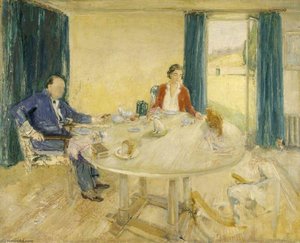
      This captivating scene, "Chairing the Feathers The Eynsham Morris at the Gates of Blenheim Palace," transports the viewer directly into a moment of genteel celebration from the early twentieth century. One can almost hear the murmur of conversation and the rustle of fine fabrics surrounding this gathering. At the heart of the composition sits a distinguished gentleman, his attire suggesting an occasion of considerable importance or festive revelry. The magnificent…

      Album Copies of Old Masters and other Paintings (no.28, p.13) od W Beggarstaff
      3

      Album Copies of Old Masters and other Paintings (no.28, p.13)

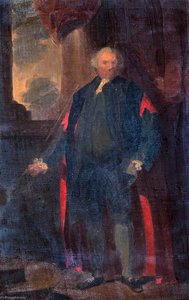
      Sir William Newzam Prior Nicholson, a name perhaps less familiar than some of his contemporaries, nevertheless possessed an extraordinary artistic vision. His "Album Copies" – intimate renderings of masterworks created for private collections – offer a unique window into his meticulous technique and profound understanding of light, composition, and the human form. This particular piece, depicting a man standing beside a dog, is not merely a reproduction; it’s a distillation…

      Album Copies of Old Masters and other Paintings (no.5, p.5) od W Beggarstaff
      4

      Album Copies of Old Masters and other Paintings (no.5, p.5)

      Sir William Newzam Prior Nicholson's "Album Copies of Old Masters and other Paintings" represent a fascinating intersection of artistic reverence and accessible art production. This particular piece, an exquisite rendition of Anthony van Dyck’s iconic portrait “Charles I with M. de St Antoine,” offers a captivating glimpse into the Victorian era’s fascination with classical art while simultaneously showcasing Nicholson's remarkable skill as both a painter and a keen observer of…

      Glass and Fruit (1938) od W Beggarstaff
      5

      Glass and Fruit

      1938 · Národní galerie Kanady, Ottawa

      In this 1938 oil on canvasboard, titled Glass and Fruit, the British artist William Nicholson explores a highly distilled approach to the still life. The work represents a departure from his more representational tendencies, leaning toward a significant degree of abstraction. It is a piece that demands a quiet, focused attention to understand its formal qualities.

      Sir William Henry Bragg (1862–1942) (1932) od W Beggarstaff
      7

      Sir William Henry Bragg (1862–1942)

      1932 · Oil On Canvas · The Royal Institution, Londýn

      The room feels still, held in a moment of profound contemplation. Seated in a chair against a wall of subtle, textured plaster, an older gentleman meets the viewer's gaze with a directness that feels both heavy and light. There is a quiet dignity in his posture, a sense of a mind that has spent decades untangling the invisible structures of the universe. The light, streaming in from the upper left,…

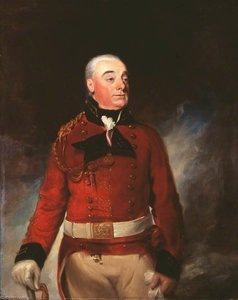
      Field Marshal J. C. Smuts (1923) od W Beggarstaff
      8

      Field Marshal J. C. Smuts

      1923 · Oil On Canvas · Fitzwilliamovo muzeum, Cambridge

      In the quiet, commanding presence of Sir William Nicholson’s 1923 masterpiece, Field Marshal J. C. Smuts, one finds much more than a mere historical record; one encounters a profound meditation on the weight of leadership and the grace of experience. This evocative oil painting captures the essence of a man who stood at the crossroads of history, portraying the South African statesman not just as a military strategist, but as…

      Lord Horder (1871–1955), FCVC, MD, FRCP, Physician to Five Successive British Monarchs (Edward VII to Elizabeth II) (1938) od W Beggarstaff
      9

      Lord Horder (1871–1955), FCVC, MD, FRCP, Physician to Five Successive British Monarchs (Edward VII to Elizabeth II)

      In this 1938 portrait, we encounter Lord Horder, a man whose life was defined by a quiet, steadfast proximity to the British monarchy. He sits with a composed, almost guarded posture, legs crossed in a manner that suggests both comfort and a disciplined restraint. His gaze is directed away from the viewer, fixed upon a distant point that implies a mind preoccupied with matters of state or the heavy weight…

      Title (Original): A Reduced Chart of Bombay Harbour, to form as an Index for the large one of Eight Sheets, by William Nichelson, Master of his Majesty’s Ship Elizabeth. (1763) od W Beggarstaff
      10

      Title (Original): A Reduced Chart of Bombay Harbour, to form as an Index for the large one of Eight Sheets, by William Nichelson, Master of his Majesty’s Ship Elizabeth.

      1763 · Print · Kalakriti Archives, Hyderabad

      To gaze upon "A Reduced Chart of Bombay Harbour" is to embark on a voyage through time, transported back to the mid-1760s when the tides of the Indian Ocean carried the weight of colonial ambition and maritime discovery. This exquisite piece of cartography, derived from the meticulous surveys of Captain William Nichelson around 1763, serves as much more than a mere navigational tool; it is a profound historical document that…

      W Beggarstaff: canvases 11 to 100 of the ranking

      An Old Glass Bottle (1920) od W Beggarstaff
      #18

      An Old Glass Bottle

      1920 · Leeds Art Gallery

      In this 1920 composition, we find ourselves in a space of profound quietude. The subject is a humble glass bottle, its surface marked by age and a slight…

      Bring this light home →
      Hampstead Heath, Flagstaff (1908) od W Beggarstaff
      #28

      Hampstead Heath, Flagstaff

      1908 · Bristol Museum - Art Gallery

      William Nicholson's "Hampstead Heath, Flagstaff," painted in 1908, isn’t merely a depiction of a London landscape; it’s a carefully constructed tableau brimming with quiet observation and subtle emotional…

      Have it painted by hand →
      Mushrooms (1927) od W Beggarstaff
      #30

      Mushrooms

      1927 · Nottingham Castle Museum And Art Gallery

      To gaze upon Sir William Nicholson’s depiction of mushrooms is to encounter a moment suspended between the wild forest floor and the cultivated elegance of a dining table.…

      Order this canvas →
      Santa Lucia, Malaga (1935) od W Beggarstaff
      #32

      Santa Lucia, Malaga

      1935

      In the quietude of 1935, Sir William Nicholson captured a moment of profound stillness in his evocative landscape, Santa Lucia, Malaga. This exquisite piece invites the viewer into…

      Have it painted by hand →
      William Henry Davies (1928) od W Beggarstaff
      #33

      William Henry Davies

      1928

      In this evocative 1928 portrait, Sir William Nicholson captures more than just the likeness of a man; he captures a profound sense of quietude and introspection. The painting,…

      Bring this light home →
      Music (1890) od W Beggarstaff
      #34

      Music

      1890 · Newark Town Hall Museum And Art Gallery

      To stand before "Music" is to be enveloped in a moment suspended between sound and silence. This exquisite portrait, dating from 1890, captures not merely the act of…

      Have it painted by hand →
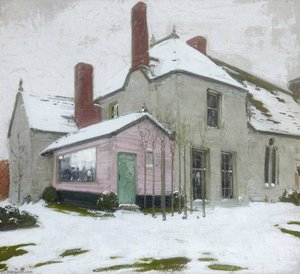
      Sutton Veny in Snow (1924) od W Beggarstaff
      #35

      Sutton Veny in Snow

      1924 · Royal Scottish Academy of Art - Architecture

      In the quietude of a frozen landscape, Sir William Nicholson captures a moment of profound stillness in Sutton Veny in Snow. Painted in 1924, this evocative oil on…

      Have it painted by hand →
      Still Life (1885) od W Beggarstaff
      #38

      Still Life

      1885 · Newark Town Hall Museum And Art Gallery

      In the quiet corners of art history, few masters captured the profound beauty of the mundane as gracefully as Sir William Nicholson. His 1885 masterpiece, Still Life, serves…

      Order this canvas →
      Hawking (1902) od W Beggarstaff
      #39

      Hawking

      1902 · National Trust

      William Nicholson’s “Hawking,” painted in 1902, isn't merely a portrait; it’s a carefully constructed tableau of Victorian sensibilities layered with subtle anxieties and burgeoning modernity. The subject, a…

      Have it painted by hand →
      The stack, Hoar's Fields (1927) od W Beggarstaff
      #49

      The stack, Hoar's Fields

      1927 · Umělecká galerie Nového Jižního Walesu

      The stack, Hoar's Fields is a painting by Sir William Nicholson. Executed in 1927, the work reflects the artist's established approach to form and composition during the interwar…

      Order this canvas →
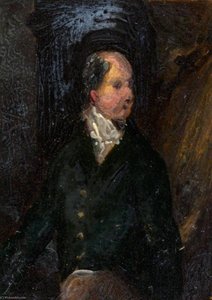
      Portrait of an Unidentified Gentleman od W Beggarstaff
      #53

      Portrait of an Unidentified Gentleman

      Royal Scottish Academy of Art - Architecture

      Sir William Nicholson’s “Portrait of an Unidentified Gentleman,” painted circa 1868, is more than just a likeness; it's a carefully constructed tableau of understated elegance and contemplative melancholy.…

      Bring this light home →
      The Rose crested Cockatoo (1917) od W Beggarstaff
      #55

      The Rose crested Cockatoo

      1917 · Ashmolean Museum

      Sir William Nicholson's 1917 painting, “The Rose-Crested Cockatoo,” isn’t merely a depiction of an exotic bird; it’s a carefully constructed meditation on observation, illusion, and the subtle interplay…

      Have it painted by hand →
      The Paper Poppies (1919) od W Beggarstaff
      #57

      The Paper Poppies

      1919 · The National Trust For Scotland

      In the quietude of “The Paper Poppies,” painted in 1919, Sir William Nicholson invites the viewer into a sanctuary of stillness that belies the profound turbulence of its…

      Bring this light home →
      Thomas Hamilton (1784–1858), RSA od W Beggarstaff
      #59

      Thomas Hamilton (1784–1858), RSA

      Royal Scottish Academy of Art - Architecture

      Sir William Nicholson’s “Thomas Hamilton (1784–1858), RSA” is more than a mere likeness; it's a carefully constructed tableau of 19th-century British identity, imbued with the quiet strength and…

      Have it painted by hand →
      Matadero, Segovia (1935) od W Beggarstaff
      #64

      Matadero, Segovia

      1935 · Fitzwilliamovo muzeum

      William Newzam Prior Nicholson’s “Matadero, Segovia” isn't merely a depiction of a building; it’s a portal. Painted in 1935, this oil on panel captures the essence of a…

      Bring this light home →
      Armistice Night (1918) od W Beggarstaff
      #86

      Armistice Night

      1918 · Fitzwilliamovo muzeum

      Sir William Nicholson's "Armistice Night," painted in 1918, isn’t merely a depiction of a wartime scene; it’s a visceral embodiment of the complex emotions swirling within a nation…

      Have it painted by hand →

      W Beggarstaff's canvases, period by period

      What W Beggarstaff painted most

      The four subjects that return most often on these canvases, each with its best-loved example.

      Where W Beggarstaff's canvases hang

      8 muzea, v nichž je umístěno nejvíce obrazů z této stránky.

      Muzea Město Díla autora W Beggarstaff Obrazy z tohoto seznamu
      Royal Scottish Academy of Art - Architecture, ÉdinRoyal Scottish Academy of Art - Architecture Édin 102 Album Copies of Old Masters and other Paintings (no.28, p.13), Album Copies of Old Masters and other Paintings (no.5, p.5), Album Copies of Old Masters and other Paintings (no.98, p.43)
      National Trust, LondýnNational Trust Londýn 8 Master Anthony Bacon, Aged 3 (Anthony W. Bacon, Son of Thomas W. Bacon, 1873–1950, of Ramsden Hall, Essex), La Place du Petit Enfer, Dieppe, Hawking
      Fitzwilliamovo muzeum, CambridgeFitzwilliamovo muzeum Cambridge 7 Field Marshal J. C. Smuts, Matadero, Segovia, Armistice Night
      Newark Town Hall Museum And Art Gallery, NewarkNewark Town Hall Museum And Art Gallery Newark 4 Music, Still Life, Boy with the Caroline Mug
      Národní galerie Kanady, OttawaNárodní galerie Kanady Ottawa 3 Glass and Fruit, The Blue Gloves
      Fitzwilliam MuseumFitzwilliam Museum 3 Armistice Night, 1918, Still-life, fruit on a dish
      Nottingham Castle Museum And Art Gallery, NottinghamNottingham Castle Museum And Art Gallery Nottingham 3 Mushrooms, Miss Wish Wynne (1882–1931), Actress, in the Character of Janet Cannot for the Play 'The Great Adventure'
      Fenton House, LondonFenton House London 2 Hawking (La chasse au falcon), Francis and Christopher Bacon (Sons of Thomas Walter Bacon (1873-1950) of Ramsden Hall, Essex)

      W Beggarstaff's most famous canvas, decade after decade

      1. 1880s
        Still Life (1885) od W Beggarstaff
        38 of 100

        Still Life

        Věk 8 – 17 · Newark Town Hall Museum And Art Gallery

        In the quiet corners of art history, few masters captured the profound beauty of the mundane as gracefully as Sir William Nicholson. His 1885 masterpiece, Still Life, serves…

      2. 1890s
        Sara Bernhardt (1844–1923) (1897) od W Beggarstaff
        Ranked 1 of 100

        Sara Bernhardt (1844–1923)

        Věk 18 – 27

        In this evocative monochrome portrait from 1897, Sir William Nicholson captures the magnetic presence of the incomparable Sara Bernhardt. The painting transcends a mere photographic likeness, offering instead…

      3. 1900s
      4. 1910s
      5. 1920s
        Field Marshal J. C. Smuts (1923) od W Beggarstaff
        8 of 100

        Field Marshal J. C. Smuts

        Věk 48 – 57 · Fitzwilliamovo muzeum

        In the quiet, commanding presence of Sir William Nicholson’s 1923 masterpiece, Field Marshal J. C. Smuts, one finds much more than a mere historical record; one encounters a…

      6. 1930s
        Glass and Fruit (1938) od W Beggarstaff
        5 of 100

        Glass and Fruit

        Věk 58 – 67 · Národní galerie Kanady

        In this 1938 oil on canvasboard, titled Glass and Fruit, the British artist William Nicholson explores a highly distilled approach to the still life. The work represents a…

      W Beggarstaff's canvases, question by question

      Which canvas is W Beggarstaff most remembered for?Read the answer

      Sara Bernhardt (1844–1923) (1897), followed by Chairing the Feathers The Eynsham Morris at the Gates of Blenheim Palace (1902) and Album Copies of Old Masters and other Paintings (no.28, p.13).

      Sara Bernhardt (1844–1923): how old was W Beggarstaff when it was painted?Read the answer

      W Beggarstaff, born in 1872, was 25 years old: Sara Bernhardt (1844–1923) dates from 1897.

      What are W Beggarstaff's ten most famous canvases?Read the answer

      Sara Bernhardt (1844–1923), Chairing the Feathers The Eynsham Morris at the Gates of Blenheim Palace, Album Copies of Old Masters and other Paintings (no.28, p.13), Album Copies of Old Masters and other Paintings (no.5, p.5), Glass and Fruit, The Front Door and Porch of Chartwell, Sir William Henry Bragg (1862–1942), Field Marshal J. C. Smuts, Lord Horder (1871–1955), FCVC, MD, FRCP, Physician to Five Successive British Monarchs (Edward VII to Elizabeth II) a Title (Original): A Reduced Chart of Bombay Harbour, to form as an Index for the large one of Eight Sheets, by William Nichelson, Master of his Majesty’s Ship Elizabeth.. Each canvas in the ranking above comes with its year and its museum.

      How many paintings did W Beggarstaff create?Read the answer

      242 works by W Beggarstaff are in our catalogue, dated 1885 to 1938.

      Where do W Beggarstaff's most famous canvases hang today?Read the answer

      Mostly in Royal Scottish Academy of Art - Architecture (Édin), National Trust (Londýn) a Fitzwilliamovo muzeum (Cambridge); the list above names each museum and its canvases.

      When did W Beggarstaff paint the most famous canvases?Read the answer

      In 1910s, which gave 24 of the 100 works on this page, Walter Greaves (1846–1930) among them.

      Which famous W Beggarstaff canvas came first, and which came last?Read the answer

      The earliest canvas here is Still Life (1885); the latest is Glass and Fruit (1938).

      Which subjects did W Beggarstaff paint most?Read the answer

      Portrait (22), Victorian era (10) a British art (9), across the 100 works on this page.

      Which medium appears most in W Beggarstaff's paintings?Read the answer

      Oil On Canvas, used in 19 of the 100 works on this page.

      Which movement is W Beggarstaff associated with?Read the answer

      Impressionistic realism, as the canvases on this page show.

      Which paintings by W Beggarstaff are held by the Royal Scottish Academy of Art - Architecture?Read the answer

      The Royal Scottish Academy of Art - Architecture, Édin holds 13 of the works on this page, among them Album Copies of Old Masters and other Paintings (no.28, p.13), Album Copies of Old Masters and other Paintings (no.5, p.5) a Album Copies of Old Masters and other Paintings (no.98, p.43).

      Where can I buy a reproduction of a W Beggarstaff painting?Read the answer

      Yes. Every painting on this page can be ordered from its own page as an oil reproduction painted by hand, or as a fine art print, in the size you choose.

      Meet the painter: W Beggarstaff

      Early Life and Artistic Beginnings

      Sir William Newzam Prior Nicholson, narozený 5. února 1872 v Newark-on-Trentu v Nottinghamshiru, pocházel z prostředí, které kombinovalo průmyslovou pragmatičnost s uměleckým citem. Jeho otec, úspěšný inženýr a konzervativní poslanec, vnutil disciplínu, zatímco jeho matka ho spojovala s estetickými tradicemi Oxfordshire. Od raného dětství projevoval Nicholsonův talent pro umění, který byl podpořen lekcemi od Williama Cubleye, místního malíře, který sám sledoval své umělecké kořeny od Sir Joshuaho Rejse. Tato raná expozice položila základy kariéry, která se rozprostírala přes různé médium a styly. Krátký pobyt na umělecké škole Hubert von Herkomera přinesl nejen zlepšení jeho dovedností, ale také ho představil Mabel Prydeové, která se stala jeho manželkou a klíčovou spolupracovnicí v jeho rozvíjející se uměleckém putování. Prostřednictvím Mabel se setkal s jejím bratrem, Jamesem Prydem, partnerství, které brzy změnilo svět grafického designu.

      The Beggarstaffs and a Revolution in Poster Art

      Partnerství mezi Williamem Nicholsonem a Jamesem Prydem, známým jako „J. & W. Beggarstaff“, znamenalo obrat v britské vizuální kultuře. Odmítli opulentní estetiku plakátů z dob Viktorie a přijali odvážnou jednoduchost charakterizovanou působivými siluetami, plochými vrstvami barev a záměrným odmítnutím tradiční perspektivy. Jejich návrhy nebyl jen reklama; byly to prohlášení – mocné, grafické kompozice, které uchytily fantazii veřejnosti. Plakáty pro produkce jako Don Quixote a publikace jako Harper’s Magazine se okamžitě staly rozpoznatelné, ovlivnily celou generaci umělců a designérů. Tento období nebyla jen o reklamním umění; bylo to o přehodnocení vizuální komunikace sama o sobě. Práce Beggarstaffs podkopávala konvence a vytyčila cestu pro moderní grafický design, čímž si Nicholson zapsal jméno inovátora. Jejich dopad se roznesl daleko za hranice plakátů, ovlivnil ilustraci i malířství díky důrazu na silnou formu a záměrné kompozici.

      From Woodcuts to Portraits: A Developing Style

      Po rozpadu partnerství Beggarstaffs Nicholson začal období stylistické explorace. Zaměřil se na dřetěnský a dřovotisk, techniky, které mu umožnily dále zdokonalit jeho mistrovství v linii a formě. Podněcoval ho vlivný James Abbott McNeill Whistler, aby se jim věnoval, produkce složitých a sugestivních tisků, které ukazují jeho rostoucí uměleckou zralost. Tyto díla demonstrovaly mimořádnou schopnost zachytit esenci s minimálním detailem, vlastností, která se stala charakteristickou pro jeho styl. Současně Nicholson začal budovat svou pověst portrétního malíře a získával objednávky od významných osobností doby. Jeho portréty nebyl jen zobrazení; byly to vhledné studie o charakteru, odhalující vnitřní životy svých subjektů prostřednictvím jemných nuancí výrazu a postoje. Díla jako *Lady in Furs, Mme. P.* ilustrují tuto dovednost, zachycují nejen fyzický vzhled, ale i pocit osobnosti a společenského postavení.

      Still Life, Landscape, and Lasting Legacy

      Pozdější fáze Nicholsonovy kariéry se stále více soustředila na malbu krajin a still life. Jeho still life jsou oslavovány pro svou mimořádnou pozornost k detailu, harmonické barevné palety a klidný pocit intimity. Vdechoval obyčejným předmětům poezii, zvedal je nad pouhou reprezentaci na symboly krásy a kontemplace. Jeho krajiny, často zobrazující scény ze svých cest v Španělsku a Itálii, zachycují podstatu místa s pozoruhodnou dovedností. Celkově Nicholson zůstal rozmanitým umělcem, neustále experimentoval s novými technikami a přístupy. Zapisoval si dětské knihy, navrhoval divadelní kulisy a pokračoval v produkci tisku vedle obrazů. Sir William Nicholsonův vliv se rozprostírá za hranice jeho vlastní plodné tvorby; inspiroval generace umělců svým závazkem k řemeslu, inovativním myšlením a schopností nalézat krásu v obyčejném. Jeho dílo je svědectvím o síle umění osvětlovat lidský zážitek a měnit naše vnímání světa kolem nás. *Umřel roku 1949* a zanechal bohatou uměleckou tradici, která stále okouzluje a inspiruje.

      Všechna díla od W Beggarstaff: 242 →