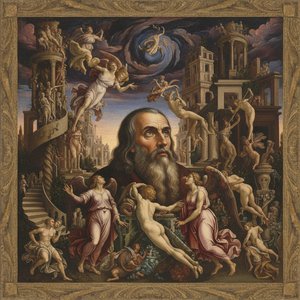
Portrait of a Gentleman: A Window into Renaissance Spain
El Greco’s “Portrait of a Gentleman,” painted in 1580, isn't merely a likeness; it’s a carefully constructed tableau of status, intellect, and the burgeoning cultural exchange between Greece and Spain. This oil-on-canvas masterpiece, currently residing within the Museo del Prado in Madrid, offers a captivating glimpse into the world of 16th-century nobility – a world where artistic expression intertwined seamlessly with social hierarchy and religious devotion. The painting immediately draws the eye to its subject: a man of considerable presence, distinguished by his neatly trimmed beard and mustache, a fashionable ruffled collar indicative of the era’s refined taste, and an arresting gaze directed squarely at the viewer. This directness isn't simply observational; it suggests confidence, perhaps even a hint of intellectual superiority – qualities highly valued within Renaissance society.
El Greco, born Doménikos Theotokopoulos on Crete, possessed a uniquely transformative artistic vision. His early training steeped in Byzantine iconography—characterized by its meticulous detail and symbolic color palettes—provided a foundational structure. However, his relocation to Italy marked a pivotal shift. He absorbed the dynamism of Venetian painting, particularly the works of Titian and Tintoretto, incorporating their bold colors, dramatic lighting, and expressive brushwork into his own distinctive style. This synthesis is powerfully evident in “Portrait of a Gentleman.” The stark contrast between the dark background and the subject’s richly colored attire creates an immediate visual impact, while El Greco's signature elongated figures—a hallmark of his oeuvre—lend a sense of heightened drama and emotional intensity to the scene. Notice how the folds of his clothing seem to ripple with movement, contributing to the painting’s overall dynamism.
The Language of Renaissance Portraiture
Beyond its aesthetic qualities, “Portrait of a Gentleman” is deeply rooted in the conventions of Renaissance portraiture. The pose itself—a three-quarter view, common during this period—allowed for a detailed depiction of the subject’s face and attire, conveying both his individual identity and his social standing. The meticulous rendering of his clothing – the velvet, the lace, the intricate embroidery – speaks volumes about his wealth and status. The ruffled collar, in particular, was a significant fashion statement, signifying membership within the upper echelons of society. Furthermore, the subject’s expression—a subtle hint of contemplation—suggests an intellectual bent, aligning with the humanist ideals that were gaining prominence during the Renaissance.
However, El Greco departs from traditional portraiture in several key ways. The painting's monochrome palette – a deliberate choice by the artist – elevates it beyond a simple depiction of appearance. It lends a sense of solemnity and timelessness to the image, transforming it into something more akin to a religious icon than a secular portrait. This stylistic decision underscores El Greco’s desire to imbue his work with spiritual depth and emotional resonance. The lack of color also forces the viewer to focus entirely on the subject's features and expression, intensifying the impact of his gaze.
A Bridge Between Cultures
“Portrait of a Gentleman” stands as a testament to the vibrant cultural exchange that characterized Renaissance Spain. El Greco’s journey from Crete to Toledo represents a significant migration of artistic ideas and techniques. His work reflects both Byzantine traditions—–particularly in its use of symbolism and spiritual themes—–and Western European influences, notably Venetian painting. The painting embodies this synthesis, creating a unique visual language that is both deeply rooted in the past and strikingly modern. It’s a poignant reminder of how art can transcend geographical boundaries and cultural differences, fostering dialogue and understanding across centuries.
The Museo del Prado’s acquisition of “Portrait of a Gentleman” marks a pivotal moment in the appreciation of El Greco's artistic legacy. Researchers have meticulously analyzed pigments and brushstrokes, confirming that it was indeed created by the Cretan painter himself—a fact substantiated by stylistic parallels with other works from his period. The painting’s composition—characterized by its pyramidal structure and dramatic chiaroscuro—mirrors techniques prevalent in Venetian art, demonstrating El Greco's masterful assimilation of artistic innovations.
Own a Piece of History: High-Quality Reproductions
TopImpressionists.com offers exquisite, handmade oil painting reproductions of El Greco’s “Portrait of a Gentleman,” meticulously crafted by skilled artists who share the same passion for preserving artistic heritage as we do. These reproductions capture not only the visual details of the original but also its emotional depth and historical significance. Available in various sizes to suit your space and budget, they provide an accessible way to bring this iconic masterpiece into your home or office. Explore our website at Painting by ‘El Greco (Doménikos Theotokopoulos)’ | El Greco (Doménikos Theotokopoulos): Portrait of a Gentleman and Painting by ‘El Greco (Doménikos Theotokopoulos)’ | El Greco (Doménikos Theotokopoulos): Portrait of a Gentleman to discover the perfect reproduction for your collection.



 Se i fuld skala
 Køb print
 Del
Del Del
Del
 Detaljer

 Download
 Lignende værker
 Røntgenundersøgelse
 Diasshow


 Se mere






































 Glasmulighed er kun tilgængelig i størrelser under 110 cm