

Shown: · With its frame:
 Se i rummet
 Del som kort
 Del
Del
 Detaljer
 Guide
Guide

 Download
 Lignende værker
 Røntgenundersøgelse
 Diasshow
 Q&A
Q&A Statistikker


Dkr 1787
Håndlavet oliereproduktion
Håndmalet olie på lærred i din valgte størrelse og ramme, udført efter bestilling af vores kunstnere. ( Skift til printsalg Skift til digitalt billede)
Size
·Standardstørrelse
speciallavet
CM
INCH
Vælg mellem vores forudindstillede størrelser, der matcher kunstværkets originale proportioner.
Loading sizes...

bredde
højde
Indtast den bredde og højde, du har brug for, så det passer til din ramme eller din væg. Da dette er håndmalet, kan kunstneren ved en anden form på størrelsen male lidt mere rundt om billedet eller skære lidt væk — det er op til dig. Vi sender dig et digitalt mockup til godkendelse, før maleriet påbegyndes. Billedet, der vises på denne side, viser ikke det endelige resultat — det er kun mockuppet, der gør.
 Læs mere
Finish
·
White Dkr1

Blurside Dkr1

Extended Dkr1

P118B Dkr10

P118H Dkr10

P118W Dkr10

P438Z Dkr10

P508JH Dkr12

P508YH Dkr12

P805H Dkr10

P805Z Dkr10

P919BZ Dkr10

P919G Dkr10

P919XJ Dkr10

P959ZH Dkr10

P968JZ Dkr12

W106C Dkr8

W218G Dkr10

W218JH Dkr8

W218Y Dkr10

W307PJ Dkr10

W316G Dkr10

W316PJ Dkr8

W316Y Dkr10

W398PJ Dkr8

W4111J Dkr10

W500HY Dkr15

W500JH Dkr15

W692G Dkr12

W849H Dkr8

W940BG Dkr15

W953PJ Dkr8

H24-GOLD Dkr30

H24-SILVER Dkr30

H36-GOLD Dkr45

H36-SILVER Dkr45
Shipped in a protective tube, ready for your own framer.
Above 105 cm the frame is shipped as a kit for a professional framer — read the details.
Extras
optionalWhat do the extras include?
Examples of what can be changed: Replace face with customer photo; Add pet (e.g., replace cat with dog); Include hidden message in background; Change background landscape or elements.
After order, TopImpressionists.com team will email client for instructions and provide a mockup preview
After order, TopImpressionists.com team will email client for instructions and provide a mockup preview
Verdensomspændende levering () på 3-4 uger i stedet for de standard 5 uger. (1 november). Ingen kompromiser med kvaliteten.
Beskyttende fernis
Navneskilt
Detaljer om indgraveret bronzeskilt
This elegant plaque features the artist's name and the title of the artwork, finely engraved for a timeless presentation.
It is made from bronze with a refined, elegant finish. The text is precisely laser-engraved for a sharp and permanent result. Measuring 9x2 cm, the plaque is compact yet easy to read. It's built to be durable and scratch-resistant, offering a professional, museum-quality look. Mounting is simple thanks to the included adhesive backing.
Detaljer om gennemsigtig akrylplade
The plaque includes essential engraved details such as the artist's name, the title of the artwork, the date it was created, the type of media used-like oil on canvas or watercolor-a brief description of the piece, and a QR code that links to the complete artwork information.
It is crafted from clear acrylic, offering a sleek, modern appearance. The text is UV-engraved in black to ensure strong visual contrast. With a size of 10x15 cm, it ensures optimal readability. It comes equipped with two metal hooks for secure wall mounting. The plaque is designed to be weather-resistant, making it suitable for various environments, and it includes interactive features that work seamlessly with smartphone scanning.
Detaljer om sort akrylplade
This elegant plaque includes engraved information such as the artist's name, the title of the artwork, the date it was created, the type of media used (like oil on canvas or watercolor), a short description of the artwork, and a QR code for quick access to more information.
The plaque itself is made from refined black acrylic with a premium finish. The text is laser-engraved in white for high contrast and readability. Its size is 10x15 cm, designed to be easy to read. It comes with two metal hooks for professional mounting. The design is sleek and fits any interior style. It is also weather-resistant and durable, with built-in digital integration for mobile compatibility.
Glasmulighed er kun tilgængelig i størrelser under 110 cm
 Glasmulighed er kun tilgængelig i størrelser under 110 cm
- Gratis ekspresforsendelse til hele verden
- Lærred af linned i høj kvalitet
- Fuld transportforsikring
- Garanti for refusion af told og importafgifter
- Garanti for præcis farvegengivelse
- 100 dages returret ved fabrikationsfejl
- 100% fuld returret
- Mængderabat ved flere køb


Beskrivelse af samlerobjektet
Kunstnerbiografi
Jacopo Tintoretto (1518-1594) var en venetiansk maler, kendt for sin dramatiske stil, lys og farver. 'Il Furioso' revolutionerede malerkunsten med sine imponerende værker og et unikt udtryk.
About the painting
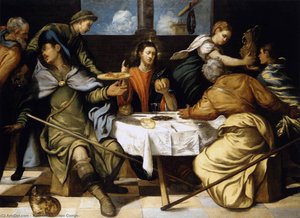
A Drama of Suffering and Spectacle: Tintoretto’s “The Crucifixion (Detail)”
Jacopo Tintoretto's "The Crucifixion (detail)," painted in 1565, is not merely a depiction of Christ’s agonizing death; it’s a visceral experience. Emerging from the bustling workshops of Venice during the High Renaissance and transitioning into the dramatic fervor of the early Baroque, this painting embodies Tintoretto’s signature style – a masterful manipulation of light, shadow, and human emotion that continues to captivate viewers centuries later. The detail presented here offers a glimpse into a scene brimming with both profound sorrow and unsettling observation, revealing a complex narrative far beyond the simple act of sacrifice.
The immediate impact is one of overwhelming scale and movement. Tintoretto doesn’t offer a serene tableau; instead, he plunges us directly into the chaos surrounding Christ's execution. The figures are not arranged in a static composition but rather surge forward, pulled by an unseen force – perhaps the weight of grief, or the sheer horror of the event unfolding before them. Notice how Tintoretto employs a dramatic chiaroscuro, utilizing pools of intense light to highlight key elements while shrouding others in deep shadow. This technique isn’t just for aesthetic effect; it serves to amplify the emotional intensity and create a sense of theatricality, as if we are witnessing a grand stage production.
The Anatomy of Emotion: Tintoretto's Humanistic Approach
Tintoretto’s genius lay in his profound understanding of human anatomy and its capacity for expressing intense emotion. He meticulously studied the musculature of Christ, rendering the agony etched into his body with startling realism. The contorted limbs, the strained facial features – all speak to a physical suffering that transcends mere representation. But it's not just Christ who embodies this raw emotion; the surrounding figures are equally compelling. Some weep openly, their faces buried in despair, while others stand back, seemingly detached yet undeniably affected by the spectacle. The inclusion of these onlookers is crucial, elevating the scene from a purely religious one to a broader commentary on human nature – our capacity for both compassion and indifference.
The presence of animals—horses prominently featured in the foreground and background—is particularly noteworthy. While crucifixion scenes rarely include livestock, Tintoretto’s decision to incorporate them adds an unsettling layer of complexity. Some scholars suggest these animals represent the Roman Empire's brutality and its role in perpetuating Christ’s suffering. Others interpret them as symbols of earthly power and the fleeting nature of worldly dominion, juxtaposed against the eternal sacrifice of Christ. The horses themselves are rendered with a remarkable degree of detail, their coats gleaming under Tintoretto’s masterful light, further emphasizing the dramatic quality of the scene.
A Window into Venetian Life and Artistic Innovation
"The Crucifixion (detail)" was created during a period of immense artistic innovation in Venice. Tintoretto, unlike many of his contemporaries who adhered to established conventions, relentlessly pushed the boundaries of painting technique. He experimented with layering pigments, creating an illusionistic depth that seemed almost three-dimensional. His use of loose brushstrokes and vibrant colors contributed to the dynamic energy of the composition, a hallmark of the Venetian style. This particular detail offers insight into his working process – a rapid, confident application of paint designed to capture not just the likenesses of the figures but also their emotional states.
Furthermore, the painting reflects the social and political context of 16th-century Venice. The city was a hub of commerce, intrigue, and religious fervor, and Tintoretto’s art often engaged with these themes. “The Crucifixion” is not simply a devotional image; it's a powerful statement about faith, suffering, and the human condition – a testament to Tintoretto’s enduring legacy as one of Venice’s greatest artistic masters. A reproduction captures this dramatic intensity and invites viewers to contemplate the profound questions raised by this unforgettable scene.
Spørgsmål og svar
Hvem sælger håndmalede kopier af "The Crucifixion (detail)" af Tintoretto?
"The Crucifixion (detail)" er tilgængelig som en håndmalet oliereproduktion på lærred af hør. Du kan bestille den på dens Håndmalet reproduktion-side, hvor du kan vælge mellem forskellige størrelser.
Hvilken fase af Tintorettos kunstneriske udvikling repræsenterer "The Crucifixion (detail)"?
Inden for Tintorettos karriere tilhører "The Crucifixion (detail)" perioden Mature Period, hvilket gør det muligt at sammenligne værket med kunstnerens øvrige værker.
Er farverne i "The Crucifixion (detail)" kraftige eller dæmpede?
"The Crucifixion (detail)" af Tintoretto er gengivet med en Muted mætning og en Monochromatic intensitet.
Quick facts and art quiz
About Tintoretto

Tintoretto
1518 - 1594, Italien
Kunstnerbiografi
Jacopo Tintoretto: En Venetians Dramatiske Lys og Skygge
Jacopo Robusti, bedre kendt som Tintoretto, blev født i Venedig omkring 1518 og døde der i 1594. Hans navn, “Tintoretto,” der betyder “den lille farver”, refererer til hans families erhverv – farvehandel – men skjuler den enorme kunstneriske dygtighed, der ville definere ham. I modsætning til mange kunstnere, der fik en struktureret uddannelse under en mester, var Tintoretto’s vej primært selvbestemt, drevet af en uudtømmelig nysgerrighed og en vedholdende stræben efter innovation. Selvom han havde et kort og kontroversielt møde med Titian, den anerkendte farvemester i Venedig, virkede det som om denne oplevelse snarere stimulerende end formative. Titians anklager – enten baseret på jalousi eller kunstneriske uenigheder – fik Tintoretto til at gå sin egen vej, en præget af dristige eksperimenter og en unikt dynamisk stil. Han dykkede ned i anatomistudier, muligvis gennem dissekering, og finpudsede sine færdigheder ved omhyggeligt at kopiere klassiske skulpturer og værker fra andre mestre. Denne dedikation lagde grundlaget for en karriere, der ville omskrive venetiansk maleri.Udviklingen af en Distinkt Stil: *Il Furioso*
Tintoretto’s kunstneriske udvikling var præget af en næsten feberagtig energi, hvilket gav ham endnu et beskrivende kælenavn: *Il Furioso* – “den vrede”. Dette navn var ikke blot en beskrivelse af hans arbejdsrytme, men også fangede intensiteten og den følelsesmæssige ladning, der gennemsyrede hans lærred. Hans tidlige værker antydede allerede et afvigende fra traditionelle venetianske konventioner. Selvom han anerkendte Titian’s indflydelse inden for farver, tiltrak Tintoretto sig mod Michelangelos kraftfulde figurer og dramatiske kompositioner. Han syntetiserede disse påvirkninger til noget helt nyt: en stil kendetegnet ved forlængede former, roterende draperier og et innovativt brug af perspektiv, der ofte skabte en følelse af betagende dybde og bevægelse. Han opgav den omhyggelige finish, som hans samtidige foretrak, og satsede i stedet på en hurtig, næsten skitseagtig penselstrøg, der udtrykte øjeblikkelighed og rå følelser. Denne teknik, kombineret med hans mesterlige manipulation af lys og skygge – *chiaroscuro* – tillod ham at skabe scener af uovertruffen drama og psykologisk intensitet. Han malede ikke blot begivenheder; han formidlede deres følelsesmæssige kerne.Monumentale Bedrifter: San Rocco og Ud over
Tintoretto’s produktive output spændte over flere årtier, omfattende religiøse fortællinger, historiske allegorier og portrætter. Hans mest betydningsfulde præstation ligger dog i cyklussen af malerier, han skabte for Scuola Grande di San Rocco, en venetiansk confraternite dedikeret til Sankt Roch. Over en periode på mere end halvtreds år udsmykkede Tintoretto Scuola’ens sale med over seksogtres lærred – og skabte dermed et betagende visuelt vidnesbyrd om tro og menneskelig erfaring. Værker som “Sidste Supper”, færdiggjort sent i hans liv, demonstrerer hans fortsatte eksperimenter med perspektiv og komposition. Afvigende fra traditionelle fremstillinger placerede Tintoretto scenen i et dramatisk oplyst, arkitektonisk ustabilt rum, der understregede de følelsesmæssige spændinger i Kristi sidste måltid med sine disciple. Andre bemærkelsesværdige værker omfatter “Miraklet ved Sankt Mark”, der viser en dynamisk komposition og perspektivforvrængning, samt et væld af malerier for venetianske kircher og paladser, der demonstrerer hans mesterskab i skala og narrativ fortælling. Disse monumentale projekter cementerede Tintoretto’s ry som en af Venedigs vigtigste kunstnere.Indflydelse og Historisk Betydning
Jacopo Tintoretto døde i Venedig i 1594, efterladende sig et omfattende og indflydelsesrigt værk. Han brolagde mellem den høje renæssance og barokken, og forudså mange af de stilistiske innovationer, der skulle definere den sidste. Hans dramatiske kompositioner, udtryksfulde penselstrøg og innovative brug af lys og skygge påvirkede kunstnere som Caravaggio, Rembrandt og Delacroix dybtgående. Han var ikke blot en maler; han var en visuel fortæller, der forstod at udnytte kunstens kraft til at vække følelser og inspirere undren. Som en af de tre store venetianske malere i det 16. århundrede – sammen med Titian og Paolo Veronese – spillede Tintoretto en central rolle i at forme Venedigs kunstneriske landskab under dets guldalder. Hans arbejde afspejler ikke kun den religiøse fervor og de politiske spændinger i sin tid, men også hans unikt personlige vision, der fortsat resonerer hos publikum i dag – og solidificerer hans plads som en af historiens mest fascinerende kunstnere. *Hans arv er et vidnesbyrd om kunstens vedvarende kraft og den transformative potentiale for menneskets kreativitet.*Quick facts about Tintoretto
- Artistic Movement Or Style: Renaissance, Manerisme
- Artists Or Movements Influenced By This Artist:
- Caravaggio
- Barok kunst
- Artists Who Influenced This Artist:
- Tizian
- Michelangelo
- Date Of Birth: 1518
- Date Of Death: 1594
- Full Name: Jacopo Robusti
- Nationality: Italiensk
- Notable Artworks:
- Mirakel St. Mark
- Sidste Supper
- Place Of Birth: Venedig, Italien
Udforsk kunstværker organiseret efter temaer, stilarter og karakteristika.




Tintoretto
The Crucifixion (detail)
() ·
With its frame: · Hand-painted in oil on linen
Total