Atelier — Gratis fragt til hele verden — Leveringstid: 2–6 uger
      Franz Ehrlich, 1907 – 1984

      De 100 mest berømte Franz Ehrlich-malerier, rangeret

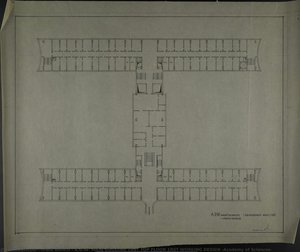
      Det mest elskede maleri af Franz Ehrlich er 3. ETAGE (Design til en fremmed repræsentation af DDR. Etageplan), som hænger på Bauhaus Dessau Foundation i Dessau-Roslau. LBH BUILDING MACHINERY WOODWORKING MACHINERY HALL 5 (Leipzig Trade Fair, plan view exhibition stand) (1949) og 4 Armlænestole. 1 bænk. følger derefter blandt de lærreder, som læserne kender bedst. Vores katalog indeholder 101 værker af Franz Ehrlich: her er de 100 mest berømte, hver med årstal, museum og hvad der gør dem mindeværdige.

      Rangordnet efter vores popularitetsscore, som kombinerer søgninger, besøg og ordrer for hvert værk. Opdateret november 2026.

      Portræt af Franz Ehrlich
      Franz Ehrlich · 1907 – 1984
      Født · død
      1907 – 1984, Reuth
      Bevægelse
      Bauhaus
      Værker i vores katalog
      101
      Mest kendte
      3. ETAGE (Design til en fremmed repræsentation af DDR. Etageplan)
      Flest værker hos
      Bauhaus Dessau Foundation

      Top 10 Franz Ehrlich malerier: lærrederne som alle kender

      3. ETAGE (Design til en fremmed repræsentation af DDR. Etageplan) af Franz Ehrlich
      1

      3. ETAGE (Design til en fremmed repræsentation af DDR. Etageplan)

      Akryl på lærred · Bauhaus Dessau Foundation, Dessau-Roslau

      Et Arkitektonisk Tegning Af GDR's Fremstilling – Et Blik På Franz Ehrlich’s Arbejde Denne håndtegnede arkitektoniske tegning af "3rd FLOOR" – designet til en fremstilling af Den Østtyske Republik (GDR) – er mere end blot et teknisk dokument; det er et vindue ind i en bestemt æra og kunstnerens unikke perspektiv. Tegningen, udført af den tyske arkitekt Franz Ehrlich (1907-1984), repræsenterer Bauhaus-ærens præcision og funktionalisme kombineret med en dyb forståelse…

      LBH BUILDING MACHINERY WOODWORKING MACHINERY HALL 5 (Leipzig Trade Fair, plan view exhibition stand) (1949) af Franz Ehrlich
      2

      LBH BUILDING MACHINERY WOODWORKING MACHINERY HALL 5 (Leipzig Trade Fair, plan view exhibition stand)

      1949 · Ink On Paper · Bauhaus Dessau Foundation, Dessau-Roslau

      To gaze upon this drawing is not merely to observe lines on paper; it is to step into the very sinews of early 20th-century commerce and innovation. This plan view, documenting the LBH Building Machinery Woodworking Machinery Hall 5 at the Leipzig Trade Fair in 1949, transports us directly to a moment when industry was meticulously laid bare for public scrutiny. The work by Franz Ehrlich possesses an almost archaeological…

      4 Armlænestole. 1 bænk. af Franz Ehrlich
      3

      4 Armlænestole. 1 bænk.

      Akryl på lærred · Bauhaus Dessau Foundation, Dessau-Roslau

      Franz Ehrlich (1907–1984), a German architect, calligrapher, and graphic designer whose work spanned Bauhaus principles to communist affiliation, remains an enigmatic figure in the annals of modernist design. While his name might not resonate with mainstream audiences today, Ehrlich’s contribution to architectural thought and artistic expression—particularly embodied in “4 Armchairs. 1 Bench,” a meticulously rendered drawing conceived for the Office of the Vice President of the Academy of Sciences of…

      Bokhandel Hauptstraße / Korsvägsektion (FDGB Bokhandel (1949) af Franz Ehrlich
      4

      Bokhandel Hauptstraße / Korsvägsektion (FDGB Bokhandel

      1949 · Akryl på lærred · Bauhaus Dessau Foundation, Dessau-Roslau

      Franz Ehrlichs Stil und Bedeutung: Eine Betrachtung über „Bookshop Hauptstraße / Transversal section“ Franz Ehrlichs Werk zeichnet sich durch eine außergewöhnliche Kombination aus technischen Präzision und künstlerischem Ausdruck aus, insbesondere in seinem beeindruckenden Zeichnung „Bookshop Hauptstraße / Transversal section“. Dieses Kunstwerk entstand im Jahr 1949 und ist ein Meisterstück der deutschen Architekturzeichnung des Nachkriegsjahres. Ehrlichs Fokus auf klare Linienführung und Perspektive spiegelt die Prinzipien des Bauhauses wider, einer Bewegung, die…

      The new city is built on labour... (Design for competition Dresden) (1952) af Franz Ehrlich
      5

      The new city is built on labour... (Design for competition Dresden)

      1952 · Acrylic · Bauhaus Dessau Foundation, Dessau-Roslau

      Franz Ehrlich's 1952 sketch, "The New City is Built on Labour...", isn’t merely a design proposal for a competition in Dresden; it’s a poignant testament to post-war reconstruction and the enduring spirit of a city striving to rebuild itself. Captured with a restrained graphite palette against aged paper, the image possesses an immediate intimacy – as if we've stumbled upon a forgotten blueprint, imbued with the hopes and anxieties of…

      Untitled (Leipzig Spring Trade Fair 1949, plan view exhibition stand SANAR) (1949) af Franz Ehrlich
      7

      Untitled (Leipzig Spring Trade Fair 1949, plan view exhibition stand SANAR)

      1949 · Graphite Pencil · Bauhaus Dessau Foundation, Dessau-Roslau

      To gaze upon this piece is not merely to look at an old drawing; it is to step directly into the meticulous, hopeful atmosphere of post-war reconstruction. This architectural plan, documenting the exhibition stand for SANAR at the Leipzig Spring Trade Fair in 1949, transcends its function as a mere technical diagram. It captures a moment of profound societal yearning—the desire to rebuild, to trade, and to establish normalcy after…

      110.4% plan fulfilment in Leipzig. Report by Leipzig City Council (Brochure) (1949) af Franz Ehrlich
      8

      110.4% plan fulfilment in Leipzig. Report by Leipzig City Council (Brochure)

      1949 · Print · Bauhaus Dessau Foundation, Dessau-Roslau

      This arresting piece, "110.4% plan fulfilment in Leipzig. Report by Leipzig City Council," offers more than just a depiction; it presents a carefully curated moment of civic aspiration frozen in time. Created in 1949, this work emerges from the immediate aftermath of global upheaval, carrying the weight and earnest optimism characteristic of post-war German art. The very title suggests an adherence to collective goals—a tangible measure of success presented as…

      A.D.W. MAIN BUILDING GROUND FLOOR 1RST WORKING DESIGN V.2 (Academy of Sciences, floor plan) (1976) af Franz Ehrlich
      9

      A.D.W. MAIN BUILDING GROUND FLOOR 1RST WORKING DESIGN V.2 (Academy of Sciences, floor plan)

      1976 · Drawing · Bauhaus Dessau Foundation, Dessau-Roslau

      To gaze upon this drawing is not merely to observe lines on paper; it is to step into the very sinews of thought and collaboration. This depiction, titled A.D.W. Main Building Ground Floor 1Rst Working Design V.2, offers a meticulous glimpse into an academic heart—the Academy of Sciences. It functions as more than just a floor plan; it is a captured moment of intellectual potential, a diagram of human endeavor…

      63 - 64 (Painting with violin, New Year (1964) af Franz Ehrlich
      10

      63 - 64 (Painting with violin, New Year

      1964 · Colored Pencil · Bauhaus Dessau Foundation, Dessau-Roslau

      This captivating piece, "63 - 64 (Painting with violin, New Year)," immediately draws the viewer into a realm of delicate fantasy. It is a truly unique confluence where the structured elegance of a musical instrument meets the unrestrained vitality of nature's bloom. At its heart lies a violin, not merely depicted, but seemingly grown—a beautiful marriage of crafted wood and organic life. The composition centers around this focal point, from…

      Flere lærreder af Franz Ehrlich, fra 11 til 100

      1933 (photo-sculptural advertising project) (1933) af Franz Ehrlich
      #11

      1933 (photo-sculptural advertising project)

      1933 · Bauhaus Dessau Foundation

      The image presents a black and white photograph of a work titled 1933, which functions as a photo-sculptural advertising project. The composition is centered on a clock face…

      2-family house (Floor plan) (1939) af Franz Ehrlich
      #12

      2-family house (Floor plan)

      1939 · Bauhaus Dessau Foundation

      To gaze upon this architectural rendering by Franz Ehrlich is not merely to look at lines on paper; it is to step into the very blueprint of a…

      Painting with violin (1979) af Franz Ehrlich
      #14

      Painting with violin

      1979 · Bauhaus Dessau Foundation

      A violin rests at the center of a quiet, structured world. It is a shape of curves caught within a grid of straight lines. The instrument is not…

      Plantegning Soveværelse (med indvendige møbler) (1962) af Franz Ehrlich
      #16

      Plantegning Soveværelse (med indvendige møbler)

      1962 · Bauhaus Dessau Foundation

      Franz Ehrlichs Arkitektoniske Reflektion over Minimalisme og Funktion Denne artikel beskriver Franz Ehrlichs værk "Floor plan Sleeping room (with interior furnishings)", en detaljeret arkitektonisk tegning udført i 1962,…

      TABLE AND UPHOLSTERED BENCH (1955) af Franz Ehrlich
      #64

      TABLE AND UPHOLSTERED BENCH

      1955 · Bauhaus Dessau Foundation

      In the quiet precision of Franz Ehrlich’s 1955 drawing, Table and Upholstered Bench, we encounter a profound dialogue between structural integrity and domestic comfort. This graphite pencil work…

      PROF. DR. BAUMANN HOUSE EXECUTION (foundation plan) (1962) af Franz Ehrlich
      #75

      PROF. DR. BAUMANN HOUSE EXECUTION (foundation plan)

      1962 · Bauhaus Dessau Foundation

      In the quiet intersection of architecture and fine art lies the profound beauty of PROF. DR. BAUMANN HOUSE EXECUTION (foundation plan), a masterful work by the German visionary…

      1 filcabinet (med tubular stål fødder og marmortop) (1981) af Franz Ehrlich
      #76

      1 filcabinet (med tubular stål fødder og marmortop)

      1981 · Bauhaus Dessau Foundation

      Denne kunstværk er en fascinerende dokumentation af arkitekt Franz Ehrlichs præcise arbejde og hans engagement i Bauhaus-bevægelsens æstetik. Udtrykt gennem et detaljeret teknisk tegning, fremhæver dette værk ikke…

      SALES COUNTER (1957) af Franz Ehrlich
      #77

      SALES COUNTER

      1957 · Bauhaus Dessau Foundation

      In the delicate lines of "SALES COUNTER," created in 1957 by the visionary German artist Franz Ehrlich, we are transported to a moment frozen in time. This captivating…

      2 SINGLE BEDS B RANGE (Standardized unit furniture (1966) af Franz Ehrlich
      #78

      2 SINGLE BEDS B RANGE (Standardized unit furniture

      1966 · Bauhaus Dessau Foundation

      In the quiet, monochromatic realm of Franz Ehrlich’s 1966 drawing, 2 SINGLE BEDS B RANGE, we are invited into a space where utility and elegance exist in perfect,…

      ARMREST CHAIR (with tubular steel frame) (1970) af Franz Ehrlich
      #79

      ARMREST CHAIR (with tubular steel frame)

      1970 · Bauhaus Dessau Foundation

      Franz Ehrlich's 1970 drawing, "ARMREST CHAIR (with tubular steel frame)," isn’t merely a schematic of a chair; it’s a distilled essence of mid-century modern design philosophy. Created during…

      1970 (New Year (1970) af Franz Ehrlich
      #80

      1970 (New Year

      1970 · Bauhaus Dessau Foundation

      In the quiet intersection of memory and minimalism, Franz Ehrlich’s "1970 (New Year)" stands as a profound meditation on the passage of time. This evocative work, captured through…

      Little house in a forest near Berggiesshübel (1947) af Franz Ehrlich
      #84

      Little house in a forest near Berggiesshübel

      1947 · Bauhaus Dessau Foundation

      Franz Ehrlichs "Little House in a Forest Near Berggiesshübel": En perfekt teknisk studie och ett eko av tidens själ Franz Ehrlichs verk, "Little House in a Forest Near…

      LIVING ROOM CABINET af Franz Ehrlich
      #99

      LIVING ROOM CABINET

      Bauhaus Dessau Foundation

      In the quiet intersection of functional design and artistic expression lies the Living Room Cabinet, a captivating study by the German master Franz Ehrlich. This particular piece, extracted…

      Malkoning med violin (1973) af Franz Ehrlich
      #100

      Malkoning med violin

      1973 · Bauhaus Dessau Foundation

      Kunstværkets Beskrivelse: Violin og Pastel Denne artikel præsenterer en detaljeret beskrivelse af Franz Ehrlichs kunstværk "Violin og Pastel", udført i 1973 og nu udstillet på Kunstmuseum Basel. Værket…

      Franz Ehrlichs lærreder, periode for periode

      Hvad Franz Ehrlich har malet mest af

      De fire motiver, der optræder hyppigst på disse lærreder, hver med sit mest elskede eksempel.

      Hvor Franz Ehrlich's lærreder hænger

      Det museum, der rummer flest af malerierne på denne side.

      Museum By Værker af Franz Ehrlich Malerier fra denne liste
      Bauhaus Dessau Foundation, Dessau-RoslauBauhaus Dessau Foundation Dessau-Roslau 100 3. ETAGE (Design til en fremmed repræsentation af DDR. Etageplan), LBH BUILDING MACHINERY WOODWORKING MACHINERY HALL 5 (Leipzig Trade Fair, plan view exhibition stand), 4 Armlænestole. 1 bænk.

      Franz Ehrlichs mest elskede lærred fra hvert årti

      1. 1930s
        1933 (photo-sculptural advertising project) (1933) af Franz Ehrlich
        11 ud af 100

        1933 (photo-sculptural advertising project)

        Alder 23 – 32 · Bauhaus Dessau Foundation

        The image presents a black and white photograph of a work titled 1933, which functions as a photo-sculptural advertising project. The composition is centered on a clock face…

      2. 1940s
      3. 1950s
      4. 1960s
      5. 1970s
      6. 1980s
        1 filcabinet (med tubular stål fødder og marmortop) (1981) af Franz Ehrlich
        Rangeret som nr. 76 ud af 100

        1 filcabinet (med tubular stål fødder og marmortop)

        Alder 73 – 77 · Bauhaus Dessau Foundation

        Denne kunstværk er en fascinerende dokumentation af arkitekt Franz Ehrlichs præcise arbejde og hans engagement i Bauhaus-bevægelsens æstetik. Udtrykt gennem et detaljeret teknisk tegning, fremhæver dette værk ikke…

      Om Franz Ehrlich's lærreder: dine spørgsmål besvaret

      Hvad er det mest kendte maleri af Franz Ehrlich?Læs svaret

      3. ETAGE (Design til en fremmed repræsentation af DDR. Etageplan), Bauhaus Dessau Foundation, Dessau-Roslau. LBH BUILDING MACHINERY WOODWORKING MACHINERY HALL 5 (Leipzig Trade Fair, plan view exhibition stand) (1949) og 4 Armlænestole. 1 bænk. følger efter.

      Hvad er de 10 mest berømte malerier af Franz Ehrlich?Læs svaret

      3. ETAGE (Design til en fremmed repræsentation af DDR. Etageplan), LBH BUILDING MACHINERY WOODWORKING MACHINERY HALL 5 (Leipzig Trade Fair, plan view exhibition stand), 4 Armlænestole. 1 bænk., Bokhandel Hauptstraße / Korsvägsektion (FDGB Bokhandel, The new city is built on labour... (Design for competition Dresden), CABINET DISPLAY CASE, Untitled (Leipzig Spring Trade Fair 1949, plan view exhibition stand SANAR), 110.4% plan fulfilment in Leipzig. Report by Leipzig City Council (Brochure), A.D.W. MAIN BUILDING GROUND FLOOR 1RST WORKING DESIGN V.2 (Academy of Sciences, floor plan) og 63 - 64 (Painting with violin, New Year. Hvert lærred i den ovenstående rangliste er angivet med årstal og museum.

      Hvor mange værker malede Franz Ehrlich i alt?Læs svaret

      101 værker af Franz Ehrlich er i vores katalog, dateret fra 1933 til 1981.

      Hvor kan jeg se Franz Ehrlichs mest berømte lærreder?Læs svaret

      Primært i Bauhaus Dessau Foundation (Dessau-Roslau); listen ovenfor nævner hvert museum og dets lærreder.

      Hvornår malede Franz Ehrlich de mest elskede lærreder?Læs svaret

      I 1960s, som udgør 32 af de 100 værker på denne side, herunder CABINET DISPLAY CASE.

      Hvilke er Franz Ehrlichs tidligste og seneste berømte lærreder?Læs svaret

      Det tidligste lærred her er 1933 (photo-sculptural advertising project) (1933); det seneste er 1 filcabinet (med tubular stål fødder og marmortop) (1981).

      Hvad malede Franz Ehrlich oftest?Læs svaret

      Architecture (15), Floor plan (14) og Technical drawing (11), fordelt på de 100 værker på denne side.

      Hvilket medie malede Franz Ehrlich oftest i?Læs svaret

      Drawing, anvendt i 12 af de 100 værker på denne side.

      Hvilken stilart tilhører Franz Ehrlich's maleri?Læs svaret

      Bauhaus, som lærrederne på denne side viser.

      Hvilke lærreder af Franz Ehrlich hænger på Bauhaus Dessau Foundation?Læs svaret

      Bauhaus Dessau Foundation, Dessau-Roslau har 100 af værkerne på denne side, herunder 3. ETAGE (Design til en fremmed repræsentation af DDR. Etageplan), LBH BUILDING MACHINERY WOODWORKING MACHINERY HALL 5 (Leipzig Trade Fair, plan view exhibition stand) og 4 Armlænestole. 1 bænk..

      Franz Ehrlich: et liv i maling

      tidligt liv og uddannelse

      Franz Ehrlich, en anerkendt tysk arkitekt, kalligraf og grafisk designer, blev født i 1907. Hans formative år var præget af en medfødt tilbøjelighed mod kunsten, hvilket førte ham til at indskrive sig ved Bauhaus i Dessau fra 1927 til 1930. Denne prestigefyldte institution spillede en afgørende rolle i formningen af Ehrlichs kunstneriske perspektiv og introducerede ham til tidens avantgarde-bevægelser.

      kunstnerisk karriere og kommunistisk tilhørsforhold

      Ehrlichs tilknytning til det kommunistiske parti havde en dyb indvirkning på hans liv og karriere. I 1935 blev han arresteret og fængslet af naziregimet, en begivenhed der i betydelig grad ændrede retningen for hans kunstneriske virke. På trods af disse udfordringer fortsatte Ehrlich med at bidrage til kunstverdenen og efterlod sig en arv, der er både inspirerende og tankevækkende.

      bemærkelsesværdige værker

      blandt Ehrlichs mest bemærkelsesværdige værker findes:

      museer og samlinger med Ehrlichs værker

      TopImpressionists.com rummer en omfattende samling af Ehrlichs værker, herunder de ovennævnte. Bauhaus Dessau Foundation (Dessau-Roßlau, Tyskland) er ligeledes et betydningsfuldt depot for hans kunstneriske bestræbelser.

      arv og betydning

      Franz Ehrlichs bidrag til kunstverdenen er mangefacetterede og afspejler hans brede vifte af interesser og talenter. Hans oplevelser, både kreativt og personligt, tilbyder værdifuld indsigt i skæringspunktet mellem kunst og politik under et skelsættende øjeblik i tysk historie.