Atelier — Gratis fragt til hele verden — Leveringstid: 2–6 uger
      Paul Nash, 1889 – 1946

      De 100 mest berømte Paul Nash-malerier, rangeret

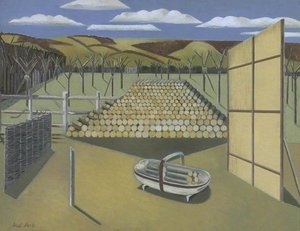
      Det mest elskede maleri af Paul Nash er The Separation of Light from Darkness (1924). The Stackyard (1925) og Sunflower and sun (1942) følger derefter blandt de lærreder, som læserne kender bedst. Vores katalog indeholder 111 værker af Paul Nash: her er de 100 mest berømte, hver med årstal, museum og hvad der gør dem mindeværdige.

      Rangordnet efter vores popularitetsscore, som kombinerer søgninger, besøg og ordrer for hvert værk. Opdateret oktober 2026. Hvert maleri på denne side kan bestilles som en håndmalet oliereproduktion på lærred, eller som et kunsttryk i den størrelse, du vælger.

      Portræt af Paul Nash
      Paul Nash · 1889 – 1946
      Født · død
      1889 – 1946, Kensington
      Bevægelse
      Surrealism
      Værker i vores katalog
      111
      Mest kendte
      The Separation of Light from Darkness (1924)
      Flest værker hos
      National Gallery of Canada

      Top 10 Paul Nash malerier: lærrederne som alle kender

      The Separation of Light from Darkness (1924) af Paul Nash
      1

      The Separation of Light from Darkness

      1924 · Woodcut

      We are looking at The Separation of Light from Darkness, a work created by Paul Nash in 1924. This piece emerged during a significant period in the artist's development, following his formative years in the United Kingdom. Nash was born in Kensington, United Kingdom, in 1889, and his perspective was shaped by the landscapes and environments of his home country.

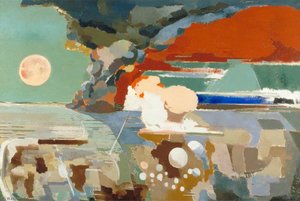
      Landscape of the Moon's Last Phase (1944) af Paul Nash
      4

      Landscape of the Moon's Last Phase

      1944 · Oil On Canvas · Walker Art Gallery, Liverpool

      Paul Nash’s Landscape of the Moon's Last Phase transports the viewer to a moment suspended between night and dawn, a breathtaking tableau dominated by the soft, yet profound, luminescence of a waning moon. This painting is more than a mere depiction of nature; it is an atmospheric meditation on cycles—the ebb and flow of light, life, and time itself. The composition draws the eye across a sweeping vista where foreground…

      Circle of the Monoliths (1938) af Paul Nash
      5

      Circle of the Monoliths

      1938 · Oil On Canvas · Leeds Art Gallery, Leeds

      Paul Nash's “Circle of the Monoliths,” painted in 1938, isn’t merely a landscape; it’s a meticulously constructed dreamscape, a potent distillation of memory, myth, and the unsettling beauty of the British countryside. This remarkable work, housed at Leeds Museums and Galleries, invites viewers into a realm where familiar forms are fractured, perspectives shift, and an ancient, almost primeval energy permeates every detail. Nash, deeply influenced by William Blake’s visionary poetry…

      The Creation of the Firmament (1924) af Paul Nash
      6

      The Creation of the Firmament

      1924 · Woodcut

      In this 1924 woodcut, we witness a moment of profound, almost violent transition. The work, part of a series of illustrations for the book Genesis, moves away from the figurative to explore the very mechanics of existence. It is a stark, monochromatic vision where the separation of light from darkness is rendered not as a gentle dawn, but as a rhythmic, angular tension. The composition is dominated by a series…

      The Creation of Land (1924) af Paul Nash
      7

      The Creation of Land

      1924 · Woodcut

      The Creation of Land emerges from the shadows of a profound transformation. Created by Paul Nash in 1924, this work exists as a singular moment within a larger, rhythmic sequence. It belongs to a series of woodcuts that draw their strength from the biblical Genesis, capturing the very instant when the world begins to take shape through a jerky, frightening cataclysm. The landscape does not merely appear; it erupts.

      Oxford During the War (1942) af Paul Nash
      8

      Oxford During the War

      1942 · Oil On Canvas · Worcester College, Oxford

      Paul Nash’s "Oxford During the War," painted in 1942, is far more than a mere depiction of an English landscape; it is a profound meditation on endurance. The canvas captures a scene steeped in the palpable tension of wartime, yet simultaneously breathes with an almost defiant tranquility. One gazes upon the foreground, drawn immediately to the imposing presence of the parked tank—a stark emblem of military reality—which anchors the composition.…

      The Diving Stage (1928) af Paul Nash
      9

      The Diving Stage

      1928 · Oil On Canvas · British Council Collection, London

      The Haunting Stillness of “The Diving Stage” Paul Nash’s “The Diving Stage,” painted in 1928, isn't merely a depiction of a seaside structure; it’s a meticulously crafted tableau of isolation, anticipation, and the unsettling beauty of suspended time. Emerging from the British Council Collection, this work transcends its subject matter to become a profound meditation on human presence within a vast, indifferent landscape. The painting immediately commands attention with its…

      The Creation of the Starry Firmament (1924) af Paul Nash
      10

      The Creation of the Starry Firmament

      1924 · Woodcut

      The Creation of the Starry Firmament is a significant woodcut by the British artist Paul Nash. Created in 1924, this work emerged from a period of intense creative development for the artist. It was produced as part of a series of illustrations for the book Genesis, a project that sought to visualize the biblical narrative through a modern, abstracted lens. The piece captures a moment of cosmic emergence, translating the…

      Flere lærreder af Paul Nash, fra 11 til 100

      Coronilla (recto) (1929) af Paul Nash
      #12

      Coronilla (recto)

      1929 · Fitzwilliam-museet

      A Realm of Silent Geometry: Paul Nash’s “Coronilla (recto)” Paul Nash's "Coronilla (recto)," painted in 1929, isn’t merely a depiction of a landscape; it’s an immersion into a…

      Bring dette lys hjem →
      November Moon (1942) af Paul Nash
      #88

      November Moon

      1942 · Fitzwilliam-museet

      In the quietude of 1942, amidst a world gripped by the profound tensions of global conflict, Paul Nash captured a moment of profound stillness in his evocative masterpiece,…

      Bestil dette lærred →
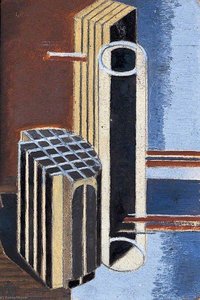
      Telecommunications (1934) af Paul Nash
      #89

      Telecommunications

      1934 · Walker Art Gallery

      Paul Nash’s 1934 painting, “Telecommunications,” isn’t merely a still life; it’s a carefully constructed visual argument about the burgeoning anxieties and promises of modernity. Rendered in a restrained…

      Få det malet i hånden →
      Eclipse of the Sunflower (1945) af Paul Nash
      #90

      Eclipse of the Sunflower

      1945 · British Council Collection

      In the twilight of his prolific career, Paul Nash captured a moment of profound existential tension in Eclipse of the Sunflower. Created in 1945, as the shadows of…

      Bring dette lys hjem →
      Druid Landscape (1938) af Paul Nash
      #91

      Druid Landscape

      1938 · British Council Collection

      Paul Nash’s Druid Landscape, painted in 1938, isn't merely a depiction of a landscape; it’s an immersion into a carefully constructed dreamscape. Created during a period of profound…

      Få det malet i hånden →
      Dymchurch Steps af Paul Nash
      #93

      Dymchurch Steps

      National Gallery of Canada

      The oil on canvas titled Dymchurch Steps is a work by the British artist Paul Nash. This piece was painted and re-worked between 1924 and 1944. It measures…

      Bestil dette lærred →
      Chestnut Waters af Paul Nash
      #94

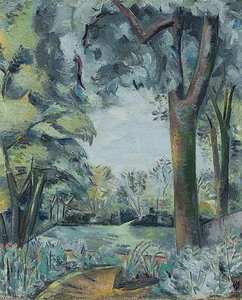
      Chestnut Waters

      National Gallery of Canada

      Paul Nash presents Chestnut Waters, an oil on canvas that captures a specific, quiet moment in the English landscape. The work originated in 1923 and was later reworked…

      Få det malet i hånden →
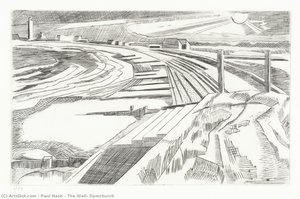
      The Wall, Dymchurch (1923) af Paul Nash
      #95

      The Wall, Dymchurch

      1923 · Tate Britain

      Paul Nash’s “The Wall, Dymchurch”: A Monument to Isolation in Geometric Precision Paul Nash's "The Wall, Dymchurch," created in 1923, stands as a quintessential example of British Modernism—a…

      Bring dette lys hjem →
      Landscape (verso) af Paul Nash
      #100

      Landscape (verso)

      Fitzwilliam-museet

      In the quiet corners of art history, few works capture the delicate equilibrium between the tangible world and the ethereal spirit quite like Paul Nash’s Landscape (verso). This…

      Bestil dette lærred →

      Paul Nashs lærreder, periode for periode

      Hvad Paul Nash har malet mest af

      De fire motiver, der optræder hyppigst på disse lærreder, hver med sit mest elskede eksempel.

      Hvor Paul Nash's lærreder hænger

      De 8 museer, der rummer flest af malerierne på denne side.

      Museum By Værker af Paul Nash Malerier fra denne liste
      National Gallery of Canada, OttawaNational Gallery of Canada Ottawa 9 A Night Bombardment, Void, Night Fighter
      Government Art Collection, LondonGovernment Art Collection London 5 Pink Hyacinth, Riviera Window, Cros de Cagnes, Landscape
      British Council Collection, LondonBritish Council Collection London 4 The Diving Stage, Eclipse of the Sunflower, Druid Landscape
      Leeds Art Gallery, LeedsLeeds Art Gallery Leeds 3 Circle of the Monoliths, Still Life with Bog Cotton, The Shore
      Fitzwilliam-museet, CambridgeFitzwilliam-museet Cambridge 3 Coronilla (recto), November Moon, Landscape (verso)
      Imperial War Museums, LondonImperial War Museums London 6 Follow the Fuhrer Above the Clouds, Battle of Germany
      Art Gallery of New South Wales, SydneyArt Gallery of New South Wales Sydney 2 Sunflower and sun, Mimosa Wood
      Walker Art Gallery, LiverpoolWalker Art Gallery Liverpool 2 Landscape of the Moon's Last Phase, Telecommunications

      Paul Nashs mest elskede lærred fra hvert årti

      1. 1910s
      2. 1920s
        The Separation of Light from Darkness (1924) af Paul Nash
        Lærred 1 af 100

        The Separation of Light from Darkness

        Alder 31 – 40

        We are looking at The Separation of Light from Darkness, a work created by Paul Nash in 1924. This piece emerged during a significant period in the artist's…

      3. 1930s
        Circle of the Monoliths (1938) af Paul Nash
        5 ud af 100

        Circle of the Monoliths

        Alder 41 – 50 · Leeds Art Gallery

        Paul Nash's “Circle of the Monoliths,” painted in 1938, isn’t merely a landscape; it’s a meticulously constructed dreamscape, a potent distillation of memory, myth, and the unsettling beauty…

      4. 1940s
        Sunflower and sun (1942) af Paul Nash
        Lærred 3 af 100

        Sunflower and sun

        Alder 51 – 57 · Art Gallery of New South Wales

      Om Paul Nash's lærreder: dine spørgsmål besvaret

      Hvad er det mest kendte maleri af Paul Nash?Læs svaret

      The Separation of Light from Darkness (1924), efterfulgt af The Stackyard (1925) og Sunflower and sun (1942).

      Hvor gammel var Paul Nash, da The Separation of Light from Darkness blev malet?Læs svaret

      Paul Nash, født i 1889, var 35 år gammel: The Separation of Light from Darkness er fra 1924.

      Hvad er de 10 mest berømte malerier af Paul Nash?Læs svaret

      The Separation of Light from Darkness, The Stackyard, Sunflower and sun, Landscape of the Moon's Last Phase, Circle of the Monoliths, The Creation of the Firmament, The Creation of Land, Oxford During the War, The Diving Stage og The Creation of the Starry Firmament. Hvert lærred i den ovenstående rangliste er angivet med årstal og museum.

      Hvor mange værker malede Paul Nash i alt?Læs svaret

      111 værker af Paul Nash er i vores katalog, dateret fra 1914 til 1945.

      Hvor kan jeg se Paul Nashs mest berømte lærreder?Læs svaret

      Primært i National Gallery of Canada (Ottawa), Government Art Collection (London) og British Council Collection (London); listen ovenfor nævner hvert museum og dets lærreder.

      Hvornår malede Paul Nash de mest elskede lærreder?Læs svaret

      I 1920s, som udgør 35 af de 100 værker på denne side, herunder The Separation of Light from Darkness.

      Hvilke er Paul Nashs tidligste og seneste berømte lærreder?Læs svaret

      Det tidligste lærred her er The Orchard (1914); det seneste er Solstice of the Sunflower (1945).

      Hvad malede Paul Nash oftest?Læs svaret

      Landscape (20), Geometric shapes (8) og British art (8), fordelt på de 100 værker på denne side.

      Hvilket medie malede Paul Nash oftest i?Læs svaret

      Oil On Canvas, anvendt i 8 af de 100 værker på denne side.

      Hvilken stilart tilhører Paul Nash's maleri?Læs svaret

      Surrealism, som lærrederne på denne side viser.

      Hvilke lærreder af Paul Nash hænger på National Gallery of Canada?Læs svaret

      National Gallery of Canada, Ottawa har 9 af værkerne på denne side, herunder A Night Bombardment, Void og Night Fighter.

      Kan jeg købe en reproduktion af et lærred af Paul Nash?Læs svaret

      Ja. Hvert maleri på denne side kan bestilles fra sin egen side som en håndmalet oliereproduktion eller som et kunsttryk i den størrelse, du vælger.

      Paul Nash: et liv i maling

      En Visionær Landskabsmaler: Paul Nash og det Moderne Englands Sjæl

      Paul Nash, født i London i 1889 og død i 1946, var mere end blot en maler; han var en visjonær som fangede essensen av et land i rask forandring. Hans liv, preget av både personlig tragedie og kunstnerisk triumf, speiler det engelske samfunnets turbulente første halvdel av det 20. århundre. Oppvokst i en familie der hans far var advokat og hans mor plaget av psykiske lidelser, flyttet familien til Buckinghamshire, hvor landskapet rundt Iver Heath ble et tidlig og varig inspirasjonskilde for Nash. Denne barndommen, fylt med både skjønnhet og uro, formet hans kunstneriske blikk og bidro til den melankolske, ofte drømmeaktige kvaliteten i hans malerier. Hans utdannelse ved Parsons School of Art og senere Slade School of Fine Art ga ham et solid fundament, men han foretrakk å utvikle sin egen stil, fri for konvensjonelle begrensninger. Tidlige påvirkninger fra William Blake og J.M.W. Turner er tydelige i hans tidlige arbeider, der han kombinerte romantisk følsomhet med en spirende interesse for moderne former og farger.

      Fra Landskap til Krigens Skarer: En Kunstnerisk Utvikling

      Nashs kunstneriske utvikling var preget av en gradvis bevegelse fra tradisjonelle landskapsmotiver til mer abstrakte og symbolske komposisjoner. Han eksperimenterte med farger, geometriske former og surrealistiske elementer, noe som skilte ham ut fra mange av sine samtidige. Etter å ha sett en Giorgio de Chirico-utstilling i 1928, ble han dypt påvirket av den italienske kunstnerens mystiske landskapsbilder, og dette preget hans senere verk med en følelse av fremmedgjøring og melankoli. Hans tilknytning til surrealismen var imidlertid ikke fullstendig; han beholdt alltid et sterkt fotfeste i tradisjonell maleteknikk og en dyp kjærlighet til det engelske landskapet. Første verdenskrig markerte et vendepunkt i hans karriere, da han ble offisiell krigsmaler. Hans skildringer av slagmarkene var ikke glorifiserende eller heroiske; snarere var de hjemsøkende og poetiske, fylt med en følelse av tap og ødeleggelse. "The Menin Road" er kanskje hans mest kjente krigsbilde, et verk som fanger den uhyggelige stillheten etter kampens raseri. Senere i andre verdenskrig skapte han serien "Aerial Creatures," hvor antropomorfe flykropper lå spredt utover landskapet – en visjonær og foruroligende kommentar til krigens destruktive kraft.

      En Pioner innen Britisk Modernisme og Krigsminnesmerke

      Paul Nashs betydning i britisk kunsthistorie kan ikke overvurderes. Han var en sentral skikkelse i modernismens fremvekst, og brobygger mellom tradisjonell landskapsmaleri og de nye modernistiske strømningene. Hans evne til å kombinere det konkrete med det abstrakte, det vakre med det grufulle, gjorde ham til en unik kunstnerisk stemme. Han var også en viktig bidragsyter til krigskunsten, og hans bilder fra begge verdenskriger er ikoniske representasjoner av konfliktenes innvirkning på både soldater og miljøet. Hans deltakelse i Unit One-gruppen, sammen med Ben Nicholson og Barbara Hepworth, vitner om hans engasjement i den avantgarde kunstscenen. Nash var også en dyktig skribent og designer, og hans bidrag til brukskunst, inkludert scenografi, tekstiler og plakater, viser hans allsidighet som kunstner.

      Arv og Inspirasjon: En Fortsatt Relevans

      Selv om Paul Nash døde relativt ung i 1946, etterlot han seg en arv som fortsetter å inspirere kunstnere og publikum den dag i dag. Hans verk er representert i de mest prestisjefylte samlinger i Storbritannia, inkludert Tate Britain og Imperial War Museum. Nashs evne til å fange det engelske landskapets skjønnhet og melankoli, kombinert med hans dype forståelse for menneskets forhold til naturen, gjør hans malerier tidløse. Hans krigsbilder er kraftfulle minnesmerker over konfliktenes grusomheter, mens hans surrealistiske komposisjoner fortsetter å fascinere og utfordre seeren. Paul Nash var en kunstner som våget å utforske de mørke og lysende sidene av den menneskelige erfaring, og hans verk er et vitnesbyrd om kraften i kunsten til å reflektere over vår tid.

      Alle 111 værker af Paul Nash →