Atelier — Gratis fragt til hele verden — Leveringstid: 2–6 uger
      Simon Vouet, 1590 – 1649

      De 100 mest berømte Simon Vouet-malerier, rangeret

      Det mest elskede maleri af Simon Vouet er Venus og Adonis (1642), som hænger på J. Paul Getty Museum i Los Angeles. The Muses of Urania and Calliope (1634) og Annunciation (1640) følger derefter blandt de lærreder, som læserne kender bedst. Vores katalog indeholder 166 værker af Simon Vouet: her er de 100 mest berømte, hver med årstal, museum og hvad der gør dem mindeværdige.

      Rangordnet efter vores popularitetsscore, som kombinerer søgninger, besøg og ordrer for hvert værk. Opdateret oktober 2026. Hvert maleri på denne side kan bestilles som en håndmalet oliereproduktion på lærred, eller som et kunsttryk i den størrelse, du vælger.

      Portræt af Simon Vouet
      Simon Vouet · 1590 – 1649
      Født · død
      1590 – 1649, Paris
      Bevægelse
      French baroque
      Værker i vores katalog
      166
      Mest kendte
      Venus og Adonis (1642)
      Flest værker hos
      Louvre

      Top 10 Simon Vouet malerier: lærrederne som alle kender

      Venus og Adonis (1642) af Simon Vouet
      1

      Venus og Adonis

      1642 · Akryl på lærred · J. Paul Getty Museum, Los Angeles

      Venus og Adonis – Et Klassisk Møde mellem Ærlighed og Passion Simon Vouet’s “Venus og Adonis,” malet i 1642, er et bemærkelsesværdigt eksempel på fransk Barok kunst, hvor kunstnerens mesterlige brug af farve, komposition og hans assimilering af italienske kunsttrends fremgår tydeligt. Dette billedhuggeriske værk fortæller historien om Ovid’s *Metamorphoses*, hvor den unge Adonis nægter Venus’ kærlighedsforsøg, hvilket prædiker hans tragiske skæbne. Maleriet er mere end blot en beskrivelse af…

      The Muses of Urania and Calliope (1634) af Simon Vouet
      2

      The Muses of Urania and Calliope

      1634 · Acrylic On Canvas · National Gallery of Art, Washington

      Simon Vouet’s “The Muses Urania and Calliope”: A Symphony of Baroque Grace Simon Vouet (1590-1649) stands as a pivotal figure in the artistic landscape of 17th-century France, marking the decisive transition from Mannerism to the opulent grandeur of the Baroque style. His legacy resides not merely in his prolific output but also in his unwavering dedication to mastering Italian influences—a pursuit that fundamentally reshaped French painting and cemented Vouet’s place…

      Annunciation (1640) af Simon Vouet
      3

      Annunciation

      1640 · Oil On Canvas · Galleria degli Uffizi, Firenze

      Simon Vouet's "Annunciation," painted in 1640, is more than just a religious depiction; it’s a masterful orchestration of light, shadow, and human emotion. This captivating work transports the viewer to an intimate interior space, where the momentous announcement of Mary’s divine conception unfolds with breathtaking drama. The painting immediately draws the eye to the kneeling figure of the Virgin Mary, bathed in a warm, golden glow emanating from the right…

      The Fortuneteller (detail) (1617) af Simon Vouet
      4

      The Fortuneteller (detail)

      1617 · Oil On Canvas · Galleria Nazionale d'Arte Antica, Rom

      In the heart of 1617, amidst the vibrant and transformative atmosphere of Roman artistic circles, Simon Vouet captured a moment of profound human connection in his masterpiece, The Fortuneteller. This work, particularly when viewed in its intimate details, serves as much more than a mere portrait; it is an emblem of the burgeoning Baroque style that was beginning to reshape the visual landscape of Europe. The scene unfolds with a…

      Sleeping Venus (1630) af Simon Vouet
      5

      Sleeping Venus

      1630 · Acrylic On Canvas · Szépművészeti Múzeum, Budapest

      Simon Vouet's "Sleeping Venus," painted around 1630, is not merely a depiction of a reclining nude; it’s an exquisite distillation of Renaissance ideals and the burgeoning Baroque aesthetic. This captivating work transcends simple portraiture, offering instead a profound meditation on beauty, repose, and the delicate balance between earthly pleasure and spiritual contemplation. The painting immediately draws the viewer into a world of hushed tranquility, inviting us to share in the…

      Allegory of Virtue (1634) af Simon Vouet
      6

      Allegory of Virtue

      1634 · Acrylic On Canvas · Louvre, Paris

      Simon Vouet’s “Allegory of Virtue,” completed around 1634, stands as a testament to the burgeoning Baroque aesthetic infiltrating French artistic circles during Louis XIII's reign. More than just a portrait—though it undeniably depicts a woman radiating grace and authority—the painting delves into profound philosophical concepts rooted in humanist ideals prevalent at the time.

      The Entombment (1638) af Simon Vouet
      7

      The Entombment

      1638 · Oil On Canvas · Fitzwilliam-museet, Cambridge

      Simon Vouet's "The Entombment," painted in 1635–1638, is not merely a depiction of a biblical scene; it’s an exquisitely rendered meditation on grief, faith, and the profound dignity of sacrifice. This monumental work, currently residing within the collection of the Fitzwilliam Museum in Cambridge, transcends its subject matter to become a powerful testament to the Baroque era's ability to evoke intense emotion through masterful technique and carefully considered symbolism. Vouet,…

      Angels with Attributes of the Passion: Angel Holding the Vessel and Towel for washing the hands of Pontius Pilate (1624) af Simon Vouet
      8

      Angels with Attributes of the Passion: Angel Holding the Vessel and Towel for washing the hands of Pontius Pilate

      1624 · Oil · Minneapolis Institute of Art, Minneapolis

      A single celestial figure emerges from a deep, near-black void, commanding the space with an intimate and monumental presence. This angel, caught in a moment of profound spiritual devotion, gazes upward with eyes full of soulful contemplation or sorrow. The light descends from the upper left, carving the figure out of the darkness and casting soft, tender shadows across a face etched with emotion. Every detail feels immediate, from the…

      Saint John (1623) af Simon Vouet
      9

      Saint John

      1623 · Oil On Canvas · Philadelphia Museum of Art, Philadelphia

      A young man turns his face toward a light that remains unseen. His eyes, wide and searching, catch a glimmer that pulls his gaze upward, away from the dark, murky depths of the background. Thick, dark curls frame a pale face, creating a sharp contrast against the heavy shadows that swallow the space around him. He is caught in a moment of sudden, quiet realization. The light does not merely…

      Virgin and Child, with an Angel (1642) af Simon Vouet
      10

      Virgin and Child, with an Angel

      1642 · Oil On Panel · Philadelphia Museum of Art, Philadelphia

      The light falls softly upon the skin of the Virgin Mary, catching the curve of her cheek and the small, smooth hands of the Christ Child. They sit within a triangular arrangement that anchors the composition, surrounded by the deep shadows of a dense woodland. An angel leans into this intimate circle, its robes glowing with warm yellows and golds that contrast against the heavy, dark trees behind them. At…

      Flere lærreder af Simon Vouet, fra 11 til 100

      Madonna with Child (1625) af Simon Vouet
      #11

      Madonna with Child

      1625 · Hermitage Museum

      The room falls away into a deep, near-black shadow, leaving only two figures bathed in a soft, directional light. From the upper left, a gentle glow spills across…

      Bestil dette lærred →
      Heavenly Charity (1640) af Simon Vouet
      #14

      Heavenly Charity

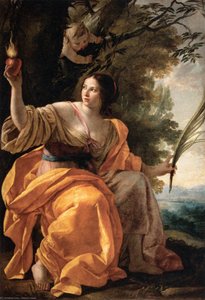
      1640 · Louvre

      A Beacon of Baroque Virtue: Simon Vouet’s Heavenly Charity Simon Vouet's "Heavenly Charity," completed around 1640, stands as a cornerstone of French Baroque painting—a testament to Louis XIII’s…

      Bring dette lys hjem →
      Allegory (1640) af Simon Vouet
      #15

      Allegory

      1640 · Musei Capitolini

      Simon Vouet executed Allegory during his residency in Rome, a period spanning from 1614 to 1627. The work was commissioned by Marcello Sacchetti, a 17th-century Italian merchant and…

      Bring dette lys hjem →
      Sacrifice of Isaac (1642) af Simon Vouet
      #17

      Sacrifice of Isaac

      1642 · Milwaukee Art Museum

      The painting titled Sacrifice of Isaac is a work of religious art. It is attributed to the French artist Simon Vouet (1590-1649) and Pierre Patel, the Elder (1605-1676).…

      Bestil dette lærred →
      Ceres and Harvesting Cupids (1634) af Simon Vouet
      #20

      Ceres and Harvesting Cupids

      1634 · National Gallery

      The oil on canvas work titled Ceres and Harvesting Cupids was executed by Simon Vouet and studio. This painting dates to about 1634-5. The subject matter depicts Ceres,…

      Bring dette lys hjem →
      Suicide of Lucrece (1625) af Simon Vouet
      #21

      Suicide of Lucrece

      1625 · Nationalgalleriet i Prag

      The heavy silence of a tragic end hangs in the air within Suicide of Lucrece. In this dramatic oil painting, the artist Simon Vouet captures the precise, harrowing…

      Bring dette lys hjem →
      The Muse Clio (1640) af Simon Vouet
      #22

      The Muse Clio

      1640 · Staatliche Kunsthalle Karlsruhe

      The Muse Clio is an oil on canvas painting by the artist Simon Vouet. Created about 1640, this work depicts the mythological figure Clio, who is recognized as…

      Bestil dette lærred →
      Vanitas (1621) af Simon Vouet
      #24

      Vanitas

      1621 · Nationalmuseet i Warszawa

      In Vanitas, Simon Vouet centers the composition on a tight, intimate encounter between two figures. A young woman and an older man emerge from a deep, near-black background…

      Bring dette lys hjem →
      The Muses Urania and Calliope (1634) af Simon Vouet
      #55

      The Muses Urania and Calliope

      1634 · National Gallery of Art

      Simon Vouet's "The Muses Urania and Calliope," painted in 1634, isn’t merely a portrait; it’s an immersive experience—a vibrant tableau vivant capturing the essence of classical inspiration. This…

      Bring dette lys hjem →
      Saint Catherine of Alexandria (1620) af Simon Vouet
      #60

      Saint Catherine of Alexandria

      1620 · National Museum of Western Art

      Saint Catherine of Alexandria by Simon Vouet, executed in 1620, presents a formal study of the early Christian martyr. Rendered in oil on canvas, the work captures the…

      Bring dette lys hjem →
      Mary Adoring the Christ child (1623) af Simon Vouet
      #61

      Mary Adoring the Christ child

      1623 · Museum Boijmans Van Beuningen

      Mary Adoring the Christ child is a religious oil painting by the French artist Simon Vouet. Executed in 1623, the work belongs to the Baroque tradition, focusing on…

      Bestil dette lærred →
      Toilet of Venus (1628) af Simon Vouet
      #64

      Toilet of Venus

      1628 · Art Museum

      To gaze upon Simon Vouet’s Toilet of Venus is to step directly into a moment suspended in opulent leisure—a scene dripping with the sensuality and refined drama characteristic…

      Bestil dette lærred →
      Self-Portrait (1615) af Simon Vouet
      #65

      Self-Portrait

      1615 · Musée Réattu

      To stand before this self-portrait is to encounter not merely paint on canvas, but a direct conduit to the vibrant, ambitious spirit of early 17th-century Paris. Painted around…

      Bring dette lys hjem →
      LA VICTOIRE af Simon Vouet
      #66

      LA VICTOIRE

      Louvre

      To stand before this depiction of La Victoire is to encounter pure, unbridled apotheosis. It is not merely a painting; it is a dramatic narrative captured in oil,…

      Bring dette lys hjem →
      The Rape of Europa (1640) af Simon Vouet
      #67

      The Rape of Europa

      1640 · Thyssen-Bornemisza Museum

      To gaze upon Simon Vouet's depiction of The Rape of Europa is to step directly into the charged, dramatic heart of the Baroque era. This canvas is not…

      Bestil dette lærred →
      St Catherine (1614) af Simon Vouet
      #69

      St Catherine

      1614 · Quirinalpalasset i Rom

      To stand before Simon Vouet's depiction of St Catherine is to step directly into the vibrant, emotionally charged atmosphere of early seventeenth-century Paris. This portrait captures more than…

      Få det malet i hånden →
      Prince Marcantonio Doria (1621) af Simon Vouet
      #70

      Prince Marcantonio Doria

      1621 · Louvre

      In the hallowed halls of the Musée du Louvre, there exists a window into the soul of the seventeenth century, captured through the masterful brushstrokes of Simon Vouet.…

      Bestil dette lærred →
      The Holy Family (1630) af Simon Vouet
      #79

      The Holy Family

      1630 · Kunsthalle Bremen

      In the heart of the seventeenth century, as the rigid structures of Mannerism began to dissolve under the weight of a new, more visceral era, Simon Vouet emerged…

      Få det malet i hånden →
      Madonna and Child (1633) af Simon Vouet
      #80

      Madonna and Child

      1633 · National Gallery of Art

      In the intimate embrace of Simon Vouet’s Madonna and Child, we are invited into a moment of profound, quiet tenderness that transcends the centuries. Painted in 1633, this…

      Bring dette lys hjem →
      LA MISE AU TOMBEAU af Simon Vouet
      #81

      LA MISE AU TOMBEAU

      Louvre

      LA MISE AU TOMBEAU is a work by Simon Vouet, created between 1640 and 1642. This painting captures a moment of profound stillness. It depicts the iconographic type…

      Bring dette lys hjem →
      Allegory of Peace (1627) af Simon Vouet
      #82

      Allegory of Peace

      1627 · Galleria Nazionale d'Arte Antica

      Completed in 1627, Allegory of Peace by Simon Vouet offers a profound look into the intellectual fervor and humanist aspirations of the seventeenth century. This work emerged during…

      Bestil dette lærred →
      Allegory of Wealth (1630) af Simon Vouet
      #83

      Allegory of Wealth

      1630 · Louvre

      Simon Vouet's 1630 *Allegory of Wealth* is not merely a painting; it’s an immersive experience, a meticulously crafted tableau that speaks volumes about the values and aspirations of…

      Bestil dette lærred →
      The Fortune Teller (1618) af Simon Vouet
      #87

      The Fortune Teller

      1618 · National Gallery of Canada

      The Fortune Teller, painted in 1618 by the masterful Simon Vouet, offers a captivating glimpse into the social and artistic currents of early 17th-century France. This portrait, measuring…

      Bring dette lys hjem →
      Caritas Romana af Simon Vouet
      #92

      Caritas Romana

      Nationalmuseet i Warszawa

      In Caritas Romana, Simon Vouet presents a quiet, emotionally charged encounter between two figures. The composition centers on a woman cradling an older, bearded man, creating an intimate…

      Bestil dette lærred →
      St Jerome and the Angel (1622) af Simon Vouet
      #93

      St Jerome and the Angel

      1622 · National Gallery of Art

      Simon Vouet’s “St. Jerome and the Angel,” painted in 1622, is more than just a depiction of a biblical scene; it's a carefully constructed meditation on divine guidance,…

      Bestil dette lærred →
      The Fortune Teller (1617) af Simon Vouet
      #94

      The Fortune Teller

      1617 · Galleria Nazionale d'Arte Antica

      Simon Vouet's "The Fortune Teller," painted in 1617, isn’t merely a portrait; it’s a carefully constructed tableau brimming with intrigue and a palpable sense of the mystical. Housed…

      Få det malet i hånden →
      LE CHRIST EN CROIX af Simon Vouet
      #95

      LE CHRIST EN CROIX

      Louvre

      is a significant work by the French Baroque painter Simon Vouet. The composition centers on the crucifixion of Jesus Christ, a central event of the New Testament. The…

      Bestil dette lærred →

      Simon Vouets lærreder, periode for periode

      Hvad Simon Vouet har malet mest af

      De fire motiver, der optræder hyppigst på disse lærreder, hver med sit mest elskede eksempel.

      Hvor Simon Vouet's lærreder hænger

      De 8 museer, der rummer flest af malerierne på denne side.

      Museum By Værker af Simon Vouet Malerier fra denne liste
      Louvre, ParisLouvre Paris 20 Allegory of Virtue, Heavenly Charity, POLYMNIE, MUSE DE L'ELOQUENCE
      Szépművészeti Múzeum, BudapestSzépművészeti Múzeum Budapest 5 Sleeping Venus, Parnassus or Apollo and the Muses, Parnassus or Apollo and the Muses (detail)
      National Gallery of Art, WashingtonNational Gallery of Art Washington 4 The Muses of Urania and Calliope, The Muses Urania and Calliope, Madonna and Child
      Galleria Nazionale d'Arte Antica, RomGalleria Nazionale d'Arte Antica Rom 4 The Fortuneteller (detail), Allegory of Peace, The Fortune Teller
      Nationalmuseet i Warszawa, WarszawaNationalmuseet i Warszawa Warszawa 4 Vanitas, Caritas Romana
      Los Angeles County Museum of Art, Los AngelesLos Angeles County Museum of Art Los Angeles 3 Model for Altarpiece in St. Peter's, Model for Altarpiece in St. Peter's
      Minneapolis Institute of Art, MinneapolisMinneapolis Institute of Art Minneapolis 2 Angels with Attributes of the Passion: Angel Holding the Vessel and Towel for washing the hands of Pontius Pilate, Angels with Attributes of the Passion, the Superscription from the Cross
      Philadelphia Museum of Art, PhiladelphiaPhiladelphia Museum of Art Philadelphia 2 Saint John, Virgin and Child, with an Angel

      Simon Vouets mest elskede lærred fra hvert årti

      1. 1610s
        The Fortuneteller (detail) (1617) af Simon Vouet
        Lærred 4 af 100

        The Fortuneteller (detail)

        Alder 20 – 29 · Galleria Nazionale d'Arte Antica

        In the heart of 1617, amidst the vibrant and transformative atmosphere of Roman artistic circles, Simon Vouet captured a moment of profound human connection in his masterpiece, The…

      2. 1620s
      3. 1630s
        The Muses of Urania and Calliope (1634) af Simon Vouet
        Lærred 2 af 100

        The Muses of Urania and Calliope

        Alder 40 – 49 · National Gallery of Art

        Simon Vouet’s “The Muses Urania and Calliope”: A Symphony of Baroque Grace Simon Vouet (1590-1649) stands as a pivotal figure in the artistic landscape of 17th-century France, marking…

      4. 1640s
        Venus og Adonis (1642) af Simon Vouet
        1 ud af 100

        Venus og Adonis

        Alder 50 – 59 · J. Paul Getty Museum

        Venus og Adonis – Et Klassisk Møde mellem Ærlighed og Passion Simon Vouet’s “Venus og Adonis,” malet i 1642, er et bemærkelsesværdigt eksempel på fransk Barok kunst, hvor…

      Om Simon Vouet's lærreder: dine spørgsmål besvaret

      Hvad er det mest kendte maleri af Simon Vouet?Læs svaret

      Venus og Adonis (1642), J. Paul Getty Museum, Los Angeles. The Muses of Urania and Calliope (1634) og Annunciation (1640) følger efter.

      Hvor gammel var Simon Vouet, da Venus og Adonis blev malet?Læs svaret

      Simon Vouet, født i 1590, var 52 år gammel: Venus og Adonis er fra 1642.

      Hvad er de 10 mest berømte malerier af Simon Vouet?Læs svaret

      Venus og Adonis, The Muses of Urania and Calliope, Annunciation, The Fortuneteller (detail), Sleeping Venus, Allegory of Virtue, The Entombment, Angels with Attributes of the Passion: Angel Holding the Vessel and Towel for washing the hands of Pontius Pilate, Saint John og Virgin and Child, with an Angel. Hvert lærred i den ovenstående rangliste er angivet med årstal og museum.

      Hvor mange værker malede Simon Vouet i alt?Læs svaret

      166 værker af Simon Vouet er i vores katalog, dateret fra 1614 til 1645.

      Hvor kan jeg se Simon Vouets mest berømte lærreder?Læs svaret

      Primært i Louvre (Paris), Szépművészeti Múzeum (Budapest) og National Gallery of Art (Washington); listen ovenfor nævner hvert museum og dets lærreder.

      Hvornår malede Simon Vouet de mest elskede lærreder?Læs svaret

      I 1620s, som udgør 31 af de 100 værker på denne side, herunder Angels with Attributes of the Passion: Angel Holding the Vessel and Towel for washing the hands of Pontius Pilate.

      Hvilke er Simon Vouets tidligste og seneste berømte lærreder?Læs svaret

      Det tidligste lærred her er Lovers (1614); det seneste er Allegory of Prudence (1645).

      Hvad malede Simon Vouet oftest?Læs svaret

      Woman (15), Renaissance (11) og Mythology (9), fordelt på de 100 værker på denne side.

      Hvilket medie malede Simon Vouet oftest i?Læs svaret

      Oil On Canvas, anvendt i 40 af de 100 værker på denne side.

      Hvilken stilart tilhører Simon Vouet's maleri?Læs svaret

      French baroque, som lærrederne på denne side viser.

      Hvilke lærreder af Simon Vouet hænger på Louvre?Læs svaret

      Louvre, Paris har 12 af værkerne på denne side, herunder Allegory of Virtue, Heavenly Charity og POLYMNIE, MUSE DE L'ELOQUENCE.

      Kan jeg købe en reproduktion af et lærred af Simon Vouet?Læs svaret

      Ja. Hvert maleri på denne side kan bestilles fra sin egen side som en håndmalet oliereproduktion eller som et kunsttryk i den størrelse, du vælger.

      Simon Vouet: et liv i maling

      Simon Vouet: Fra Paris til Italiensk Barok og Tilbage

      Simon Vouet, født i Paris den 9. januar 1590 og død samme sted den 30. juni 1649, var mere end blot en maler; han var en kulturel brobygger, der smeltede fransk finesse sammen med italiensk barokpragt. Fra sin tidlige karriere som portrætmaler i Paris til hans formative år i Italien og tilbage til Frankrig som kongelig hofmaler, formede Vouets liv og kunst den franske malerkunsts udvikling i det 17. århundrede.

      En Kunstnerisk Rejse: Fra England til Det Osmanniske Rige og Rom

      Vouets kunstneriske rejse begyndte tidligt. Som blot fjortenårig blev han sendt til England for at male et portræt, en tidlig indikation af hans talent og voksende ry. Men det var hans ophold i Det Osmanniske Rige, som en del af Baron de Sancys følge, der virkelig åbnede hans øjne for nye kulturelle horisonter. Denne oplevelse førte ham videre til Venedig, hvor han studerede Paolo Veroneses mesterværker med stor interesse – især dennes evne til at skabe overdådige og farverige kompositioner. Det var dog i Rom, fra 1614 til 1627, at Vouet virkelig fandt sin kunstneriske stemme. Her fordybede han sig i den pulserende barokscene, absorberede Caravaggios dramatiske lyssætning, de elegante former fra italiensk manierisme og de levende farvepaletter hos Veronese. Han studerede også værker af Carracci, Guercino, Lanfranco og Guido Reni, og syntetiserede disse forskellige stilarter til en unik vision.

      Barokkens Introduktion til Frankrig: Stiludvikling og Kongelig Anerkendelse

      Vouets ophold i Rom kulminerede med hans valg som president for den prestigefyldte Accademia di San Luca, et bevis på hans dygtighed og anerkendelse. Da han vendte tilbage til Frankrig i 1627, bragte han ikke blot en imponerende samling af teknikker og stilarter med sig, men også selve essensen af den italienske barok. Han blev straks udnævnt til Premier peintre du Roi – kongens første maler – en position der gav ham enorm indflydelse og adgang til de mest prestigefyldte opgaver. Vouets stil var karakteriseret ved sin evne til at absorbere og raffinere forskellige kunstneriske påvirkninger, hvilket resulterede i et overdådigt og dynamisk udtryk. Han introducerede en ny sans for drama og bevægelse i fransk maleri, der afveg markant fra den mere formelle og elegante manierisme, der havde domineret tidligere.

      En Skole af Talenter: Elever og Arv

      Vouets betydning strækker sig langt ud over hans egne værker. Han oprettede et stort og aktivt atelier, hvor han uddannede en række talentfulde kunstnere, der skulle forme den franske malerkunst i generationer fremover. Blandt hans mest kendte elever var Charles Le Brun, der senere stod for al dekorativ maleri på Versailles, Valentin de Boulogne, Charles Alphonse du Fresnoy, Pierre Mignard, Eustache Le Sueur og Claude Mellan. Disse kunstnere spredte Vouets stil og teknikker over hele Frankrig, hvilket etablerede en distinkt fransk barokskole. Hans indflydelse er tydelig i de storslåede dekorative ordninger, der blev bestilt af Ludvig XIV, og hans arv lever videre i den rige visuelle kultur fra det 17. århundrede.

      En Bro mellem Kulturer: Simon Vouets Historiske Betydning

      Simon Vouet vil for altid blive husket som en central figur i overgangen fra manierisme til barokken i fransk malerkunst. Han var ikke blot en dygtig maler, men også en visionær kunstner, der formåede at integrere italienske stilarter og teknikker på en måde, der resonerede med den franske smag. Hans evne til at skabe overdådige, dynamiske og visuelt betagende værker cementerede hans plads i historien som en af de mest betydningsfulde kunstnere i det 17. århundrede.

      Alle 166 værker af Simon Vouet →