Introduction Close your eyes for a moment and imagine the world not as a collection of fixed lines and rigid shapes, but as a shimmering dance of light and atmosphere. Imagine the way a morning mist clings to the reeds of a pond, or how the setting s...
In our contemporary era, characterized by a relentless rush of digital noise and the frantic pace of urban life, the home has become more than just a physical structure; it is a vital sanctuary for the soul. We often find ourselves yearning for a quiet corner of stillness, a place where the mind can exhale and the spirit can reconnect with its own depths. This pursuit of tranquility is not merely a luxury but a necessity for emotional well and-being. It is within this search for peace that the luminous world of Impressionism offers its most profound gift.
Unlike the rigid, dramatic narratives of classical art that demand our attention through heavy shadows and monumental subjects, Impressionist works invite us to linger. They do not shout; they whisper. The magic lies in their ability to manipulate light—the very element that conditions our perception of reality. When we bring a piece inspired by the luminism of the late 19th century into our living spaces, we are inviting a soft, ethereal glow to inhabit our walls. This interplay of light and shadow does more than decorate; it shapes the atmosphere of a room, creating an environment that feels breathable and alive.
Atmospheric Presence: Capturing the Fleeting Moment
A Symphony of Light and Nature: Exploring Renoir’s ‘Landscape 15’ Pierre-Auguste Renoir's *Landscape 15* is a captivating embodiment of Impressionism, transporting the viewer to a realm of serene beauty and fleeting moments. More than just a depictio...
To understand the serenity found in these landscapes, one must look at how artists like Claude Monet or Pierre-Auguste Renoir approached the canvas. They did not seek to document the world with photographic precision; instead, they sought to capture the impression—that ephemeral, breathless moment before the light shifts and the shadows lengthen. This movement began with a desire to record the precise sensation of a single moment, whether it was the way morning mist clings to the reeds of a pond or how the setting sun dissolves the horizon into a soft, violet haze.
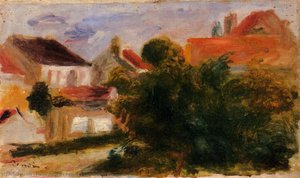
In works such as Landscape 15 by Renoir, we see this beautifully realized. The scene unfolds with a harmonious balance of natural elements, where two majestic trees frame the composition and draw the eye inward. These are not merely botanical studies; they establish depth and create a sense of grounded stability. A solitary figure, subtly placed within the landscape, adds a human element—a quiet observer immersed in the tranquility of nature. This practice of en plein air painting allowed artists to capture the transient effects of light and atmosphere with an accuracy that felt deeply personal rather than purely topographical.
The Texture of Memory: Examining Brushwork and Impasto
The Enigmatic Landscapes of Maurice F. H. De Haas Maurice F. H. De Haas remains a somewhat elusive figure in the pantheon of 19th and early 20th-century landscape painters, despite a body of work characterized by its atmospheric depth, subtle color p...
To truly experience an Impressionist painting, one must move beyond mere observation and into the realm of feeling. The technique itself—the use of broken color and short, deliberate brushstrokes—creates a shimmering effect that mimics the way our eyes perceive light in motion. There is a tactile soul in the visible impasto, where the ridges of paint catch the actual light of your room, creating a sense of movement that a flat, digital print can never replicate.
When these textures are rendered in hand-painted oil on cotton canvas, the depth becomes palpable. The use of broken brushstrokes and a luminous palette transforms the canvas into a sensory experience. In the works of artists like M.F.H. De Haas, we find a dedication to capturing the fleeting moods of nature through subtle color palettes and atmospheric depth. His approach, moving away from strict realism toward an impressionistic focus on light, reminds us that the texture of the paint itself—the way it holds the light—adds a layer of intimacy, making the artwork feel like a living, breathing part of the household's emotional fabric.
Introduction To step into the world of Jean-Baptiste-Camille Corot is to leave behind the clamor of the modern age and enter a realm of profound stillness, where the air feels heavy with morning mist and the light dances softly through silvered leave...
The palette of the Impressionists is carefully orchestrated to evoke specific emotional states. Consider the vibrant reds, lush greens, and sunny yellows found in Frederick Childe Hassam’s Home Sweet Home Cottage; these colors are not merely decorative but act as a meditation on beauty and warmth. In a home, such hues can transform a sterile corner into a sun-drenched nook of joy. Conversely, the softer, pastel tones used to capture morning mist or twilight shadows can instill a sense of profound equilibrium.
We see this emotional resonance in the works of Jean-Baptiste-Camille Corot, whose palette of muted greens, silvery greys, and warm ochres offers a sanctuary of visual peace. His ability to evoke mood rather than just matter ensures that his landscapes remain resonant, inviting us to slow our breath and observe the ephemeral beauty of a single moment. Whether it is the soft, almost poetic haziness of his French scenes or the structured elegance of his earlier studies, the color serves as an emotional anchor, connecting us to the natural world.
Framing the Horizon: Integrating Landscapes into Living Spaces
Captivating Subject and Lush Landscape Immerse yourself in the vibrant beauty of a tropical paradise captured through the masterful brushwork of Paul Gauguin. This evocative scene depicts the lush, mountainous terrain of Martinique, where the natural...
Bringing these landscapes into our personal environments requires a thoughtful approach to composition and scale. For those looking to create a focal point, a multi-panel arrangement—splitting a landscape across three or five panels—can be particularly effective for wide walls or staircases. This technique allows the brushstrokes and colors to flow seamlessly across the space, creating a cohesive, modern architectural look that mimics the expansive feeling of the outdoors.
For more intimate settings, a single, well-placed work can act as a window. An artist like Paul Gauguin, in his Martinique Landscape, uses bold, expressive brushstrokes and a vivid, layered palette to emphasize emotional resonance. Such a piece can transform a room by introducing the lush, mountainous terrain of a tropical paradise, providing an escape from the urban bustle. Whether through large-format murals that recreate historical ceilings or carefully selected oil reproductions, the goal is to use art to shape the atmosphere, creating an environment that feels both grounded and expansive.
A Lasting Connection: Art as a Companion Through Time
Ultimately, these landscapes remain profoundly meaningful because they mirror our own human experience of time. In an era that often feels hurried and disconnected, there is a quiet, soulful solace in returning to these works. They remind us to pause, to notice the subtle shift in a shadow, and to find wonder in the everyday. The Impressionist landscape does not merely depict a scene; it embodies a way of seeing—a way of finding beauty in the transient and the imperfect.
As we curate our homes with pieces that celebrate this light and texture, we are building a legacy of contemplation. Whether through a custom commission that turns a personal memory into an oil masterpiece or the careful selection of a reproduction that brings the spirit of the French countryside to a modern study, art remains a constant companion. It is a window into a world where color is emotion and every brushstroke is a heartbeat, guiding us toward a more mindful and serene existence.
At TopImpressionists.com, we specialize in preserving this spirit through hand-painted oil reproductions that honor the techniques of the masters, ensuring that the light and texture of the Impressionist era can reside within your own sanctuary.
Discover the soul of Impressionism. Explore how masters like Monet and Renoir captured light through evocative brushstrokes. At TopImpressionists.com, we celebrate this legacy with exquisite, hand-painted oil reproductions and bespoke commissions tailored for true art lovers.
Transform your home with the emotive power of Post-Impressionist landscapes. Discover expert tips on selecting hand-painted oil reproductions to create a soulful, vibrant interior that reflects your unique style and connection to nature.
Explore the profound beauty of impermanence through Impressionist and Post-Impressionist eyes. Discover how masters like Monet and Van Gogh captured fleeting light and the poetic essence of nature's transitions in our deep dive into art history and emotional landscapes.
Entdecken Sie 10 Meisterwerke des Impressionismus: Von Monet bis Van Gogh erleben Sie die Magie von Licht und Farbe. Finden Sie museale Ölgemälde-Reproduktionen für Ihr Zuhause. Erforschen Sie die gesamte Kollektion auf TopImpressionists.com.
TIAtelier-ConciergeOnline · antwortet innerhalb einer Minute
Hallo! Ich kann Ihnen dabei helfen, ein Kunstwerk auszuwählen, eine Bestellung zu verfolgen oder Fragen zur Garantie zu beantworten. Wie kann ich Ihnen heute behilflich sein?




 10 Iconic Impressionist Landscapes That Changed Art Forever
 Landscape 15
 M.F.H. De Haas
 Mastering Light: The 25 Most Iconic Landscapes by Jean-Baptiste-Camille Corot
 Martinique Landscape


