




The Tactile Weave: Texture and the Interplay of Light
To observe a straw hat within a painting is to witness a quiet intersection of utility and light. It is an object defined by its rhythmic, braided patterns that catch the sun and cast intricate shadows across a brow or a wooden table. In the hands of a master, the straw is never merely a flat surface; it is a vessel for light. The material—whether the fine Toquilla straw of Ecuador or the sturdy rye of Eastern Europe—possesses a physical presence that demands a specific technical response from the painter. We see this in the way light filters through the gaps in the weave, creating a soft, dappled glow that softens the features of the subject.
This fascination with the woven brim finds an echo in the very way we perceive the natural world today. Just as the weaver interlaces individual strands to create a resilient form, the art lover seeks to connect the fine details of a single brushstroke to the broader movement of history. There is a shared understanding that beauty resides in the tension between the raw, organic fiber and the structured, intentional shape it eventually takes. When we look at a canvas, we are not just seeing a hat; we are seeing the way light interacts with human craft.
The texture of the weave provides a sensory anchor for the viewer, grounding the ethereal quality of light in something tangible and real.
Shadow and Form: The Structure of the Brim
The architecture of a hat provides a painter with a unique opportunity to explore the geometry of shadow. A wide brim acts as a natural canopy, carving out space and defining the contours of a face through chiaroscuro. In the Baroque era, this was used to create a sense of drama and depth, where the darkness beneath the brim would contrast sharply with the luminous skin of the sitter. The brim is not merely a boundary; it is a tool of composition that directs the eye and establishes the weight of the subject within the frame.
In the mid-nineteenth century, the production of these hats transitioned from a localized craft into a high-fashion industry, particularly in Switzerland. This evolution was driven by the technical ability to braid and shape straw to emulate much more expensive materials, bringing a touch of luxury to a wider audience. This transition from utility to ornament mirrors the way we value craftsmanship in our own era. We find beauty in the deliberate choice of material, whether it is the heavy impasto of an oil painting or the intricate weave of a handmade textile.
Through the careful application of pigment, the artist transforms a simple circular shape into a complex study of volume and light.
The Pastoral Shift: From Labor to Leisure
Historically, the straw hat has served as a recurring motif that bridges the gap between the humble labor of the field and the refined leisure of the city. For centuries, it was the essential tool of the peasant, a shield against the sun during long hours of toil. However, as social structures shifted, the hat moved from the furrowed field to the garden terrace. It became a symbol of a specific kind of seasonal grace, signaling a departure from work and an entry into the quiet enjoyment of the afternoon.
This shift is reflected in the history of the material itself. The technical mastery required to transform raw plant fiber into a structured boater or a soft bonnet is much like the skill an artist employs when layering pigments to create depth. As the hat moved from the hands of the laborer to the fashion of the elite, its meaning shifted from survival to style. It became a marker of time—a signifier that the heat of the day had arrived and that the pace of life had slowed.
The hat, therefore, acts as a temporal marker, capturing a specific moment of seasonal transition and social standing.
Geometric Stillness: The Quietude of the Young Sitter
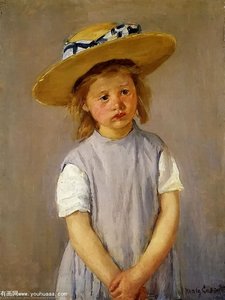
 Child in a Straw Hat
, Paul Cézanne
In the hands of Paul Cézanne, the straw hat loses its decorative flourish and becomes a study in form and color. In his portraits of young boys, the hat serves as a structural element that anchors the composition. Rather than focusing on the delicate weave, the Post-Impressionist approach uses thick, deliberate brushstrokes and patches of color to suggest the weight and presence of the object. There is a profound calmness in these works, where the hat becomes part of the child's contemplative stillness.
This approach recalls the way we seek order in a chaotic world. Just as Cézanne used geometric shapes to build his compositions, the weaver uses the repetition of the strand to create a sense of stability. In his 1902 work, Child in a Straw Hat, the warmth of the subject is heightened by the earthy tones and the bold, structural application of paint. The hat is no longer an accessory; it is a fundamental component of the subject's very being.
The simplicity of the object allows the viewer to focus on the quiet, enduring essence of the sitter.
The Luminous Thread: Light Through the Woven Fiber
Impressionism brought a new sensitivity to the way light interacts with the organic textures of straw. In the works of Renoir, the straw hat becomes a playground for color. Through the use of impasto and broken color, the artist captures the way sunlight dances across a decorative brim. The hat is often adorned with flowers, creating a complex interplay between the rigid, woven straw and the soft, ephemeral petals. The edges are not hard; they are soft, blurred by the vibration of light and atmosphere.
This technique finds a parallel in the way we experience memory. We often remember the light of a summer afternoon not as a sharp, photographic image, but as a series of impressions—a warmth on the skin, a certain hue of gold, a soft blur of color. The Impressionist brushstroke mimics this fluidity, capturing the essence of a moment rather than its exact, clinical detail. The hat becomes a vessel for the sun itself.
In these paintings, the straw hat is less an object and more a medium through which the light is felt.
The Cultural Thread: A Legacy of Woven Identity
Beyond the canvas, the straw hat remains a powerful symbol of identity and even resistance. From the traditional hats of the Basotho and Lesotho peoples to the symbolic use of the straw hat in modern global protest movements, the object carries a weight that transcends its material composition. It is a symbol that can be reclaimed, repurposed, and worn as a statement of belonging or a cry for change. The weave of the hat is, in many ways, a weave of human history.
This enduring relevance is a testament to the object's ability to adapt. Whether it is a high-fashion accessory or a symbol of a political movement, the straw hat remains a constant in a changing world. It is a reminder that even the most humble materials can carry the profound weight of human experience and the persistent drive of the human spirit.
As we look back at these painted echoes, we see that the straw hat is never just a hat; it is a reflection of the world we inhabit.


