Ατελιέ — Δωρεάν αποστολή σε όλο τον κόσμο — Παράδοση σε 2–6 εβδομάδες
      Άντρέ Ντεράιν, 1880 – 1954

      Άντρέ Ντεράιν: The 100 Best-Known Paintings

      Of all Άντρέ Ντεράιν's paintings, bathers (1907) is the most famous. Close behind come London Bridge (1906) and Charing Cross from sw (1906). Among the 354 works by Άντρέ Ντεράιν in our catalogue, these 100 are the most celebrated, each shown with its date, its museum and its story.

      Καταταγίζονται με βάση το σκορ δημοφιλίας μας, το οποίο συνδυάζει τις αναζητήσεις, τις επισκέψεις και τις παραγγελίες για κάθε έργο. Ενημερώθηκε Οκτώβριος 2026. Each painting on this page can be ordered as an oil reproduction painted by hand on linen canvas, or as a fine art print, made to the size you choose.

      Πορτρέτο του Άντρέ Ντεράιν
      Άντρέ Ντεράιν · 1880 – 1954
      Γεννημένος · πεθνημένος
      1880 – 1954, Σατού
      Κίνηση
      Fauvist expressionism
      Έργα στον κατάλογό μας
      354
      Τα πιο διάσημα
      bathers (1907)
      Πολλές εργασίες στο
      Statens Museum For Kunst

      Άντρέ Ντεράιν's 10 most celebrated paintings

      bathers (1907) του Άντρέ Ντεράιν
      1

      bathers

      1907 · Oil On Canvas

      To stand before André Derain's Bathers is to step directly into the exhilarating heart of the early twentieth century art revolution. This painting, executed in 1907, is not merely a depiction of figures by water; it is a pure explosion of color and emotion rendered through the lens of Fauvism. The very air around the canvas seems charged with the energy of bold pigment. Derain, a key figure alongside Henri…

      London Bridge (1906) του Άντρέ Ντεράιν
      2

      London Bridge

      1906 · Oil On Canvas · MoMA - Museum of Modern Art, Νέα Υόρκη

      In the heart of 1906, a revolution was unfolding on canvas, and André Derain was one of its most daring architects. His masterpiece, London Bridge, is far more than a mere architectural study; it is a visceral explosion of emotion captured through the lens of Fauvism. While the London fog is traditionally associated with muted greys and somber tones, Derain defies the atmospheric reality of the Thames to present a…

      Charing Cross from sw (1906) του Άντρέ Ντεράιν
      3

      Charing Cross from sw

      1906 · Oil On Canvas · Εθνική Πινακοθήκη Τέχνης, Ουάσινγκτον

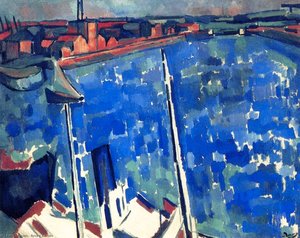
      Charing Cross from SW: A Fauvist Symphony of London André Derain’s “Charing Cross from SW” isn't merely a depiction of a London landmark; it’s an explosion of feeling, a vibrant declaration of the Fauvist movement at its peak. Painted in 1906, this artwork captures a bustling scene along the Thames, dominated by the iconic Charing Cross bridge, yet rendered through a lens entirely unique to Derain's revolutionary approach to color…

      Landscape at L'Estaque (1906) του Άντρέ Ντεράιν
      4

      Landscape at L'Estaque

      1906 · Oil On Canvas

      To stand before André Derain’s Landscape at L'Estaque is not merely to observe a scene; it is to be enveloped by a burst of pure, unadulterated chromatic energy. Painted in 1906, this oil on canvas stands as a vibrant manifesto of the Fauvist movement—a style that dared to liberate color from the shackles of mere description. Here, the natural world of L'Estaque is rendered not with photographic accuracy, but with…

      Hyde Park (1906) του Άντρέ Ντεράιν
      5

      Hyde Park

      1906 · Oil On Panel · Musee d'Art Moderne de Troyes, Troyes

      To gaze upon André Derain's Hyde Park is to step directly into the effervescent heart of early 20th-century Parisian life. This painting, executed in 1906, is far more than a mere depiction of an afternoon stroll; it is a vibrant celebration of modern leisure captured through the revolutionary lens of Fauvism. The scene unfolds with an almost palpable energy—a tapestry woven from bold color and dynamic movement. We see figures…

      Cypresses (1907) του Άντρέ Ντεράιν
      7

      Cypresses

      1907 · Oil On Panel

      To stand before André Derain’s "Cypresses" is to step directly into the vibrant heart of early twentieth-century French modernism. This captivating oil-on-panel, dating from 1907, is far more than a mere depiction of a landscape; it is an explosion of color and emotion captured by an artist at the zenith of his revolutionary period. The scene unfolds with a profound sense of natural grandeur: a field dotted with resilient pine…

      Portrait of Madame Paul Guillaume with a large hat (1928) του Άντρέ Ντεράιν
      8

      Portrait of Madame Paul Guillaume with a large hat

      1928 · Oil On Canvas

      To stand before André Derain’s Portrait of Madame Paul Guillaume with a large hat is to step directly into the vibrant, charged atmosphere of an early twentieth-century artist's studio. This painting is far more than a mere likeness; it is a meditation on creativity itself. The subject, seated amidst the beautiful chaos of artistic tools—canvases leaning against unseen supports, palettes bearing the ghosts of color—commands our attention with a serene…

      Drying the Sails (1905) του Άντρέ Ντεράιν
      9

      Drying the Sails

      1905 · Oil On Canvas · Μουσείο Πούσκιν, Μόσχα

      André Derain’s “Drying the Sails,” painted in 1905, isn't merely a depiction of a harbor scene; it’s an explosion of color and emotion—a quintessential embodiment of the Fauvist movement. Born from a confluence of artistic influences and a desire to break free from traditional representation, this painting captures a fleeting moment on the French coast, imbued with a raw energy that continues to resonate with viewers today. Derain, alongside Henri…

      Mountains at Collioure του Άντρέ Ντεράιν
      10

      Mountains at Collioure

      Oil On Canvas

      In the annals of modern art, few moments capture the raw, unbridled energy of a revolution quite like André Derain’s Mountains at Collioure. Painted during the feverish summer of 1905, this masterpiece serves as a vibrant manifesto of the Fauvist movement, a period when color was liberated from the shackles of reality to serve the needs of pure emotion. As one gazes upon this canvas, the eye is immediately swept…

      Άντρέ Ντεράιν paintings ranked 11 to 100

      Harbour of Collioure (1905) του Άντρέ Ντεράιν
      #13

      Harbour of Collioure

      1905 · Staatsgalerie Stuttgart

      In this oil on canvas, André Derain presents Harbour of Collioure, a work from 1905. The painting captures a Mediterranean port, focusing on the specific light and atmosphere…

      Have it painted by hand →
      Black Scarf (1935) του Άντρέ Ντεράιν
      #14

      Black Scarf

      1935

      To stand before André Derain's "Black Scarf" is to step directly into the effervescent, color-drenched heart of early 20th-century Paris. Painted in 1935, this oil on canvas transcends…

      Order this canvas →
      Landscape (Blue) (1906) του Άντρέ Ντεράιν
      #16

      Landscape (Blue)

      1906

      To stand before André Derain’s Landscape (Blue) is to step directly into the exhilarating heart of early twentieth-century modernism. This painting, executed in 1906, is not merely a…

      Have it painted by hand →
      Landscape near Chatou (1904) του Άντρέ Ντεράιν
      #17

      Landscape near Chatou

      1904

      In the annals of early twentieth-century modernism, few moments capture the raw, unbridled energy of artistic revolution quite like André Derain’s Landscape near Chatou. Painted in 1904, this…

      Have it painted by hand →
      Landscape at Collioure (1905) του Άντρέ Ντεράιν
      #18

      Landscape at Collioure

      1905

      To stand before André Derain’s Landscape at Collioure is to witness the moment when the traditional boundaries of nature were dissolved by a sudden, brilliant explosion of light…

      Bring this light home →
      The Dance (1906) του Άντρέ Ντεράιν
      #19

      The Dance

      1906

      In the annals of modern art, few moments capture the raw, unbridled spirit of rebellion quite like the emergence of Fauvism, and few works embody this revolution as…

      Have it painted by hand →
      Μια Συμπαθητική Προσθήκη Φρούτων (1940) του Άντρέ Ντεράιν
      #20

      Μια Συμπαθητική Προσθήκη Φρούτων

      1940 · Harris Museum - Art Gallery

      Αντρέ ΝτεΡαιν και η Ζωγραφική της Φαυβισμού στην Πορτραίτο με Καρύδια και Μπολ Η ζωγραφική του Αντρέ ΝτεΡαιν αποτελεί ένα σημαντικό κεφάλαιο στην ιστορία της τέχνης του πρώτου…

      Have it painted by hand →
      Cassis του Άντρέ Ντεράιν
      #21

      Cassis

      The artwork titled Cassis, also known as Landscape at Cassis, is an oil on canvas painting. This work was executed by the French artist André Derain in 1907.…

      Bring this light home →
      Music (1904) του Άντρέ Ντεράιν
      #23

      Music

      1904

      The early 20th century was a transformative period for modern art, with the emergence of various movements that challenged traditional techniques and aesthetics. One such movement was Fauvism,…

      Order this canvas →
      Head of a Young Woman (1923) του Άντρέ Ντεράιν
      #25

      Head of a Young Woman

      1923 · Statens Museum For Kunst

      A soulful portrait emerges from a palette of ochre, sienna, and cream. The subject is positioned in a close-up, centered composition that forces an intimate encounter between the…

      Bring this light home →
      Sorrowful Landscape (1946) του Άντρέ Ντεράιν
      #26

      Sorrowful Landscape

      1946

      The Sorrowful Landscape by André Derain is a masterpiece that embodies the essence of Expressionism, a style characterized by its emphasis on conveying intense emotions and inner experiences.…

      Order this canvas →
      Collioure (1905) του Άντρέ Ντεράιν
      #28

      Collioure

      1905

      The early 20th century was a transformative period for modern art, with the emergence of various movements that challenged traditional techniques and aesthetics. One such movement was Fauvism,…

      Bring this light home →
      Martigues (1908) του Άντρέ Ντεράιν
      #30

      Martigues

      1908

      The painting Martigues by André Derain is a quintessential example of the Fauvist art movement. Created in 1908, this oil on canvas work embodies the essence of Fauvism,…

      Bring this light home →
      Harlequin (1923) του Άντρέ Ντεράιν
      #31

      Harlequin

      1923 · Statens Museum For Kunst

      This 1923 oil painting on canvas presents a solitary figure dressed as a Harlequin, captured in a moment of quiet introspection. The subject is seated and holds a…

      Have it painted by hand →
      Boy's Head (1914) του Άντρέ Ντεράιν
      #33

      Boy's Head

      1914 · Statens Museum For Kunst

      In Boy's Head by André Derain, the composition centers on a close-up study of a single human figure. The subject's face is positioned slightly turned to the left,…

      Bring this light home →
      The beautiful model (1923) του Άντρέ Ντεράιν
      #37

      The beautiful model

      1923

      The painting The Beautiful Model by André Derain is a stunning example of Fauvism, a style characterized by vivid colors and emotive brushstrokes. Created in 1923, this oil…

      Order this canvas →
      Fishing Boats, Colioure (1905) του Άντρέ Ντεράιν
      #38

      Fishing Boats, Colioure

      1905 · Μετροπολιτικό Μουσείο Τέχνης

      Introduction to the Painting Fishing Boats, Colioure, painted in 1905 by André Derain, is a quintessential example of the Fauvist art movement. This vibrant oil on canvas painting…

      Order this canvas →
      Boats at Colliure του Άντρέ Ντεράιν
      #41

      Boats at Colliure

      André Derain, a French artist and co-founder of the Fauvist movement, created a captivating piece titled Boats at Colliure. This painting is a quintessential representation of the Fauvist…

      Bring this light home →
      The Lighthouse at Collioure (1905) του Άντρέ Ντεράιν
      #42

      The Lighthouse at Collioure

      1905 · Musée d’Art Moderne de la Ville de Paris

      André Derain’s “The Lighthouse at Collioure,” painted in 1905, isn't merely a depiction of a coastal scene; it’s an immersive experience—a vibrant explosion of color and movement that…

      Bring this light home →
      Nude with Folded Arms (1924) του Άντρέ Ντεράιν
      #43

      Nude with Folded Arms

      1924 · Statens Museum For Kunst

      The oil on canvas work titled Nude with Folded Arms was executed by the artist André Derain. This specific painting dates to 1924. It is currently held within…

      Have it painted by hand →
      Golden age (1940) του Άντρέ Ντεράιν
      #44

      Golden age

      1940

      In the sweeping expanse of André Derain’s "Golden Age," viewers are transported into a primordial realm where the boundaries between humanity and nature dissolve into a dramatic, cinematic…

      Bring this light home →
      Fishing Boats, Collioure (1905) του Άντρέ Ντεράιν
      #56

      Fishing Boats, Collioure

      1905 · MoMA - Museum of Modern Art

      Introduction to the Painting Fishing Boats, Collioure, painted in 1905 by André Derain, is a quintessential example of Fauvism, an art movement characterized by bold and vivid colors.…

      Have it painted by hand →
      Landscape (1907) του Άντρέ Ντεράιν
      #57

      Landscape

      1907

      In this mesmerizing 1907 masterpiece, titled Landscape, André Derain invites the viewer into a world where reality is reimagined through the fractured lens of early modernism. The canvas…

      Have it painted by hand →
      Still Life with Pipe (1911) του Άντρέ Ντεράιν
      #58

      Still Life with Pipe

      1911 · Statens Museum For Kunst

      In the 1911 work Still Life with Pipe by André Derain, the composition is centered on a wooden table or ledge. The arrangement consists of a tall reddish-brown…

      Bring this light home →
      Pinewood near Sausset-les-Pins (1913) του Άντρέ Ντεράιν
      #59

      Pinewood near Sausset-les-Pins

      1913 · Statens Museum For Kunst

      The landscape unfolds through a series of leaning, organic forms that define a grove of pine trees. Thick, sweeping brushstrokes trace the bark of the trunks, creating a…

      Order this canvas →
      Le Phare de Collioure του Άντρέ Ντεράιν
      #60

      Le Phare de Collioure

      In the annals of modern art history, few movements captured the raw, unbridled energy of light and emotion quite like Fauvism. At the heart of this revolution stands…

      Order this canvas →
      The Last Supper (1911) του Άντρέ Ντεράιν
      #61

      The Last Supper

      1911 · Art Institute of Chicago

      A Moment of Sacred Tension The air in the room feels heavy, thick with the weight of a final meal. In this 1911 oil on canvas, the scene…

      Order this canvas →
      The road (1932) του Άντρέ Ντεράιν
      #65

      The road

      1932

      To gaze upon André Derain’s The Road is to step into a moment suspended in the golden haze of memory. This oil on canvas, dating from 1932, captures…

      Bring this light home →
      Bacchus dance (1906) του Άντρέ Ντεράιν
      #66

      Bacchus dance

      1906

      Bacchus Dance: A Fauvist Celebration of Movement The early 20th century witnessed a seismic shift in art, marked by movements that boldly challenged established norms. Among these was…

      Have it painted by hand →
      L'Estaque (1906) του Άντρέ Ντεράιν
      #72

      L'Estaque

      1906

      The painting L'Estaque by André Derain is a quintessential example of Fauvism, a style characterized by the use of bold, vibrant colors and energetic brushstrokes. Created in 1906,…

      Bring this light home →
      Boats at Collioure (1905) του Άντρέ Ντεράιν
      #73

      Boats at Collioure

      1905

      Gazing upon André Derain's "Boats at Collioure," one is immediately transported to the sun-drenched shores of the French Riviera. This painting captures more than just a seascape; it…

      Order this canvas →
      Χαρακίρι και Πιερρότ (1924) του Άντρέ Ντεράιν
      #75

      Χαρακίρι και Πιερρότ

      1924 · Musée de l'Orangerie

      Ένας Πειρώτης στην Επανάσταση του Χρωμάτων: Η Συμβολική Στιγμή του André Derain στο «Μαρδί Γκρας» Η σκηνή είναι μια αναγνώριση της ιστορικής σημασίας του έργου και προσκαλεί τον…

      Bring this light home →
      Portrait of Alice Derain (1921) του Άντρέ Ντεράιν
      #78

      Portrait of Alice Derain

      1921

      To gaze upon André Derain’s Portrait of Alice Derain is to step through a painted portal into a moment suspended in time—a quiet afternoon imbued with the warmth…

      Order this canvas →

      Άντρέ Ντεράιν's canvases, period by period

      What Άντρέ Ντεράιν painted most

      The four subjects that return most often on these canvases, each with its best-loved example.

      Where Άντρέ Ντεράιν's canvases hang

      Τα 8 μουσεία που φιλοξενούν το μεγαλύτερο μέρος των έργων σε αυτήν τη σελίδα.

      Μουσεία Πόλη Έργα του Άντρέ Ντεράιν Πάτρια από αυτή τη λίστα
      Statens Museum For Kunst, ΚόπενημαγκςStatens Museum For Kunst Κόπενημαγκς 17 Head of a Young Woman, Harlequin, Sitting Female Model, Semi-Nude
      Μετροπολιτικό Μουσείο Τέχνης, Νέα ΥόρκηΜετροπολιτικό Μουσείο Τέχνης Νέα Υόρκη 4 Houses of Parliament at Night, London, Fishing Boats, Colioure, Lucien Gilbert
      Musée d’Art Moderne de la Ville de Paris, ΠαρίσιMusée d’Art Moderne de la Ville de Paris Παρίσι 7 The Lighthouse at Collioure, The Gypsy
      MoMA - Museum of Modern Art, Νέα ΥόρκηMoMA - Museum of Modern Art Νέα Υόρκη 4 London Bridge, Fishing Boats, Collioure
      Art Institute of Chicago, ΣικάγκοArt Institute of Chicago Σικάγκο 3 The Last Supper, Cagnes
      Εθνική Πινακοθήκη Τέχνης, ΟυάσινγκτονΕθνική Πινακοθήκη Τέχνης Ουάσινγκτον 2 Charing Cross from sw
      Musee d'Art Moderne de Troyes, TroyesMusee d'Art Moderne de Troyes Troyes 2 Hyde Park
      Μουσείο Πούσκιν, ΜόσχαΜουσείο Πούσκιν Μόσχα 2 Drying the Sails

      Decade by decade: Άντρέ Ντεράιν's most celebrated canvas

      1. 1890s
        Funeral (1899) του Άντρέ Ντεράιν
        85 of 100

        Funeral

        Ηλικία 10 – 19
      2. 1900s
        bathers (1907) του Άντρέ Ντεράιν
        Canvas 1 of 100

        bathers

        Ηλικία 20 – 29

        To stand before André Derain's Bathers is to step directly into the exhilarating heart of the early twentieth century art revolution. This painting, executed in 1907, is not…

      3. 1910s
      4. 1920s
        Portrait of Madame Paul Guillaume with a large hat (1928) του Άντρέ Ντεράιν
        Ranked 8 of 100

        Portrait of Madame Paul Guillaume with a large hat

        Ηλικία 40 – 49

        To stand before André Derain’s Portrait of Madame Paul Guillaume with a large hat is to step directly into the vibrant, charged atmosphere of an early twentieth-century artist's…

      5. 1930s
        Black Scarf (1935) του Άντρέ Ντεράιν
        14 of 100

        Black Scarf

        Ηλικία 50 – 59

        To stand before André Derain's "Black Scarf" is to step directly into the effervescent, color-drenched heart of early 20th-century Paris. Painted in 1935, this oil on canvas transcends…

      6. 1940s
        Μια Συμπαθητική Προσθήκη Φρούτων (1940) του Άντρέ Ντεράιν
        Canvas 20 of 100

        Μια Συμπαθητική Προσθήκη Φρούτων

        Ηλικία 60 – 69 · Harris Museum - Art Gallery

        Αντρέ ΝτεΡαιν και η Ζωγραφική της Φαυβισμού στην Πορτραίτο με Καρύδια και Μπολ Η ζωγραφική του Αντρέ ΝτεΡαιν αποτελεί ένα σημαντικό κεφάλαιο στην ιστορία της τέχνης του πρώτου…

      Your questions on Άντρέ Ντεράιν's paintings, answered

      Which is the most celebrated painting by Άντρέ Ντεράιν?Read the answer

      bathers (1907), followed by London Bridge (1906) and Charing Cross from sw (1906).

      How old was Άντρέ Ντεράιν at the time of bathers?Read the answer

      Άντρέ Ντεράιν, born in 1880, was 27 years old: bathers dates from 1907.

      Which ten paintings is Άντρέ Ντεράιν most famous for?Read the answer

      bathers, London Bridge, Charing Cross from sw, Landscape at L'Estaque, Hyde Park, The Turning Road, L'Estaque - (129.5x195), Cypresses, Portrait of Madame Paul Guillaume with a large hat, Drying the Sails και Mountains at Collioure. Each canvas in the ranking above comes with its year and its museum.

      How many paintings by Άντρέ Ντεράιν are known?Read the answer

      354 works by Άντρέ Ντεράιν are in our catalogue, dated 1899 to 1946.

      Which museums hold Άντρέ Ντεράιν's best-known canvases?Read the answer

      Mostly in Statens Museum For Kunst (Κόπενημαγκς), Μετροπολιτικό Μουσείο Τέχνης (Νέα Υόρκη) και Musée d’Art Moderne de la Ville de Paris (Παρίσι); the list above names each museum and its canvases.

      In which years did Άντρέ Ντεράιν paint the most celebrated canvases?Read the answer

      In 1900s, which gave 45 of the 100 works on this page, bathers among them.

      What are the first and the last of Άντρέ Ντεράιν's famous canvases?Read the answer

      The earliest canvas here is Funeral (1899); the latest is Sorrowful Landscape (1946).

      Which subjects return most often in Άντρέ Ντεράιν's paintings?Read the answer

      Landscape (17), Trees (12) και Boats (10), across the 100 works on this page.

      What did Άντρέ Ντεράιν usually paint with?Read the answer

      Oil On Canvas, used in 46 of the 100 works on this page.

      To which art movement does Άντρέ Ντεράιν belong?Read the answer

      Fauvist expressionism, as the canvases on this page show.

      What can I see by Άντρέ Ντεράιν at the Statens Museum For Kunst?Read the answer

      The Statens Museum For Kunst, Κόπενημαγκς holds 10 of the works on this page, among them Head of a Young Woman, Harlequin και Sitting Female Model, Semi-Nude.

      Can I order a hand-painted copy of a painting by Άντρέ Ντεράιν?Read the answer

      Yes. Every painting on this page can be ordered from its own page as an oil reproduction painted by hand, or as a fine art print, in the size you choose.

      Άντρέ Ντεράιν: the painter's story

      Early Life, Family and Training

      In the year 1880, André Derain entered the world in Chatou, a village nestled within the Yvelines region of France. His early years were shaped by the quiet landscapes of the Île-de-France, where a natural curiosity for the surroundings began to take root. By 1895, he had already commenced studying on his own, seeking to understand the visual world through his own eyes rather than through formal instruction. This period of self-directed exploration allowed him to develop a personal way of seeing before the rigors of an academy could impose their will upon him.

      The path of a painter was not his only consideration. In 1898, he sought a more structured education, briefly studying to become an engineer at the Académie Camillo. It was within these academic halls that his life took a decisive turn; he attended painting classes under Eugène Carrière and there encountered Henri Matisse. This meeting would change the course of his life, pulling him away from the precision of engineering and toward the expressive possibilities of the canvas. His ambitions were strong, yet his progress was interrupted by the duties of citizenship. From September 1901 until 1904, he fulfilled his military service in Commercy, a period of separation that paused his burgeoning artistic development.

      The Fauvist Revolution and Collioure

      The summer of 1905 brought a sudden, bright change to the lives of André Derain and Henri Matisse. They traveled together to the fishing town of Collioure, a place where the light seemed to demand a new way of seeing. In this coastal setting, the artist began to move away from the traditional rules of representation. His work from 1905 to 1906 was defined by a riotous colourism that shocked those accustomed to more subtle tones. He used simplified drawings and an exaggerated use of color to capture the essence of the landscape, favoring intense, unmixed hues over the naturalistic shades of the world.

      This radical approach to painting sparked a fierce reaction from the public and the press. The artists were met with such astonishment that they were dubbed Les Fauves, or the wild beasts. This name, though intended to mock their perceived lack of discipline, was embraced by the group. Derain’s canvases during these years did not seek to replicate the scenery as a photograph might, but instead used color as a direct expression of feeling. The brushwork was bold and the palettes were startling, marking a departure from everything that had come before.

      The London Paintings and Commissions

      In March 1906, the art dealer Ambroise Vollard saw a new direction for the artist and sent him to London. This was no mere excursion, but a deliberate commission to capture the essence of a city that had long been the subject of many painters. Derain arrived in the English capital and began to see the urban landscape through a lens of intense color, moving away from the quietude of the French countryside. He sought to translate the energy of the metropolis into something felt rather than merely seen.

      The artist produced a series of thirty paintings during this period, turning his attention to the Thames and the heavy architecture of the city. He did not seek to replicate the gray mists often associated with the river; instead, he used bold hues to depict the movement of the water and the silhouettes of the bridges. His vision of the city was a radical departure from the atmospheric studies of those who had come before him. He focused on the structural weight of the landmarks and the shifting light of the urban environment.

      These works remained among his most popular creations, as they offered a fresh perspective on an established setting. By focusing on the Thames and the Tower Bridge, he captured a sense of modernity and restless movement. The thick application of paint and the unconventional palette allowed him to portray the city as a living, breathing entity of light and shadow.

      Evolution Towards Classicism and Gothic Style

      As the years passed, the wilder impulses of his youth began to settle. Around 1907, a change took hold of his hand and eye, and his work grew more austere. The unrestrained colors that once defined his canvases gave way to a more disciplined approach. This shift was not a sudden break but a gradual movement toward structure and form. He sought a different kind of truth, one found in the quiet strength of composition rather than the shock of color.

      By the years 1911 to 1914, he entered a phase that many have called his gothic period. During this time, his interest in the Old Masters and classical forms became more pronounced. He moved away from the loud, unmixed pigments of his earlier years, seeking instead a more controlled and intellectually rigorous way of seeing. This was a time of searching, where he looked back to the foundations of art to find a new way forward.

      The Great War changed the landscape of his life and his art once more. Following the conflict, he emerged as a leader of a movement known as the Return to order. This new classicism sought stability and clarity in an era of profound change. He became a central figure in this revival, helping to guide the direction of art toward a more structured and traditional aesthetic. His work reflected this desire for order, embracing a sense of permanence that had been absent during his more experimental years.

      Later Years and Death

      As the years passed, the artist’s interests expanded beyond the canvas and into the theatrical realm. In 1919, he turned his creative gaze toward the stage, designing the ballet La Boutique Fantasque for the Ballets Russes. This foray into set and costume design revealed a sense of rhythm and spectacle that complemented his evolving aesthetic. His ability to command attention through form and color continued to be recognized by his peers, leading to him being named a recipient of the Carnegie Prize in 1928.

      The later decades of his life were marked by a continued pursuit of a new classicism, a departure from the wilder impulses of his youth. He remained active in the art world, even as the political landscape of Europe shifted around him. He eventually passed away on 8 September 1954, leaving behind a body of work that had traversed many different modes of expression.

      Legacy and Influence

      The ripples of the Fauvist movement, which André Derain helped establish alongside Henri Matisse, reached far beyond the initial shock of their color choices. By breaking the traditional bonds of how color relates to the physical world, he helped clear a path for the structural innovations of Cubism and the emotional intensity found in modern expressionism. His restless search for a new visual language meant that the lessons learned in the sun-drenched landscapes of Collioure eventually traveled north, influencing the development of German Expressionism. He did not merely paint; he helped redefine the very purpose of the brushstroke.

      His influence remained a constant presence for subsequent generations of artists who sought to balance the raw energy of his early years with the structured discipline of his later work. Even as his own style shifted toward a more austere and classical approach, the radical spirit of his youth continued to resonate. He proved that an artist could move between the wild, unmixed hues of his youth and a more controlled, intellectual rigor without losing their creative truth. This adaptability ensured that his presence in the history of modern art remained undeniable, even as the movements he helped birth evolved into entirely new forms.

      Όλα τα 354 έργα του Άντρέ Ντεράιν →