Ατελιέ — Δωρεάν αποστολή σε όλο τον κόσμο — Παράδοση σε 2–6 εβδομάδες
      Χοακίν Σορόγια, 1863 – 1923

      The 100 Most Famous Χοακίν Σορόγια Paintings, Ranked

      The best-loved painting by Χοακίν Σορόγια is Walk on the Beach (Paseo a orillas del mar) (1909), which hangs in the Sorolla Museum, Μαδρίτη. Valencia beach in the morning light (1908) and Yo soy el pan de la vida (also known as I am the Bread of Life) (1897) come next among the canvases readers know best. Our catalogue holds 969 works by Χοακίν Σορόγια: here are the 100 most famous, each with its year, its museum and what makes it memorable.

      Καταταγίζονται με βάση το σκορ δημοφιλίας μας, το οποίο συνδυάζει τις αναζητήσεις, τις επισκέψεις και τις παραγγελίες για κάθε έργο. Ενημερώθηκε Οκτώβριος 2026. Each painting on this page can be ordered as an oil reproduction painted by hand on linen canvas, or as a fine art print, made to the size you choose.

      Πορτρέτο του Χοακίν Σορόγια
      Χοακίν Σορόγια · 1863 – 1923
      Γεννημένος · πεθνημένος
      1863 – 1923, Βαλένθια
      Κίνηση
      Εντυπωσιακές τοπία
      Έργα στον κατάλογό μας
      969
      Τα πιο διάσημα
      Walk on the Beach (Paseo a orillas del mar) (1909)
      Πολλές εργασίες στο
      Hispanic Society Museum - Library

      Top 10 Χοακίν Σορόγια paintings: the canvases everyone knows

      Walk on the Beach (Paseo a orillas del mar) (1909) του Χοακίν Σορόγια
      1

      Walk on the Beach (Paseo a orillas del mar)

      1909 · Oil On Canvas · Sorolla Museum, Μαδρίτη

      A Sun-Drenched Moment: Joaquín Sorolla’s “Walk on the Beach” Joaquín Sorolla y Bastida, a name synonymous with the vibrant luminosity of Spanish light and life, gifted us with countless canvases brimming with joy and an almost palpable sense of summer. Among his most beloved works stands "Walk on the Beach" (Paseo a la orilla del mar), painted in 1909, a captivating tableau that transcends mere representation to become a profound…

      Valencia beach in the morning light (1908) του Χοακίν Σορόγια
      2

      Valencia beach in the morning light

      1908 · Oil On Canvas · Hispanic Society Museum - Library, Νέα Υόρκη

      In the soft, burgeoning glow of a Mediterranean dawn, Joaquín Sorolla y Bastida captures more than just a landscape; he captures the very breath of life. Valencia Beach in the Morning Light, completed in 1908, stands as a breathtaking testament to Spanish Impressionism, inviting the viewer to step into a world where the boundary between sea and sky dissolves into pure luminosity. As one gazes upon this masterpiece, there is…

      Yo soy el pan de la vida (also known as I am the Bread of Life) (1897) του Χοακίν Σορόγια
      3

      Yo soy el pan de la vida (also known as I am the Bread of Life)

      1897 · Oil On Canvas

      Joaquín Sorolla y Bastida's "Yo soy el pan de la vida," also known as "I am the Bread of Life," is a monumental oil on canvas painting completed in 1897. Measuring an impressive 415 x 533 cm, this artwork depicts a pivotal moment from the New Testament – Jesus Christ addressing a large crowd near the Sea of Galilee. The scene is dynamic and bustling, filled with numerous figures rendered…

      The Pink robe του Χοακίν Σορόγια
      4

      The Pink robe

      Oil On Canvas

      To step into the world of Joaquín Sorolla y Bastida is to step directly into the radiant warmth of a Mediterranean afternoon. His masterpiece, "The Pink Robe," transcends mere depiction; it embodies the very essence of Impressionism, capturing a moment suspended in time—a quiet dialogue between two women bathed in the golden glow of sunlight. Painted circa 1908-1909, this artwork offers an unparalleled glimpse into Sorolla's masterful vision, where light…

      Extremadura, The Market (1917) του Χοακίν Σορόγια
      5

      Extremadura, The Market

      1917 · Oil On Canvas · Hispanic Society Museum - Library, Νέα Υόρκη

      In the grand tapestry of Spanish Impressionism, few works capture the pulse of a nation as vibrantly as Joaquín Sorolla y Bastida’s “Extremadura, The Market.” Completed in 1917, this monumental oil on canvas is far more than a mere depiction of commerce; it is a breathtaking window into the soul of rural Spain. As part of his celebrated Vision of Spain series, Sorolla transcends the boundaries of traditional genre painting…

      Περπάτημα κατά την Ακτή (1909) του Χοακίν Σορόγια
      6

      Περπάτημα κατά την Ακτή

      1909 · Άνθρακα και λάδι σε καμβά · Sorolla Museum, Μαδρίτη

      Το έργο «Περπάτημα αλά entlang της ακτοπλαγίου» του Joaquín Sorolla y Bastida, ζωημένο το 1949, δεν είναι απλώς μια απεικόνιση μιας καλοκαιρινής απόηλίας· είναι μια εξαιρετική απόσταξη φωτός, κίνησης και της φευγαλέας ομορφιάς της καθημερινής ζωής. Δημιουργημένο κατά μια περίοδο τεράστιας καλλιτεχνικής επιτυχίας για τον Ισπανό ζωγράφο –ακολουθώντας τις διάσημες εκθέσεις του στην Αμερική– αυτό το έργο αντιπροσωπεύει μια κομβική στροφή στο στυλ του Sorolla, κινούμενος προς μια πιο impressionistic…

      The Smugglers (1919) του Χοακίν Σορόγια
      7

      The Smugglers

      1919 · Oil On Canvas

      To gaze upon Joaquín Sorolla y Bastida’s 1919 masterpiece, "The Smugglers," is to step directly into the radiant embrace of a Spanish summer. This expansive canvas, measuring an impressive 84 x 165 cm, does far more than merely depict a coastal scene; it serves as a profound sensory experience, capturing the very soul of the Mediterranean coast near Ibiza. Sorolla, often revered as the "Master of Light," utilizes the shimmering…

      Lighthouse walk at Biarritz (1906) του Χοακίν Σορόγια
      8

      Lighthouse walk at Biarritz

      1906 · Oil On Canvas · Μουσείο Τέχνης Βοστώνης, Μπόσττον

      In the luminous masterpiece Lighthouse Walk at Biarritz, Joaquín Sorolla y Bastida invites us into a world where the boundaries between reality and impression dissolve into a golden haze. Completed in 1906, this breathtaking canvas is far more than a mere depiction of a seaside stroll; it is a profound celebration of the Spanish Belle Époque, captured with an unparalleled mastery of light. As we gaze upon the scene, we…

      Clotilde on the Beach (1904) του Χοακίν Σορόγια
      9

      Clotilde on the Beach

      1904 · Acrylic On Canvas · Sorolla Museum, Μαδρίτη

      Joaquín Sorolla’s “Clotilde on the Beach,” painted in 1904, isn't merely a depiction of a seaside scene; it’s an immersion into the heart of Spanish summer – a vibrant distillation of light, color, and the quiet joy of family life. Sorolla, a master of *plein air* painting, captures a fleeting moment with breathtaking immediacy, transporting the viewer to the warm sands of Valencia's Playa de El Cabanyal. The canvas breathes…

      Messalina in the Arms of the Gladiator (1886) του Χοακίν Σορόγια
      10

      Messalina in the Arms of the Gladiator

      1886 · Oil

      The ground is a bed of scattered flora and heavy silence. A woman lies motionless, her hair woven with blossoms that seem to hold the weight of her stillness. She is a pale shape against the earth, appearing either lost in a deep unconsciousness or surrendered to death. Above her, a man looms, his presence defined by the sharp edge of a knife held in his hand. The outdoor setting…

      More Χοακίν Σορόγια canvases, 11 to 100

      The Cry of El Palleter (1884) του Χοακίν Σορόγια
      #12

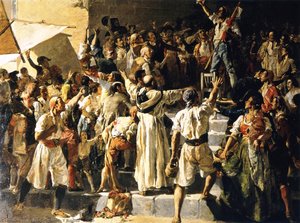
      The Cry of El Palleter

      1884 · Palau de la Generalitat

      To step into the world of Joaquín Sorolla y Bastida is to surrender oneself to the radiant warmth of the Mediterranean sun. In his 1884 masterpiece, "The Cry…

      Order this canvas →
      Promenade by the Sea (1909) του Χοακίν Σορόγια
      #13

      Promenade by the Sea

      1909

      A Symphony of Light and Leisure: Exploring Joaquín Sorolla’s Promenade by the Sea Joaquín Sorolla y Bastida stands as one of Spain's most beloved Impressionist painters, celebrated for…

      Bring this light home →
      Self-portrait (1909) του Χοακίν Σορόγια
      #16

      Self-portrait

      1909 · Sorolla Museum

      Joaquín Sorolla y Bastida's 1909 self-portrait is more than just a likeness; it’s a potent distillation of the artist’s life, his spirit, and the very essence of Spain…

      Have it painted by hand →
      Η Σιέστα (1911) του Χοακίν Σορόγια
      #20

      Η Σιέστα

      1911 · Sorolla Museum

      Μια Στιγμή Παγωμένη στον Χρόνο: Ανακάλυπτον το «La Siesta» του Joaquín Sorolla Ο Joaquín Sorolla y Bastida (1863 – 19άντα τρία) δεσπόζει ως ένας από τους πιο διακεκριμένους…

      Bring this light home →
      Rocks of the Cape, Javea (1905) του Χοακίν Σορόγια
      #23

      Rocks of the Cape, Javea

      1905 · Hispanic Society Museum - Library

      To gaze upon Joaquín Sorolla y Bastida’s 1905 masterpiece, "Rocks of the Cape, Javea," is to step directly into the radiant embrace of a Spanish summer. This oil…

      Bring this light home →
      Valencian Fisherwomen (1915) του Χοακίν Σορόγια
      #27

      Valencian Fisherwomen

      1915

      This oil on canvas painting by Joaquín Sorolla depicts a bustling scene on the coast, where a group of women stands in the water near several boats. The…

      Order this canvas →
      Δίχτυα Ψαράδων (1893) του Χοακίν Σορόγια
      #28

      Δίχτυα Ψαράδων

      1893

      Ο Χουάν Σορόλα, ένα όνομα που συνδέεται άρρητα με το λαμπερό φως της Ισπανίας, ήταν πολύ περισσότερο από έναν απλό ζωγράφο – ήταν ένας μαθητής της ψυχής της…

      Have it painted by hand →
      Swimmers, Javea (1905) του Χοακίν Σορόγια
      #32

      Swimmers, Javea

      1905

      The painting depicts two people swimming in the ocean. The first person is positioned on the left side of the canvas, while the second person is on the…

      Order this canvas →
      My Kids (1897) του Χοακίν Σορόγια
      #39

      My Kids

      1897

      Joaquín Sorolla y Bastida’s "My Kids" is not merely a depiction of three children; it is an effusion of pure, untainted joy captured on canvas. Completed in 1897,…

      Have it painted by hand →
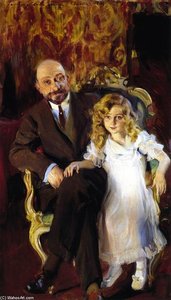
      Manuel B. Cossio (1908) του Χοακίν Σορόγια
      #40

      Manuel B. Cossio

      1908

      Subject and Composition The canvas presents a dignified figure, Manuel B. Cossio, rendered in a crisp suit and tie that speaks of early twentieth‑century Spanish professionalism. His stern…

      Have it painted by hand →
      Tipos de Salamanca (1912) του Χοακίν Σορόγια
      #41

      Tipos de Salamanca

      1912

      A Study in Spanish Identity Three figures are arranged within a shallow, formal space, dressed in traditional Spanish attire. The composition centers on these individuals, utilizing organic lines…

      Bring this light home →
      Ο Ψαράς της Βαλενσιέλας (1916) του Χοακίν Σορόγια
      #42

      Ο Ψαράς της Βαλενσιέλας

      1916

      Το έργο "Ο Ψαράς της Βαλενσιέι" του Joaquín Sorolla δεν είναι απλώς μια σκηνή, αλλά μια εμπειρία – μια βουτιά στην καρδιά της ισπανικής ψυχολογίας, όπου το φως…

      Have it painted by hand →
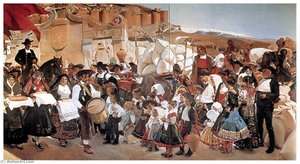
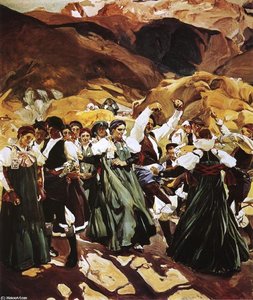
      The Jota (Aragon) (1914) του Χοακίν Σορόγια
      #43

      The Jota (Aragon)

      1914 · Hispanic Society Museum - Library

      A Symphony of Light and Spanish Spirit: Joaquín Sorolla’s “The Jota (Aragon)” Joaquín Sorolla y Bastida, a painter inextricably linked with the radiant heart of Spain, gifted us…

      Have it painted by hand →
      The Painter's Studio (1888) του Χοακίν Σορόγια
      #50

      The Painter's Studio

      1888

      To stand before Joaquín Sorolla y Bastida's The Painter's Studio is to step directly into a moment suspended in golden light, a breath held within the vibrant tapestry…

      Bring this light home →
      After a Bathe του Χοακίν Σορόγια
      #53

      After a Bathe

      Hispanic Society Museum - Library

      Joaquin Sorolla y Bastida stands as one of Spain’s most beloved painters, celebrated for his luminous canvases that effortlessly blend realism with an ethereal quality—a hallmark of his…

      Order this canvas →
      The Two Sisters (1909) του Χοακίν Σορόγια
      #54

      The Two Sisters

      1909 · Art Institute of Chicago

      In the luminous realm of Joaquín Sorolla y Bastida, light is not merely an element of the landscape; it is the very soul of the canvas. His 1909…

      Bring this light home →
      Fiesta Gallega του Χοακίν Σορόγια
      #57

      Fiesta Gallega

      Joaquín Sorolla y Bastida's *Fiesta Gallega* (1907) is more than just a depiction of a rural Spanish gathering; it’s an embodiment of the vibrant spirit of Spain itself.…

      Have it painted by hand →
      La bendicion de Isaac του Χοακίν Σορόγια
      #58

      La bendicion de Isaac

      In the profound stillness of La bendición de Isaac, Joaquín Sorolla y Bastida captures a pivotal moment from Hebrew tradition. The painting depicts the patriarch Isaac, now aged…

      Order this canvas →
      At the Pool in the Artist (1898) του Χοακίν Σορόγια
      #60

      At the Pool in the Artist

      1898 · Μουσείο Τέχνης Πόνσε

      Joaquín Sorolla y Bastida’s “At the Pool in the Artist’s Garden,” painted in 1898, isn’t merely a depiction of a summer afternoon; it’s an immersion into the very…

      Have it painted by hand →
      The Siesta (1911) του Χοακίν Σορόγια
      #62

      The Siesta

      1911

      Joaquin Sorolla y Bastida’s “The Siesta,” completed in 1911, transcends mere depiction; it embodies a philosophy – the deliberate embrace of stillness and beauty found within the simplest…

      Bring this light home →
      Maria la guapa (1914) του Χοακίν Σορόγια
      #64

      Maria la guapa

      1914

      Joaquín Sorolla's 1914 painting, *Maria la Guapa*, isn't merely a portrait; it’s an immersion into the heart of Spain’s golden age. This captivating work, depicting a young woman…

      Order this canvas →
      Sea Idyll (1908) του Χοακίν Σορόγια
      #65

      Sea Idyll

      1908 · Hispanic Society Museum - Library

      Joaquin Sorolla y Bastida, a pivotal figure in late 19th and early 20th century Spanish art, possessed an extraordinary gift for capturing the ephemeral beauty of light and…

      Order this canvas →
      The Kiss (1899) του Χοακίν Σορόγια
      #66

      The Kiss

      1899

      The Kiss by Joaquín Sorolla Y Bastida: A Moment of Spanish Light Subject Matter: Joaquin Sorolla’s “The Kiss” is an exquisite portrayal of intimacy and reverence, depicting a…

      Have it painted by hand →
      My Children (1904) του Χοακίν Σορόγια
      #67

      My Children

      1904 · Museo Sorolla

      Joaquín Sorolla’s “My Children,” painted in 1904, isn't merely a portrait; it’s an immersion into the heart of a sun-drenched Spanish afternoon. The scene unfolds within a modest…

      Have it painted by hand →
      Children on the Seashore (1903) του Χοακίν Σορόγια
      #68

      Children on the Seashore

      1903 · Philadelphia Museum of Art

      The Painting's Essence Joaquín Sorolla y Bastida's Children on the Seashore, created in 1903, is a beautiful depiction of children playing on the beach near the ocean. The…

      Have it painted by hand →
      Maria Planas de Gil (1906) του Χοακίν Σορόγια
      #69

      Maria Planas de Gil

      1906

      Joaquín Sorolla's ‘Maria Planas de Gil,’ painted in 1906, is more than simply a portrait; it’s an exquisite distillation of the Spanish light that defined his oeuvre and…

      Have it painted by hand →
      Ramón Pérez de Ayala (1920) του Χοακίν Σορόγια
      #71

      Ramón Pérez de Ayala

      1920 · Hispanic Society Museum - Library

      In the luminous realm of Spanish Impressionism, few works capture the intersection of human character and atmospheric brilliance as profoundly as Joaquín Sorolla y Bastida’s 1920 masterpiece, Ramón…

      Order this canvas →
      The Return from the Fishing (1898) του Χοακίν Σορόγια
      #73

      The Return from the Fishing

      1898 · Εθνικό Μουσείο Καλών Τεχνών

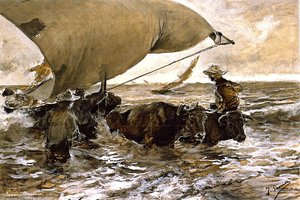
      Joaquín Sorolla y Bastida's “The Return from the Fishing,” completed in 1898, isn’t merely a depiction of a seaside scene; it’s an embodiment of Impressionism at its finest—a…

      Have it painted by hand →
      Under the awning, Zarauz (1910) του Χοακίν Σορόγια
      #74

      Under the awning, Zarauz

      1910 · Saint Louis Art Museum

      Joaquin Sorolla y Bastida's "Under the Awnings, Zarauz," painted in 1910, is a captivating Impressionist work that transports viewers to a sun-drenched beach scene in Spain. Housed within…

      Have it painted by hand →
      Fisherwomen (1911) του Χοακίν Σορόγια
      #75

      Fisherwomen

      1911

      Introduction to the Artist and Painting Joaquín Sorolla y Bastida, a renowned Spanish painter, is celebrated for his vivid depictions of everyday life in Spain. One of his…

      Order this canvas →
      Penitents, Holy Week, Seville (1914) του Χοακίν Σορόγια
      #76

      Penitents, Holy Week, Seville

      1914 · Hispanic Society Museum - Library

      Joaquín Sorolla y Bastida's "Penitents, Holy Week, Seville," painted in 1914, is a captivating oil on canvas that transports viewers to the heart of Spain’s deeply rooted religious…

      Bring this light home →
      Swimmers, Jávea (1905) του Χοακίν Σορόγια
      #77

      Swimmers, Jávea

      1905 · Sorolla Museum

      Joaquin Sorolla y Bastida's "Swimmers, Jávea," painted in 1905, isn’t merely a depiction of two women enjoying the Mediterranean Sea; it’s an exquisite distillation of light, movement, and…

      Bring this light home →
      Paris Boulevard (1885) του Χοακίν Σορόγια
      #79

      Paris Boulevard

      1885 · Sorolla Museum

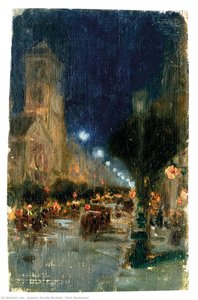
      Joaquin Sorolla y Bastida’s “Paris Boulevard,” painted in 1885, isn’t merely a depiction of a city street at night; it’s an immersive experience. Captured during his formative years…

      Have it painted by hand →
      Joaquín (1917) του Χοακίν Σορόγια
      #80

      Joaquín

      1917 · Sorolla Museum

      Joaquín Sorolla’s 1917 painting, “Joaquín,” isn't merely a likeness; it’s a carefully constructed tableau vivant, capturing the essence of early 20th-century Spanish society and the burgeoning spirit of…

      Bring this light home →
      La siesta (1912) του Χοακίν Σορόγια
      #82

      La siesta

      1912

      Joaquín Sorolla’s “La Siesta,” painted in 1912, is more than just a depiction of women resting outdoors; it's an embodiment of the Spanish spirit – a celebration of…

      Have it painted by hand →
      Wounded foot (1909) του Χοακίν Σορόγια
      #84

      Wounded foot

      1909

      Joaquín Sorolla y Bastida's “Wounded Foot,” painted in 1909, transcends mere depiction; it embodies the very essence of Impressionism and offers a poignant glimpse into the spirit of…

      Order this canvas →
      Seville, the Bullfighters (1915) του Χοακίν Σορόγια
      #85

      Seville, the Bullfighters

      1915 · Hispanic Society Museum - Library

      Seville, the Bullfighters is a captivating oil on panel painting created in 1915 by the renowned Spanish artist Joaquín Sorolla y Bastida. Measuring an impressive 350 x 231…

      Order this canvas →
      Mending the Sail (1896) του Χοακίν Σορόγια
      #86

      Mending the Sail

      1896

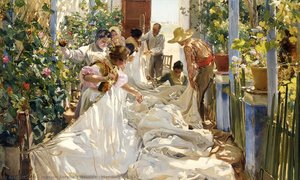
      Joaquín Sorolla Y Bastida, a name synonymous with the radiant light and vibrant energy of Spain, was more than just a painter; he was a chronicler of his…

      Order this canvas →
      La vuelta de la pesca (1894) του Χοακίν Σορόγια
      #88

      La vuelta de la pesca

      1894

      Introduction Joaquín Sorolla y Bastida, a renowned Spanish painter, created the captivating oil on canvas painting titled La Vuelta de la Pesca. This artwork is a testament to…

      Have it painted by hand →
      Maria in a Red Blouse (1910) του Χοακίν Σορόγια
      #90

      Maria in a Red Blouse

      1910

      Joaquin Sorolla’s “Maria in a Red Blouse,” painted in 1910, is more than just a portrait; it's an exquisite distillation of light, emotion, and the Spanish spirit. This…

      Order this canvas →
      On the coast of Biarritz (1906) του Χοακίν Σορόγια
      #91

      On the coast of Biarritz

      1906

      The painting depicts a lively seaside scene, capturing the essence of leisure and summertime joy. At its core is a group of figures – three prominent individuals standing…

      Order this canvas →
      Beneath the Canopy του Χοακίν Σορόγια
      #93

      Beneath the Canopy

      Joaquín Sorolla y Bastida's "Beneath the Canopy" is more than just a depiction of a sun-drenched beach; it’s an embodiment of the Spanish spirit – vibrant, joyful, and…

      Order this canvas →
      untitled (2616) του Χοακίν Σορόγια
      #95

      untitled (2616)

      In this breathtaking untitled masterpiece by the legendary Spanish Impressionist Joaquín Sorolla y Bastida, the viewer is invited to step into a sun-drenched sanctuary where time seems to…

      Bring this light home →
      Running along the beach (1908) του Χοακίν Σορόγια
      #96

      Running along the beach

      1908

      Joaquín Sorolla y Bastida's "Running along the beach," painted in 1908, is more than just a picturesque depiction of seaside leisure; it’s a masterful distillation of light, movement,…

      Order this canvas →
      Don Rafael Altamira y Crevea (1913) του Χοακίν Σορόγια
      #97

      Don Rafael Altamira y Crevea

      1913 · Hispanic Society Museum - Library

      Don Rafael Altamira y Crevea sits in a centered, three-quarter length pose, his presence defined by a heavy, luminous red mozzetta that anchors the composition. The portrait captures…

      Have it painted by hand →
      On the Coast of Valencia (1898) του Χοακίν Σορόγια
      #99

      On the Coast of Valencia

      1898 · Εθνικό Μουσείο Καλών Τεχνών

      The painting On the Coast of Valencia by Joaquin Sorolla Y Bastida is a beautiful depiction of people on the beach with boats in the water. Created in…

      Bring this light home →
      The Alcazar at Seville του Χοακίν Σορόγια
      #100

      The Alcazar at Seville

      Joaquín Sorolla y Bastida's “The Alcazar at Seville” is more than just a depiction of a magnificent building; it’s an immersive experience, a palpable distillation of light and…

      Bring this light home →

      Χοακίν Σορόγια's canvases, period by period

      What Χοακίν Σορόγια painted most

      The four subjects that return most often on these canvases, each with its best-loved example.

      Where Χοακίν Σορόγια's canvases hang

      Τα 8 μουσεία που φιλοξενούν το μεγαλύτερο μέρος των έργων σε αυτήν τη σελίδα.

      Μουσεία Πόλη Έργα του Χοακίν Σορόγια Πάτρια από αυτή τη λίστα
      Hispanic Society Museum - Library, Νέα ΥόρκηHispanic Society Museum - Library Νέα Υόρκη 113 Valencia beach in the morning light, Extremadura, The Market, Rocks of the Cape, Javea
      Sorolla Museum, ΜαδρίτηSorolla Museum Μαδρίτη 72 Walk on the Beach (Paseo a orillas del mar), Περπάτημα κατά την Ακτή, Clotilde on the Beach
      Εθνικό Μουσείο Καλών Τεχνών, Μπουένος ΆιρεςΕθνικό Μουσείο Καλών Τεχνών Μπουένος Άιρες 8 The Return from the Fishing, On the Coast of Valencia
      Μουσείο του Πράδο, ΜαδρίτηΜουσείο του Πράδο Μαδρίτη 10 Aureliano de Beruete y Moret, Jr.
      Μουσείο J. Paul Getty, Λος ΆντζελεςΜουσείο J. Paul Getty Λος Άντζελες 6 Courtyard of the Dances, Alcazar of Sevilla
      Musée d'Orsay, ΠαρίσιMusée d'Orsay Παρίσι 4 The Return from Fishing: Hauling the Boat (study)
      Art Institute of Chicago, ΣικάγκοArt Institute of Chicago Σικάγκο 2 The Two Sisters
      Μουσείο Τέχνης Βοστώνης, ΜπόσττονΜουσείο Τέχνης Βοστώνης Μπόσττον 1 Lighthouse walk at Biarritz

      Χοακίν Σορόγια's best-loved canvas of each decade

      1. 1880s
        Messalina in the Arms of the Gladiator (1886) του Χοακίν Σορόγια
        Ranked 10 of 100

        Messalina in the Arms of the Gladiator

        Ηλικία 17 – 26

        The ground is a bed of scattered flora and heavy silence. A woman lies motionless, her hair woven with blossoms that seem to hold the weight of her…

      2. 1890s
      3. 1900s
        Walk on the Beach (Paseo a orillas del mar) (1909) του Χοακίν Σορόγια
        Canvas 1 of 100

        Walk on the Beach (Paseo a orillas del mar)

        Ηλικία 37 – 46 · Sorolla Museum

        A Sun-Drenched Moment: Joaquín Sorolla’s “Walk on the Beach” Joaquín Sorolla y Bastida, a name synonymous with the vibrant luminosity of Spanish light and life, gifted us with…

      4. 1910s
        Extremadura, The Market (1917) του Χοακίν Σορόγια
        Canvas 5 of 100

        Extremadura, The Market

        Ηλικία 47 – 56 · Hispanic Society Museum - Library

        In the grand tapestry of Spanish Impressionism, few works capture the pulse of a nation as vibrantly as Joaquín Sorolla y Bastida’s “Extremadura, The Market.” Completed in 1917,…

      5. 1920s
        Ramón Pérez de Ayala (1920) του Χοακίν Σορόγια
        71 of 100

        Ramón Pérez de Ayala

        Ηλικία 57 – 60 · Hispanic Society Museum - Library

        In the luminous realm of Spanish Impressionism, few works capture the intersection of human character and atmospheric brilliance as profoundly as Joaquín Sorolla y Bastida’s 1920 masterpiece, Ramón…

      About Χοακίν Σορόγια's canvases: your questions answered

      What is the best-known painting by Χοακίν Σορόγια?Read the answer

      Walk on the Beach (Paseo a orillas del mar) (1909), Sorolla Museum, Μαδρίτη. Valencia beach in the morning light (1908) and Yo soy el pan de la vida (also known as I am the Bread of Life) (1897) follow.

      What age was Χοακίν Σορόγια when Walk on the Beach (Paseo a orillas del mar) was painted?Read the answer

      Χοακίν Σορόγια, born in 1863, was 46 years old: Walk on the Beach (Paseo a orillas del mar) dates from 1909.

      What are the 10 most famous paintings by Χοακίν Σορόγια?Read the answer

      Walk on the Beach (Paseo a orillas del mar), Valencia beach in the morning light, Yo soy el pan de la vida (also known as I am the Bread of Life), The Pink robe, Extremadura, The Market, Περπάτημα κατά την Ακτή, The Smugglers, Lighthouse walk at Biarritz, Clotilde on the Beach και Messalina in the Arms of the Gladiator. Each canvas in the ranking above comes with its year and its museum.

      How many works did Χοακίν Σορόγια paint in all?Read the answer

      969 works by Χοακίν Σορόγια are in our catalogue, dated 1881 to 1920.

      Where can I see Χοακίν Σορόγια's most famous canvases?Read the answer

      Mostly in Hispanic Society Museum - Library (Νέα Υόρκη), Sorolla Museum (Μαδρίτη) και Εθνικό Μουσείο Καλών Τεχνών (Μπουένος Άιρες); the list above names each museum and its canvases.

      When did Χοακίν Σορόγια paint the best-loved canvases?Read the answer

      In 1910s, which gave 34 of the 100 works on this page, Extremadura, The Market among them.

      Which are Χοακίν Σορόγια's earliest and latest famous canvases?Read the answer

      The earliest canvas here is Seascape, Ships in the Port (1881); the latest is Ramón Pérez de Ayala (1920).

      What did Χοακίν Σορόγια paint most often?Read the answer

      Sunlight (18), Spain (17) και Sorolla style (14), across the 100 works on this page.

      Which medium did Χοακίν Σορόγια paint in most often?Read the answer

      Oil On Canvas, used in 85 of the 100 works on this page.

      Which movement is Χοακίν Σορόγια's painting part of?Read the answer

      Εντυπωσιακές τοπία, as the canvases on this page show.

      Which Χοακίν Σορόγια canvases hang at the Hispanic Society Museum - Library?Read the answer

      The Hispanic Society Museum - Library, Νέα Υόρκη holds 11 of the works on this page, among them Valencia beach in the morning light, Extremadura, The Market και Rocks of the Cape, Javea.

      Can I buy a reproduction of a Χοακίν Σορόγια canvas?Read the answer

      Yes. Every painting on this page can be ordered from its own page as an oil reproduction painted by hand, or as a fine art print, in the size you choose.

      Χοακίν Σορόγια: a life in paint

      Early Life, Family and Training

      Joaquín Sorolla y Bastida entered the world on 27 February 1863 in Valencia, Spain. He was the eldest child of a tradesman, Joaquín Sorolla, and his wife, Concepción Bastida. Life for the young boy was marked by a sudden and heavy silence when, in August 1865, a cholera epidemic claimed both of his parents. This tragedy left Joaquín and his sister, Concha, as orphans. They were taken in by their maternal aunt and uncle, a locksmith, who provided the stability the siblings needed to grow.

      The spark of talent appeared early in his youth in Valencia. He received his first lessons in art within his home city, developing a natural aptitude that could not be ignored. This early instruction laid the foundation for a formal education under established artists, including Cayetano Capuz and José Benlliure. These mentors helped shape the technical skills that would eventually allow him to move beyond the local scene and seek broader horizons.

      Life and Career in Madrid

      In 1888, Joaquín married Clotilde García del Castillo, a woman he had known since he was a young man working in her father's studio. Their life together moved to Madrid in 1890, a transition that marked a significant chapter in his personal and professional development. As they settled into the capital, their family grew, with Maria, Joaquín, and Elena arriving by 1895. These years were a period of building both a household and a reputation that would eventually reach far beyond the borders of Spain.

      During the decade that followed his move to Madrid, Sorolla’s focus shifted toward the creation of large-scale canvases. He spent much of his time working on monumental subjects, ranging from mythological and historical scenes to orientalist themes and social studies. His ambition was reflected in the scale of his work, as he sought to tackle complex narratives through his brush. This period of intense production saw his reputation expand through various international exhibitions. He presented his work in salons across Europe and the Americas, including cities such as Paris, Venice, Munich, Berlin, and Chicago.

      Key Works and Major Achievements

      A significant turning point in his career arrived with the creation of Sad Inheritance in 1899. This large-scale canvas, which depicted children bathing in the sea, was presented at the Universal Exhibition in Paris. The work brought him a level of recognition that would change his life, leading to him being named a Knight of the Legion of Honour in 1900. That same year, he received the Grand Prix and a medal of honor at the Paris exhibition, marking his arrival on the international stage.

      His success continued to grow through the early years of the new century. In 1901, he was awarded the medal of honour at the National Exhibition in Madrid. These accolades reflected his ability to move between heavy social themes and the bright, sun-drenched scenes that would eventually define his reputation. His reach extended far beyond the borders of Spain, as his reputation for capturing light and life earned him commissions from major international institutions.

      One of his most ambitious projects was the commission to create Vision of Spain for the Hispanic Society of America. This series of monumental works allowed him to express his deep connection to his homeland through large-scale storytelling. His career was marked by these moments of high achievement, where his technical skill met a profound sense of purpose.

      Technique and Artistic Style

      Sorolla had a way of working that felt as restless and alive as the Mediterranean itself. He was a painter who preferred the directness of the outdoors, choosing to paint almost all of his works en plein air. This commitment to working in the open air allowed him to confront the shifting elements head-on. He did not merely aim to record a scene; he sought to capture the way light interacts with the world, particularly the way it dances across sunlit water and illuminates the skin of his subjects. His brushwork was loose and energetic, using thick, expressive strokes to translate the ephemeral movement of sunlight onto the canvas.

      His technical focus was often split between the intimate and the monumental. He was equally comfortable rendering a quiet portrait as he was tackling large-scale social or historical themes. There is a certain dexterity in how he handled the landscape, often placing people within a bright, Spanish sun that seems to dissolve the boundaries between the sea and the sky. This approach turned ordinary moments into something that felt immediate and breathing. He focused on the textures of daily life, using light to define the shapes of the people and the environments they inhabited.

      Later Years and Death

      The final years of Sorolla's life were marked by a significant undertaking that required immense physical and mental stamina. He spent much of this period working on his monumental murals, a project that demanded his full attention and strength. He managed to complete the final panel of these large-scale works in July 1919, marking a major conclusion to his creative output.

      However, his ability to continue painting was soon interrupted by health struggles. In 1920, he suffered a stroke, an event that curtailed his painting activity and changed the pace of his life. This period of recovery was a quiet departure from the energetic, outdoor sessions that had defined his earlier years. He passed away on 10 August 1923. He was laid to rest in the Cementeri de Valencia, Spain, returning to the region that had always been so central to his life and his art.

      Legacy and Enduring Influence

      The impact of Joaquín Sorolla y Bastida reached far beyond the shores of his native Spain. His presence in the international art community was solidified through his membership in several prestigious institutions, including the Académie des Beaux-Arts in Paris, the National Academy of Fine Arts in Lisbon, and the Real Academia de Bellas Artes de San Carlos in Valencia. These honors reflected a career that successfully bridged the gap between local identity and global recognition. He was celebrated as the Favourite Son of Valencia, a title that spoke to the deep connection between the painter and the light of his home region.

      Today, his canvases are held in collections across Spain, Europe, and America. His ability to translate the movement of the sea and the warmth of the sun onto a flat surface ensured that his vision would remain part of the public consciousness. The works continue to be studied and admired in major museums, maintaining a presence that spans continents. His influence is felt in the way he captured a specific sense of place and light, leaving behind a body of work that remains a vital part of the artistic landscape.

      Where to See the Works Today

      For those wishing to walk through the spaces that shaped his life, the Museo Sorolla in Madrid offers a rare glimpse into his private world. This single-artist museum is housed in his former home and studio, preserving the atmosphere where he lived and worked. Within these walls, one can find intimate pieces like My Children, which offer a look at his personal connections away from the large-scale commissions of his career.

      His influence stretches far beyond the borders of Spain, reaching into major international collections. In New York, the Hispanic Society Museum - Library holds many of his works, preserving a significant portion of his output for those traveling to the United States. His presence in Europe is equally felt, particularly in Paris, where the Musée d'Orsay maintains The Return from Fishing; Hauling the Boat.

      Όλα τα 969 έργα του Χοακίν Σορόγια →