Ατελιέ — Δωρεάν αποστολή σε όλο τον κόσμο — Παράδοση σε 2–6 εβδομάδες
      Πάουλ Κλέε, 1879 – 1940

      Πάουλ Κλέε: The 100 Best-Known Paintings

      Of all Πάουλ Κλέε's paintings, Νέος Άγγελος (1920) is the most famous; it hangs in the Ισραηλινό Μουσείο, Ιερουσαλήμ. Close behind come Η Μηχανή Τσιουτσερικό Κινητικό Σχήμα and Το Παρνασσόν (1932). Among the 669 works by Πάουλ Κλέε in our catalogue, these 100 are the most celebrated, each shown with its date, its museum and its story.

      Καταταγίζονται με βάση το σκορ δημοφιλίας μας, το οποίο συνδυάζει τις αναζητήσεις, τις επισκέψεις και τις παραγγελίες για κάθε έργο. Ενημερώθηκε Οκτώβριος 2026. Each painting on this page can be ordered as an oil reproduction painted by hand on linen canvas, or as a fine art print, made to the size you choose.

      Πορτρέτο του Πάουλ Κλέε
      Πάουλ Κλέε · 1879 – 1940
      Γεννημένος · πεθνημένος
      1879 – 1940, Μύνχενμπουχζεε
      Κίνηση
      Εξπρεσιονισμός
      Έργα στον κατάλογό μας
      669
      Τα πιο διάσημα
      Νέος Άγγελος (1920)
      Πολλές εργασίες στο
      Μετροπολιτικό Μουσείο Τέχνης

      Πάουλ Κλέε's 10 most celebrated paintings

      Νέος Άγγελος (1920) του Πάουλ Κλέε
      1

      Νέος Άγγελος

      1920 · Μονοτυπία · Ισραηλινό Μουσείο, Ιερουσαλήμ

      Created in 1920, New Angel by Paul Klee offers a glimpse into the artist's singular vision. This work is a monoprint, a choice that reflects Klee's interest in the unique, unrepeatable qualities of a single impression. It is a quiet piece, one that relies on a stark black and white palette to establish its presence. The composition focuses on a bird's head, a motif Klee returned to frequently, positioned as…

      Η Μηχανή Τσιουτσερικό Κινητικό Σχήμα του Πάουλ Κλέε
      2

      Η Μηχανή Τσιουτσερικό Κινητικό Σχήμα

      Μελάνι σε χαρτί · MoMA - Museum of Modern Art, Νέα Υόρκη

      Το έργο του Πολ Κλέι, “Twittering Machine”, δημιουργήθηκε γύρω στο 1922 και αποτελεί ένα συναρπαστικό παράδειγμα της πρώτης μοντέρνης τέχνης. Συνδυάζοντας παιχνιδιάρικες εικόνες με βαθύ συμβολισμό, αυτός ο πίνακας αντικατοπτρίζει την μοναδική καλλιτεχνική γλώσσα του Κλέι – μια γλώσσα που ξεπερνά την αφηρημένη τέχνη και τον εκφρατισμό και προσφέρει μια παιγνιώδη αίσθηση θαυμασμού.

      Το Παρνασσόν (1932) του Πάουλ Κλέε
      3

      Το Παρνασσόν

      1932 · Ακρυλικά πάνω σε καμβά · Kunstmuseum Bern, Μπερν

      Καρρυσματικό Θέμα και Συμβολισμός Αυτό το εντυπωσιακό έργο παρουσιάζει ένα ζωντανό και πολυεπίπεδο τοπίο, το οποίο προσκαλεί τους θεατές σε έναν κόσμο φαντασίας και στοχασμού. Κεντρικό σημείο της σύνθεσης είναι ένας φωτεινός πορτοκαλί κύκλος, που υπενθυμίζει τον ήλιο ή τη σελήνη, συμβολίζοντας την ενέργεια, τον φωτισμό και την πάροδο του χρόνου. Κάτω από αυτό το ουράνιο σώμα, ένα έντονο τριγωνικό σχήμα υποδηλώνει ένα βουνό ή μια πυραμίδα, προκαλώντας αισθήματα σταθερότητας,…

      Μύθοι του Νείλου (1937) του Πάουλ Κλέε
      4

      Μύθοι του Νείλου

      1937 · Άνθρακα και λάδι σε καμβά · Kunstmuseum Bern, Μπερν

      Εξερευνώντας το Πλούσιο Θέμα και τον Πολιτισμικό Συμβολισμό Βυθιστείτε σε ένα ζωντανό υφασμά πολιτισμικής αφήγησης και μυθικού συμβολισμού μέσα από αυτό το μαγευτικό έργο τέχνης. Εμπνευσμένο από τον θρυλικό Νείλο, το αριστούργημα αυτό υφαίνει μια αφήγηση για το νερό, τη ζωή και την πνευματικότητα μέσω αφηρημένων μοτίβων και συμβολικών σχημάτων. Η σύνθεση υποδηλώνει αρχαία αιγυπτιακά θέματα, με σύμβολα που θυμίζουν ιερογλυφικά, στιλιζμένους φυτούς και υδρόβια πλάσματα, τα οποία ανακαλούν τη…

      Flora on sand (1927) του Πάουλ Κλέε
      5

      Flora on sand

      1927 · Άνθρακα και λάδι σε καμβά

      Flora on Sand: A Symphony of Color and Geometric Form Paul Klee, a Swiss-born German painter, was renowned for his unique blend of expressionism, cubism, and surrealism. His impact on modern art is evident in his theoretical writings, notably his 'Paul Klee Notebooks.' One of his notable works, Flora on Sand, created in 1927, exemplifies his abstract style and showcases his fascination with children's art. This painting isn’t merely a…

      Τοπίο με Κίτρινα Πουλιά (1923) του Πάουλ Κλέε
      6

      Τοπίο με Κίτρινα Πουλιά

      1923 · Ακρυλικά πάνω σε καμβά

      Landscape with Yellow Birds Paul Klee’s Landscape with Yellow Birds is a quintessential example of the artist’s unique blend of expressionism and surrealism. Painted in 1923, this artwork showcases Klee’s innovative approach to color, form, and composition. The Artistic Context Paul Klee was a Swiss-born German artist who played a pivotal role in the development of modern art. His work was influenced by various movements, including expressionism, cubism, and surrealism.…

      Fish Image (1925) του Πάουλ Κλέε
      7

      Fish Image

      1925 · Ακρυλικά πάνω σε καμβά

      A World Suspended: Decoding Paul Klee’s *Fish Image* (1925) Paul Klee's *Fish Image*, created in 1925, is more than just a depiction of aquatic life; it’s a captivating exploration of movement, symbolism, and the liminal space between reality and dream. Measuring 40 x 61 cm, this delicate painting exemplifies Klee’s unique artistic voice – one deeply rooted in Expressionism yet subtly influenced by Cubism and Surrealism. It invites viewers into…

      With the eagle του Πάουλ Κλέε
      8

      With the eagle

      Painting · Zentrum Paul Klee, Βέρνη

      In the vast, kaleidoscopic landscape of twentieth-century modernism, few artists possess the ability to translate the invisible rhythms of the soul onto canvas as masterfully as Paul Klee. His work, With the Eagle, serves as a profound testament to this unique gift, acting not merely as a painting, but as a window into a psychological realm where color and form dance in a delicate, often mysterious, equilibrium. Created during the…

      In the Style of Kairouan (1914) του Πάουλ Κλέε
      9

      In the Style of Kairouan

      1914

      In the annals of modern art, few moments are as transformative as Paul Klee’s 1914 masterpiece, "In the Style of Kairouan." This work serves as a profound declaration of independence from the constraints of representational art, marking Klee's pivotal transition toward an abstract expressionism that would redefine the twentieth century. The painting is not merely a composition of shapes; it is a visual manifestation of a spiritual and artistic epiphany.…

      Κήπος με Ρόδους (1920) του Πάουλ Κλέε
      10

      Κήπος με Ρόδους

      1920 · Μικτές τεχνικές · Lenbachhaus, Μόναχο

      Στις ήσυχες γωνιές του Lenbachhaus στο Μόναχο, το έργο «Rose Garden» (1920) του Paul Klee περιμένει τον επισκέπτη, προσφέροντας μια οπτική εμπειρία που ξεπερνά τα όρια της απλής ζωγραφιάς. Η θέαση αυτού του αριστουργήματος είναι σαν να εισέρχεσαι σε έναν κόσμο όπου το οργανικό και το αρχιτεκτοχνικό χορεύουν σε απόλυτη, ρυθμική ενσυναρμονία. Δημιουργημένο κατά μια κομβική στιγμή στη ζωή του Klee—λίγο μετά τη συμμετοχή του στον Πρώτο Παγκόσμιο Πόλεμο και…

      Πάουλ Κλέε paintings ranked 11 to 100

      Σχολικό Κτίριο (1920) του Πάουλ Κλέε
      #11

      Σχολικό Κτίριο

      1920 · Art Institute of Chicago

      Πλησιάστε και παρατηρήστε πώς ο χώρος φαίνεται να διπλώνεται πάνω στον εαυτό του. Στο έργο Σχολικό Κτίριο, συναντάμε έναν κόσμο που δεν ακολουθεί τους κανόνες της προοπτικής στις…

      Order this canvas →
      May Picture (1925) του Πάουλ Κλέε
      #13

      May Picture

      1925 · Μετροπολιτικό Μουσείο Τέχνης

      May Picture: A Fragmented Landscape of Color and Rhythm Paul Klee’s “May Picture,” painted in 1925, stands as a testament to the artist's unwavering commitment to abstraction while…

      Bring this light home →
      Πρεστι digitalen (Τεχνική Μαγείας) (1927) του Πάουλ Κλέε
      #14

      Πρεστι digitalen (Τεχνική Μαγείας)

      1927 · Philadelphia Museum of Art

      Ο καμβάς φιλοξενεί ένα σύνολο σχημάτων που αρνούνται να ηρεμήσουν. Ένας σκουρόχρωμος, κυκλικός σφαιροειδής όγκος απλώνεται βαριά πάνω σε ένα φόντο με διασπασμένα κόκκινα και ροζ χρώματα, σαν…

      Order this canvas →
      Αρκτική Δροσιά (1920) του Πάουλ Κλέε
      #16

      Αρκτική Δροσιά

      1920 · Sezon Museum of Modern Art

      In the ethereal realm of Paul Klee’s “Arctic Dew,” the boundaries between reality and imagination dissolve into a luminous dance of color and rhythm. Created in 1920, this…

      Bring this light home →
      Untitled (1914) του Πάουλ Κλέε
      #17

      Untitled

      1914 · Μετροπολιτικό Μουσείο Τέχνης

      There is a quiet, rhythmic pulse within this 1914 watercolor that suggests a world composed entirely of light and geometry. The piece presents an arrangement of overlapping rectangular…

      Bring this light home →
      Serpent (1926) του Πάουλ Κλέε
      #18

      Serpent

      1926 · Μουσείο Τέχνης Βοστώνης

      In the quiet, monochromatic realm of Paul Klee’s 1926 masterpiece, Serpent (also known as Schlangenbeute), a primal drama unfolds with breathtaking subtlety. This graphite drawing is far more…

      Bring this light home →
      The messenger of autumn (1922) του Πάουλ Κλέε
      #20

      The messenger of autumn

      1922

      The Messenger of Autumn Paul Klee’s “The Messenger of Autumn” stands as an emblem of artistic innovation—a painting that transcends mere representation to embody a profound exploration of…

      Have it painted by hand →
      La Kash-Ne (1933) του Πάουλ Κλέε
      #21

      La Kash-Ne

      1933 · Μετροπολιτικό Μουσείο Τέχνης

      In 1933, a period marked by profound political shifts and personal displacement, the artist produced La Kash-Ne. This work exists as a study in monochrome, where the absence…

      Have it painted by hand →
      Wallflower του Πάουλ Κλέε
      #23

      Wallflower

      In the quiet, contemplative realm of Paul Klee’s 1938 masterpiece, 'Wallflower,' we encounter a work that transcends mere botanical depiction to become a profound meditation on existence. At…

      Order this canvas →
      Φλόρα στους βράχους Ήλιος (1940) του Πάουλ Κλέε
      #24

      Φλόρα στους βράχους Ήλιος

      1940 · Kunstsammlung Nordrhein-Westfalen

      Στο λυκόφως της εξαιρετικής του καριέρας, ο Paul Klee χαρίσε στον κόσμο της τέχνης το 'Φλόρα στους βράχους Ήλιος', ένα αριστούργημα του 1940 που λειτουργεί ως μια βαθιά…

      Bring this light home →
      Βοτανικό Θέατρο (1934) του Πάουλ Κλέε
      #25

      Βοτανικό Θέατρο

      1934 · Lenbachhaus

      Ένα Ονειρικό Τοπίο Φύσης και Σχήματος Στον ήσυχο, συγκινητικό κόσμο του Botanical Theater του Paul Klee, τα όρια μεταξύ πραγματικότητας και φαντασίας διαλύονται σε έναν μαγευτικό χορό χρώματος…

      Bring this light home →
      Woman in Peasant Dress (1940) του Πάουλ Κλέε
      #26

      Woman in Peasant Dress

      1940

      Paul Klee, a Swiss-born German painter whose legacy extends far beyond his artistic output, remains an enigma to many. Born December 18, 1879, he defied categorization, forging a…

      Bring this light home →
      Συλλογή από Φιγούρες (1926) του Πάουλ Κλέε
      #27

      Συλλογή από Φιγούρες

      1926 · Μετροπολιτικό Μουσείο Τέχνης

      Εισαγωγή στον Πάουλ Κλέε και τον Εξπρεσιονισμό Ο Πάουλ Κλέε, Γερμανός ζωγράφος με Ελβετικές καταβολές (1879-1940), τιμήθηκε παγκοσμίως για την μοναδική του ικανότητα να συνθέτει τον εξπρεσιονισμό, τον…

      Have it painted by hand →
      Dancing Girl (1940) του Πάουλ Κλέε
      #28

      Dancing Girl

      1940 · Art Institute of Chicago

      A single, dark figure moves across a textured field. This humanoid form, rendered with thick and gestural lines, suggests a skeletal grace. It is a stick-figure shape that…

      Have it painted by hand →
      Γυναίκα που πλέκει (1915) του Πάουλ Κλέε
      #29

      Γυναίκα που πλέκει

      1915 · Boca Raton Museum of Art

      Woman Knitting – A Fragment of Geometric Harmony Paul Klee’s “Woman Knitting” stands as a deceptively simple yet profoundly resonant exploration of domesticity and abstraction, born from the…

      Order this canvas →
      Black prince του Πάουλ Κλέε
      #30

      Black prince

      A Fragmented Soul Emerging from the Void In the haunting depths of Paul Klee’s Black Prince, the viewer is not merely observing a portrait but witnessing a psychological…

      Order this canvas →
      Ισχυρό Όνειρο (1929) του Πάουλ Κλέε
      #31

      Ισχυρό Όνειρο

      1929

      Ένα Παράθυρο στο Υποσυνείδητο: Εξερευνώντας το «Ισχυρό Όνειρο» του Paul Klee Το έργο «Ισχυρό Όνειρο» του Paul Klee, δημιουργημένο το 1929, αποτελεί ένα μαγευτικό δείγμα της μοντέρνας τέχνης…

      Have it painted by hand →
      With the Egg (1917) του Πάουλ Κλέε
      #32

      With the Egg

      1917

      Introduction to Paul Klee and His Artistic Style Paul Klee, a Swiss-born German painter (1879-1940), was celebrated for his unique blend of expressionism, cubism, and surrealism. A master…

      Have it painted by hand →
      Seventeen (1923) του Πάουλ Κλέε
      #33

      Seventeen

      1923

      Paul Klee's “Seventeen,” created in 1927, stands as a cornerstone of Surrealist art—a testament to his singular ability to translate inner vision onto canvas. More than just an…

      Have it painted by hand →
      Astrological Fantasy Portrait (1924) του Πάουλ Κλέε
      #34

      Astrological Fantasy Portrait

      1924 · Μετροπολιτικό Μουσείο Τέχνης

      In the vast, silent expanse of 1924, Paul Klee birthed a vision that continues to haunt and enchant the modern imagination. Astrological Fantasy Portrait is not merely a…

      Bring this light home →
      Mask of Fear του Πάουλ Κλέε
      #35

      Mask of Fear

      MoMA - Museum of Modern Art

      Introduction to Paul Klee and Expressionism Paul Klee, a Swiss-born German painter (1879-1940), was celebrated for his unique blend of expressionism, cubism, and surrealism. A master draftsman with…

      Bring this light home →
      Hot Pursuit (1939) του Πάουλ Κλέε
      #36

      Hot Pursuit

      1939 · Fogg Museum

      The canvas breathes with a primitive energy, as if we are witnessing a ritual frozen in a moment of frantic motion. Dark, heavy black lines slash across the…

      Order this canvas →
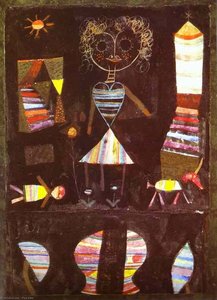
      Puppet theater (1923) του Πάουλ Κλέε
      #37

      Puppet theater

      1923

      Puppet Theater: A Surrealist Dance of Forms by Paul Klee Paul Klee’s “Puppet Theater,” painted in 1923, isn't merely a depiction of theatrical imagery; it’s an embodiment of…

      Order this canvas →
      Temple Gardens (1920) του Πάουλ Κλέε
      #38

      Temple Gardens

      1920 · Μετροπολιτικό Μουσείο Τέχνης

      Paul Klee's “Three Panels,” painted circa 1920, isn’t merely a collection of landscapes; it’s a carefully constructed meditation on perception, memory, and the fractured nature of experience. Emerging…

      Have it painted by hand →
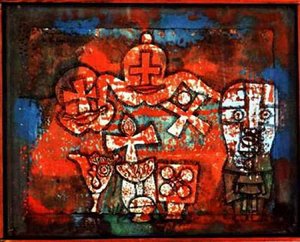
      Chinese porcelain (1940) του Πάουλ Κλέε
      #39

      Chinese porcelain

      1940

      A Symphony of Geometric Abstraction In the twilight of his life, Paul Klee composed a visual masterpiece that transcends mere pigment on canvas. The Four Faces, painted in…

      Order this canvas →
      Εξωτικά (1939) του Πάουλ Κλέε
      #40

      Εξωτικά

      1939 · Art Institute of Chicago

      The eye wanders through a landscape of interlocking shapes, where deep terracotta and burnt sienna collide with patches of slate blue and mustard yellow. There is no horizon…

      Have it painted by hand →
      Remembrance of a Garden (1914) του Πάουλ Κλέε
      #41

      Remembrance of a Garden

      1914

      A Visionary Landscape of MemoryIn Paul Klee’s 1914 masterpiece, Remembrance of a Garden, the viewer is not merely presented with a landscape, but invited into a profound meditation…

      Bring this light home →
      Παράξενο Βλέμμα (1930) του Πάουλ Κλέε
      #42

      Παράξενο Βλέμμα

      1930 · Art Institute of Chicago

      Μια οβάλ μορφή καταλαμβάνει το κέντρο ενός σκοτεινού, υφασμάτου πεδίου, υποδηλώνοντας ένα πρόσωπο μέσα από μια μινιμαλιστική γεωμετρία. Η σύνθεση βασίζεται σε μια σοβαρή παλέτα από μπλε του…

      Have it painted by hand →
      Boy in Fancy Dress (1931) του Πάουλ Κλέε
      #43

      Boy in Fancy Dress

      1931 · Μετροπολιτικό Μουσείο Τέχνης

      A single figure emerges from a dense, rhythmic grid of color, appearing less like a solid person and more like a delicate arrangement of tiny, rectangular patches. This…

      Bring this light home →
      The Pathos of Fertility (1921) του Πάουλ Κλέε
      #44

      The Pathos of Fertility

      1921 · Μετροπολιτικό Μουσείο Τέχνης

      The artwork consists of a centered, seated humanoid figure rendered through delicate black outlines on paper. The figure possesses a large, rounded belly that is decorated with organic…

      Bring this light home →
      Ηρωικός Βιολί του Πάουλ Κλέε
      #45

      Ηρωικός Βιολί

      MoMA - Museum of Modern Art

      Introduction: Paul Klee, a Swiss-born German painter (1879-1940), was celebrated for his unique blend of expressionism, cubism, and surrealism. A master draftsman with a profound understanding of color…

      Order this canvas →
      Arab Song (1932) του Πάουλ Κλέε
      #46

      Arab Song

      1932 · The Phillips Collection

      In 1932, Paul Klee composed a visual arrangement that translates the atmosphere of North Africa into a simplified, rhythmic language. The work utilizes oil on burlap to create…

      Bring this light home →
      Flower Family V. (1922) του Πάουλ Κλέε
      #48

      Flower Family V.

      1922 · Solomon R. Guggenheim Museum

      Three stylized figures, possessing qualities of both human forms and botanical life, occupy a dark, textured space. A larger figure with an orange-toned body and a circular white…

      Order this canvas →
      Forgetful angel του Πάουλ Κλέε
      #49

      Forgetful angel

      Paul Klee's “Forgetful Angel,” painted in 1939 amidst the gathering storm clouds of war, is not merely a depiction of an angel; it’s a profound meditation on memory,…

      Have it painted by hand →
      Singer of the Comic Opera (1927) του Πάουλ Κλέε
      #50

      Singer of the Comic Opera

      1927 · Bavarian State Painting Collections

      Step closer to observe the way the light seems to emerge from within the figure itself. In Singer of the Comic Opera, we encounter a form that feels…

      Bring this light home →
      A Couple of Gods (1924) του Πάουλ Κλέε
      #51

      A Couple of Gods

      1924 · Scharf-Gerstenberg Collection

      Step closer to observe these two figures. They emerge from a dark, textured void, appearing less like painted subjects and more like relics unearthed from a forgotten era.…

      Have it painted by hand →
      Walpurgis Night (1935) του Πάουλ Κλέε
      #53

      Walpurgis Night

      1935

      The surface of Walpurgis Night consists of gouache applied to fabric stretched over plywood. A monochromatic blue palette dominates the visual field, ranging from deep navy and near-black…

      Bring this light home →
      Static-Dynamic Gradation του Πάουλ Κλέε
      #54

      Static-Dynamic Gradation

      Μετροπολιτικό Μουσείο Τέχνης

      # Introduction to Expressionism and Paul Klee Expressionism is an art movement that emerged in the early 20th century, characterized by its emphasis on emotional experience and individual…

      Bring this light home →
      Colorful Architecture (1917) του Πάουλ Κλέε
      #55

      Colorful Architecture

      1917 · Μετροπολιτικό Μουσείο Τέχνης

      A City Born of Dreams: Unveiling Paul Klee’s “Colorful Architecture” Paul Klee's 1917 watercolor, “Colorful Architecture,” is not a rendering of any identifiable place, but rather an evocation—a…

      Have it painted by hand →
      Possibilities at Sea (1932) του Πάουλ Κλέε
      #56

      Possibilities at Sea

      1932 · Norton Simon Museum

      A white-outlined diamond holds red grid lines against a dark grey background. On the right, this structure dominates the space. A single, bright white arrow points toward a…

      Have it painted by hand →
      Rose Wind του Πάουλ Κλέε
      #57

      Rose Wind

      A Symphony in Color: Exploring Paul Klee’s Rose Wind The moment one encounters Rose Wind, there is an immediate sense of being swept into a rhythmic, breathing landscape…

      Bring this light home →
      Angel in the Making του Πάουλ Κλέε
      #59

      Angel in the Making

      Paul Klee's ‘Angel in the Making’, painted around an unspecified date, is not merely a visual composition; it’s a whispered meditation on potentiality, a glimpse into the nascent…

      Order this canvas →
      Dying Down (1940) του Πάουλ Κλέε
      #60

      Dying Down

      1940 · Scharf-Gerstenberg Collection

      The composition presents an arrangement of calligraphic, black lines that weave through patches of saturated color. These thick, fluid strokes intersect with deep crimson, burnt sienna, and ochre,…

      Bring this light home →
      Tighter rhythms and freer του Πάουλ Κλέε
      #61

      Tighter rhythms and freer

      In the vibrant realm of Expressionist abstraction, Paul Klee’s Tighter rhythms and freer stands as a captivating exploration of color and structure. The painting presents an intricate composition…

      Bring this light home →
      The rumors (1939) του Πάουλ Κλέε
      #62

      The rumors

      1939 · Ίδρυμα Μπαρνς

      In the quiet, evocative depths of Paul Klee’s 1939 watercolor masterpiece, "The Rumors," we encounter a visual language that speaks far more than words ever could. Created during…

      Bring this light home →
      Rose garden (1920) του Πάουλ Κλέε
      #63

      Rose garden

      1920

      A Garden of Geometric Dreams: Unveiling Paul Klee’s ‘Rose Garden’ Paul Klee's *Rose Garden*, painted in 1920, is far more than a depiction of flowers; it’s a pivotal…

      Bring this light home →
      Ad marginem (1930) του Πάουλ Κλέε
      #64

      Ad marginem

      1930 · Kunstmuseum Basel

      Step closer to observe the quiet tension held within this 1930 composition. At first glance, the eye is drawn to a central, deep terracotta red orb, a circular…

      Bring this light home →
      Untitled (Reconstruction) (1926) του Πάουλ Κλέε
      #65

      Untitled (Reconstruction)

      1926 · KODE Art museums and composer homes

      A Labyrinth of Form Step closer to observe the density of this 1926 composition. There is no single point for the eye to rest; instead, one finds oneself…

      Have it painted by hand →
      Tree Nursery (1929) του Πάουλ Κλέε
      #67

      Tree Nursery

      1929 · The Phillips Collection

      A rhythmic, horizontal composition defines this 1929 work, utilizing layered bands of pale blue, soft pink, light yellow, sage green, and earthy ochre. The surface is marked by…

      Order this canvas →
      Fire in the Evening (1929) του Πάουλ Κλέε
      #68

      Fire in the Evening

      1929 · MoMA - Museum of Modern Art

      To look closely at this small work is to encounter a quiet, structured energy. Created in 1929, the piece presents itself through an arrangement of horizontal bands and…

      Bring this light home →
      The rumors (1939) του Πάουλ Κλέε
      #69

      The rumors

      1939

      In the quiet, evocative depths of Paul Klee’s 1939 masterpiece, “The Rumors,” we encounter a visual language that speaks far more than words ever could. Created during one…

      Bring this light home →
      Πλήγματη Πόλη (1936) του Πάουλ Κλέε
      #71

      Πλήγματη Πόλη

      1936 · Μετροπολιτικό Μουσείο Τέχνης

      The composition presents an abstract, heavily textured surface that suggests a fragmented, skeletal urban environment. A large, solid black arrow descends from the top center, directing focus toward…

      Order this canvas →
      Λαϊκό Ξεκοσμίτης (1922) του Πάουλ Κλέε
      #72

      Λαϊκό Ξεκοσμίτης

      1922 · Μετροπολιτικό Μουσείο Τέχνης

      A single, elongated figure occupies the center of the paper, her presence felt through a delicate arrangement of shapes and lines. She gazes outward with large, almond-shaped eyes…

      Have it painted by hand →
      Κόκκινοπράσινοι και Μωβ-Κίτρινοι Ρυθμοί (1920) του Πάουλ Κλέε
      #73

      Κόκκινοπράσινοι και Μωβ-Κίτρινοι Ρυθμοί

      1920 · Μετροπολιτικό Μουσείο Τέχνης

      Το έργο του Paul Klee, «Κόκκινοπράσινοι και Μωβ-Κίτρινοι Ρυθμοί», που δημιουργήθηκε το 1920, αποτελεί κάτι πολύ βαθύτερο από μια απλή ζωγραφική· είναι μια εξερεύνηση της θεωρίας του χρώματος,…

      Have it painted by hand →
      Χρώματα από απόσταση (1932) του Πάουλ Κλέε
      #76

      Χρώματα από απόσταση

      1932 · Ισραηλινό Μουσείο

      Η σύνθεση παρουσιάζει ένα πυκνό, μη αναπαραστατικό πλέγμα από επικαλυμμένα τετράγωνα και ορθογώνια. Ένα δίκτυο από λεπτές, σκουρόχρωμες γραμμές διατρέχει την επιφάνεια, δημιουργώντας μικρά, κυψελωτά σχήματα που υποδηλουν…

      Bring this light home →
      View into the Fertile Country (1932) του Πάουλ Κλέε
      #77

      View into the Fertile Country

      1932 · Städel Museum

      The Nile flows as a single, wavy line across the foreground. Behind this blue thread, geometric shapes rise like silent buildings. Rows of multicolored horizontal stripes stretch toward…

      Bring this light home →
      Polyphony (1932) του Πάουλ Κλέε
      #78

      Polyphony

      1932 · Kunstmuseum Basel

      Small squares of deep blue, forest green, and ochre settle into a dense, rhythmic grid. Each rectangle rests against its neighbor like a note placed upon a staff.…

      Bring this light home →
      Bust of a Child του Πάουλ Κλέε
      #80

      Bust of a Child

      Bust of a Child: An Expressionist Exploration by Paul Klee A Glimpse into Childhood Through Abstract Forms Paul Klee's "Bust of a Child" is a captivating artwork that…

      Order this canvas →
      The Lamb (1920) του Πάουλ Κλέε
      #81

      The Lamb

      1920 · Städel Museum

      In the quiet, transformative landscape of early twentieth-century modernism, few works capture the intersection of spiritual devotion and geometric innovation as poignantly as Paul Klee’s “The Lamb,” completed…

      Bring this light home →
      Interior with the Clock (1913) του Πάουλ Κλέε
      #82

      Interior with the Clock

      1913 · Εθνική Πινακοθήκη Τέχνης

      The paper holds a soft, ethereal world where shapes drift like clouds through an unseen room. Pale yellows and light blues mingle with lavender and dusty rose, creating…

      Have it painted by hand →
      Girl with Doll του Πάουλ Κλέε
      #84

      Girl with Doll

      In the vast landscape of modern art, few works possess the intimate, rhythmic charm found in Paul Klee’s "Girl with Doll Carriage" (Mädchen mit Puppenwagen). Painted in 1923,…

      Bring this light home →
      Municipal Jewel (1917) του Πάουλ Κλέε
      #85

      Municipal Jewel

      1917 · Μετροπολιτικό Μουσείο Τέχνης

      The painting Municipal Jewel presents an intricate cityscape composed of various shapes and colors. The palette features a vibrant mix of red, blue, yellow, green, and purple. Within…

      Have it painted by hand →
      Fruits on Red (1930) του Πάουλ Κλέε
      #88

      Fruits on Red

      1930 · Lenbachhaus

      The composition presents a delicate network of thin stems and rounded geometric forms set against a warm copper-red ground. Rather than a traditional arrangement of harvested produce, the…

      Bring this light home →
      Πύλη στον Κήπο (1926) του Πάουλ Κλέε
      #89

      Πύλη στον Κήπο

      1926 · Kunstmuseum Bern

      Deep within a dark, moody atmosphere, a rhythmic dance of texture begins to unfold. The eye is immediately drawn to the upper left, where a rectangular form pulses…

      Order this canvas →
      Captive (1940) του Πάουλ Κλέε
      #91

      Captive

      1940

      A Portrait of Resilience: Paul Klee’s “Captive” Paul Klee's "Captive," painted in 1940 during the twilight years of his life and just months before his passing, is far…

      Bring this light home →
      Sunset (1930) του Πάουλ Κλέε
      #92

      Sunset

      1930 · Art Institute of Chicago

      The oil on canvas, measuring 46.1 x 70.5 cm, presents an abstract arrangement of geometric and organic shapes. A neutral background is covered by a dense, layered pattern…

      Have it painted by hand →
      In Position (1939) του Πάουλ Κλέε
      #93

      In Position

      1939

      Step closer to observe the delicate balance within this 1939 watercolor. There is a certain stillness here, an arrangement that feels both intentional and fragile. The composition rests…

      Order this canvas →
      Enclosure for Pachyderms (1940) του Πάουλ Κλέε
      #94

      Enclosure for Pachyderms

      1940 · KODE Art museums and composer homes

      Created in 1940, this oil on canvas presents a structured network of thick, black, irregular lines that traverse the surface in a grid-like pattern. These dark strokes vary…

      Order this canvas →
      Crystal Gradation του Πάουλ Κλέε
      #95

      Crystal Gradation

      Kunstmuseum Basel

      In the vast landscape of twentieth-century abstraction, few works possess the hypnotic, rhythmic quality found in Paul Klee’s "Crystal Gradation." Created during the artist's profound period in Murnau,…

      Order this canvas →
      El conquistador του Πάουλ Κλέε
      #96

      El conquistador

      “The Great Bear,” painted in 1938 during Klee’s prolific period at Bauhaus Dessau, stands as a cornerstone of his artistic legacy. More than just a depiction of an…

      Order this canvas →
      Landscape with yellow church tower (1920) του Πάουλ Κλέε
      #97

      Landscape with yellow church tower

      1920 · Bavarian State Painting Collections

      A complex, grid-like structure defines this 1920 landscape, utilizing a mosaic of geometric shapes to suggest a village setting. Horizontal lines traverse the canvas, establishing a rhythmic, layered…

      Have it painted by hand →
      Puppet Theatre του Πάουλ Κλέε
      #98

      Puppet Theatre

      Paul Klee's "Puppet Theater" is far more than a mere depiction of figures; it serves as a profound invitation to delve into the realm of subconscious thought and…

      Have it painted by hand →
      Episode Before an Arab Town (1923) του Πάουλ Κλέε
      #100

      Episode Before an Arab Town

      1923 · Μετροπολιτικό Μουσείο Τέχνης

      The horizon sits low, a thin line dividing an expansive sky from a textured ground. Earthy tones of terracotta, ochre, and dusty rose settle over the paper like…

      Have it painted by hand →

      Πάουλ Κλέε's canvases, period by period

      What Πάουλ Κλέε painted most

      The four subjects that return most often on these canvases, each with its best-loved example.

      Where Πάουλ Κλέε's canvases hang

      Τα 8 μουσεία που φιλοξενούν το μεγαλύτερο μέρος των έργων σε αυτήν τη σελίδα.

      Μουσεία Πόλη Έργα του Πάουλ Κλέε Πάτρια από αυτή τη λίστα
      Μετροπολιτικό Μουσείο Τέχνης, Νέα ΥόρκηΜετροπολιτικό Μουσείο Τέχνης Νέα Υόρκη 56 Ενημερωτικό Φυλλάδιο Κομικών, May Picture, Untitled
      Art Institute of Chicago, ΣικάγκοArt Institute of Chicago Σικάγκο 10 Σχολικό Κτίριο, Dancing Girl, Εξωτικά
      MoMA - Museum of Modern Art, Νέα ΥόρκηMoMA - Museum of Modern Art Νέα Υόρκη 9 Η Μηχανή Τσιουτσερικό Κινητικό Σχήμα, Mask of Fear, Ηρωικός Βιολί
      Kunstmuseum Basel, ΒασιλείαKunstmuseum Basel Βασιλεία 8 Ad marginem, Polyphony, Crystal Gradation
      Lenbachhaus, ΜόναχοLenbachhaus Μόναχο 6 Κήπος με Ρόδους, Βοτανικό Θέατρο, Fruits on Red
      Bavarian State Painting Collections, ΜόναχοBavarian State Painting Collections Μόναχο 20 Singer of the Comic Opera, Landscape with yellow church tower
      The Phillips Collection, Ουάσιγκτον, D.C.The Phillips Collection Ουάσιγκτον, D.C. 8 Arab Song, Tree Nursery
      Scharf-Gerstenberg Collection, BerlinScharf-Gerstenberg Collection Berlin 6 A Couple of Gods, Dying Down

      Decade by decade: Πάουλ Κλέε's most celebrated canvas

      1. 1910s
        In the Style of Kairouan (1914) του Πάουλ Κλέε
        9 of 100

        In the Style of Kairouan

        Ηλικία 31 – 40

        In the annals of modern art, few moments are as transformative as Paul Klee’s 1914 masterpiece, "In the Style of Kairouan." This work serves as a profound declaration…

      2. 1920s
        Νέος Άγγελος (1920) του Πάουλ Κλέε
        1 of 100

        Νέος Άγγελος

        Ηλικία 41 – 50 · Ισραηλινό Μουσείο

        Created in 1920, New Angel by Paul Klee offers a glimpse into the artist's singular vision. This work is a monoprint, a choice that reflects Klee's interest in…

      3. 1930s
        Το Παρνασσόν (1932) του Πάουλ Κλέε
        Ranked 3 of 100

        Το Παρνασσόν

        Ηλικία 51 – 60 · Kunstmuseum Bern

        Καρρυσματικό Θέμα και Συμβολισμός Αυτό το εντυπωσιακό έργο παρουσιάζει ένα ζωντανό και πολυεπίπεδο τοπίο, το οποίο προσκαλεί τους θεατές σε έναν κόσμο φαντασίας και στοχασμού. Κεντρικό σημείο της…

      4. 1940s
        Φλόρα στους βράχους Ήλιος (1940) του Πάουλ Κλέε
        Ranked 24 of 100

        Φλόρα στους βράχους Ήλιος

        Ηλικία 61 · Kunstsammlung Nordrhein-Westfalen

        Στο λυκόφως της εξαιρετικής του καριέρας, ο Paul Klee χαρίσε στον κόσμο της τέχνης το 'Φλόρα στους βράχους Ήλιος', ένα αριστούργημα του 1940 που λειτουργεί ως μια βαθιά…

      Your questions on Πάουλ Κλέε's paintings, answered

      Which is the most celebrated painting by Πάουλ Κλέε?Read the answer

      Νέος Άγγελος (1920), Ισραηλινό Μουσείο, Ιερουσαλήμ. Η Μηχανή Τσιουτσερικό Κινητικό Σχήμα and Το Παρνασσόν (1932) follow.

      How old was Πάουλ Κλέε at the time of Νέος Άγγελος?Read the answer

      Πάουλ Κλέε, born in 1879, was 41 years old: Νέος Άγγελος dates from 1920.

      Which ten paintings is Πάουλ Κλέε most famous for?Read the answer

      Νέος Άγγελος, Η Μηχανή Τσιουτσερικό Κινητικό Σχήμα, Το Παρνασσόν, Μύθοι του Νείλου, Flora on sand, Τοπίο με Κίτρινα Πουλιά, Fish Image, With the eagle, In the Style of Kairouan και Κήπος με Ρόδους. Each canvas in the ranking above comes with its year and its museum.

      How many paintings by Πάουλ Κλέε are known?Read the answer

      669 works by Πάουλ Κλέε are in our catalogue, dated 1910 to 1940.

      Which museums hold Πάουλ Κλέε's best-known canvases?Read the answer

      Mostly in Μετροπολιτικό Μουσείο Τέχνης (Νέα Υόρκη), Art Institute of Chicago (Σικάγκο) και MoMA - Museum of Modern Art (Νέα Υόρκη); the list above names each museum and its canvases.

      In which years did Πάουλ Κλέε paint the most celebrated canvases?Read the answer

      In 1920s, which gave 36 of the 100 works on this page, Νέος Άγγελος among them.

      What are the first and the last of Πάουλ Κλέε's famous canvases?Read the answer

      The earliest canvas here is Flower stand with watering can and bucket (1910); the latest is Φλόρα στους βράχους Ήλιος (1940).

      Which subjects return most often in Πάουλ Κλέε's paintings?Read the answer

      Geometric shapes (44), Γεωμετρικά σχήματα (13) και Color theory (12), across the 100 works on this page.

      What did Πάουλ Κλέε usually paint with?Read the answer

      Watercolor, used in 21 of the 100 works on this page.

      To which art movement does Πάουλ Κλέε belong?Read the answer

      Εξπρεσιονισμός, as the canvases on this page show.

      What can I see by Πάουλ Κλέε at the Μετροπολιτικό Μουσείο Τέχνης?Read the answer

      The Μετροπολιτικό Μουσείο Τέχνης, Νέα Υόρκη holds 17 of the works on this page, among them Ενημερωτικό Φυλλάδιο Κομικών, May Picture και Untitled.

      Can I order a hand-painted copy of a painting by Πάουλ Κλέε?Read the answer

      Yes. Every painting on this page can be ordered from its own page as an oil reproduction painted by hand, or as a fine art print, in the size you choose.

      Πάουλ Κλέε: the painter's story

      The Early Life of Paul Klee

      Born on December 18, 1879, in Münchenbuchsee, near Bern, Switzerland, Paul Klee grew up in a home defined by the discipline of music. He was the second child of Hans Wilhelm Klee, a German music teacher, and Ida Marie Klee, a Swiss singer. The sounds of his parents' professions likely shaped the atmosphere of his childhood, providing a rhythmic foundation that would follow him into his later years. By the age of eleven, Klee was already showing a significant talent for the violin, earning an invitation to play with the Bern Music Association.

      Despite his musical aptitude, a different path began to call to him as he grew older. In 1898, he moved to Munich to begin studying at the Academy of Fine Arts. Between 1898 and 1901, he trained under Heinrich Knirr and Franz von Stuck. These early years of formal study were a period of intense learning and struggle. While he showed a natural skill for drawing, he often found the use of color to be a difficult hurdle to clear during those first cold winters in Munich.

      A Journey Toward Abstraction

      The path toward a new way of seeing was not a straight line. In the early years, Klee traveled to Italy from October 1901 to May 1902 with Hermann Haller. While the experience was significant, he later noted that the struggle with color remained a difficult, long-term challenge. He found himself caught between the classical traditions of the past and a growing desire to find a more personal visual language. For a long time, his work remained largely focused on drawing and black-and-white compositions, often leaning into the grotesque or the satirical.

      A profound shift occurred in 1914 during a trip to Tunisia with August Macke and Louis Moilliet. The limpid light of North Africa changed everything for him. In that intense sunlight, he began to detach color from its duty to describe physical objects. Instead of using color to mimic the world, he used it as an independent force. This realization provided the push he needed to move toward abstraction. By 1915, he had turned his back to nature and never painted after the model again, choosing instead to express the world through his own internal symbols and imagination.

      The Bauhaus and Teaching Years

      In 1920, a new chapter began when Walter Gropius invited Klee to join the faculty of the Bauhaus. He spent the next decade at the school, working alongside Wassily Kandinsky. This period was perhaps his most prolific, as nearly half of his total output was produced during these ten years. His time at the Bauhaus allowed him to explore the relationship between color and form with a scientific precision that he documented extensively in his notebooks. These writings became essential for anyone trying to understand the mechanics of modern composition.

      The stability of his teaching career was interrupted by the political shifts in Germany. In 1933, Klee was dismissed from his position at the Academy of Fine Arts in Düsseldorf due to the rise of the National Socialist regime, which classified his work as “degenerate.” This forced him to leave the academy and return to his native Bern. The shift in his surroundings and the growing political turmoil began to change the tone of his work, moving away from the whimsy of his earlier years toward a more somber and heavy perspective.

      Technique and Artistic Style

      Klee was a natural draftsman who possessed a deep, almost scientific understanding of color theory. His approach to a canvas was rarely about simple imitation; instead, he built his compositions through a highly individual style influenced by expressionism, cubism, and surrealism. He often worked on a small scale, using delicate media like watercolor on gauze or paper with a chalk ground. This experimentation allowed him to explore how light and pigment interacted in ways that traditional oil painting could not capture. He was also a prolific printmaker, utilizing zinc-plate etchings and lithographs to expand his visual language.

      There was a certain playfulness in his imagery that felt both sophisticated and simple. He frequently populated his works with recurring motifs: small stick figures, suspended fish, and moon faces. These symbols were often arranged in grids or patterns that felt like visual music. His technical curiosity even led him to unconventional methods, such as using a needle to draw on blackened glass, a technique he used to create fifty-seven distinct works. This method required a steady hand and a precise understanding of how light would catch the scratches in the dark surface.

      Key Works and Notable Compositions

      Klee’s ability to translate the invisible into something visible is perhaps most evident in his mid-career works. In 1915, he painted Woman Knitting, a piece that captures a sense of quiet, rhythmic movement. As his fascination with the relationship between color and form deepened, he produced Fish Magic in 1925, a work that demonstrates his ability to use simple shapes to suggest something much more complex and mysterious. His compositions often relied on a specific kind of visual music, where lines and colors acted like notes on a staff.

      By the late 1920s, his work took on a more structured, almost architectural quality. Ships in the Dark, created in 1927, shows his skill at balancing light and shadow to create a sense of space. As the political climate in Europe grew heavier, his art followed suit. The whimsy of his earlier years began to fade, replaced by a more somber tone. This shift is visible in Comedians' Handbill from 1938, where the lines become thicker and the forms more generalized. Even in his final years, as his health declined, he continued to find ways to express the gravity of his surroundings, as seen in the 1939 work Angel Applicant.

      Later Years and Death

      The political climate in Europe began to darken significantly in the 1930s. In 1933, the National Socialists declared his art to be "degenerate," a decision that forced him out of his teaching position at the Academy of Fine Arts in Düsseldorf. This dismissal ended a period of relative stability and sent him back to his native Bern. As the shadows of war and political turmoil grew, his work began to change. The lightness of his earlier years faded, replaced by a more somber and melancholic perspective. His lines grew heavier, often turning into thick black bars, and his forms became more generalized and broad.

      This shift in his painting reflected the increasing gravity of the world around him. The whimsicality that once defined his compositions gave way to a sense of weight and seriousness. Even as his own health declined, he continued to produce work that captured the tension of the era. His later pieces often felt more stripped down, using simpler colors and more substantial shapes to express a sense of loss or gravity. He died on June 29, 1940, in Muralto, Switzerland.

      Where to See His Works Today

      To find the traces of his prolific output, one might travel to Bern, Switzerland. The Zentrum Paul Klee holds a significant presence of his work, offering a space to encounter the visual language he developed throughout his life. Nearby, the Kunstmuseum Bern also preserves pieces of his history, including works like To Parnassus.

      His influence reaches far beyond Switzerland. In New York, the Metropolitan Museum of Art maintains a substantial collection, including ninety works that were gifted by Heinz Berggruen. These pieces allow viewers to see the evolution of his thought through his specific use of color and form. In London, the Tate collection holds several of his compositions, such as Walpurgis Night.

      Όλα τα 669 έργα του Πάουλ Κλέε →