Ατελιέ — Δωρεάν αποστολή σε όλο τον κόσμο — Παράδοση σε 2–6 εβδομάδες
      Τέο φαν Ντέσμπουργκ, 1883 – 1931

      Τα 100 πιο διάσημα έργα του Τέο φαν Ντέσμπουργκ, κατά σειρά δημοφιλίας

      Το πιο αγαπημένο έργο του Τέο φαν Ντέσμπουργκ είναι το Counter composition XV (1925). Οι Rhythm of a Russian Dance και Troelstra (1910) ακολουθούν ανάμεσα στα έργα που γνωρίζουν καλύτερα οι αναγνώστες. Ο κατάλογός μας περιλαμβάνει 225 έργα του Τέο φαν Ντέσμπουργκ: ακολουθούν τα 100 πιο διάσημα, το καθένα με την χρονολογία του, το μουσείο του και το τι το κάνει αξιοσημείωτο.

      Καταταγίζονται με βάση το σκορ δημοφιλίας μας, το οποίο συνδυάζει τις αναζητήσεις, τις επισκέψεις και τις παραγγελίες για κάθε έργο. Ενημερώθηκε Οκτώβριος 2026. Κάθε έργο σε αυτήν τη σελίδα μπορεί να παραγγελθεί ως χειροποίητη αναπαραγωγή σε λάδι πάνω σε καμβά από λινό, ή ως μια εκτύπωση fine art, σε οποιοδήποτε μέγεθος επιλέξετε.

      Πορτρέτο του Τέο φαν Ντέσμπουργκ
      Τέο φαν Ντέσμπουργκ · 1883 – 1931
      Γεννημένος · πεθνημένος
      1883 – 1931, Ουτρέχτη
      Κίνηση
      De stijl
      Έργα στον κατάλογό μας
      225
      Τα πιο διάσημα
      Counter composition XV (1925)
      Πολλές εργασίες στο
      Centraal Museum

      Τα 10 κορυφαία έργα του Τέο φαν Ντέσμπουργκ: οι καμβάδες που όλοι γνωρίζουν

      Counter composition XV (1925) του Τέο φαν Ντέσμπουργκ
      1

      Counter composition XV

      1925 · Acrylic On Canvas

      Theo van Doesburg's "Counter Composition XV," painted in 1925, isn’t merely a painting; it’s a distilled essence of the De Stijl movement – a radical declaration of order and universal harmony. This deceptively simple work, executed against a stark white canvas, pulsates with an underlying tension born from the careful orchestration of geometric forms and primary colors. It represents a pivotal moment in 20th-century art, moving beyond representational imagery to…

      Rhythm of a Russian Dance του Τέο φαν Ντέσμπουργκ
      2

      Rhythm of a Russian Dance

      Oil On Canvas

      The composition consists of an arrangement of intersecting horizontal and vertical lines that form a series of rectangular and square shapes. These geometric forms overlap across the canvas, creating a sense of depth through visual layering rather than traditional perspective. The color palette is restricted to white, black, blue, pink, and gold or yellow hues. Each color is applied in flat planes with minimal shading, resulting in a smooth and…

      Troelstra (1910) του Τέο φαν Ντέσμπουργκ
      3

      Troelstra

      1910 · Charcoal

      The artwork Troelstra is a monochromatic portrait rendered in charcoal on paper, dating to 1910. The composition is tightly focused on the head and shoulders of the subject, creating an intimate and close-up view. The man's face occupies the majority of the frame, characterized by an asymmetrical arrangement where features are not proportionally accurate. A collar or cravat is visible around the neck, providing a sense of formality to the…

      Study for Composition VIII (The Cow) (1918) του Τέο φαν Ντέσμπουργκ
      4

      Study for Composition VIII (The Cow)

      1918 · Oil

      A cow is reduced to a series of intersecting planes. In this 1918 study, the animal is no longer a creature of flesh and breath, but a rhythmic arrangement of vertical and horizontal lines. The subject is stripped of its organic curves, replaced by the sharp precision of a geometric skeleton. Green blocks of color anchor the composition, cutting through a field of white and black. There is a tension…

      Portrait of a man with hat (1908) του Τέο φαν Ντέσμπουργκ
      9

      Portrait of a man with hat

      1908 · Oil On Board · Kunstmuseum Den Haag, Χάγη

      The portrait presents a close-up, bust-length view of a man wearing a hat. The subject's face occupies the central portion of the frame, positioned slightly to the left. The lighting is low-key, catching the left side of the forehead and the cheek, while the remaining features recede into deep shadow. This use of chiaroscuro creates a sense of depth through the contrast between light and dark. The color palette is…

      Περισσότερες καμβάδες Τέο φαν Ντέσμπουργκ, από 11 έως 100

      Τι ζωγράφισε περισσότερο ο Τέο φαν Ντέσμπουργκ

      Τα τέσσερα θέματα που εμφανίζονται πιο συχνά σε αυτές τις καμβάδες, το καθένα με το αγαπημένο του παράδειγμα.

      Εκεί που εκτίθενται οι καμβάδες του Τέο φαν Ντέσμπουργκ

      Τα 7 μουσεία που φιλοξενούν το μεγαλύτερο μέρος των έργων σε αυτήν τη σελίδα.

      Μουσεία Πόλη Έργα του Τέο φαν Ντέσμπουργκ Πάτρια από αυτή τη λίστα
      Centraal Museum, UtrechtCentraal Museum Utrecht 33 Self-portrait with beard, Portrait of Agnita Feis, Portrait of Agnita Feis
      Museum de Lakenhal, ΛάινενMuseum de Lakenhal Λάινεν 9 Abstract portrait, Portrait of Nelly van Doesburg (1899-1975), Still Life with Bottle
      Μουσείο Kröller-Müller, OtterloΜουσείο Kröller-Müller Otterlo 12 Composition I (still life), Dunes and sea
      MoMA - Museum of Modern Art, Νέα ΥόρκηMoMA - Museum of Modern Art Νέα Υόρκη 9 Café Aubette, Strasbourg, France (Preliminary color scheme for ceiling and short walls of ballroom)
      Kunstmuseum Den Haag, ΧάγηKunstmuseum Den Haag Χάγη 4 Portrait of a man with hat
      Solomon R. Guggenheim Museum, Νέα ΥόρκηSolomon R. Guggenheim Museum Νέα Υόρκη 3 Composition in gray (Rag Time)
      Μουσείο Τέχνης Βουδαπέστης, ΒουδαπέστηΜουσείο Τέχνης Βουδαπέστης Βουδαπέστη 1 Archer

      Το πιο αγαπημένο καμβά από κάθε δεκαετία του Τέο φαν Ντέσμπουργκ

      1. 1900s
        Portrait of a man with hat (1908) του Τέο φαν Ντέσμπουργκ
        Κατάταξη 9 από 100

        Portrait of a man with hat

        Ηλικία 17 – 26 · Kunstmuseum Den Haag

        The portrait presents a close-up, bust-length view of a man wearing a hat. The subject's face occupies the central portion of the frame, positioned slightly to the left.…

      2. 1910s
        Troelstra (1910) του Τέο φαν Ντέσμπουργκ
        Λεβεντάδες 3 από 100

        Troelstra

        Ηλικία 27 – 36

        The artwork Troelstra is a monochromatic portrait rendered in charcoal on paper, dating to 1910. The composition is tightly focused on the head and shoulders of the subject,…

      3. 1920s
        Counter composition XV (1925) του Τέο φαν Ντέσμπουργκ
        Λεβεντάδες 1 από 100

        Counter composition XV

        Ηλικία 37 – 46

        Theo van Doesburg's "Counter Composition XV," painted in 1925, isn’t merely a painting; it’s a distilled essence of the De Stijl movement – a radical declaration of order…

      4. 1930s
        Composition (1931) του Τέο φαν Ντέσμπουργκ
        Κατάταξη 8 από 100

        Composition

        Ηλικία 47 – 48

      Σχετικά με τις καμβάδες του Τέο φαν Ντέσμπουργκ: οι ερωτήσεις σας απαντημένες

      Ποιο είναι το πιο γνωστό έργο του Τέο φαν Ντέσμπουργκ;Διαβάστε την απάντηση

      Counter composition XV (1925), ακολουθούμενο από το Rhythm of a Russian Dance και το Troelstra (1910).

      Πόσο είχε ηλικία ο Τέο φαν Ντέσμπουργκ όταν ζωγραφίστηκε το Counter composition XV;Διαβάστε την απάντηση

      Ο/Η Τέο φαν Ντέσμπουργκ, γεννημένος/η το 1883, ήταν 42 ετών: το έργο Counter composition XV χρονολογείται από το 1925.

      Ποιες είναι οι 10 πιο διάσημες ζωγραφιές του Τέο φαν Ντέσμπουργκ;Διαβάστε την απάντηση

      Counter composition XV, Rhythm of a Russian Dance, Troelstra, Study for Composition VIII (The Cow), Composition (The Cow), Composition, Preliminary design for the floor, Composition, Portrait of a man with hat και Self-portrait with beard. Κάθε καμβάς στον παραπάνω κατάραχο συνοδεύεται από το έτος και το μουσείο του.

      Πόσα έργα δημιούργησε συνολικά ο Τέο φαν Ντέσμπουργκ;Διαβάστε την απάντηση

      Στον κατάλογό μας υπάρχουν 225 έργα του Τέο φαν Ντέσμπουργκ, με ημερομηνίες από 1900 έως 1931.

      Πού μπορώ να δω τα πιο διάσημα καμβά από τον/την Τέο φαν Ντέσμπουργκ;Διαβάστε την απάντηση

      Κυρίως στα Centraal Museum (Utrecht), Museum de Lakenhal (Λάινεν) και Μουσείο Kröller-Müller (Otterlo); η παραπάνω λίστα αναφέρει κάθε μουσείο και τα έργα του.

      Πότε ζωγράφισε ο Τέο φαν Ντέσμπουργκ τα πιο αγαπημένα έργα του;Διαβάστε την απάντηση

      Στην 1910s, η οποία περιλαμβάνει 56 από τα 100 έργα σε αυτήν τη σελίδα, με Troelstra ανάμεσα σε αυτά.

      Ποια είναι τα πρώτα και τα τελευταία διάσημα έργα του Τέο φαν Ντέσμπουργκ;Διαβάστε την απάντηση

      Το παλαιότερο καμβάς εδώ είναι του River Landscape with Steeple and Mill (1900), ενώ ο νεότερος είναι του Composition (1931).

      Τι ζωγράφισε πιο συχνά ο Τέο φαν Ντέσμπουργκ;Διαβάστε την απάντηση

      Men (12), Designs and sketches (11) και Buildings (8), σε συνολικά 100 έργα σε αυτήν τη σελίδα.

      Με ποια τεχνική χρησιμοποίησε πιο συχνά ο Τέο φαν Ντέσμπουργκ;Διαβάστε την απάντηση

      Oil On Canvas, που χρησιμοποιείται σε 2 από τα 100 έργα σε αυτήν τη σελίδα.

      Ποιο καλλιτεχνικό κίνημα αντιπροσωπεύει το έργο του Τέο φαν Ντέσμπουργκ;Διαβάστε την απάντηση

      De stijl, όπως τα καμβάδες σε αυτήν τη σελίδα δείχνουν.

      Ποια καμβάδες του Τέο φαν Ντέσμπουργκ εκτίθενται στο Centraal Museum;Διαβάστε την απάντηση

      Το Centraal Museum, Utrecht διαθέτει 20 από τα έργα σε αυτήν τη σελίδα, μεταξύ των οποίων τα Self-portrait with beard, Portrait of Agnita Feis και Portrait of Agnita Feis.

      Μπορώ να αγοράσω μια αναπαραγωγή ενός καμβά του Τέο φαν Ντέσμπουργκ;Διαβάστε την απάντηση

      Ναι. Κάθε έργο σε αυτήν τη σελίδα μπορεί να παραγγελθεί από τη δική του σελίδα ως χειροποίητη αναπαραγωγή σε λάδι ή ως εκτύπωση fine art, στο μέγεθος που επιλέξετε.

      Τέο φαν Ντέσμπουργκ: μια ζωή σε χρώμα

      The Architect of Abstraction: A Life in Geometric Harmony

      Theo van Doesburg, born Christian Emil Marie Küpper on August 30, 1883, in Utrecht, Netherlands, wasn’t merely a painter; he was a revolutionary force who fundamentally reshaped the landscape of modern art. His journey began amidst the lingering echoes of Impressionism and Post-Impressionism, initially mirroring styles reminiscent of Vincent van Gogh – both in their emotional intensity and the way they captured fleeting moments of light and color. However, this early phase served as a crucial prelude, a necessary stepping stone towards the radical transformation that would define his enduring legacy. A pivotal moment arrived in 1913 with his encounter with Wassily Kandinsky’s *Rückblicke*. This text ignited within van Doesburg a profound realization: true artistic expression wasn't about faithfully replicating the external world, but rather channeling an inner, spiritual reality through the pure language of abstraction. It was this conviction that birthed Neoplasticism – more commonly known as De Stijl – a movement he founded and fiercely championed, becoming its most ardent advocate.

      Forging a New Visual Language: The Principles of De Stijl

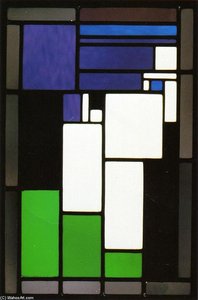
      De Stijl wasn’t simply an artistic style; it was a comprehensive philosophical manifesto translated into visual form. Van Doesburg believed in stripping art down to its most essential elements – straight lines, right angles, and the primary colors of red, yellow, and blue, alongside black, white, and gray. This austere palette wasn't born from limitation but from a desire for universality—a belief that these fundamental forms resonated with an underlying cosmic order. He envisioned a *total* work of art, extending beyond the canvas to encompass architecture, design, and even everyday objects. Collaboration was key; van Doesburg worked closely with architects like J.J.P. Oud and Gerrit Rietveld, designing stained glass windows, furniture, and entire interiors that embodied the principles of De Stijl. His collaborations extended to fellow artists such as Piet Mondrian, with whom he co-founded the influential journal *De Stijl*, a platform for disseminating their ideas and attracting like-minded creatives. However, despite their shared origins, tensions arose between van Doesburg and Mondrian regarding the rigidity of Neoplasticism. Van Doesburg introduced “Elementarism” in 1926, advocating for diagonal lines and more dynamic compositions – a departure that ultimately led to a schism within the movement, revealing his restless spirit and constant pursuit of artistic evolution. The core tenet of De Stijl was the belief that art should be independent of nature, existing instead as an autonomous system governed by mathematical principles and geometric harmony.

      Beyond Painting: A Multifaceted Artistic Vision

      While celebrated as a painter, Theo van Doesburg’s artistic pursuits were remarkably diverse. He wasn't content to remain solely within the realm of visual arts; he was a prolific writer, poet, and critic, using his pen to articulate the theoretical underpinnings of De Stijl and challenge conventional notions of art. His engagement with Dadaism in the early 1920s further broadened his artistic horizons, leading to experimental works that incorporated collage and typography. This period also saw him teaching at the Bauhaus, where he shared his ideas with a new generation of artists and designers, fostering dialogue about the future of design and architecture. He wasn’t simply lecturing; he was actively participating in the school's innovative environment, experimenting with materials and techniques alongside his students. His designs for interiors and furniture weren't merely aesthetic exercises but attempts to create harmonious living spaces that reflected the principles of De Stijl – a holistic approach to artistic creation aimed at shaping not just objects, but entire environments. A prime example is his collaboration on designing artist residences, showcasing a vision of integrated art and architecture.

      Key Works & Lasting Influence

      • Study for Simultaneous Compositions XXII (1922): This iconic work exemplifies Neoplasticism’s signature geometric forms and limited color palette – a testament to the movement's core principles.
      • Composition with half values (1928): Demonstrates van Doesburg’s exploration of tonal variations within the De Stijl aesthetic, showcasing his subtle manipulation of light and shadow.
      • Dancers (1917-1918): Represents a transitional phase in his work, blending figurative elements with emerging abstract tendencies – a glimpse into his evolving artistic language.
      • Collaboration on *De Stijl* journal: The journal served as a crucial platform for disseminating the movement’s ideas and fostering dialogue among artists and intellectuals, solidifying De Stijl's influence.
      • Elementarism (1926): Van Doesburg’s attempt to inject dynamism into Neoplasticism, introducing diagonal lines and a more fluid approach to composition – a bold departure that ultimately led to the movement’s fragmentation.
      Van Doesburg’s influence can be seen in countless aspects of modern design – from architecture and furniture to graphic design and typography. His emphasis on geometric abstraction, pure color, and functionalism continues to resonate with artists and designers today. He remains a pivotal figure in the history of art, a true pioneer who dared to challenge conventions and envision a new visual language for the 20th century and beyond—a legacy etched in straight lines and primary hues.

      A Tragic End & A Lasting Legacy

      Theo van Doesburg’s life was tragically cut short on March 7, 1931, at the age of 47, in Davos, Switzerland. The circumstances surrounding his death remain somewhat shrouded in mystery, adding a layer of melancholy to his already complex legacy. Despite this untimely end, his impact on modern art is undeniable. De Stijl, though relatively short-lived as a cohesive movement, exerted an enormous influence on subsequent artistic developments, including Bauhaus design, Minimalism, and Constructivism. His work continues to inspire architects, designers, and artists worldwide, reminding us of the power of abstraction and the enduring quest for universal harmony in art and life. His vision of a world shaped by geometric principles remains a potent symbol of modernism’s ambition—a testament to one man's unwavering belief in the transformative potential of pure form.

      Όλα τα 225 έργα του Τέο φαν Ντέσμπουργκ →