Atelier — Complimentary worldwide shipping — Delivery 2–6 weeks
Painting from Photo Wishlist Cart
PreviewPreview AR previewAR preview Switch to Print Switch to PrintSwitch to Image Switch to Image SendSend
DetailsDetails Add to favorites Add to favorites DownloadDownload SimilarsSimilars X-RayX-Ray DiaporamaDiaporama

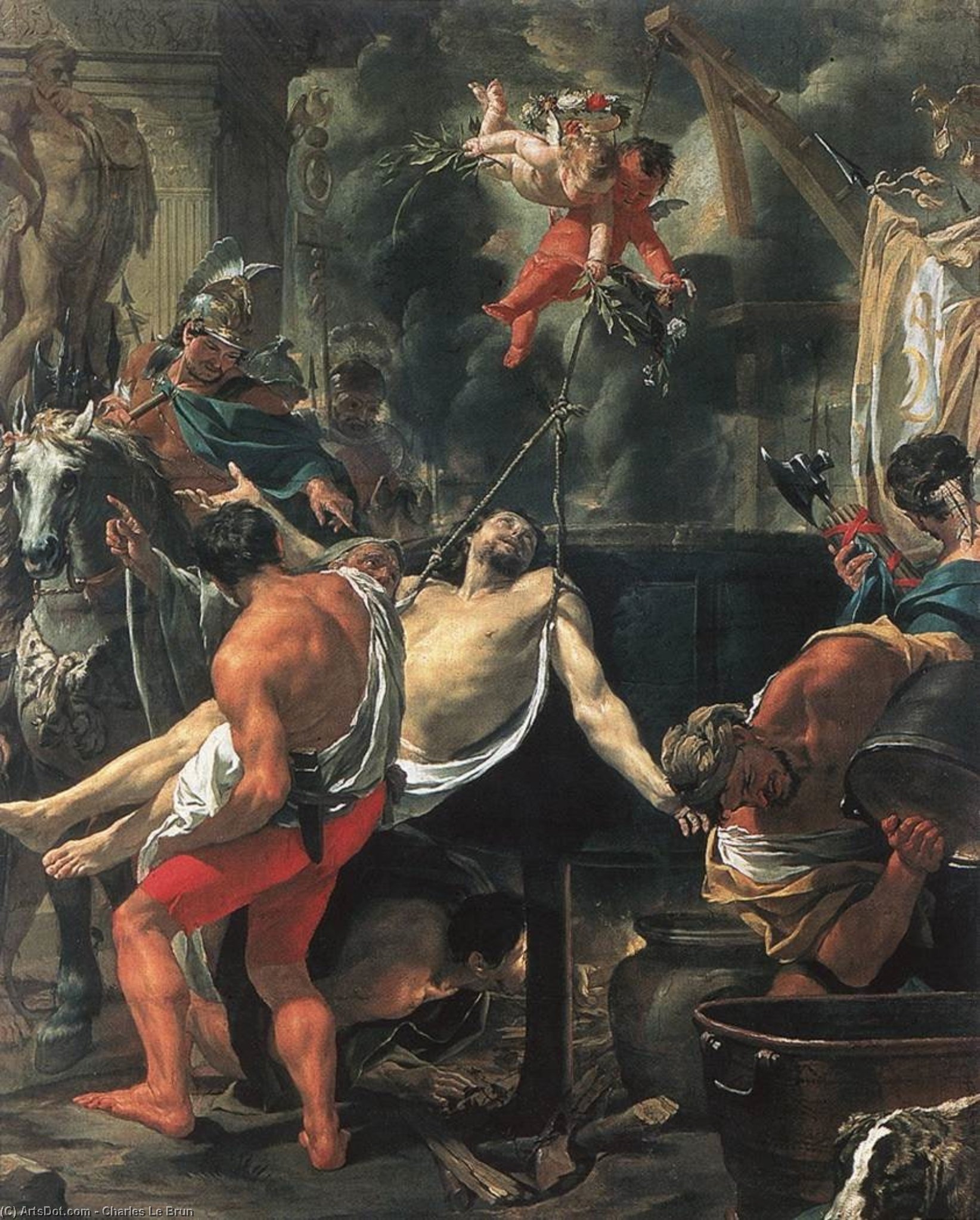
Martyrdom of St John the Evangelist at Porta Latina

Witness the poignant "Martyrdom of St John" by Charles Le Brun – a Baroque masterpiece depicting the saint's execution. Explore its dramatic lighting, rich details & historical significance.

Discover Charles Le Brun (1619-1690), the influential French Baroque painter & art theorist! Explore his royal commissions, artistic legacy & impact on Versailles.

Hand Made Oil Reproduction

Hand-painted oil on canvas in your size and frame, made to order by our artists. (Switch to Print Switch to PrintSwitch to Image Switch to Image)

P118B $10
P118H $10
P118W $10
P438Z $10
P508JH $12
P508YH $12
P805H $10
P805Z $10
P919BZ $10
P919G $10
P919XJ $10
P959ZH $10
P968JZ $12
W106C $8
W218G $10
W218JH $8
W218Y $10
W307PJ $10
W316G $10
W316PJ $8
W316Y $10
W398PJ $8
W4111J $10
W500HY $15
W500JH $15
W692G $12
W849H $8
W940BG $15
W953PJ $8

Standard
custom
CM
INCH

Pick from our preset sizes that match the artwork's original proportions.

width
height

You may enter your own dimensions to fit a specific frame or space. If your selected size does not match the original image's proportions, we will either crop the artwork or extend the painting with additional hand-painted elements. A digital mockup will be sent for your approval before production begins.
Please note that the on-screen preview does not reflect the actual cropping or extension. Only the mockup will accurately show the final composition.
While custom sizes are available, we recommend selecting a dimension from the predefined list to preserve the original proportions.

Examples of what can be changed: Replace face with customer photo; Add pet (e.g., replace cat with dog); Include hidden message in background; Change background landscape or elements.
After order, TopImpressionists.com team will email client for instructions and provide a mockup preview

Worldwide Delivery () in 3/4 weeks instead of standard 5 weeks. (11 August). No compromise on quality.

why_choose_icon
Free Worldwide Express Shipping
why_choose_icon
High-Quality Linen Canvas
why_choose_icon
Full Shipping Insurance
why_choose_icon
Customs Tax Refund Guarantee
why_choose_icon
True Color Matching Guarantee
why_choose_icon
60-Day Return Policy (Defects Only)
why_choose_icon
100% Money-Back Guarantee
why_choose_icon
Bulk Discount Offer

Total Price

$ 269

reproduction

Martyrdom of St John the Evangelist at Porta Latina

Reproduction Medium

Reproduction Size

-

Total Price

$ 269

Quick Facts

  • Title: Martyrdom of St John
  • Subject or theme: Martyrdom of St John
  • Location: Saint-Nicolas du Chardonnet, Paris
  • Influences:
    • Poussin
    • Classical
  • Year: 1641
  • Artist: Charles Le Brun
  • Medium: Oil on canvas

Art Quiz

There is only one correct answer for each question.

Question 1:
What is the title of the painting?
Question 2:
In what year was the painting created?
Question 3:
Who is the artist of this painting?
Question 4:
What historical event is depicted in the painting?
Question 5:
What is a prominent feature in the painting's composition?

Artwork Description

The Martyrdom’s Echo: Charles Le Brun's Dramatic Depiction of St. John

Charles Le Brun’s “Martyrdom of St. John the Evangelist at Porta Latina,” painted in 1641, isn’t merely a historical depiction; it’s a visceral plunge into suffering and faith. This monumental canvas, currently residing within the serene walls of the Saint-Nicolas du Chardonnet in Paris, pulsates with an intensity rarely found in Baroque art. Measuring a commanding 282 x 224 centimeters, the painting immediately overwhelms the viewer with its scale and theatrical presentation – a deliberate choice by Le Brun to convey the gravity of St. John’s brutal fate.

The scene unfolds within the claustrophobic confines of Porta Latina, Rome's ancient southern gate. The composition is meticulously structured, drawing our eye directly to the central figure: St. John himself, poised on the precipice of execution. His posture—a blend of stoic acceptance and profound sorrow—is heartbreakingly realistic. The swordsman, a shadowy embodiment of Roman cruelty, descends with ruthless efficiency, his action frozen in a moment of lethal precision. Surrounding this pivotal confrontation are a carefully orchestrated tableau of secondary figures: angels bearing witness to the tragedy, Roman soldiers enforcing the Emperor’s decree, and a throng of onlookers caught between horror and morbid fascination. Le Brun masterfully employs diagonal lines – the swordsman's descent, the outstretched arms of St. John – to create a dynamic tension that propels the narrative forward.

A Baroque Masterclass: Technique and Atmosphere

Le Brun’s skill as a painter is immediately apparent in his masterful manipulation of light and shadow, a hallmark of the Baroque style. Deep, saturated colors dominate the palette—rich reds, deep blues, and somber browns – creating an atmosphere thick with drama and emotional weight. The use of chiaroscuro (the dramatic contrast between light and dark) isn’t simply for aesthetic effect; it serves to heighten the sense of tragedy and underscore the stark reality of St. John's impending death. Note particularly how the light catches on St. John’s face, illuminating his anguish while simultaneously plunging much of the scene into darkness.

The artist’s technique is equally impressive. Le Brun utilizes a loose, expressive brushstroke—a characteristic of his style—that lends the painting a sense of immediacy and movement. The figures are rendered with remarkable detail, particularly in their clothing and facial expressions, conveying a profound sense of humanity even amidst such violence. Furthermore, the inclusion of two rearing horses – a deliberate addition that adds to the scene’s realism and underscores the brutality of Roman execution—demonstrates Le Brun's keen eye for composition and his ability to integrate symbolic elements into the narrative.

Symbolism and Spiritual Resonance

Beyond its dramatic depiction, “Martyrdom of St. John” is laden with symbolism. The event itself – the martyrdom of the beloved disciple – carries immense spiritual significance within Christian tradition. St. John’s unwavering faith in the face of death serves as a potent reminder of the cost of discipleship and the ultimate triumph of good over evil. The presence of angels, traditionally associated with divine protection and judgment, reinforces this theological message.

The setting—Porta Latina—also holds symbolic weight. As the gate through which St. John was exiled and ultimately martyred, it represents a threshold between earthly suffering and eternal salvation. The painting, therefore, becomes not just a historical record but a meditation on faith, sacrifice, and the enduring power of spiritual conviction. The inclusion of the horses can be interpreted as representing Roman power and brutality, contrasting sharply with the quiet dignity of St. John’s acceptance of his fate.

A Legacy in Reproduction: Bringing History to Life

Today, meticulously crafted oil painting reproductions of “Martyrdom of St. John the Evangelist at Porta Latina” are available through platforms like TopImpressionists.com, offering art enthusiasts a unique opportunity to own a piece of this iconic Baroque masterpiece. These high-quality reproductions faithfully capture Le Brun’s dramatic composition, rich color palette, and masterful technique, allowing you to experience the painting's emotional impact within your own home or office space. Consider how this powerful image can serve as a focal point in a study, a gallery, or even a grand salon – a testament to both artistic brilliance and enduring spiritual themes. For further exploration of Charles Le Brun’s oeuvre, we encourage you to visit the resources linked below.

  • Charles Le Brun - Wikipedia: https://en.wikipedia.org/wiki/Charles_Le_Brun
  • Martyrdom of St John the Evangelist at Porta Latina - WikiArt: https://www.wikiart.org/en/charles-le-brun/martyrdom-of-st-john-the-evangelist-at-porta-latina
  • Palais des Beaux-Arts de Lille - Charles Le Brun: https://TopImpressionists.com/art/list/?Filter=A@D3CFGX-Palais-Des-Beaux-Arts-Lille-France

Artist Biography

Early Life and Training

  • Born: Paris, France (1619)
  • Baptised: 24 February 1619
  • Died: 12 February 1690 Paris, Kingdom of France
  • Charles Le Brun displayed artistic talent from a young age. At the age of eleven, he entered the studio of Simon Vouet under the patronage of Chancellor Séguier.
  • He further studied with François Perrier and received early commissions from Cardinal Richelieu, demonstrating considerable skill even at fifteen.
  • A pivotal period in his development was a four-year stay in Rome (1642-1646), where he worked under the guidance of Nicolas Poussin. This experience profoundly shaped his artistic style and theoretical understanding of art.
  • During this time, Le Brun studied ancient Roman sculpture and copied works by Raphael, absorbing influences from both classical antiquity and contemporary Italian masters.

Artistic Development and Style

  • Upon returning to Paris in 1646, Le Brun quickly gained recognition and patronage. His early style reflected the influence of Vouet and Poussin, but he gradually developed a more personal approach.
  • Le Brun's artistic evolution involved moving away from strict adherence to classical models towards a more dynamic and expressive Baroque style.
  • He became known for his grand historical paintings, portraiture, and decorative work, often characterized by dramatic compositions, rich colors, and meticulous detail.
  • A significant series of works depicting the history of Alexander the Great showcased his ability to combine historical narrative with artistic grandeur.

Major Achievements and Royal Service

  • Le Brun's career reached its peak during the reign of Louis XIV, who appointed him First Painter to the King in 1664. This position granted him immense influence over French art.
  • He played a crucial role in decorating the Palace of Versailles, creating iconic works such as the Ambassadors’ Staircase, the Hall of Mirrors, and the Peace and War Rooms. These projects cemented his reputation as a master decorator and designer.
  • Le Brun was also responsible for designing many statues in the gardens of Versailles, demonstrating his versatility across various artistic disciplines.
  • He founded the Académie Royale de Peinture et de Sculpture (Royal Academy of Painting and Sculpture) in 1648, solidifying his position as a leader within the French art world. He served as its director for many years.

Legacy and Historical Significance

  • Charles Le Brun's influence on French art was profound. His work helped define the Baroque style in France and established him as one of the most important artists of his time.
  • As a theorist, he emphasized the importance of intellectual engagement over mere visual appeal, shaping artistic education for generations to come.
  • His decorative schemes at Versailles set a standard for royal palaces throughout Europe.
  • Le Brun's legacy extends beyond his individual works; he played a vital role in establishing and promoting French art on an international stage.
Charles Le Brun

Charles Le Brun

1619 - 1690 , France

Quick Facts

  • Artistic Movement Or Style: Baroque
  • Artists Who Influenced This Artist:
    • Nicolas Poussin
    • Simon Vouet
  • Date Of Birth: February 24, 1619
  • Date Of Death: February 12, 1690
  • Full Name: Charles Le Brun
  • Nationality: French
  • Notable Artworks:
    • Ambassadors’ Staircase
    • Hall of Mirrors
    • Peace and War Rooms
  • Place Of Birth: Paris, France
Explore artworks organized by themes, styles, and characteristics.
© TopImpressionists.com — All Rights Reserved  ·  100% Hand-Painted · Satisfaction Guaranteed · Free Worldwide Shipping
VISA MASTERCARD