Atelier — Complimentary worldwide shipping — Delivery 2–6 weeks
Painting from Photo Wishlist Cart
PreviewPreview AR previewAR preview Switch to Print Switch to PrintSwitch to Image Switch to Image SendSend
DetailsDetails Add to favorites Add to favorites DownloadDownload SimilarsSimilars X-RayX-Ray DiaporamaDiaporama

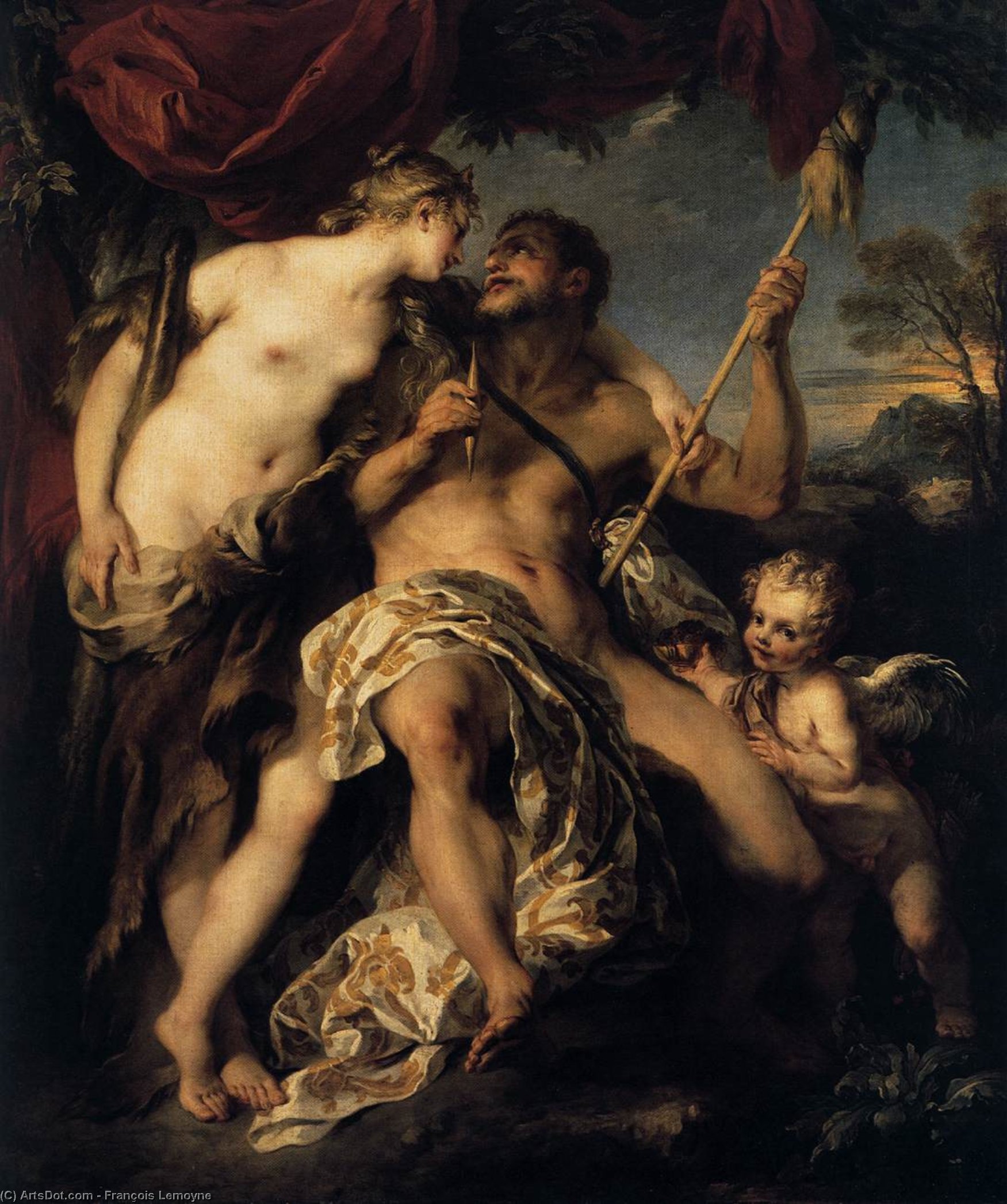
Hercules and Omphale

François Lemoyne’s "Hercules & Omphale" (1724) – a stunning Baroque oil painting of mythological love. Explore its dynamic composition, rich textures & classical beauty.

François Lemoyne (1688-1737): Parisian Rococo painter reviving grand allegories & influenced by Rubens. Explore his legacy of elegance & Baroque splendor!

Hand Made Oil Reproduction

Hand-painted oil on canvas in your size and frame, made to order by our artists. (Switch to Print Switch to PrintSwitch to Image Switch to Image)

P118B $10
P118H $10
P118W $10
P438Z $10
P508JH $12
P508YH $12
P805H $10
P805Z $10
P919BZ $10
P919G $10
P919XJ $10
P959ZH $10
P968JZ $12
W106C $8
W218G $10
W218JH $8
W218Y $10
W307PJ $10
W316G $10
W316PJ $8
W316Y $10
W398PJ $8
W4111J $10
W500HY $15
W500JH $15
W692G $12
W849H $8
W940BG $15
W953PJ $8

Standard
custom
CM
INCH

Pick from our preset sizes that match the artwork's original proportions.

width
height

You may enter your own dimensions to fit a specific frame or space. If your selected size does not match the original image's proportions, we will either crop the artwork or extend the painting with additional hand-painted elements. A digital mockup will be sent for your approval before production begins.
Please note that the on-screen preview does not reflect the actual cropping or extension. Only the mockup will accurately show the final composition.
While custom sizes are available, we recommend selecting a dimension from the predefined list to preserve the original proportions.

Examples of what can be changed: Replace face with customer photo; Add pet (e.g., replace cat with dog); Include hidden message in background; Change background landscape or elements.
After order, TopImpressionists.com team will email client for instructions and provide a mockup preview

Worldwide Delivery () in 3/4 weeks instead of standard 5 weeks. (10 August). No compromise on quality.

why_choose_icon
Free Worldwide Express Shipping
why_choose_icon
High-Quality Linen Canvas
why_choose_icon
Full Shipping Insurance
why_choose_icon
Customs Tax Refund Guarantee
why_choose_icon
True Color Matching Guarantee
why_choose_icon
60-Day Return Policy (Defects Only)
why_choose_icon
100% Money-Back Guarantee
why_choose_icon
Bulk Discount Offer

Total Price

$ 319

reproduction

Hercules and Omphale

Reproduction Medium

Reproduction Size

-

Total Price

$ 319

Quick Facts

  • Subject or theme: Love & Mythology
  • Influences: Rubens
  • Artistic style: Baroque
  • Artist: François Lemoyne
  • Year: 1724
  • Dimensions: 184 x 149 cm
  • Notable elements: Mythological scene

Art Quiz

There is only one correct answer for each question.

Question 1:
What mythological scene is depicted in François Lemoyne’s ‘Hercules and Omphale’?
Question 2:
In ‘Hercules and Omphale’, what symbolic element does Omphale hold that represents Hercules's former strength?
Question 3:
The painting ‘Hercules and Omphale’ is primarily associated with which artistic movement?
Question 4:
What technique did François Lemoyne employ to create the rich textures and detailed figures in ‘Hercules and Omphale’?

Artwork Description

A Dance of Desire: François Lemoyne’s “Hercules and Omphale”

François Lemoyne's "Hercules and Omphale," painted in 1724, isn’t merely a depiction of a mythological tale; it’s an exquisitely rendered exploration of desire, power, and the blurring lines between masculine and feminine. This captivating work, housed within the opulent confines of the Louvre Museum in Paris, offers a glimpse into the heart of the Rococo era – a period defined by its embrace of sensuality, playful extravagance, and a deliberate rejection of the rigid formality of preceding artistic movements. Lemoyne, a master painter deeply influenced by the grandeur of Rubens, skillfully translates this spirit into a scene brimming with dynamic energy and subtle emotional complexity.

The narrative itself is rooted in Greek mythology – Hercules, famed for his strength and twelve labors, finds himself unexpectedly bound to Omphale, the alluring queen of Lydia. Initially a consequence of servitude, their relationship swiftly evolves into an intense, almost unsettling, exchange of roles. The painting captures this pivotal moment: Hercules, rendered with a youthful vitality that belies his legendary status, leans towards Omphale, his gaze fixed upon her with unmistakable admiration. She, in turn, holds him gently, her expression a captivating blend of amusement and desire. The scene unfolds within a lavishly decorated boudoir – a testament to the queen’s wealth and influence – where crimson velvet drapes cascade from the bed, scattering decorative objects across the floor, creating an atmosphere of delightful chaos.

A Baroque Embrace: Technique and Composition

Lemoyne's technical prowess is immediately evident in the painting’s rich textures and masterful use of chiaroscuro. The artist employs a layering technique – a hallmark of Baroque painting – to build up color and create an astonishingly tactile surface. The folds of fabric ripple with life, each thread seemingly rendered with meticulous detail; the musculature of Hercules is both powerful and subtly idealized, while Omphale’s form is presented with a delicate grace. Notice how light dramatically sculpts their bodies, highlighting key features and casting intriguing shadows that deepen the sense of intimacy. The composition itself is carefully orchestrated – a diagonal arrangement of figures creates a dynamic flow, drawing the viewer's eye through the scene and emphasizing the central interaction.

The use of color is particularly noteworthy. Lemoyne employs a palette dominated by warm ochres, earthy browns, and vibrant reds, creating a visual feast that’s both luxurious and emotionally resonant. The bold red of the velvet canopy serves as a dramatic backdrop, further intensifying the scene's sensual atmosphere. Furthermore, the artist subtly incorporates symbolic elements – the lion’s pelt draped over Omphale’s shoulder represents Hercules’ former status as a slave, while her possession of his club signifies a temporary reversal of power dynamics. The presence of Cupid, a small but significant detail, underscores the theme of passionate love and transformation.

Symbolism and the Shifting Power Dynamic

“Hercules and Omphale” is far more than a simple retelling of a mythological story; it’s a complex meditation on themes of gender roles, desire, and the fluidity of power. The painting deliberately subverts traditional depictions of Hercules – typically portrayed as an imposing figure of strength and authority – by presenting him in a vulnerable, almost effeminate pose. His embrace of Omphale's breast is not one of dominance but of surrender, suggesting a willingness to relinquish control and indulge in the pleasures of the moment.

Omphale’s role is equally significant. She isn’t merely a passive recipient of Hercules’ affections; she actively participates in the exchange, holding his club and wearing his lion's skin – symbols of his former status. This act of appropriation challenges conventional notions of masculinity and femininity, suggesting that power can be fluid and subject to change. The painting invites us to question established hierarchies and consider the possibility of a more reciprocal relationship between men and women.

A Legacy of Rococo Grandeur

François Lemoyne’s “Hercules and Omphale” stands as a quintessential example of Rococo art – a style characterized by its elegance, sensuality, and playful exuberance. Influenced by the works of Rubens, Lemoyne masterfully blends classical subject matter with contemporary French tastes, creating a work that is both visually stunning and intellectually stimulating. The painting’s enduring appeal lies in its ability to capture the complexities of human desire and the shifting dynamics of power – themes that continue to resonate with audiences today. Reproductions of this masterpiece offer a chance to bring this captivating scene into your own home, adding a touch of Rococo grandeur and timeless allure to any space.


Artist Biography

A Parisian Legacy in Rococo Splendor

François Lemoyne, a name perhaps less immediately recognized than those of his contemporaries Boucher or Watteau, nevertheless occupies a significant position within the tapestry of 18th-century French art. Born in Paris in 1688, Lemoyne dedicated his life to reviving the grandeur of large-scale allegorical painting—a tradition that had somewhat waned since the era of Charles Le Brun, whom Lemoyne deeply admired and sought to emulate. His ambition was not merely to decorate, but to create works imbued with intellectual weight and emotional resonance, reflecting the complex spirit of the Rococo period while simultaneously harking back to a more classical ideal. From his early training under his stepfather, Robert le Vrac, and later within the rigorous environment of the Académie Royale de peinture et de sculpture, Lemoyne demonstrated a dedication to mastering both technical skill and artistic expression. His formal education with Louis Galloche and Pierre-Jacques Cazes proved formative, particularly in developing his nuanced understanding of color—a characteristic that would become increasingly prominent throughout his career. The coveted Prix de Rome in 1711 marked a pivotal moment, though financial constraints initially delayed his journey to Italy; a trip he eventually undertook in 1723 accompanying François Berger.

Italian Echoes and Rococo Flourishes

The sojourn to Italy proved transformative for Lemoyne. Immersing himself in the works of Renaissance masters like Raphael, Correggio, and Titian, he absorbed their techniques and aesthetic principles, enriching his artistic vocabulary. However, it was the dynamic energy of Peter Paul Rubens that left an indelible mark on his style—evident in his vibrant color palettes and dramatic compositions. Exposure to Venetian painting within Pierre Crozat’s renowned collection further refined his sensibilities, fostering a love for rich textures and atmospheric effects. These influences coalesced into a distinctly Rococo aesthetic characterized by elegance, ornamentation, and a focus on decorative beauty. Yet, Lemoyne never fully abandoned the ambition of grand narrative that defined earlier French academic painting; he sought to synthesize these seemingly disparate elements—the lightness and grace of the Rococo with the intellectual rigor of the classical tradition. This unique blend is what sets his work apart and contributes to its enduring appeal.

Versailles and Royal Recognition

Lemoyne’s artistic prowess found its most spectacular expression in his monumental ceiling frescoes, notably L'Apothéose d'Hercule (The Apotheosis of Hercules) at the Salon d’Hercule within the Palace of Versailles. This masterpiece—a dazzling display of illusionistic technique and dynamic composition—immediately garnered widespread acclaim. Contemporaries like Voltaire and Cardinal Fleury lauded its brilliance, recognizing Lemoyne as a master of his craft. Beyond Versailles, he also undertook significant religious commissions, such as The Transfiguration in the chancel of the Jacobin Church (now Parish Church of St. Thomas d’Aquin) in Paris, demonstrating his versatility and ability to adapt his style to different subject matter. In 1736, Lemoyne reached the pinnacle of his career with his appointment as Premier peintre du roi (First Painter to the King) under Louis XV—a testament to his artistic achievements and standing within the French court.

A Tragic End and Lasting Influence

Despite achieving such heights, Lemoyne’s life was tragically cut short by suicide in 1737. His untimely death marked not only a personal loss but also signaled a shift in artistic tastes; it coincided with a decline in popularity for the large-scale allegorical ceiling paintings he so passionately championed. Nevertheless, his legacy endured through his students, including prominent artists such as Charles-Joseph Natoire and François Boucher, to whom he imparted his knowledge and skills. While perhaps not as universally celebrated today as some of his contemporaries, Lemoyne’s contributions to French Rococo art are increasingly appreciated for their technical mastery, artistic ambition, and the unique synthesis of classical ideals with the prevailing aesthetic sensibilities of his time. His works remain a testament to a dedicated artist who sought to elevate painting to its highest form—a legacy that continues to inspire and captivate audiences centuries later.

Key Works & Artistic Contributions

  • Ceiling Frescoes: Lemoyne’s most celebrated achievements, exemplified by L'Apothéose d'Hercule, showcase his mastery of illusionistic techniques and dynamic composition.
  • Mythological Scenes: Works like Hercules and Omphale demonstrate his ability to depict classical narratives with both dramatic intensity and sensual grace.
  • Religious Paintings: The Transfiguration exemplifies his skill in rendering religious subjects with emotional depth and technical precision.
  • Portraiture: His portrait of Head of King Louis XV, reveals a subtle understanding of character and a mastery of charcoal and pastel techniques.
François Lemoyne

François Lemoyne

1688 - 1737 , France

Quick Facts

  • Artistic Movement Or Style: Rococo
  • Artists Or Movements Influenced By This Artist:
    • Natoire
    • Boucher
  • Artists Who Influenced This Artist:
    • Rubens
    • Raphael
    • Correggio
    • Titian
    • Cazes
  • Date Of Birth: 1688
  • Date Of Death: 1737
  • Full Name: François Lemoyne
  • Nationality: French
  • Notable Artworks:
    • The Apotheosis of Hercules
    • Hercules and Omphale
    • Perseus and Andromeda
    • Head of King Louis XV
    • The Transfiguration
  • Other Names: François Le Moine
  • Place Of Birth: Paris, France
Explore artworks organized by themes, styles, and characteristics.
© TopImpressionists.com — All Rights Reserved  ·  100% Hand-Painted · Satisfaction Guaranteed · Free Worldwide Shipping
VISA MASTERCARD





































