A Serene Vision of the French Countryside
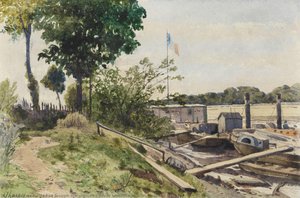
Henri-Joseph Harpignies’ “Valley Landscape” isn't merely a depiction of a rural scene; it’s an invitation to step into a pocket of profound tranquility. Painted in 1866, this artwork embodies the core tenets of the Barbizon School – a movement that championed direct observation of nature and a rejection of academic artifice. The painting captures a quintessential French valley, bathed in the soft, diffused light characteristic of late afternoon. The composition is remarkably balanced, drawing the eye through the meandering river, across the gently rolling hills, and towards the distant, hazy mountains. It’s a scene that whispers of quiet contemplation and the restorative power of the natural world.
The Barbizon School: A Return to Nature
To fully appreciate “Valley Landscape,” it's crucial to understand the context in which it was created. Following the Romantic era, French art had become increasingly focused on grand historical narratives and idealized figures. The Barbizon School, emerging in the 1850s, offered a radical alternative. Artists like Harpignies, Corot, and Millet sought inspiration directly from the landscapes of France, eschewing studio work for plein air painting. They favored loose brushstrokes, muted colors, and an emphasis on capturing atmospheric effects – light, shadow, and weather – rather than precise detail. This approach prioritized feeling and observation over technical perfection, resulting in a deeply personal and evocative style.
Technique and Materials: A Masterful Blend
Harpignies’ skill lies not just in his subject matter but also in his masterful technique. He employs a delicate layering of oil paint, building up the forms gradually with subtle gradations of color. Notice how he uses light to define the contours of the hills and valleys – highlights suggest depth and volume while shadows create a sense of mystery and atmosphere. The river is rendered with remarkable fluidity, its surface shimmering with reflected light. The artist’s use of impasto—thickly applied paint—adds texture and visual interest to the foreground elements, grounding the viewer in the scene. The painting's palette leans towards earthy tones – ochres, browns, greens, and blues – creating a harmonious and calming effect.
Symbolism and Emotional Resonance
Beyond its realistic depiction of a valley landscape, “Valley Landscape” resonates with deeper symbolic meanings. It evokes a sense of timelessness and serenity, suggesting an escape from the complexities of modern life. The figures scattered throughout the scene – likely shepherds or farmers tending their flocks – represent humanity’s connection to the land and the rhythms of rural existence. The valley itself can be interpreted as a metaphor for inner peace and spiritual renewal. Harpignies' ability to capture such profound emotion through a seemingly simple landscape is a testament to his artistic vision and sensitivity.
A Legacy in Reproduction
Today, “Valley Landscape” continues to captivate audiences with its beauty and tranquility. TopImpressionists offers high-quality reproductions of this iconic painting, allowing you to bring its serene atmosphere into your home or office. Whether you’re an art enthusiast, a collector seeking a timeless piece, or simply someone who appreciates the restorative power of nature, “Valley Landscape” is a truly exceptional work of art.



 Preview
 Buy Print
 Send
Send Share
Share
 Details

 Download
 Similars
 X-Ray
X-Ray Diaporama


 Read More






































 Glass option is only available in size under 110 CM