The Serene Vision of Faith: Edward Hicks’ Grave of William Penn
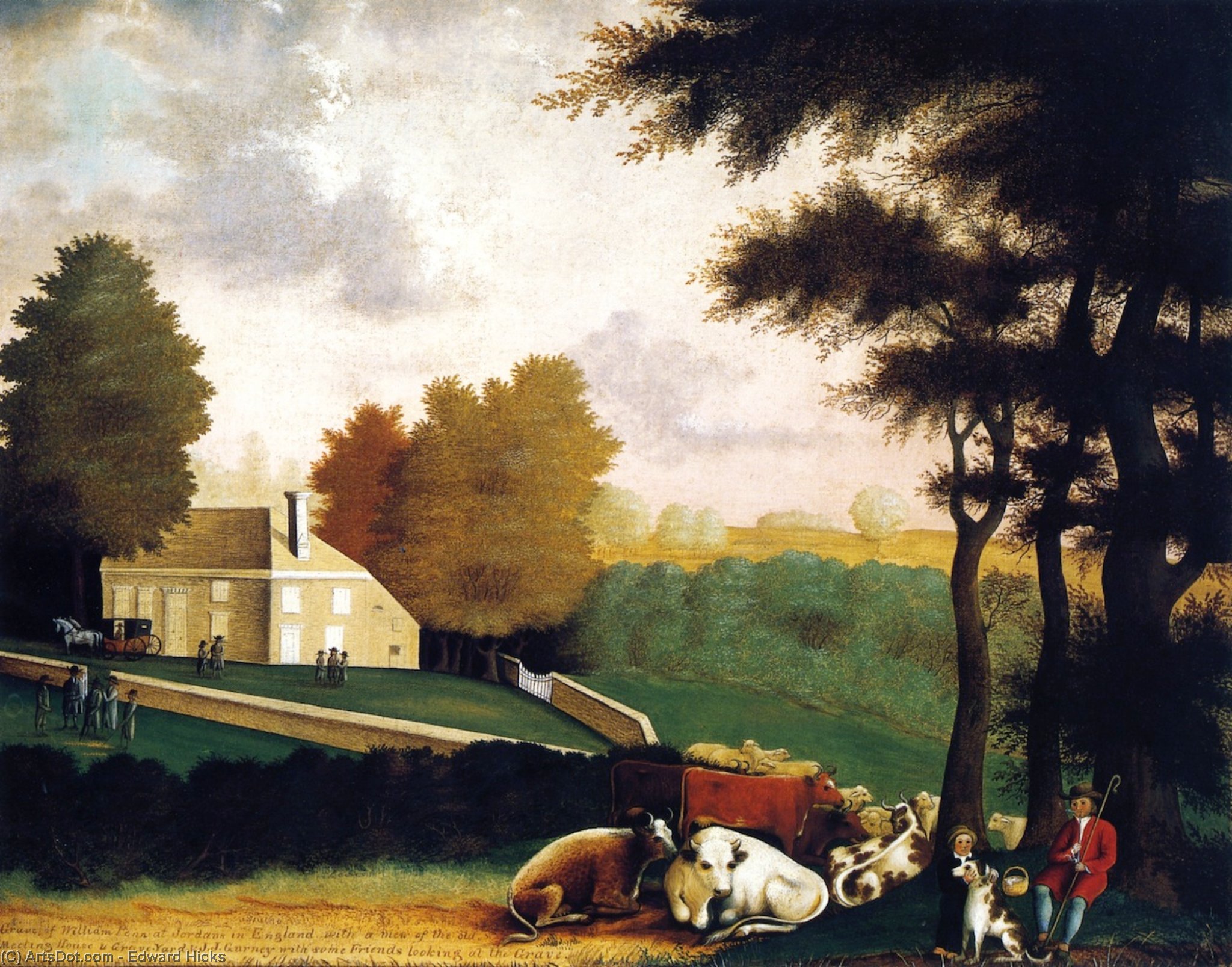
Edward Hicks' "Grave of William Penn at Jordans in England," painted in 1847, is more than just a depiction of a rural English scene; it’s a profound meditation on faith, community, and the ideals underpinning the nascent American colony of Pennsylvania. This oil-on-canvas masterpiece, now residing within the National Gallery of Art, offers a glimpse into the heart of Quaker belief through Hicks' distinctive artistic lens. The painting immediately draws the viewer in with its harmonious composition – a carefully orchestrated tableau of cows grazing peacefully, a horse standing patiently, and a solitary figure observing the grave. Yet, it’s not merely a pastoral landscape; it’s a deliberate construction designed to evoke a sense of tranquility and spiritual resonance.
Hicks, a self-taught artist deeply rooted in Quaker principles, eschewed the grand narratives favored by many of his contemporaries. Instead, he focused on capturing the everyday virtues of rural life – simplicity, honesty, and a connection to nature – as embodiments of Quaker values. The warm palette—dominated by ochres, browns, and muted greens—creates an atmosphere of gentle warmth and serenity. Hicks’ masterful use of soft brushstrokes contributes significantly to this effect, blurring the lines between objects and figures, fostering a feeling of unity and interconnectedness within the scene. Notice how he renders the light; it's diffused and even, avoiding harsh contrasts that might disrupt the painting’s peaceful mood.
A Quaker Narrative: Symbolism and Composition
The composition itself is laden with symbolic meaning. The placement of the grave at the center-right subtly directs the viewer’s eye, inviting contemplation. The cows, often associated with humility and gentleness in Quaker iconography, represent a connection to the earth and a rejection of material wealth. The horse, a symbol of strength and endurance, stands as a testament to the pioneering spirit of Pennsylvania. The figure standing respectfully near the grave is deliberately ambiguous; it’s not a specific individual but rather a representation of the community paying its respects to William Penn, the founder who championed religious freedom and established a haven for dissenters.
Crucially, Hicks' decision to include elements like the chair suggests an ongoing gathering, a shared moment of remembrance. This reinforces the theme of communal faith—the idea that spiritual life is not solitary but thrives within a supportive community. The inclusion of a pig on the far right might seem incongruous at first glance, but it’s often interpreted as a symbol of earthly pleasures and temptations, subtly reminding viewers to maintain balance between spiritual devotion and worldly concerns – another core tenet of Quaker belief.
The Artist's Vision: Edward Hicks and His Context
Edward Hicks (1780-1849) was a pivotal figure in the development of American folk art. Born in Attleboro, Pennsylvania, he initially trained as a coach maker before dedicating himself to painting. His work reflects his deep commitment to Quakerism; many of his most celebrated paintings, including this one, depict scenes from the Bible and embody Quaker values such as peace, simplicity, and social justice. Hicks’ art wasn't intended for commercial success but rather served as a visual sermon, communicating his faith to his community.
The painting emerged during a period of significant religious and social upheaval in America. The Second Great Awakening was stirring spiritual fervor across the nation, and Quakerism, with its emphasis on individual conscience and social reform, found itself at the forefront of these movements. Hicks’ "Grave of William Penn" can be seen as a reflection of this broader context—a celebration of the ideals that underpinned Pennsylvania's founding and a quiet affirmation of the enduring power of faith.
A Timeless Reproduction: Bringing Hicks’ Vision Home
TopImpressionists offers meticulously crafted, hand-painted reproductions of Edward Hicks’ “Grave of William Penn at Jordans in England,” allowing you to experience the beauty and depth of this iconic artwork firsthand. Each reproduction is created by skilled artisans using traditional oil painting techniques, faithfully capturing the artist's nuanced brushstrokes, rich colors, and evocative atmosphere. Whether displayed in a formal living room or a contemplative study, this reproduction serves as a powerful reminder of Hicks’ artistic vision—a testament to faith, community, and the enduring legacy of William Penn.
To explore more exquisite reproductions by Edward Hicks and discover how you can bring a piece of American folk art history into your home, visit https://TopImpressionists.com


 Preview
 Switch to Print
 Send
Send Share
Share
 Details

 Download
 Similars
 X-Ray
X-Ray Diaporama


 Read More






































 Glass option is only available in size under 110 CM



