

The Shattered Mirror: From Impressionist Light to Abstract Emotion
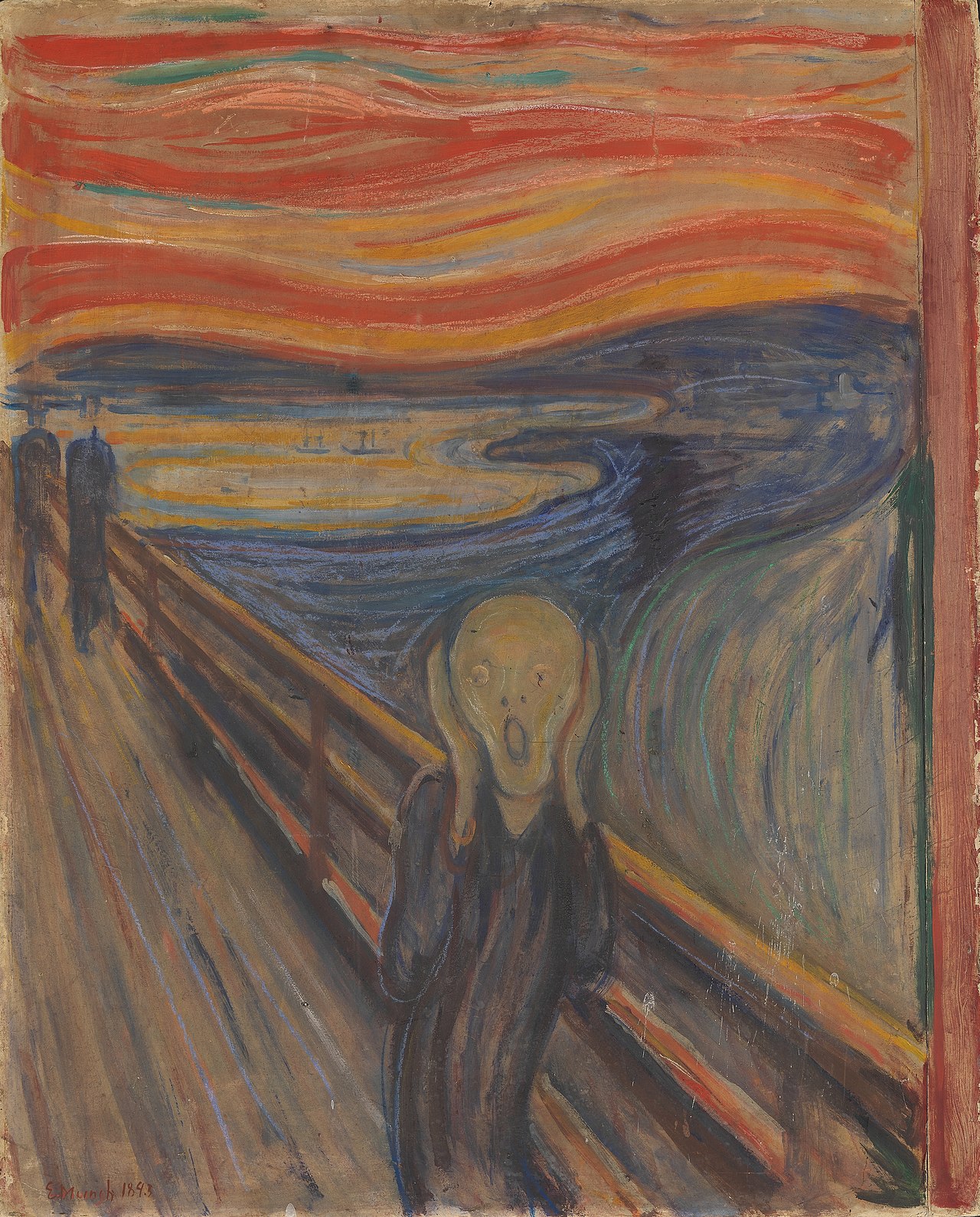 Expressionism
Expressionism is a modernist movement, initially in poetry and painting, originating in Northern Europe around the beginning of the 20th century. Its typical trait is to present the world solely from a subjective perspective, distorting it radically ...
To those of us who have spent decades wandering through the sun-drenched gardens of Giverny or tracing the delicate, rhythmic brushstrokes of Renoir, the arrival of abstraction can initially feel like a profound loss. We are accustomed to the soft, luminous embrace of the visible world—the way light dances upon a lily pond or how a fleeting moment of midday warmth settles upon a landscape. For generations, art served as a window, a meticulously crafted illusion of reality that celebrated the sensory delights of our existence. However, as the twentieth century dawned, a quiet revolution began to stir within the hearts of creators who felt that the external world, no matter how beautifully rendered, was no longer sufficient to hold the weight of human experience.
This transition was not a sudden abandonment of beauty, but rather an evolution of it. Where the Impressionists sought to capture the impression of light upon the eye, the pioneers of abstraction began to seek the impression of emotion upon the soul. The mirror of representation began to shatter, not to destroy the image, and certainly not to invite chaos, but to allow the viewer to peer through the cracks into a deeper, more visceral reality. We moved from the observation of what is seen to the exploration of what is felt. It was a movement away from the subject and toward the sentiment, a journey that required us to relinquish our reliance on recognizable forms in favor of a more profound, albeit more challenging, visual language.
The Geometry of Truth: Finding Order in the Absence of Form
 Geometric Abstraction's 10 Defining Masterpieces | Art for Your Home - TopImpressionists
Introduction Imagine a world stripped bare to its essential forms – lines, colors, and shapes resonating with an almost mathematical purity. This is the realm of Geometric Abstraction, a movement that dared to abandon representational art in favor of...
As the world grappled with the unprecedented upheavals of the early twentieth century, many artists sought solace not in the chaotic swirl of emotion, but in the quiet, mathematical purity of structure. This was the realm of Geometric Abstraction, a movement that dared to strip the universe bare to its most essential elements: the line, the circle, and the square. To the untrained eye, these works might appear cold or clinical, yet for the discerning enthusiast, they offer a sanctuary of profound order. There is an almost spiritual resonance in witnessing a composition where every shape exists in a state of perfect, balanced equilibrium.
Artists like Piet Mondrian and Kazimir Malevich were not merely playing with shapes; they were searching for a universal truth that transcended the fleeting nature of human life. They believed that by reducing art to its fundamental geometric components, they could tap into a cosmic logic—a hidden architecture that governs all existence. In this space, there is no narrative to distract us, no recognizable face to evoke pity or joy; there is only the elegant simplicity of form and the rhythmic interplay of color. It is an art of contemplation, inviting us to find peace within the precision of a well-placed line and the unwavering stability of a balanced plane.
The Visceral Canvas: Action Painting and the Language of Gesture
 Abstract Expressionism's 10 Defining Masterpieces |
Introduction To gaze upon these ten canvases is to step into a realm where emotion reigns supreme, where the very act of painting became a visceral outpouring of the human spirit. The Abstract Expressionist movement, born in the aftermath of World Wa...
If Geometric Abstraction represents the intellect’s search for order, then Abstract Expressionism—specifically the "Action Painting" of the post-war era—represents the raw, unbridled outpouring of the human spirit. Emerging from the shadows of World War II, this movement was a seismic rupture from tradition. The canvas was no longer a surface upon which a scene was depicted; it became an arena in which to act. We see here the influence of the subconscious, where the artist’s very movements—the drip, the splatter, the forceful sweep of the brush—become the subject itself.
When we gaze upon the works of Jackson Pollock or Willem de Kooning, we are witnessing a physical manifestation of intense emotional labor. There is a certain bravery in this style, a refusal to hide behind the safety of a recognizable figure. The texture of the paint, often applied with a heavy impasto, carries the energy of the artist's hand. It is a dance of spontaneity and instinct, where the act of creation is as significant as the finished work. For those of us who cherish the tactile beauty of a well-executed oil painting, this movement offers a breathtaking encounter with the sheer vitality of human existence, reminding us that even in moments of profound uncertainty, there is an irrepressible urge to create and to express.
A Symphony of Color: Exploring the Spiritual Resonance of Pure Abstraction
 Abstract art
Abstract art uses visual language of shape, form, color, and line to create a composition which may exist with a degree of independence from visual references in the world. Abstract art, non-figurative art, non-objective art, and non-representational...
Beyond the frantic energy of action painting lies another facet of abstraction, one that is perhaps more akin to the quietude we find in a cathedral. This is the realm of color field painting, where vast expanses of hue are used to evoke deep, meditative states. Here, the artist moves away from gesture and toward atmosphere. Imagine standing before a monumental canvas by Mark Rothko, where layers of translucent color seem to breathe and pulse with an inner light. There is no boundary, no hard edge; there is only the immersion of the viewer into a sea of chromatic emotion.
This approach treats color as a musical note in a grand, silent symphony. A deep, somber blue can evoke the weight of melancholy, while a vibrant, glowing orange can stir the embers of hope. By removing all representational references, these artists allow color to speak directly to our subconscious. It is an intimate experience that demands stillness. Much like the way a soft light in a Monet painting can alter our perception of a landscape, these pure abstractions alter our internal landscape, guiding us toward a state of spiritual resonance and profound introspection.
The Modern Legacy: How Abstract Expressionism Redefined the Human Spirit
 Beyond Representation: Exploring the Emotional Landscape of Abstract Expressionism
The Genesis of Feeling: Post-War America and the Rise of Abstract Expressionism The Raw Emotion of Expressionism: A Revolution in 20th-Century Art Explore the revolutionary world of Expressionism with . Discover key artists like Kirchner & Nolde, und...
Reflecting on this journey from the visible to the invisible, we realize that abstraction did not replace the beauty of the classical or impressionist traditions; rather, it expanded the boundaries of what art could achieve. It provided a new vocabulary for the complexities of the modern age—for the anxieties, the triumphs, and the existential questions that define our era. The legacy of these movements lies in their ability to bridge the gap between the external world and the internal psyche, proving that art can be both a window and a mirror.
Today, as we continue to collect and admire these works, we do so with an appreciation for the courage it took to move beyond the familiar. Whether we find ourselves drawn to the structured elegance of geometric forms or the emotive power of a gestural stroke, we are participating in a long tradition of seeking meaning. Art remains our most profound tool for navigating the human condition, reminding us that even when the world appears fragmented and unrecognizable, there is an enduring beauty to be found in the search for truth, emotion, and the eternal.
At TopImpressionists.com, we believe that every masterpiece deserves a place of honor in your home. Our mission is to make the profound beauty of art history accessible to all through our exquisite, hand-painted oil reproductions. Each piece is meticulously crafted by master artists on fine cotton canvas, ensuring that the soul, texture, and emotional depth of the original are preserved for generations to come. Whether you wish to embrace the light of the Impressionists or the raw energy of the Abstract Expressionists, we invite you to explore our collection and find the work that speaks to your own spirit.


