

The Great Shift: From Renaissance Harmony to Baroque Emotion
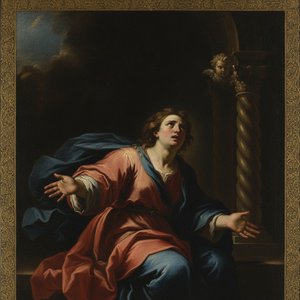 Drama & Light: The Captivating Power of Baroque Painting and the Mastery of Chiaroscuro
The Great Shift: From Renaissance Harmony to Baroque Emotion The Visceral Stage: Exploring Dramatic Narratives & Emotional Intensity in Baroque Art The Baroque Embrace of Emotion: A Shift from Renaissance Rationality Wikipedia: Baroque painting Baroq...
To understand the breathtaking tension that vibrates within a Baroque canvas, one must first recall the serene, almost mathematical perfection of the Renaissance. For centuries, the art world was guided by a pursuit of ideal beauty, where balance, symmetry, and rational clarity reigned supreme. The masters of that era sought to capture a sense of eternal stillness, a divine order reflected in perfectly composed landscapes and anatomically precise figures. However, as the seventeenth century dawned, the European consciousness began to fracture under the weight of profound religious and political upheaval. The stability of the Renaissance gave way to an era of movement, a period where the soul was no and longer content with mere observation; it craved experience.
This transition was not merely a stylistic shift but an artistic earthquake. Where the Renaissance offered a window into a balanced world, the Baroque opened a door into a visceral stage. The focus moved from the cerebral to the emotional, from the static to the dynamic. Artists began to embrace the beauty of imperfection, the energy of motion, and the profound psychological depth that comes from witnessing struggle, faith, and mortality. It was a departure from the stylized elegance of Mannerism toward a more robust, fleshy, and palpable reality—a movement that sought to touch the viewer not just with their eyes, but with their very heart.
Chiaroscuro and Tenebrism: The Sculptural Power of Light and Shadow
 Chiaroscuro
In art, chiaroscuro (English: kee-AR-ə-SKOOR-oh, -SKURE-, Italian: [ˌkjaroˈskuːro]; lit. 'light-dark') is the use of strong contrasts between light and dark, usually bold contrasts affecting a whole composition. It is also a technical term used by a...
At the very soul of this dramatic era lies a technical mastery of light, known as chiaroscuro. Derived from the Italian words for "light-dark," this technique is far more than a simple contrast; it is a method of sculpting three-dimensional forms out of the void. By manipulating the intense interplay between brilliant illumination and deep, enveloping shadows, Baroque artists achieved a sense of volume and weight that made figures appear to emerge from the canvas into our own space. This was not merely about visibility, but about creating a palpable sense of depth and atmosphere that invites the viewer to step into the scene.
When this technique is pushed to its most extreme, we encounter tenebrism—a style where darkness becomes the dominant force, swallowing much of the composition and leaving only key areas bathed in a radiant, almost supernatural glow. This method creates an atmosphere of palpable tension and spiritual ecstasy. Consider how a single beam of light might strike a face or a hand, highlighting a moment of divine intervention amidst an otherwise impenetrable gloom. Through these bold contrasts, artists like Caravaggio and Václav Vavřinec Reiner were able to focus the viewer's attention with surgical precision, using shadow to direct the eye and light to reveal the profound emotional truth of the subject.
A Visual Counter-Offensive: Art, Faith, and the Counter-Reformation
 Counter-Reformation
The Counter-Reformation (Latin: Contrareformatio), also sometimes called the Catholic Revival or the Catholic Reformation, was the period of Catholic resurgence that was initiated in response to and as an alternative to, or from similar insights as, ...
The grandeur of the Baroque was never purely aesthetic; it was deeply rooted in the historical crucible of the Counter-Reformation. As the Catholic Church faced the challenges of the Protestant Reformation, it recognized the potent power of visual persuasion. The Church sought to re-engage the faithful through spectacle, employing art as a tool for reaffirming its authority and inspiring unyielding devotion. This was an era where architecture, sculpture, and painting converged to create a sensory experience designed to inspire awe, reverence, and ultimately, loyalty.
This religious fervor fueled an unprecedented demand for artworks that were emotionally charged and dramatically persuasive. The goal was to translate complex theological concepts into visceral experiences that even the unlettered could feel. In churches like Il Gesù in Rome, the very architecture was transformed into a theatrical declaration of triumph. Altarpieces became monumental narratives of martyrdom and grace, utilizing rich color palettes and swirling compositions to evoke the presence of the divine. This convergence of religious zeal and artistic innovation ensured that the Baroque period would be remembered as an era where art served as a bridge between the earthly struggle and the celestial promise.
Masters of the Dramatic Tableau: Rubens, Caravaggio, and the Flemish Tradition
 The Seven Acts Of Mercy
Captivating Subject and Rich Symbolism This remarkable Baroque masterpiece vividly depicts the biblical theme of charity and compassion through the depiction of the Seven Acts of Mercy. The scene captures a moment of divine intervention and human kin...
No discussion of Baroque grandeur is complete without honoring the titans who defined its visual language. Peter Paul Rubens stands as perhaps the most influential figure of this tradition. His works, such as The Entombment, are emblems of monumental scale and opulent color. Rubens possessed a unique ability to blend the muscularity of Michelangelo with a signature dynamism, using expressive gestures and a symphony of deep reds and luminous yellows to convey profound grief and faith. His canvases do not merely depict scenes; they immerse the viewer in a meditation on mortality.
In contrast to the Flemish splendor of Rubens, the Italian master Caravaggio revolutionized religious art through his gritty realism and revolutionary use of light. His works, such as The Seven Acts of Mercy, capture moments of divine grace embedded within the raw, often harsh reality of human existence. Similarly, across Europe, artists like Gaspar de Crayer in the Spanish Netherlands and Gérard de Lairesse in Belgium contributed to this flourishing movement, each bringing their own mastery of light and shadow to create a cohesive yet diverse European Baroque identity. These masters shared a common goal: to use the dramatic tableau to provoke contemplation and stir the human spirit.
The Architecture of Awe: Baroque Grandeur in Stone and Canvas
 Baroque architecture
Baroque architecture is a highly decorative and theatrical style which appeared in Italy in the late 16th century and gradually spread across Europe. It was originally introduced by the Catholic Church, particularly the Jesuits, as a means to combat ...
The drama of the Baroque era extended far beyond the frame of a painting, permeating the very structures that housed it. Baroque architecture is characterized by its highly decorative, theatrical, and often overwhelming nature. It was an art of movement, where straight lines were replaced by undulating curves, and flat surfaces were transformed into complex, multi-layered compositions. From the grand palaces of absolute monarchs to the soaring vaults of Jesuit churches, the intention was always to create a sense of astonishment.
In places like the Parish Church of Pápa in Hungary, we see how architectural grandeur intertwines with spiritual contemplation through the works of sculptors like Matthias Maulbertsch. The intricate drapery of stone saints and the muscularity of their poses echo the energy found in contemporary paintings. This total integration of art—where sculpture, painting, and architecture work in unison—creates a cohesive environment of splendor. Whether it is a massive ceiling fresco or a meticulously carved altar, the Baroque style remains a testament to an era that dared to dream in large scales, using every available medium to capture the magnificent drama of existence.


