The painting River Landscape in Summer by William Mason Brown is a beautiful representation of a serene landscape, created in 1856. This oil on canvas piece is currently located at the Chrysler Museum of Art in the United States. The painting feature...
To approach a river is to encounter a boundary that is never truly fixed. There is a specific, quiet gravity in the way a waterway carves through the earth, a sense of arrival that precedes even the visual recognition of the current. In the mid-1s century, artists began to look at these landscapes not as mere geography, but as living entities. We see this intention held within the works of the Hudson River School, where the landscape feels substantial and grounded. Consider William Mason Brown’s River Landscape in Summer from 1856. Here, the scene is anchored by two trees with lush green leaves that offer a sense of shade and stillness. In the distance, mountains rise to provide depth, while a lone horse stands near the right side of the frame, perhaps grazing in quiet contemplation. It is a view that invites us to step onto the bank and simply exist within the scene before the movement of the water takes our full attention.
The riverbank serves as our threshold. Before we can understand the complexity of light on a ripple, we must first acknowledge the permanence of the shore. This initial encounter sets the stage for everything that follows, establishing a sense of place that feels both intimate and expansive.
Looking Closer at the Current: Stillness and Movement in River Landscapes
A Life Painted in the English Countryside: Leopold Rivers (1852–1905) Leopold Rivers, born in London in 1852 and passing away in 1905, was a British landscape painter who dedicated his life to capturing the serene beauty of the English countryside. W...
Once we move away from the edge and focus our gaze upon the water itself, the character of the painting begins to shift. The river is rarely just a single element; it is a dialogue between the solid and the fluid. In the works of Leopold Rivers, we find a quiet Romantic sensibility that avoids grand, dramatic statements in favor of intimate portraits of place. His depictions of the English countryside—often featuring the soft greens, browns, and ochres of moors and hills—capture a sense of peaceful isolation. There is a delicate luminosity in his technique that allows us to feel the weight of the atmosphere.
This tension between stillness and movement is equally present in the American tradition. In Winslow Homer’s 1895 watercolor, A Good Pool, Saguenay River, the water is not merely a surface but a site of kinetic energy. The light does not simply illuminate the scene; it captures a singular moment where the stillness of the river is interrupted by the silver arc of a leaping fish. We feel the cool, damp mist of the Canadian wilderness through his translucent washes. Whether we are observing the steady flow of a summer river or the sudden surge of life within a pool, the artist directs us to notice how the water carries the history of its own movement.
The Shimmering Surface: Capturing Light and Color Vibration
This is a list of works by Claude Monet (1840–1926), including all the extant finished paintings but excluding the Water Lilies, which can be found here, and preparatory black and white sketches. Monet was a founder of French impressionist painting, ...
As we lean closer to the canvas, the focus shifts from the landscape's form to its light. This is where the revolution of Impressionism becomes most palpable. The movement was born from a desire to record the precise sensation of a moment before the sun shifted. Claude Monet, perhaps the most dedicated practitioner of this philosophy, utilized en plein air painting to capture the transient effects of sunlight. In works like Impression, Sunrise, we see the departure from the dark, heavy shadows of academic tradition toward a celebration of luminosity. By using short, broken brushstrokes of mixed and pure colors, these artists achieved an intense color vibration that mimics the way the eye perceives light on a moving surface.
This technique is not limited to the French school. The California Impressionists brought this same obsession with light to the American West, finding inspiration in the clarity and force of the Southern California sun. Their work often utilized a bright, chromatic palette to depict seashores and mountains. Similarly, in the works of Sir Alfred James Munnings, such as River Landscape With Trees, we see an Impressionistic realm where the boundaries between earth and sky dissolve into a soft, golden haze. The water acts as a mirror, reflecting the muted tones of an overcast sky or the verdant silhouettes of trees. Here, the mastery lies in using loose brushwork to suggest the fleeting quality of morning mist rather than defining every leaf with clinical precision.
Moving Toward the Coast: The Interplay of Sea and Sky
The terms California Impressionism and California Plein-Air Painting describe the large art movement of 20th century artists who worked out of doors (en plein air), directly from nature in California, United States. Their work became popular in the S...
Leaving the sheltered banks of the river, we move toward the more expansive, salt-sprayed horizons of the coast. The maritime subject demands a different kind of observation—one that accounts for much larger scales of light and wind. Artists like Harry Aiken Vincent focused their attention on harbors and seaside subjects to explore the complex interplay of light between the water and the sky. In these coastal scenes, the horizon is often less a line and more a transition of color.
The sea introduces a sense of vastness that can be both humbling and restorative. We see this in the way Northern California Tonalists used simplified compositions and limited palettes to create close color harmonies, focusing on the atmospheric weight of the coast. The maritime experience is one of constant change, where the salt air and the shifting tides dictate the mood of the work. There is a profound connection here to the elements, a recognition that the sea is a living protagonist in the story of the landscape.
Observing the Vessel: The Human Connection to Maritime Life
A Gateway of Salt and Silk: The Soul of the Hong Kong Maritime Museum To step into the Hong Kong Maritime Museum is to surrender oneself to the rhythmic pulse of Victoria Harbour, where the boundary between the city’s concrete skyline and the liquid ...
A maritime scene is rarely just about the water; it is about the relationship between humanity and the waves. The presence of a boat or a pier provides a scale for our perception and a narrative thread for our curiosity. In the River – Rowing Museum along the Thames in New Zealand, we see how the physical objects of rowing—the polished oars and weathered shells—converse with the artistic visions of the water. Similarly, the Hong Kong Maritime Museum offers a window into the history of trade and movement, where the silhouettes of ship models evoke the daring spirit of explorers.
We see this human element reflected in paintings like Paul Cézanne’s Bridge over the Marne. While Cézanne often sought the structural tension within nature, his depiction of a bridge spanning a gentle river brings a sense of human habitation to the landscape. The geometric forms of the man-made structure balance the organic shapes of the trees, creating a scene of harmony. Whether it is the dramatic tension in John Edgar Platt’s depictions of river activity during the London Blitz or the quiet presence of a fishing boat, the vessel serves as our anchor, connecting our own history to the fluid world of the sea.
A Final Reflection: The Enduring Legacy of the Water's Edge
Introduction There is a profound, rhythmic poetry in the movement of water—a continuous, silver thread that weaves through the tapestry of our landscapes and our very souls. To observe a river is to witness the heartbeat of the earth; it is a symbol ...
As we conclude our walk through these various scenes, we are left with a realization that the water in art is a metaphor for time itself. To study a river or a sea is to witness a dialogue between the permanent and the ephemeral. From the thick, tactile impasto strokes that convey the energy of a flood to the delicate glazes that evoke a morning mist, these works remind us to pause.
The legacy of these maritime and riverine scenes lies in their ability to mirror our own human experience. In an age that often feels hurried, returning to the rhythmic pulse of a painted current offers a moment of solace. We find beauty in the transient—in the way a shadow falls across a pier or how sunlight breaks upon a ripple. These works do more than document a landscape; they invite us to rediscover the poetry of the present moment, held forever within the layers of oil and canvas.
Discover the profound serenity of water through a curated journey of fine art. From Impressionist ripples to Romantic landscapes, explore museum-quality oil reproductions and bespoke commissions designed for the discerning collector seeking timeless elegance.
Journey through Impressionism's golden age! Explore 10 masterpieces by Monet, Renoir & Degas that redefined art. Discover the stories behind these iconic paintings and find museum-quality reproductions to elevate your home decor on TopImpressionists.com.
Explore the revolutionary art of Claude Monet. Discover how his mastery of light and plein air techniques birthed Impressionism. Learn about iconic works like Water Lilies through our expert-led art history guide for collectors and professionals.



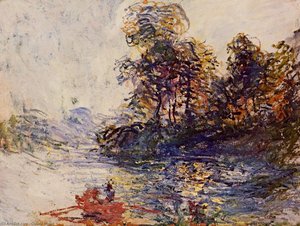


 River Landscape in Summer
 Leopold Rivers
 List of paintings by Claude Monet
 California Impressionism
 Hong Kong Maritime Museum
 Flowing Masterpieces: Top 10 Artworks That Capture the Spirit of Rivers


