

The Intersection of Science and Soul: Defining Botanical Illustration
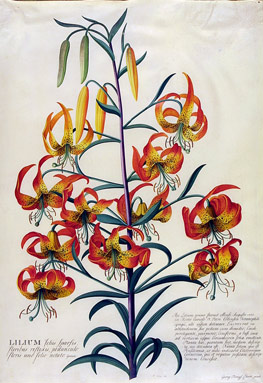 Botanical illustration
Botanical illustration is the art of depicting the form, color, and details of plant species. They are generally meant to be scientifically descriptive about subjects depicted and are often found printed alongside a botanical description in books, ma...
To gaze upon a true botanical illustration is to witness a profound dialogue between the analytical mind and the poetic heart. It is an art form that exists in the delicate space where scientific inquiry meets aesthetic grace, demanding both the rigorous precision of a taxonomist and the sensitive touch of a master painter. Unlike a purely landscape-driven work that seeks to capture the sweeping emotion of a vista, botanical art focuses its lens on the intimate architecture of life itself—the subtle curve of a petal, the intricate vein of a leaf, and the structural truth of a stem.
At its essence, this discipline is about more than mere decoration; it is an act of deep, meditative observation. The illustrator must understand plant morphology, capturing the form, color, and minute details that allow a species to be identified with certainty. Yet, within this scientific necessity lies a breathtaking beauty. When we look at works like those of Amédée Masclef, we see how a 19th-century study of Potentilla flowers uses a muted palette and precise ink work to breathe life into the specimen, transforming a biological record into a window of pure, quiet wonder.
Ultimately, botanical illustration serves as a bridge. It translates the complex, often invisible language of nature into a visual medium that is accessible to the human spirit. It invites us to slow down, to look closer, and to find the sublime within the smallest details of the natural world.
A Legacy of Observation: From Renaissance Herbals to the Golden Age
 johann wilhelm weinmann
Johann Wilhelm Weinmann (1683 – 1741): The Botanical Pioneer Johann Wilhelm Weinmann stands as a singular figure in the annals of eighteenth-century botany, recognized primarily for his monumental achievement—the *Phytanthoza iconographia*, an ambiti...
The history of botanical art is a long, winding path through the annals of human discovery. In the earliest days, illustrations were born of necessity, found within ancient herbals and pharmacopoeias where they served as vital guides for medicinal identification. These early works, such as those in Ibn al-Baytar’s compendium, were functional tools for survival, yet even then, a nascent sense of artistry began to emerge from the shadows of utility.
As we moved into the Renaissance and beyond, the purpose of these illustrations expanded alongside our growing curiosity about the earth. The era of the great florilegiums arrived, characterized by an ambitious desire to catalog the world’s flora with unprecedented grandeur. We see this in the monumental contributions of Johann Wilhelm Weinmann, whose Phytanthoza iconographia redefined the genre through its sheer scale and scientific ambition. Similarly, the work of Johann Simon von Kerner, particularly his twelve-volume Hortus Sempervirens, stands as a testament to an era when the artist’s brush was just as essential to science as the botanist’s microscope.
This golden age of illustration was fueled by a period of significant scientific advancement. As explorers traversed the globe, bringing back unknown specimens, illustrators were tasked with the monumental challenge of documenting these new wonders. This era established the standard for botanical art: a commitment to accuracy that never sacrificed the luminous, lifelike quality that captures the very essence of plant life.
Victorian Fascination: The Symbiosis of Natural History and Aesthetic Grace
 Victorian Botanical Painting: Science, Art & Aesthetic Sensibility
The Rise of Botanical Fascination: Victorian Society & the Natural World Wikipedia: Botany Botany, also called phytology or plant science, is the branch of natural science and biology that studies plants, especially their anatomy, taxonomy, and ecolo...
The Victorian era presented a fascinating paradox in the history of art. While it was a period defined by rigid social codes and the heavy soot of industrial expansion, it also witnessed an extraordinary flourishing of interest in the natural world. For the Victorian mind, botany was not merely a hobby; it was a pursuit that blended scientific curiosity with imperial ambition and a refined aesthetic sensibility. The study of plants became a popular pastime, transforming from an aristocratic pursuit into a shared cultural passion.
During this time, the role of the botanical artist evolved into that of a visual translator. They were the bridge between the rigorous findings of the scientific community and a public eager for beauty and knowledge. This era gave rise to incredible talents who could capture the energy of nature with both precision and passion. Consider the breathtaking work found in the Marianne North Gallery at Kew Gardens; unlike the formal, isolated studies of her contemporaries, North’s paintings explode with the untamed vitality of plants within their natural habitats, offering a more immersive, almost romantic experience of the wild.
This period also saw the rise of mass-circulation publications like The Illustrated London News, which brought imagery to the masses and shaped public perception. The fascination with the natural world was deeply interwoven with the era's technological progress, as new methods of printing allowed for a wider dissemination of these delicate studies. It was a time when the garden and the laboratory were inextricably linked, creating a cultural moment where science and art breathed as one.
Mastering the Miniature: Techniques of Watercolor, Ink, and Precision
 Untitled (AQTDHH)
Admire Amédée Masclef’s botanical illustration of Potentilla flowers – a detailed 19th-century scientific study in ink & watercolor. Explore its depth, precision & muted palette.
The technical demands of botanical illustration are immense, requiring a mastery of medium that can convey both structural rigidity and organic softness. Because these works often serve as scientific references, the artist must possess an intimate understanding of plant anatomy, ensuring that every stamen and seed pod is rendered with absolute fidelity. This requires a disciplined hand and a profound patience.
Watercolor remains the quintessential medium for this genre. Its inherent translucency allows artists to build up delicate layers of color, mimicking the light-filled quality of real petals and the subtle gradients found in living tissue. When combined with fine ink work, as seen in the meticulous studies of the 19th century, watercolor can achieve a level of detail that is almost microscopic. The interplay between the fluid washes of pigment and the sharp, definitive lines of ink provides the necessary depth and definition to distinguish one species from another.
Beyond watercolor, artists have historically employed oils, pencils, and even complex combinations of media to achieve their goals. The challenge lies in maintaining a balance: the work must be sufficiently detailed to satisfy the scientist, yet sufficiently expressive to captivate the art lover. It is a delicate dance of light and shadow, of sharp edges and soft bleeds, all working in harmony to present a specimen that feels as though it might spring from the page at any moment.
Nature’s Living Canvas: The Enduring Influence of Botanical Art on Modern Interiors
 Cambridge University Botanic Garden
A Living Chronicle of Botanical Artistry Nestled within the historic heart of Cambridge, the Cambridge University Botanic Garden serves as much more than a mere horticultural display; it is a living, breathing masterpiece where scientific inquiry mee...
Though the scientific necessity for botanical illustration has shifted in the age of photography, its aesthetic power remains undiminished. Today, these works find a new life within our homes, acting as timeless anchors of elegance and tranquility. A well-placed botanical print or a hand-painted reproduction brings a sense of organic history to a modern space, offering a connection to the natural world that feels both sophisticated and deeply personal.
In contemporary interior design, botanical art is often used to introduce texture, color, and a sense of calm. Whether it is a single, focused study of a rare flower or a large-scale multi-panel arrangement that spans a grand wall, these pieces possess a unique ability to harmonize with diverse decor styles. They can complement the clean lines of minimalism or add a layer of storied richness to more traditional, classical settings.
As we continue to seek beauty and connection in an increasingly digital age, the tactile, soulful nature of botanical art offers a much-needed sanctuary. To surround oneself with these meticulous studies is to surround oneself with the enduring majesty of life itself—a reminder that even in the smallest, most overlooked detail, there exists a profound and everlasting beauty.
For those seeking to bring this timeless elegance into their own collections, TopImpressionists.com offers an exquisite selection of museum-quality reproductions and curated works that celebrate the enduring legacy of botanical artistry.


