

Introduction
To step across the threshold of the British Museum is to leave the frantic rhythm of modern London behind and enter a sanctuary where time itself seems to slow, layering century upon century in a silent, breathtaking dialogue. It is not merely a visit to a gallery; it is an invitation to wander through the collective memory of humanity. As you move beneath the soaring, light-drenched glass canopy of the Great Court, you are standing at the crossroads of civilizations, where the whispers of ancient Egypt, the grandeur of Greece, and the intricate artistry of distant empires converge in a single, luminous space.
The museum’s story began much like a personal collection of wonders—born from the curious spirit of Sir Hans Sloane—and has since blossomed into a vast, global tapestry. Within these walls, history is not found in dusty textbooks, but in the tactile reality of stone, gold, and pigment. Each artifact carries the warmth of the hands that shaped it and the echoes of the cultures that cherished it. From the monumental Rosetta Stone, which breathed life back into forgotten languages, to the delicate, soul-stirating beauty of ancient sculptures, these works serve as our most profound connection to those who walked the earth millennia before us.
In our modern, often fragmented world, these treasures remain deeply meaningful because they remind us of a universal truth: that despite the vast distances of geography and the immense stretches of time, the human impulse to create, to honor, and to understand is unchanging. They are mirrors held up to our own shared existence, reflecting our triumphs, our spiritual longings, and our enduring resilience.
As we begin our journey through this curated selection, prepare to encounter more than just objects of antiquity. We have gathered twenty-five of the museum's most evocative masterpieces—works that do not merely sit in glass cases, but pulse with a life of their own. Each piece on this list has been chosen for its ability to stir the heart and ignite the imagination, guiding you through a curated odyssey of the world's most precious artistic legacies.
Rome: The Colosseum - Joseph Mallord William Turner
 Rome: The Colosseum - Joseph Mallord William Turner
To gaze upon Rome: The Colosseum by J.M.W. Turner is to witness the very breath of history caught in a moment of golden light. As you wander through the halls of the British Museum, London, this watercolor emerges not as a mere architectural study, but as a visceral, atmospheric encounter with the sublime. Turner moves beyond the stone and mortar of the ancient amphitheater, using loose, expressive brushstrokes to dissolve the monument into a hazy silhouette of ochre and grey.
The scene is alive with a soft, luminous drama; shafts of brilliant light pierce through swirling, turbulent clouds, illuminating scattered sheep that graze peacefully against the weight of imperial ruins. This delicate interplay of light and shadow evokes a profound sense of time’s relentless passage. Bringing such a piece into your own sanctuary offers more than decoration; it invites a meditative stillness and a window into the Romantic soul, where the grandeur of the past inspires a quiet, creative reflection in the modern home.
Study of the Madonna and Child with a Cat - Leonardo da Vinci
 Study of the Madonna and Child with a Cat - Leonardo da Vinci
To stand before Leonardo da Vinci’s Study of the Madonna and Child with a Cat is to witness a quiet, breathless moment stolen from the Renaissance. This is not merely a sketch; it is a profound meditation on tenderness, captured through the master's meticulous pen and ink. As you gaze upon the delicate interplay of light and shadow, you feel the warmth of a maternal embrace that transcends centuries. The way the mother cradles her infant, paired with the unexpected, playful presence of two cats weaving through the composition, breathes a soft, domestic life into the sacred subject.
Leonardo’s genius shines in the subtle sfumato -like transitions and the precise anatomical grace that defines every gesture. The fine, searching lines reveal an artist dissecting the very essence of connection and movement. In the hallowed halls of the British Museum, this work serves as a luminous reminder that true art does not just decorate a wall—it transforms a space into a gallery of the soul, inviting us to find beauty in the most intimate of human whispers.
Crucified Christ with Mary and John - Michelangelo Buonarroti
 Crucified Christ with Mary and John - Michelangelo Buonarroti
While we often envision Michelangelo lost in the monumental scale of marble, his mastery truly breathes through the delicate, rhythmic precision of chalk on paper. In this profound work, Crucified Christ with Mary and John , the Renaissance master transcends mere sketching to capture a visceral, spiritual ache. The piece is not simply a depiction of a biblical event; it is a study in light and shadow, where meticulous hatching creates a sculptural depth that feels almost tangible. As your eyes trace the anatomical perfection of Christ’s form, you are met with the tender, sorrowful presence of Mary and John, their figures rendered with a tonal subtlety that evokes a sense of divine mercy.
This technical brilliance—the ability to command such immense emotion through simple, monochromatic lines—represents a conceptual leap in capturing the human soul. To behold such focused intensity is to be reminded of the power of disciplined creativity. Much like the quiet strength found in this masterpiece, surrounding oneself with art of such profound gravity can inspire a sophisticated, contemplative atmosphere, perfect for fostering deep thought and productivity within a modern home study or private library.
The Entombment - Hieronymus Bosch
 The Entombment - Hieronymus Bosch
In Hieronymus Bosch’s The Entombment , a profound and somber monochrome dominates the soul of the work, where deep blacks and ghostly whites weave a tapestry of mourning. This absence of vibrant color does not diminish its power; rather, it intensifies the psychological weight of the scene, allowing the meticulous etching to breathe through shadows and light. As one of the most haunting treasures within the British Museum, London, this piece earns its place among the top 25 artworks through its masterful use of tonal contrast to evoke the raw, unsettling essence of the Northern Renaissance.
For the discerning collector looking to curate a sophisticated atmosphere, the monochromatic gravity of Bosch’s vision offers incredible inspiration. Integrating the stark, dramatic lighting and grayscale palette of this masterpiece can transform a modern dining room or study into a space of quiet reflection and intellectual depth. By mirroring this interplay of light and shadow, you can create an emotionally resonant environment that feels both timeless and profoundly intimate, much like walking through the hallowed halls of the museum itself.
Study for an Annunciation (recto) - Michelangelo Buonarroti
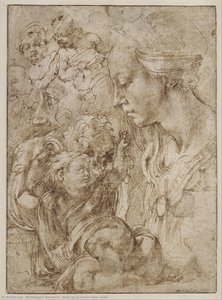 Study for an Annunciation (recto) - Michelangelo Buonarroti
In the Study for an Annunciation (recto) by Michelangelo Buonarroti, the true protagonist is not merely the figure, but the ethereal dance of light and shadow. Within this masterful chalk work, Michelangelo employs a breathtaking command of chiaroscuro, where soft, feathered strokes emerge from deep, velvety shadows to illuminate the seated man’s contemplative features. This delicate interplay of light creates a sense of divine presence, as if the very air is thick with the weight of a heavenly message.
As one of the top 25 artworks in the British Museum, London, this study captures the raw, spiritual energy that secured Michelangelo's eternal legacy. The way the chalk catches the light, revealing subtle muscular contours and tender expressions, offers a profound lesson in depth. When brought into a modern home through a faithful oil reproduction, such sophisticated use of light can transform a contemporary wall, adding a layer of soulful luxury and a timeless, luminous atmosphere that invites quiet, emotional reflection.
Sitting Male Nude (recto) - Michelangelo Buonarroti
 Sitting Male Nude (recto) - Michelangelo Buonarroti
To stand before the Sitting Male Nude (recto) is to catch a whispered breath from the heart of the Renaissance. Before your eyes even settle on the delicate lines, there is a profound sense of quiet intensity, as if you have stumbled upon a private moment of divine creation. Created in 1504, this masterful study by Michelangelo Buonarroti captures the raw, muscular energy of a soul caught in the act of becoming.
As part of his preparatory work for the lost fresco The Battle of Cascina , this drawing transcends mere anatomical exercise. Through meticulous pen strokes and rhythmic hatching, Michelangelo breathes life into sinew and bone, celebrating the idealized human form with a strength that feels both heroic and vulnerable. It earns its place among the top 25 artworks in the British Museum, London because it offers us a window into the very pulse of human potential. In our fast-paced modern world, contemplating such timeless mastery allows us to reconnect with a sense of permanence and grace, reminding us that beauty, much like a well-placed painting in our own homes, can anchor the spirit in moments of profound stillness.
Head of a Satyr - Michelangelo Buonarroti
 Head of a Satyr - Michelangelo Buonarroti
In the Head of a Satyr by Michelangelo, a profound sense of shadow and charcoal-toned depth commands the soul, setting a mood of quiet, introspective intensity. This masterful work, one of the most captivating pieces among the top 25 artworks in the British Museum, London, relies not on vibrant hues but on a sophisticated monochrome palette. The artist uses delicate hatching and deep, velvety blacks to sculpt form from nothingness, creating a dramatic interplay of light that feels almost tactile, as if the paper itself were breathing.
This mastery of light and shadow offers a timeless inspiration for the modern collector. To curate an atmosphere of prestige and contemplative calm in a study or library, one might look to this work’s chiaroscuro effect, pairing it with soft, directional lighting and muted textures like dark wood or heavy linen. By embracing the somber, dignified tones found in Michelangelo's line work, you can transform a contemporary living space into a sanctuary of intellectual depth and emotional resonance.
Photograph of a drawing of Quiriguá taken by A.P. Maudslay - alfred percival maudslay
 Photograph of a drawing of Quiriguá taken by A.P. Maudslay - alfred percival maudslay
In the Photograph of a drawing of Quiriguá taken by A.P. Maudslay , the dominant palette is a profound, velvety monochrome, where deep charcoal shadows meet soft, silvery highlights. This absence of color does not diminish the work; rather, it heightens a mood of timelessness and scholarly reverence. The interplay of light and shadow, captured through Maudslay’s pioneering dry plate technique, lends a tactile quality to the ancient Mayan stone, making this piece an essential inclusion among the top 25 artworks in 'British Museum, London' .
The mastery of these tonal gradients creates an atmosphere of quiet discovery. For the discerning collector looking to curate a sophisticated modern space, this photograph offers a blueprint for emotional lighting. Integrating such a monochromatic aesthetic into a study or dining room can introduce a sense of historical depth and calm, providing a neutral yet intellectually stimulating anchor. It invites a contemplative stillness, much like the soft, luminous light we adore in Impressionist masterpieces, bridging the gap between archaeological truth and pure, evocative art.
The Lamentation of Christ (recto) - Michelangelo Buonarroti
 The Lamentation of Christ (recto) - Michelangelo Buonarroti
To encounter The Lamentation of Christ (recto) by Michelangelo Buonarroti within the hallowed halls of the British Museum is to witness a profound moment of human vulnerability captured in ink. While we often celebrate the titan of the Renaissance for his monumental marble David or the celestial frescoes of the Sistine Chapel, this intimate drawing offers a rare, whispered glimpse into his creative soul. The scene unfolds with a haunting, rhythmic grace; figures gather around the fallen Christ, their forms etched with a raw, anatomical precision that speaks to Michelangelo’s unparalleled mastery of the human spirit.
The interplay of light and shadow across the paper creates a somber, elegiac mood, pulling the viewer into the heavy silence of the mourning procession. It is not merely a religious depiction but a study of grief and gravity. For those who seek to surround themselves with genius, this work serves as a reminder that true transformation in art lies in the ability to make the eternal feel deeply, achingly personal. It is a masterpiece of emotion, standing as one of the most poignant treasures among the top 25 artworks in the British Museum, London.
Antique Warrior - Leonardo da Vinci
 Antique Warrior - Leonardo da Vinci
In Leonardo da Vinci’s Antique Warrior , a profound sense of shadow and deep, earthen umber dominates the canvas, casting a mood of quiet, brooding intensity. This early masterpiece, a vital inclusion among the top 25 artworks in the British Museum, London, showcases the nascent genius of the Renaissance master through his experimental use of light and dark. The palette is anchored by muted, metallic tones and rich, shadowy glazes that create a sense of weight and historical gravity.
The artist’s early mastery of sfumato —that delicate, smoky blurring of edges—allows the warrior's horned helmet to emerge from the darkness with a haunting, lifelike presence. For the discerning collector looking to curate a sophisticated modern living space, this painting offers a blueprint for dramatic, atmospheric lighting. Integrating the deep, tonal range of this work into a room can evoke a sense of timelessness and intellectual depth, making it an ideal inspiration for creating a sanctuary of reflection and quiet strength within a contemporary home.
The Sixth Month (Right) - Utagawa Kuniyoshi
 The Sixth Month (Right) - Utagawa Kuniyoshi
As you wander through the hallowed halls of the British Museum, London, a sudden, quiet warmth greets you within Utagawa Kuniyoshi’s 1849 masterpiece, The Sixth Month (Right) . There is a cinematic stillness here, as if a single breath has been held amidst the golden transition of autumn. The woodblock print envelops you in the soft, amber glow of lanterns and the rich, seasonal textures of the late Edo period. At its heart, a woman in elegant traditional attire holds a pumpkin, her grace mirrored by the gentle presence of attendants in a meticulously detailed garden.
Kuniyoshi, a virtuoso of the ukiyo-e style, masterfully weaves light and shadow to evoke a sense of mono no aware —the beautiful melancholy of impermanence. The vibrant autumnal hues and delicate linework do more than depict a season; they invite a moment of profound reflection. Bringing the spirit of this work into a contemporary home offers a window into a serene, storied past, providing an anchor of calm and a sophisticated touch of historical storytelling to any curated space.
Profile of a warrior in helmet - Leonardo da Vinci
 Profile of a warrior in helmet - Leonardo da Vinci
In the delicate silverpoint of Profile of a Warrior in Helmet by Leonardo da Vinci, we encounter a masterclass in geometric restraint and structural harmony. The composition is anchored by the sharp, decisive line of the warrior’s profile, creating a rhythmic balance between the metallic weight of the armor and the ethereal lightness of the silverpoint strokes. There is a profound sense of equilibrium here; the subtle placement of the bird on the left serves as a soft counterweight to the intricate decorative patterns above, guiding the eye in a continuous, graceful loop that feels both ancient and eternally poised.
This internal balance resonates deeply with the principles of modern minimalist design, where every line serves a purpose and nothing is superfluous. Much like a contemporary clean aesthetic, Da Vinci’s ability to evoke strength through simplicity allows this work to stand as a cornerstone among the top 25 artworks in the British Museum, London. It offers a moment of quiet, focused meditation, grounding the viewer in a sense of timeless perfection that transcends the centuries.
Small Passion: 6. Christ's Entry into Jerusalem - Albrecht Dürer
 Small Passion: 6. Christ's Entry into Jerusalem - Albrecht Dürer
In the quiet, monochrome intensity of Albrecht Dürer’s 1511 woodcut, Christ's Entry into Jerusalem , we are invited to witness a moment where the divine meets the dusty reality of human expectation. As part of his profound Small Passion series, this masterpiece captures more than a biblical event; it orchestrates a symphony of movement and devotion. Through the masterful use of cross-hatching , Dürer sculpts light and shadow directly into the paper, creating velvety blacks and brilliant whites that lend a tactile, three-dimensional soul to the bustling crowd and the architectural silhouettes of the city.
The technical virtuosity on display is breathtaking, showcasing the pinnacle of Northern Renaissance printmaking. One can almost feel the texture of the stone walls and the organic sway of the palm trees amidst the sea of reaching hands. For those who cherish art that invites deep contemplation, this work offers a sophisticated visual rhythm. Its monochromatic elegance and historical weight make it an extraordinary piece for any curated collection, bringing a sense of timelessness, gravity, and scholarly grace to a modern living space.
Pattern from the Series of Six Knots 3 - Albrecht Dürer
 Pattern from the Series of Six Knots 3 - Albrecht Dürer
In the quiet corridors of the British Museum, London, few works command such focused reverence as Albrecht Dürer’s Pattern from the Series of Six Knots 3 . Created in 1505, this woodcut is far more than a mere decorative ornament; it is a profound meditation on the mathematical harmony that the Renaissance believed governed the universe. Through an intricate, monochromatic dance of black ink and pale paper, Dürer captures the very essence of interconnectedness.
The composition centers on a monumental circle—a symbol of perfection and the infinite—filled with a labyrinthine web of interlocking knots. Each precise, carved line serves as a visual metaphor for the delicate, inseparable threads of human existence. As one of the top 25 artworks in this collection, it stands as a testament to Dürer’s unparalleled technical mastery and his ability to find the divine within geometric order. This piece invites us to reflect on the beauty of structure and the eternal rhythm of nature. For the modern collector, such a work offers a timeless dialogue between historical intellect and contemporary elegance, bringing a sense of disciplined grace to any curated space.
King David Playin a Psaltery - Fra Angelico
 King David Playin a Psaltery - Fra Angelico
In the hallowed halls of the British Museum, few works offer a more profound moment of spiritual stillness than King David Playing a Psaltery by the 'Angelic Painter,' Fra Angelico. Created around 1430, this masterpiece is not merely an observation of biblical history; it is a window into the very soul of the Early Renaissance. As you stand before it, you are drawn into a state of contemplative repose, mirroring the King himself. David sits in quiet devotion, his gaze lifted toward the divine, fingers poised over the strings of his psaltery.
The artistry lies in the delicate interplay of light and texture—the meticulous detail of his royal robes and the soft, luminous quality that characterizes Angelico’s Dominican devotion. It is a work that transcends time, inviting you to transform your own surroundings into a sanctuary of peace. To possess such a piece is to surround yourself with the sublime, bringing the quiet, rhythmic beauty of Renaissance faith into the modern home.
Mosaic of a Double-headed Serpent - aztec empire
 Mosaic of a Double-headed Serpent - aztec empire
To gaze upon the Mosaic of a Double-headed Serpent by the Aztec Empire is to encounter a captured echo of profound divinity. As one of the most mesmerizing treasures within the British Museum, London, this piece transcends mere decoration; it is a rhythmic dance of stone and belief. The sinuous form of the serpent, rendered in a breathtaking palette of deep turquoise and celestial blues, pulses with an ancient energy that feels remarkably contemporary.
The technical mastery of the tesserae creates a tactile surface where light dances across scales of vibrant red and warm orange, embodying the Aztec concept of duality—the delicate balance between opposing cosmic forces. In today’s curated interiors, where the tension between organic textures and bold, symbolic statements defines modern luxury, this mosaic remains a powerful cultural talking point. It invites us to contemplate the interplay of life and death, offering a soulful, luminous presence that bridges the gap between the zenith of Mesoamerican artistry and our modern desire for depth and storytelling in art.
Christian II of Denmark - Albrecht Dürer
 Christian II of Denmark - Albrecht Dürer
To stand before Albrecht Dürer’s Christian II of Denmark is to encounter a profound psychological drama captured in oil. This is not merely a royal likeness; it is a masterclass in the tension between outward majesty and inward fragility. As one of the top 25 artworks in the British Museum, London, this portrait earns its place by redefining the boundaries of Renaissance portraiture, moving beyond mere status to reveal the heavy burden of a crown. Dürer’s meticulous rendering of velvet textures and jewel-toned golds creates a sensory feast, yet it is the king's piercing, uncertain gaze that truly haunts the viewer.
The painting serves as a timeless reminder that true art captures the soul behind the splendor. At TopImpressionists.com, we believe such profound historical emotions should not be confined to museum halls. We bring this same spirit of Renaissance depth into your personal sanctuary through our hand-painted oil reproductions. Imagine the weight and dignity of Dürer’s brushstrokes gracing your own walls, transforming a simple room into a sophisticated gallery of history and human emotion.
Studies of grotesque heads - Michelangelo Buonarroti
 Studies of grotesque heads - Michelangelo Buonarroti
In the Studies of grotesque heads by Michelangelo Buonarroti, the true protagonist is the masterful play of chiaroscuro . Through delicate chalk strokes, Michelangelo commands light to emerge from deep, velvety shadows, carving out the distorted, emotive features of each face with startling anatomical precision. This dramatic interplay of illumination does more than define form; it captures a psychological tension—a dance between the seen and the hidden—that has secured this work's place among the top 25 artworks in the British Museum, London .
To witness these shadows is to experience the raw, Mannerist spirit of the Renaissance. When such a sophisticated use of light and shadow is captured in a hand-painted oil reproduction, it brings an unparalleled sense of drama and intellectual depth to a contemporary interior. Imagine the way a faithful rendering of these tonal contrasts can anchor a room, adding layers of texture and a soulful, luxurious presence to your walls, much like the quiet, contemplative halls of the museum itself.
Small Passion: 2. Expulsion from the Paradise - Albrecht Dürer
 Small Passion: 2. Expulsion from the Paradise - Albrecht Dürer
In the quiet, hallowed corridors of the British Museum, Albrecht Dürer’s Small Passion: 2. Expulsion from the Paradise emerges not merely as a woodcut, but as a visceral heartbeat of the Northern Renaissance. To stand before this work is to witness the very moment innocence fractures. Dürer, a master of the delicate dance between light and shadow, uses incredibly fine, rhythmic linework to carve a world of profound sorrow out of simple ink and paper.
The composition breathes with a heavy, dramatic tension; notice how the diagonal movement of the angel’s outstretched hand and sword directs your gaze toward Adam’s slumped form, embodying a weight of shame that feels almost tactile. Every meticulously carved line contributes to a sensory experience—the textured foliage, the coiled serpent, and the symbolic apple all whisper of temptation and loss. It is a breathtaking display of anatomical precision and emotional depth, inviting you to move beyond mere observation and into a shared moment of human fallibility. This piece does not just decorate a collection; it transforms a gallery into a sanctuary for contemplating the eternal struggle between grace and transgression.
Death and the Landsknecht - Albrecht Dürer
 Death and the Landsknecht - Albrecht Dürer
In the hallowed, quiet corridors of the British Museum, London, few works command the air with such chilling gravity as Albrecht Dürer’s Death and the Landsknecht . This is not merely a woodcut; it is a profound, monochrome meditation on the fragility of our existence. As you stand before it, the stark interplay of light and shadow—composed with the precision of a master musician—strikes a somber chord within the soul.
Dürer uses intricate cross-hatching to invent a world of texture: the cold, smooth bone of the skeletal figure contrasts sharply against the opulent, heavy fabrics of the Landsknecht warrior. The hourglass, held out by Death, serves as a silent, rhythmic pulse, reminding us that time is relentlessly draining away. There is a haunting beauty in this encounter; the way the light catches the warrior's defiant yet futile posture creates a portal into the German Renaissance. It is a masterpiece of tension, inviting you to contemplate the fleeting nature of earthly glory and the enduring weight of history.
The Plum-Pudding in Danger - james gillray
 The Plum-Pudding in Danger - james gillray
To encounter James Gillray’s The Plum-Pudding in Danger is to step into a world where wit and appetite collide. While many of the top 25 artworks in the British Museum, London, command awe through ancient grandeur, this piece captivates through its sharp, human intimacy. It captures that universal, delicious tension found in moments of shared indulgence—the delicate balance between celebration and chaos. Gillray, a master of satirical etching, uses the heavy textures of the pudding and the focused postures of the gentlemen to weave a narrative of Regency-era social ritual.
This work earns its place among the museum's most essential treasures because it serves as a vibrant, biting window into the political and social soul of 1805 Britain. The way the light catches the knife and the rich, dark surfaces of the dessert invites us to feel the weight of history. At TopImpressionists.com, we believe such evocative storytelling should not be confined to museum walls. Through our meticulous, hand-painted oil reproductions, we strive to preserve the very soul of Gillray’s craftsmanship—the visible brushstrokes and tonal depth—allowing you to bring this spirited piece of historical narrative into the warmth of your own home.
Solicitudo Rustica (Country Concerns) - Pieter Bruegel the Elder
 Solicitudo Rustica (Country Concerns) - Pieter Bruegel the Elder
Imagine standing amidst a vast, windswept valley, where the air grows heavy with the scent of damp earth and the distant rumble of an approaching storm. In Solicitudo Rustica (Country Concerns) , Pieter Bruegel the Elder invites us into this profound moment of tension. This masterful pen-and-ink work is far more than a mere landscape; it is a rhythmic dance of light and shadow, where fine hatching and cross-hatching create a textured world of rugged mountains and winding rivers.
As you trace the delicate lines of farmers tending their fields and livestock seeking shelter, you feel the palpable weight of human vulnerability against the immense, indifferent cosmos. The monochrome palette, though lacking vibrant color, possesses a soulful depth that evokes a quiet, contemplative melancholy. Bringing such a piece into your home offers more than decoration; it provides a window into the resilience of the human spirit. Its atmospheric perspective and somber beauty can transform a modern room into a sanctuary for reflection, grounding your space with the timeless, earthy wisdom of the Northern Renaissance.
Laughing Peasant Woman - Albrecht Dürer
 Laughing Peasant Woman - Albrecht Dürer
In the delicate geometry of Albrecht Dürer’s “Laughing Peasant Woman,” there exists a profound structural harmony that transcends its monochromatic medium. The composition is anchored by the gentle, organic tilt of the subject's head, creating a rhythmic flow of lines that guide the eye through an intricate web of hatching and cross-hatching. This masterful use of line does more than define form; it creates a balanced, triangular stability that feels both grounded and weightless. As one of the most captivating works within the British Museum, London , its enduring appeal lies in this perfect equilibrium between technical precision and spontaneous emotion.
There is a striking parallel to be found between Dürer’s disciplined linework and the principles of modern minimalist design . The way he utilizes negative space and tonal depth to suggest volume without excess mirrors the clean, intentional aesthetics sought in contemporary interiors. For the discerning collector, this piece offers a soulful anchor, bringing a sense of historical gravity and quiet, sophisticated grace to a modern, light-filled space.
Landscape with a Goatherd - claude lorrain (claude gellée)
 Landscape with a Goatherd - claude lorrain (claude gellée)
In the quietude of Landscape with a Goatherd , created in 1637, we are invited into a realm where time seems to suspend its forward march. As you gaze upon this masterpiece by Claude Lorrain, you do not merely see a pastoral scene; you feel the warmth of dappled sunlight filtering through ancient, textured foliage. The solitary goatherd, tending to his flock with a gentle, rhythmic devotion, serves as a universal mirror for our own longing for peace and simplicity. There is a profound psychological depth in this stillness, a sense of the Arcadian ideal where humanity and nature exist in perfect, breathing equilibrium.
As one of the most evocative pieces among the top 25 artworks in British Museum, London , Lorrain’s mastery of light and shadow offers a luminous escape. The soft textures of animal fleece and the ethereal glow of the Roman countryside create an atmosphere of quiet prestige. Bringing the emotional resonance of this work into your own home can transform a personal sanctuary into a space for profound reflection, turning any room into a window toward eternal calm.
Portrait of Emperor Maximilian - Albrecht Dürer
 Portrait of Emperor Maximilian - Albrecht Dürer
To gaze upon Albrecht Dürer’s Portrait of Emperor Maximilian is to witness the very breath of the Northern Renaissance captured in ink. In this masterwork, light does not merely illuminate; it emerges from a delicate, rhythmic dance of fine lines and meticulous cross-hatching. Dürer did not simply record a face; he composed a soul through the language of shadow.
As you stand before this piece in the British Museum, London, notice how the artist’s unparalleled precision creates a tactile world of textures—the heavy, regal weight of velvet robes contrasting with the soft, weathered skin of an aging ruler. Maximilian’s gaze is both imposing and profoundly human, carrying a quiet melancholy that transcends centuries. Every etched wrinkle tells a story of power and the burdens of empire. It is this profound interplay of light and shadow, of monumental authority and intimate vulnerability, that makes this portrait a timeless treasure. It remains a breathtaking testament to how a master can use nothing but line and darkness to invent a luminous, living presence.
Conclusion
As the evening light softens over the Great Court, leaving the shadows of history to dance across the museum's glass canopy, we are reminded that these masterpieces are far more than mere relics of a bygone era. They are living, breathing presences—vibrant echoes of human emotion that refuse to be silenced by the passage of time. Each canvas and artifact within the British Museum serves as a bridge, spanning centuries and continents to connect our modern souls with the profound whispers of those who came before us. To stand before such works is to enter into an intimate, eternal conversation; every deliberate brushstroke and every etched line carries a fragment of an artist's heartbeat, inviting us to feel the same wonder, grief, or triumph that moved their hand hundreds of years ago.
These treasures do not belong solely to the halls of London; they belong to the spirit of anyone who seeks beauty and meaning. They continue to shape our homes, inspire our most private reflections, and breathe life into our contemporary spaces, proving that true art is never static. It is a continuous flow of inspiration that transcends the boundaries of museum walls. Whether you are seeking to bring a piece of this timeless legacy into your own sanctuary or simply wandering through the corridors of memory, we invite you to explore the full collection and rediscover the enduring magic of these human triumphs. In every texture and every hue, the conversation continues, waiting for you to listen.


