A Glimpse into Domestic Bliss: Renoir’s “The Artist’s Family” Pierre-Auguste Renoir's 1896 masterpiece, *The Artist’s Family*, is more than just a portrait; it’s an intimate window into the warmth and joy of everyday life. This oil on canvas exemplif...
Before the mid-nineteenth century, the painted family often functioned as a monument to status. Portraits were constructed with a rigid, almost architectural precision, designed to project lineage and social permanence through heavy drapery and formal poses. These works spoke of power rather than presence. However, a quiet revolution began to unfold in France as a group of rebels turned their gaze away from the grandiosity of history painting toward the ephemeral beauty of the present. They sought to dismantle the somber shadows of academic tradition, finding instead a profound magic in the mundane.
This change is perhaps most felt when observing Pierre-Auguste Renoir. In his 1896 work, The Artist’s Family, we find no stiff, ceremonial arrangement. Instead, Renoir presents us with a relaxed, unposed scene of connection. Set against a tranquil waterside where boats drift in the distance, the figures—including his wife, Aline Charigot—appear caught in the middle of a gentle conversation. His brushwork does not seek photographic accuracy; rather, it captures the way light dances across a cheekbone or settles upon a shoulder. The light is soft and natural, bathing the group in a glow that feels less like a studio lamp and more like a shared afternoon.
This shift mirrors our own changing relationship with memory. Just as the Impressionists moved away from the monumental to embrace the fleeting, we often find that our most cherished recollections are not of grand events, but of the soft, unscripted moments of togetherness.
Maternal Sanctuaries: The Quiet Devotion of Mary Cassatt
1465 painting by Master of the Life of the Virgin depicting Christ’s crucifixion w/ Mary, John & Magdalene. Detailed Gothic style, oil on panel. Explore serene devotional art.
While Renoir captured the warmth of a group, Mary Cassatt turned her attention to the profound, private sanctity of the maternal bond. In her 1893 work, The Child's Bath, the world outside seems to fall away, leaving only the intimate space of domestic care. Cassatt utilizes the hallmarks of Impressionism—a delicate palette of creams, blues, and gentle pinks—to transform a routine moment of bathing into a study of deep devotion.
Her technique was subtly influenced by the flattened perspectives of Japanese ukiyo-e prints, which allowed her to draw the viewer into the tactile reality of the scene. There is an emotional intelligence in how she renders the weight of a child in a mother's arms. The light does not merely illuminate the room; it breathes life into the very essence of this private sanctuary. It is a moment of stillness, where the focus is entirely on the tenderness of the touch and the quietness of the breath.
We see an echo of this in the way we curate our own homes today. We seek out pieces that offer a sense of peace, much like the sanctuary Cassatt created on her canvas. Her work reminds us that the most significant acts of love are often those performed in total silence, away from the eyes of the world.
The Beauty of the Everyday: Finding Connection in Van Gogh’s Arles
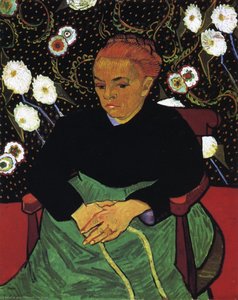
The Roulin Family is a group of portrait paintings Vincent van Gogh executed in Arles in 1888 and 1889 of Joseph, his wife Augustine and their three children: Armand, Camille, and Marcelle. This series is unique in many ways. Although Van Gogh loved ...
In the south of France, during the winter of 1888, Vincent van Gogh sought a different kind of connection through his portraits of the Roulin family. For Van Gogh, painting was an act of seeking the eternal within the ordinary. He found a bounty of models in Joseph Roulin, a local postman, and his wife, Augustine, along with their three children. These were not subjects chosen for their status, but for their humanity.
Van Gogh’s approach was far from the soft, dappled light of Renoir. He used bold, primary colors and expressive, rhythmic strokes to evoke emotion. In his depictions of the Roulin family, he sought to communicate a sense of comfort, much like the soothing quality of music. He wanted to paint people with a certain radiance, using the vibration of color to suggest something sacred within their working-class lives. Each family member was painted multiple times, allowing the Roulins to eventually turn their own bedroom into a personal museum of modern art.
This pursuit of emotional truth finds a parallel in our contemporary desire for authenticity. In an era of filtered images, we find ourselves drawn back to the raw, honest textures of Van Gogh’s work, where the struggle and the joy are visible in every thick layer of paint.
Unconventional Bonds: Unity and Resilience in Picasso’s Rose Period
Family of Acrobats (Jugglers) by Pablo Picasso: A Rose Period Masterpiece Explore the captivating world of Pablo Picasso's "Family of Acrobats (Jugglers)," a seminal work from his renowned Rose Period, created in 1905. This painting offers a poignant...
As the nineteenth century closed, the definition of family continued to expand, moving toward more complex and unconventional structures. During his Rose Period in 1905, Pablo Picasso began to explore the lives of circus performers, a group bound together by shared hardship and itinerant existence. In Family of Acrobats (Jugglers), we see a different kind of kinship—one born of necessity and mutual support.
The palette here is warmer, dominated by pinks, oranges, and reds, creating an atmosphere that feels more optimistic than the melancholic blues of his earlier work. The figures are gathered closely, their poses dynamic yet intimate, suggesting a moment of rest before the performance begins. Even small details, like a handbag resting on the ground or an umbrella positioned centrally, ground this group of performers in a sense of everyday domesticity.
This exploration of chosen family resonates deeply with our modern understanding of belonging. It reminds us that the threads of connection are not always woven through blood, but can be forged through shared purpose and the resilience required to navigate a changing world.
Enduring Legacies: Why These Painted Moments Still Resonate Today
The Luminous Revolution: Moving Beyond the Optical Moment Capturing the Soul: The Most Emotionally Moving Impressionist and Post-Impressionist Masterpieces The Luminous Revolution: How Impressionism Redefined the Art of Seeing Impressionistic Landsca...
To look upon these works is to recognize our own histories reflected in the pigment. Whether it is the structured, idealized happiness found in Lilly Martin Spencer’s Domestic Happiness or the psychological depth of the Post-Impressionists, art has always been a mirror for the human heart. These paintings do not merely document the past; they validate our present connections.
The emotions portrayed—the protective instinct of a parent, the warmth of a shared meal, the quiet tension of domestic life—remain universal. As we move through a world that often feels fragmented and hurried, these canvases offer us a place to slow down. They invite us to hold a question open, to linger on a brushstroke, and to find beauty in the transient nature of our own lives.
At TopImpressionists.com, we believe that art should be a living part of your environment. Whether through a hand-painted oil reproduction that captures the impasto texture of a Van Gogh or a custom portrait that transforms a personal memory into a classical tribute, we strive to help you bring these enduring echoes of connection into your own home.
Explore 10 defining masterpieces of Romantic Realism! Discover Courbet, Millet & Daumier's powerful paintings—capturing emotion and social realities. Find museum-quality reproductions for your home at TopImpressionists.com.
Explore the life & art of Mary Cassatt, a pivotal American Impressionist renowned for intimate portrayals of women & children. Discover her unique style, legacy, and groundbreaking techniques at TopImpressionists.
Explore the profound psychological depth of Impressionist and Post-Impressionist masters. Discover how Renoir, Van Gogh, and Monet moved beyond light to capture raw human emotion through exquisite, hand-painted oil reproductions and expert art history insights.
Step into a world of dappled sunlight and eternal connection. Discover the profound intimacy of Impressionist family portraiture with TopImpressionists.com. We specialize in exquisite, hand-painted oil reproductions that transform your cherished memories into luminous, timeless masterpieces.




 The Artist`s Family
 Christ on the Cross with Mary, John and Mary Magdalene
 The Roulin Family
 Family of acrobats (Jugglers)
 Beyond the Surface: Capturing Psychological Depth and Raw Emotion in Impressionist and Post-Impressionist Masterpieces


