The Luminous Rebellion: How Impressionism Redefined the Art of Seeing
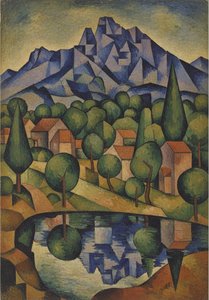
 La Poste at Cagnes
A Glimpse into Provençal Life: Pierre-Auguste Renoir’s *La Poste at Cagnes* Pierre-Auguste Renoir's *La Poste at Cagnes*, painted in 1905, is more than just a depiction of a rural scene; it’s an evocative distillation of the French Impressionist aest...
To step into the world of the Impressionists is to leave behind the heavy, somber shadows of academic tradition and enter a realm bathed in dappled sunlight. In the mid-19th century, a group of courageous rebels in France sought to dismantle the rigid, dark constraints of academic realism that had long dominated the Salon. These artists, who would become legends like Claude Monet and Pierre-Auguste Renoir, turned their gaze away from historical grandeur and toward the ephemeral beauty of the present moment. They were not merely painting landscapes; they were capturing a revolution of perception.
This movement was defined by its devotion to optical truth—the immediate, sensory experience of light as it dances across a river's surface or shames through a summer breeze before it inevitably changes. Through the use of broken brushstrokes and a vibrant, sun-drenched palette, they achieved something unprecedented: the ability to record the fleeting sensation of a single sunbeam. When we gaze upon Renoir’s La Poste at Cagnes, we see more than a rural scene; we feel the warmth of the Provençal sun on stone and the tranquil contentment of a quiet afternoon, rendered through a technique where colors are applied side-by-side to allow the viewer’s eye to blend them optically.
The magic of this era lies in its refusal to replicate reality perfectly. Instead, it sought to convey the subjective experience of seeing. By abandoning meticulous detail in favor of capturing an impression, these masters invited us to participate in the atmosphere of the scene, making the canvas a window into a world transformed by light and movement.
Beyond the Fleeting Moment: The Emotional Depth of Post-Impressionism
 Beyond Impressionism: A Definitive Guide to the Bold Revolution and Emotional Depth of Post-Impressionist Art
The Great Transition: Moving Beyond the Fleeting Moment Beyond the Brush: How Post-Impressionism Recharged Modern Art with Bold Color and Raw Emotion The Impressionist Breakup: Why Light Wasn't Enough Anymore Beyond Light & Color: Impressionism vs. P...
As beautiful and luminous as the Impressionist works were, the movement eventually encountered a creative ceiling. While they succeeded in recording the momentary sensation of light, their canvases often lacked a sense of structural permanence and emotional weight. There was a perceived incompleteness—a feeling that by chasing only the transient nature of light, the deeper, more lasting essence of reality was being left behind. This tension became the catalyst for the much more intense and visceral era of Post-Impressionism.
Post-Impressionism emerged as a profound transition, moving beyond the mere representation of light toward a deeper understanding of artistic expression and emotional resonance. Artists began to use color and form not just to describe what they saw, but to express what they felt. This was a movement of much greater subjectivity and structural intention. Where Monet might capture the shimmer of water, a Post-Impressionist like Theo van Rysselberghe would use bold brushstrokes and vibrant colors in works such as Olive Trees near Nice to create a meditation on form and the emotional resonance of nature.
This era brought a much-needed weight to the canvas. The revolution of color allowed for a more raw, emotive language. We see this shift clearly when comparing the light-drenched landscapes of the early movement to the works that sought to capture the soul itself. It was no longer enough for light to be present; it had to carry meaning, texture, and a sense of enduring presence that could withstand the passage of time.
A Symphony of Color and Form: Masterpieces of Light and Texture
 Peaches, Pears and Grapes
The Painting "Cezanne's Peaches, Pears and Grapes " is a captivating still life that exemplifies the artist's unique approach to color and composition. Painted in 1879, this oil on canvas work measures 57 x 44 cm and is a quintessential representatio...
The true brilliance of this period lies in the masterful application of color theory and the physical texture of paint. The artists of this era understood that color is not an inherent property of matter, but a visual perception produced by the interaction of light and the eye. By utilizing broken color—applying small strokes of pure pigment—they created a luminous effect that seems to vibrate with life.
Consider the incredible tactile depth found in the works of Paul Cézanne or Vincent van Gogh. In Cézanne’s still lifes, such as Peaches, Pears and Grapes, we see a meticulous attention to composition where color and form are used to build a sense of structural permanence. Conversely, in the more expressive Post-Impressionist works, the paint itself becomes part of the narrative. The thick, energetic application of pigment—often referred to as impasto—creates a palpable sense of movement, allowing the viewer to feel the very energy of the artist's hand.
This interplay between color and texture creates a sensory experience that transcends simple viewing. Whether it is the soft, blended hues of a sunset or the rugged, textured bark of an olive tree, these masterpieces use the chemistry of oil and pigment to ensure that the light captured on the canvas remains vibrant and emotionally charged for generations.
Sanctuaries of Serenity: Exploring the Great Impressionist Galleries
 Musee de l'Orangerie
A Sanctuary of Light: The Musée de l'Orangerie Nestled within the tranquil embrace of the Tuileries Garden in Paris, the Musée de l’Orangerie is more than a repository of masterpieces; it is an immersive experience, a sanctuary dedicated to the ether...
For those of us who have spent a lifetime seeking solace in art, certain institutions feel less like museums and more like sanctuaries. The Musée de l'Orangerie in Paris, nestled within the tranquil Tuileries Garden, is perhaps the most profound example. Originally an orangery for Napoleon III’s citrus trees, it has become a place of healing and contemplation, housing Claude Monet’s monumental Water Lilies murals.
To stand within the oval rooms of the Orangerie is to be enveloped by an immersive dream. The skylights are designed to bathe the canvases in soft, natural light, mirroring the shifting ambiance of Monet's garden at Giverny. It is a space where the air itself seems imbued with serenity, allowing the viewer to lose themselves in a world of shimmering reflections and delicate hues.
Similarly, The Courtauld Gallery in London offers an immersive journey into the heart of this revolution. Walking through its elegantly proportioned rooms, one can encounter the subtle dance between observer and observed in Manet’s A Bar at the Folies-Bergère, or feel the raw, poignant intensity of Van Gogh’s self-portraits. These galleries serve as vital repositories of our shared cultural heritage, preserving the light and emotion that continue to resonate with profound power.
The Enduring Legacy: Bringing the Magic of Late Impressionism into the Modern Home
The beauty of the Impressionist and Post-Impressionist movements is that they are not confined to the halls of distant museums; their spirit can be brought into our own personal sanctuaries. For the discerning collector, the desire to surround oneself with these luminous textures is a way to invite tranquility and historical depth into the modern living space.
At TopImpressionists.com, we believe that art should be a living, breathing part of your home. We specialize in the creation of bespoke, hand-painted oil reproductions that honor the academic excellence of the masters. Unlike mere prints, our works are 100% hand-painted on cotton canvas, capturing the visible brushstrokes and deep tonal ranges that define the true Impressionist aesthetic. Our artists, many of whom hold degrees from prestigious Fine Arts academies, work meticulously to ensure that every stroke reflects the soul of the original.
Whether you wish to transform a personal photograph into a masterpiece in the impasto style of Van Gogh, or you seek a large-scale multi-panel landscape to anchor a grand room, we offer a bridge between history and your contemporary life. We invite you to explore our collection and discover how the magic of light and color can forever transform your surroundings.