


The Dissolution of Form: When Military Tradition Met the Impressionist Revolution
 Impressionism's Finest: 10 Masterpieces That Revolutionized Art | TopImpressionists
Introduction Step into a world bathed in light, where fleeting moments are captured with breathtaking immediacy. The Impressionist movement, born from a rebellion against academic tradition, remains one of the most beloved and influential chapters in...
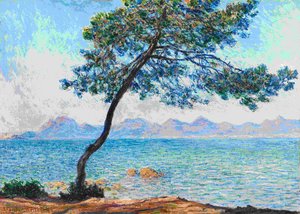
The late nineteenth century was an era of profound upheaval, not merely within the shifting political landscapes of global empires, but within the very soul of the canvas itself. While the rigid structures of military life demanded order, precision, and a certain unyielding permanence, a new generation of artists sought to dissolve these boundaries through the radical lens of Impressionism. This movement, born from a spirited rebellion against the stifling constraints of the official Paris Salon, replaced the photographic accuracy of Academic painting with something far more elusive: the sensation of a moment captured in flight. For the discerning eye, the transition was breathtaking. The heavy, polished realism of the past gave way to a world where form was no longer fixed, but rather a shimmering, subjective experience. This revolution allowed the artist to move beyond the mere documentation of uniforms and ranks, instead inviting us to feel the very atmosphere in which these figures moved.
Luminism and Valor: Capturing the Ephemeral Glow of the Soldier’s Spirit
 Luminism (Impressionism)
Luminism is a late-impressionist or neo-impressionist style in painting which devotes great attention to light effects. The term has been used for the style of the Belgian (mainly Flemish) painters such as Emile Claus and Théo van Rysselberghe and th...
To gaze upon a work of Luminism is to witness a sacred interplay between light and atmosphere, where the soldier is no longer merely a figure of steel and cloth, but a silhouette defined by the sun's descent. This late-Impressionist style, perfected by masters such as Émile Claus, devoted an almost spiritual attention to light effects, using it to define the particular manifestation of the local sky. In these works, valor is not found in the clash of blades, but in the way a sudden burst of sunlight catches the edge of a helmet or illuminates the dust of a marching column. The light becomes a character in itself, breathing life into the landscape and imbuing the scene with a sense of transient beauty. It is this mastery of illumination that allows us to perceive the ephemeral quality of the soldier's existence—a moment of brilliance captured before the shadows inevitably reclaim the field.
Beyond the Uniform: The Poignant Humanity in Muted Tones and Fleeting Moments
 Transport of colonial soldiers
Transport of Colonial Soldiers Isaac Israëls’s “Transport of Colonial Soldiers” is more than just a depiction of military personnel; it's a masterful encapsulation of the Hague School’s aesthetic and a poignant reflection on its era—the late 1880s. P...
Yet, beneath the brilliance of the light lies a profound, often somber, reality that speaks to the human cost of history. In Isaac Israëls’s 1884 masterpiece, Transport of Colonial Soldiers, we encounter the Hague School's aesthetic at its most poignant. There is no overt glorification of conquest here; instead, Israëls utilizes a muted palette of sombre grey tones and a deliberate flattening of perspective to evoke an atmosphere of quiet contemplation. We see the fatigue etched into a face and the heavy, routine duty of men gathered on a cobblestone street. This sense of poignant realism is echoed in the works of Valentin Serov, where the portraiture captures the very essence of the individual within the collective. By eschewing dramatic lighting in favor of tonal variation, these artists remind us that behind every uniform lies a human story—a narrative of determination, exhaustion, and the quiet weight of service.
Brushstrokes of Bravery: The Tactile Depth of Impressionist Military Portraiture
 Richard Simkin
: A Watercolor Pioneer of Military Portraiture Richard Simkin (1850-1926) stands as a remarkable figure in Victorian and Edwardian art history, primarily recognized for his prolific watercolor depictions of British military uniforms and...
The true emotional resonance of these works is inextricably linked to the physical presence of the paint itself. The magic of the Impressionist tradition lies in its tactile depth—the visible, energetic brushstrokes and the rich, textured impasto that a mere digital print can never truly replicate. When we look at the meticulous watercolor mastery of Richard Simkin or the historical precision of James Prinsep Beadle, we are drawn to the texture of the medium. At TopImpressionists.com, we honor this legacy by offering only 100% hand-painted oil reproductions on fine cotton canvas. Unlike the flat, computer-printed look of a standard poster, our artists use layers of pigment to create a deeper tonal range and a physical soul that catches the light. Our six-step process—from your initial order and digital mockup to the final application of protective Damar varnish—ensures that every stroke is a testament to the artist's pride and the painting's enduring vitality.
Reimagining the Heroic: Carrying the Legacy of Light into Your Private Collection
For the lifelong lover of art, collecting is an act of preserving memory. It is about bringing the luminous energy of the past into the sanctuary of your modern home. Whether you wish to transform a personal milestone into a masterpiece through our custom photo-to-oil service, or perhaps "remix" history by requesting a contemporary portrait in the light-drenched style of Monet, we invite you to explore this beautiful intersection of technology and tradition. We offer the unique ability to customize your collection, providing everything from large-format murals to multi-panel group sets that flow seamlessly across your walls. At TopImpressionists.com, we do not simply sell art; we provide a gateway to experience the profound beauty of light and shadow, ensuring that the heroic spirit of the Impressionist era remains a vibrant, living part of your world for generations to come.


