A Pioneer of the Northern Renaissance Landscape Joachim Patinir, a name often whispered alongside that of Albrecht Altdorfer as a foundational figure in landscape painting, emerged from the artistic milieu of the Low Countries during the early 16th c...
There is a specific kind of quiet that exists only when we allow our gaze to settle upon the horizon. It is not merely the absence of noise, but a presence of stillness that invites us to inhabit the moment. In our modern lives, we are often caught in a state of directed attention, a constant, taxing focus on tasks, screens, and schedules. This mental exertion leaves little room for the soul to breathe. When we turn toward a landscape, particularly one rendered with the sensitivity of the Impressionists, we find an invitation to step away from this cognitive overload.
Long before the first brushstroke of the Impressionist movement touched canvas, the Northern Renaissance masters were already exploring the profound depth of the natural world. Joachim Patinir, working in the early sixteenth century, began to move the landscape from a mere background detail into a primary subject. His "world landscapes" offered an expansive view that, while often filled with symbolic narrative, established a way of seeing the earth as an independent entity. Just as Patin and his contemporaries used vast vistas to ground their stories, we can use the expansive views of a landscape painting to ground our own wandering thoughts. The structure of the land—the rolling hills or the steady line of a forest—provides a framework upon which we can rest our weary minds.
By looking at these scenes, we find a way to reconnect with a rhythm that exists far beyond the frantic pace of human industry. It is a return to a more fundamental state of being.
Soft Fascination: How Impressionism Restores the Mind
Introduction To step into the world of Jean-Baptiste-Camille Corot is to leave behind the clamor of the modern age and enter a realm of profound stillness, where the air feels heavy with morning mist and the light dances softly through silvered leave...
The concept of soft fascination offers a beautiful way to understand why certain images bring us such profound relief. Unlike the intense, draining focus required by our daily work, soft fascination occurs when our surroundings hold our attention without demanding effort. It is the gentle movement of light through leaves or the subtle shift of a cloud. This state allows for what researchers call Attention Restoration Theory—a recovery from mental fatigue through engagement with natural, restorative environments.
This restorative quality is deeply embedded in the works of artists like Jean-Baptiste-Calille Corot. In his depictions of the French countryside, such as his views of the Forest of Fontainebleau, there is no jarring movement to startle the viewer. Instead, there is a soft, almost poetic haziness. His use of muted greens and silvery greys creates a visual environment that does not compete for our attention but rather invites it to wander freely. We see this same principle in the way a person might find peace while walking through a quiet wood; the eyes are engaged by the textures of bark and moss, yet the mind is free to reflect.
When we engage with these paintings, we are practicing a form of visual meditation. We allow our attention to drift, finding that in this lack of directed effort, we actually gain a deeper clarity. The landscape becomes a mirror for a mind that has finally found permission to be still.
Luminosity and Light: The Radiance of a Quiet Moment
Explore Frank Hayward’s ‘Landscape of Dead Fallen Tree.’ A monochromatic oil painting showcasing Romanticism & Luminism with impasto texture. Captivating solitude & atmosphere.
Light is the heartbeat of the Impressionist tradition. It is not merely a tool for visibility but a measure of energy and emotion. In physics, luminosity refers to the total radiant power emitted by an object, and in art, it becomes the medium through which we feel the passage of time. An artist like Claude Monet or Pierre-Auguste Renoir did not just paint objects; they painted the light that danced upon them. They captured the ephemeral—the way a setting sun dissolves the edges of a tree into an amber haze.
This fascination with light finds an echo in much older traditions of observing the heavens. In astronomy, the luminosity of a star is a constant, powerful force, yet our perception of its brightness changes based on distance and atmosphere. Similarly, in a painting like Frank Harold Hayward’s Landscape of Dead Fallen Tree and Pond, the luminosity is felt through the texture of the paint itself. The way light seems to reside within the impasto layers creates a sense of depth that pulls the viewer into the scene. We are not just looking at a reflection of light; we are witnessing the energy of the moment captured in oil.
To observe this light is to participate in a silent dialogue with the sun. It reminds us that even in moments of profound stillness, there is a constant, radiant life force moving through the world, waiting to be noticed by those who slow down enough to see it.
The Painter's Gaze: Observing the World Without Judgment
Bela Spanyi: A Hungarian Master of Light and Landscape Béla Spányi, a name perhaps less familiar than some of his contemporaries, nevertheless represents a significant voice in the late 19th and early 20th-century European art scene. Born in Pest (no...
To paint truly is to observe without the need to categorize or control. The Impressionists moved away from the rigid, photographic realism of the past to embrace a more sensory truth. They were not interested in documenting every leaf with scientific precision; they wanted to capture the feeling of the breeze and the warmth of the sun. This requires a certain detachment—a way of looking at the world that accepts it exactly as it is, in all its fleeting, imperfect glory.
This approach mirrors the practice of manana or other traditions of contemplation, where one observes thoughts and emotions without immediate judgment. Just as an artist like Béla Spányi sought to capture the quiet beauty of rural Hungary—focusing on humble subjects like birds in flight or a solitary farmhouse—we can learn to observe our own internal landscapes with similar grace. We do not need to fix or change our thoughts; we only need to witness them as they pass through our consciousness, much like clouds moving across a summer sky.
By adopting this painterly gaze, we find that the world becomes less of a series of problems to be solved and more of a series of wonders to be experienced. There is a profound freedom in simply seeing.
A Sanctuary of Color: Creating Reflective Spaces in the Home
An Impressionistic Whisper of the English Countryside In this evocative Landscape Study , Sir Alfred James Munnings invites the viewer into a world where the boundaries between earth and sky dissolve into a poetic haze. The painting captures a moment...
The impact of art does not end when we leave the gallery. The intention behind choosing a landscape for one's home can be an act of creating a personal sanctuary. A well-placed painting, such as a reproduction of a work by Sir Alfred James Munnings or a piece from the Pennsylvania Impressionists found in the Payne Gallery, can transform a room from a place of mere habitation into a space of intentional reflection.
The colors we surround ourselves with have the power to influence our internal state. The cool blues and soft whites of an English countryside study can lower the visual "temperature" of a room, providing a sense of calm during stressful periods. Conversely, the warmer ochres and burnt reds of a late afternoon scene can offer a sense of groundedness and comfort. When we curate our environments with these considerations in mind, we are building a physical architecture for peace.
In an era defined by digital noise and constant connectivity, our homes must become the bastions of our quietest selves. Through the thoughtful integration of art that celebrates nature, we can ensure that even in the heart of a busy life, there is always a window open to the stillness.
Explore the emotional revolution of Impressionist art. From Monet's light to Renoir's warmth, discover how these masters redefined perception through hand-painted beauty and timeless technique.
Immerse yourself in the vibrant world of Sir Alfred James Munnings. Explore 25 iconic equestrian paintings and English landscapes that define British Impressionism. Find inspiration for museum-quality art reproductions and decor. Discover all masterpieces on TopImpressionists.com.
Immerse yourself in the tranquil beauty of Jean-Baptiste-Camille Corot. Explore 25 iconic landscapes that defined French Impressionism through light and atmosphere. Find inspiration for museum-quality art reproductions and decor. Discover all masterpieces on TopImpressionists.com.
Discover the profound beauty of stillness through a curated exploration of masterworks by Corot, Gauguin, and more. Learn how legendary artists captured tranquility and bring that museum-grade serenity into your home with our exquisite hand-painted oil reproductions.


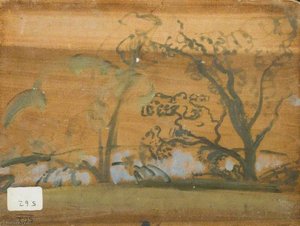


 Joachim Patinir
 Mastering Light: The 25 Most Iconic Landscapes by Jean-Baptiste-Camille Corot
 (Landscape of Dead Fallen Tree and Pond), (painting)
 Bela Spanyi
 Landscape Study


