


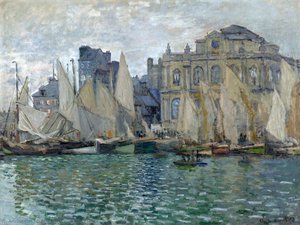

The Soul of the Sea: Vessels as Metaphors for the Human Journey
 Set Sail: 10 Iconic Masterpieces That Capture the Spirit of Boats
Introduction There is a profound, almost primal magnetism in the image of a vessel adrift upon the water. To look upon a boat is to witness a silent dialogue between human ingenuity and the untamable forces of nature. Throughout the annals of art his...
There is a profound, almost primal magnetism in the image of a vessel adrift upon the water. To look upon a painted boat is to witness more than just a feat of maritime engineering; it is to encounter a silent dialogue between human ingenuity and the untamable forces of nature. Throughout the annals of art history, the motif of the ship has served as a universal metaphor for the soul’s journey, our capacity for exploration, and our inherent vulnerability to the elements. Whether it is a solitary rowboat cutting through a mist-covered lake or a grand galleon braving the salt-sprayed fury of the high seas, these vessels represent the delicate balance between mastery and surrender.
In the eyes of the romantic and the impressionist alike, a ship in motion is a symbol of resilience. As we navigate the unpredictable currents of our own lives, the sight of a sturdy hull meeting a rising tide offers a much-needed reflection on the beauty of persistence. These works do more than depict transport; they capture the very atmosphere of an era—the scent of tar and salt, the rhythmic creak of timber, and the vast, daunting silence of the horizon that beckons us toward the unknown.
Light on the Waves: The Impressionist Mastery of Water and Atmosphere
--- title: Impressionism and the sea - Google Arts & Culture url: https://artsandculture.google.com/exhibit/impressionism-and-the-sea/NgJSb6xiEr6LLA hostname: google.com description: Google Arts & Culture features content from over 2000 leading museu...
The Impressionist movement brought a revolutionary sensitivity to the maritime subject, moving away from the rigid, documentary precision of earlier eras toward a fascination with the shimmering, ephemeral qualities of light. For artists like Monet or Childe Hassam, the sea was not merely a setting but a living, breathing canvas of color and translucency. They sought to capture the way sunlight dances upon the crest of a wave and how the morning mist softens the hard edges of a mast.
This era of painting embraced the natural beauties of the ocean, finding harmony in its calming colors and flowing movements. The magic lies in the thick, tactile impasto strokes that convey the weight of the ocean, contrasted with delicate glazes that capture the fleeting essence of a summer morning. By focusing on the interplay of light and atmosphere, these masters transformed the sea into a sensory experience, allowing the viewer to feel the humidity of the salt air and the warmth of the sun reflecting off the water's surface.
From Grand Galleons to Solitary Skiffs: A Study in Maritime Scale
 The Ship 'Melpomene'
The Ship 'Melpomene': A Testament to Maritime Grandeur Artist: John Henry Mohrmann (1857-1916) Date: 1885 Medium: Oil on Canvas Size: 60 x 98 cm Location: National Maritime Museum (United States) John Henry Mohrmann’s *The Ship ‘Melpomene’* is more t...
The diversity of maritime art is found in its ability to manipulate scale to evoke different emotional responses. We see this clearly when comparing the monumental grandeur of a full-rigged ship to the quiet intimacy of a small skiff. In works such as John Henry Mohrmann’s The Ship ‘Melpomene’, we encounter the sublime power of nature through a large sailing vessel, its sails billowing with an exhilarating motion that dominates the canvas. Such paintings celebrate the era's fascination with maritime adventure and the sheer scale of human ambition.
Conversely, there is a different kind of beauty found in the smaller, more delicate subjects. The transition from the heavy, complex rigging of a three-masted ship to the simple lines of a coastal boat allows artists to explore different textures of life. While some works celebrate the economic might and naval supremacy of great fleets, others invite us into a world of solitude and quiet contemplation. This spectrum of scale ensures that maritime art can speak to both the heroic spirit of discovery and the peaceful stillness of a sheltered harbor.
The Painter's Eye: Capturing Motion, Wind, and the Ephemeral Moment
 john stobart
John Stobart: A Mariner’s Eye and the Golden Age of Sail The world of maritime art is often associated with romanticized visions of billowing sails, distant horizons, and heroic voyages. Yet, behind these iconic images lies a meticulous process of ob...
To truly capture a sailing ship is to master the art of depicting the invisible. An artist must translate the unseen force of the wind into the visible tension of a sail and the rhythmic movement of the waves. This requires a meticulous process of observation and research. Artists like John Stobart or Antonio Nicolo Gasparo Jacobsen brought a mariner’s eye to their work, understanding the nuances of ship handling and the way light shifts across a moving surface.
Preserving the Golden Age: Bringing Maritime Masterpieces into the Modern Home
In our modern, digital age, the enduring resonance of these maritime masterpieces offers a sanctuary of permanence and reflection. These paintings are not merely decorations; they are windows into a transformative era of history and exploration. For the discerning collector, bringing such works into a living space allows for a continuous connection to the spirit of the Golden Age of Sail.
At TopImpressionists.com, we believe that art should be a lasting memory. We specialize in creating exquisite, handmade oil reproductions that honor the soul of these historical works. Our artists, trained in the finest academies, use traditional techniques—painting by hand on 100% cotton canvas with visible brushstrokes and deep tonal ranges—to ensure that the texture and emotion of the original are preserved. Whether you seek a large-scale multi-panel piece to anchor a room or a custom "remix" that transforms a personal memory into an Impressionist masterpiece, we invite you to celebrate the timeless beauty of the sea through the enduring power of fine art.


