Introduction Close your eyes for a moment and imagine the scent of damp earth after a summer rain, or the way the golden light of a setting sun dissolves the sharp edges of a distant forest into a soft, amber haze. To gaze upon a landscape is to do m...
To look upon a landscape is to engage in a silent dialogue with the earth. It is an attempt to translate the scent of damp soil after rain or the way a setting sun dissolves a distant forest into an amber haze onto a static surface. Throughout history, the genre has functioned as more than mere scenery; it serves as a vessel for capturing the ephemeral. We find ourselves drawn to these works not for a photographic record of terrain, but for the sensation of presence they command.
The power of a well-executed landscape lies in its ability to invite the viewer into a state of contemplation. Whether through the rugged grandeur of the Scottish Highlands or the soft, rolling hills of Vermont, these scenes offer a sanctuary from the noise of modern existence. They remind us that beauty is often found in the most transient elements—a single blade of grass, a shifting shadow, or the way light breathes upon a leaf.
The Dance of Light: Impressionist Studies in Atmosphere
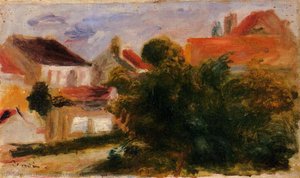
A Symphony of Light and Nature: Exploring Renoir’s ‘Landscape 15’ Pierre-Auguste Renoir's *Landscape 15* is a captivating embodiment of Impressionism, transporting the viewer to a realm of serene beauty and fleeting moments. More than just a depictio...
In the late nineteenth century, a fundamental shift occurred as artists moved away from the controlled shadows of the studio to embrace en plein air painting. Figures such as Claude Monet and Pierre-Auguste Renoir sought to record the precise sensation of a moment before the light shifted forever. In works like Renoir’s Landscape 15, we see this revolution in practice. The artist eschews rigid detail for broken brushstrokes and a palette that simulates the optical mix of light dancing across a field.
This technique creates a sense of immediacy, as if the viewer is witnessing the scene unfold in real-time. Similarly, the works of Jean-Baptiste-Camille Corot bridge the gap between classical discipline and Impressionist freedom. His ability to paint the atmosphere itself—the way mist clings to a river at dawn or how light filters through a canopy—provides a profound stillness. In these canvases, the landscape becomes a living entity, shifting with every passing cloud.
Pastoral Echoes: The Serenity of American Landscapes
A Brush with Serenity: The Life and Landscapes of George Herbert McCord George Herbert McCord, a name resonating with the quiet beauty of American landscape painting, has dedicated his life to capturing the essence of nature’s tranquility. While biog...
The American tradition often finds its voice in the quiet dignity of the pastoral. Artists like George Herbert McCord have dedicated their practice to capturing the essence of nature’s tranquility, particularly within the landscapes of Vermont and New York. Unlike the dramatic, untamed wilderness celebrated by some of his predecessors in the Hudson River School, McCord focuses on a more intimate relationship between land and human presence. His work depicts the gentle curve of a river winding through farmland or the peaceful stillness of a forest clearing bathed in morning light.
This approach finds a contemporary parallel in the photography of Joseph C. Filer, whose work captures the serene scenery of the American landscape through soft light and calming tones. From sunrises over mountain lakes to the quietude of foggy sea shores, these images provide a visual getaway that promotes relaxation. Such works are particularly effective when rendered as large-scale metal or acrylic prints, bringing the restorative power of nature into interior environments.
A Quiet Observer of Coastal Light: The Life and Art of Frans Helfferich Frans Helfferich remains a somewhat enigmatic figure in the landscape painting tradition, yet his works possess a delicate power that resonates with collectors and art enthusiast...
There is a specific, melancholic beauty found in the meeting of land and water. For artists like Samuel Bough, the rugged coastlines and shimmering lochs of Scotland provided an inexhaust, much more expressive form of landscape painting. Bough was adept at rendering the texture of rocks and the intricate patterns of waves, capturing the raw power of a sunset over a turbulent sea or the mist clinging to a lonely glen.
This fascination with water extends to the more subdued coastal scenes of Frans Helfferich. His work focuses on the quiet observation of light playing on canal waterways and the gentle sway of reeds. Eschewing grand narratives, Helfferich utilizes a muted palette of blues, grays, and ochres to evoke a sense of peaceful immersion. This focus on the subtle nuances of coastal light offers a different kind of serenity—one rooted in the steady, rhythmic pulse of the tide and the soft glow of sunlight filtering through clouds.
Foundations of the View: From Northern Renaissance to the French Countryside
A Pioneer of the Northern Renaissance Landscape Joachim Patinir, a name often whispered alongside that of Albrecht Altdorfer as a foundational figure in landscape painting, emerged from the artistic milieu of the Low Countries during the early 16th c...
The evolution of the landscape as an independent subject can be traced back to pioneers like Joachim Patinir in the early sixteenth century. Before this period, landscape was often relegated to a mere background for religious or mythological narratives. Patinir helped invent a new way of seeing, imbuing the terrain with symbolic depth and a lyrical fantasy that would influence generations. His work laid the groundwork for the "world landscape," where the earth itself becomes the protagonist.
As we move through history toward the more structured elegance of the French countryside, we see the development of atmospheric perspective. This technique, where distant objects appear paler and less defined, allows artists to create a palpable sense of depth. Whether it is the lush, mountainous terrain of Gauguin’s Martinique or the structured elegance of Corot’s studies, the ability to manipulate space and light remains the cornerstone of the genre's enduring strength.
Curating Calm: Integrating Timeless Nature into Architectural Spaces
For those responsible for furnishing large-scale environments—be it a hotel, a corporate office, or a private estate—the selection of art is a strategic decision in atmosphere management. Landscapes offer a unique utility in interior design; they provide a focal point that encourages stillness and reduces the visual tension of a room. The use of multi-panel or "split" paintings can transform a wide wall or a grand staircase into a cohesive, modern architectural feature, allowing the colors and brushstrokes to flow seamlessly across the space.
When commissioning reproductions, such as those offered by TopImpressionists.com, the focus remains on technical excellence and durability. Our artists, holding degrees from prestigious academies, specialize in recreating the tactile depth of original oils—the visible impasto and deep tonal ranges that a simple print cannot replicate. Whether through custom-framed fine art papers or large-format murals for hotel ceilings, we provide the logistical reliability required by professionals. From VAT-compliant invoicing to global shipping via DHL and FedEx, our service ensures that the tranquility of the natural world can be integrated into any professional space with efficiency and precision.
Explore the groundbreaking art of Albrecht Altdorfer, a pioneer of the Northern Renaissance's Danube School. Discover his innovative landscapes, spiritual symbolism & lasting influence on German painting.
Explore the history of serene landscape art & discover artists who evoke tranquility. Find the perfect calming artwork for your home with expert guidance from TopImpressionists.





 10 Breathtaking Masterpieces That Redefine the Landscape Genre
 Landscape 15
 George Herbert Mccord
 Frans Helfferich
 Joachim Patinir


