Atelier — Complimentary worldwide shipping — Delivery 2–6 weeks
      Franz Ehrlich, 1907 – 1984

      The 100 Most Famous Franz Ehrlich Paintings, Ranked

      The best-loved painting by Franz Ehrlich is 3rd FLOOR (Design for a foreign representation of the GDR. Floor plan), which hangs in the Bauhaus Dessau Foundation, Dessau-Roßlau. LBH BUILDING MACHINERY WOODWORKING MACHINERY HALL 5 (Leipzig Trade Fair, plan view exhibition stand) (1949) and 4 armchairs. 1 Bench. Office of the vice president (of the Academy of Sciences of the GDR in Berlin) come next among the canvases readers know best. Our catalogue holds 101 works by Franz Ehrlich: here are the 100 most famous, each with its year, its museum and what makes it memorable.

      Ranked by our popularity score, which combines the searches, visits and orders for each work. Updated October 2026.

      Portrait of Franz Ehrlich
      Franz Ehrlich · 1907 – 1984
      Born · died
      1907 – 1984, Reuth
      Movement
      Bauhaus
      Works in our catalogue
      101
      Most famous
      3rd FLOOR (Design for a foreign representation of the GDR. Floor plan)
      Most works at
      Bauhaus Dessau Foundation

      Top 10 Franz Ehrlich paintings: the canvases everyone knows

      3rd FLOOR (Design for a foreign representation of the GDR. Floor plan) by Franz Ehrlich
      1

      3rd FLOOR (Design for a foreign representation of the GDR. Floor plan)

      Acrylic On Canvas · Bauhaus Dessau Foundation, Dessau-Roßlau

      A Blueprint for Utopia: Examining Franz Ehrlich’s “3rd FLOOR” The architectural drawing titled “3rd FLOOR,” created by Franz Ehrlich in 1956, transcends mere technical documentation; it embodies the aspirations of a nation grappling with its identity after decades under Nazi oppression and subsequent Soviet influence. This meticulously crafted plan for a foreign representation of the German Democratic Republic—specifically designed for the Leipzig Trade Fair—offers a fascinating glimpse into the ethos…

      LBH BUILDING MACHINERY WOODWORKING MACHINERY HALL 5 (Leipzig Trade Fair, plan view exhibition stand) (1949) by Franz Ehrlich
      2

      LBH BUILDING MACHINERY WOODWORKING MACHINERY HALL 5 (Leipzig Trade Fair, plan view exhibition stand)

      1949 · Ink On Paper · Bauhaus Dessau Foundation, Dessau-Roßlau

      To gaze upon this drawing is not merely to observe lines on paper; it is to step into the very sinews of early 20th-century commerce and innovation. This plan view, documenting the LBH Building Machinery Woodworking Machinery Hall 5 at the Leipzig Trade Fair in 1949, transports us directly to a moment when industry was meticulously laid bare for public scrutiny. The work by Franz Ehrlich possesses an almost archaeological…

      4 armchairs. 1 Bench. Office of the vice president (of the Academy of Sciences of the GDR in Berlin) by Franz Ehrlich
      3

      4 armchairs. 1 Bench. Office of the vice president (of the Academy of Sciences of the GDR in Berlin)

      Acrylic On Canvas · Bauhaus Dessau Foundation, Dessau-Roßlau

      Franz Ehrlich (1907–1984), a German architect, calligrapher, and graphic designer whose work spanned Bauhaus principles to communist affiliation, remains an enigmatic figure in the annals of modernist design. While his name might not resonate with mainstream audiences today, Ehrlich’s contribution to architectural thought and artistic expression—particularly embodied in “4 Armchairs. 1 Bench,” a meticulously rendered drawing conceived for the Office of the Vice President of the Academy of Sciences of…

      Bookshop Hauptstraße / Transversal section (FDGB Bookshop (1949) by Franz Ehrlich
      4

      Bookshop Hauptstraße / Transversal section (FDGB Bookshop

      1949 · Acrylic On Canvas · Bauhaus Dessau Foundation, Dessau-Roßlau

      Franz Ehrlich's pencil drawing, "Bookshop Hauptstraße / Transversal Section," transcends mere architectural representation; it embodies a profound stillness and intellectual curiosity—qualities intrinsically linked to the spaces of learning. Executed in 1949 during the formative years of Bauhaus Dessau’s influence on German art and design, this piece speaks volumes about the era's commitment to clarity, functionality, and understated elegance.

      The new city is built on labour... (Design for competition Dresden) (1952) by Franz Ehrlich
      5

      The new city is built on labour... (Design for competition Dresden)

      1952 · Acrylic · Bauhaus Dessau Foundation, Dessau-Roßlau

      Franz Ehrlich's 1952 sketch, "The New City is Built on Labour...", isn’t merely a design proposal for a competition in Dresden; it’s a poignant testament to post-war reconstruction and the enduring spirit of a city striving to rebuild itself. Captured with a restrained graphite palette against aged paper, the image possesses an immediate intimacy – as if we've stumbled upon a forgotten blueprint, imbued with the hopes and anxieties of…

      Untitled (Leipzig Spring Trade Fair 1949, plan view exhibition stand SANAR) (1949) by Franz Ehrlich
      7

      Untitled (Leipzig Spring Trade Fair 1949, plan view exhibition stand SANAR)

      1949 · Graphite Pencil · Bauhaus Dessau Foundation, Dessau-Roßlau

      To gaze upon this piece is not merely to look at an old drawing; it is to step directly into the meticulous, hopeful atmosphere of post-war reconstruction. This architectural plan, documenting the exhibition stand for SANAR at the Leipzig Spring Trade Fair in 1949, transcends its function as a mere technical diagram. It captures a moment of profound societal yearning—the desire to rebuild, to trade, and to establish normalcy after…

      110.4% plan fulfilment in Leipzig. Report by Leipzig City Council (Brochure) (1949) by Franz Ehrlich
      8

      110.4% plan fulfilment in Leipzig. Report by Leipzig City Council (Brochure)

      1949 · Print · Bauhaus Dessau Foundation, Dessau-Roßlau

      This arresting piece, "110.4% plan fulfilment in Leipzig. Report by Leipzig City Council," offers more than just a depiction; it presents a carefully curated moment of civic aspiration frozen in time. Created in 1949, this work emerges from the immediate aftermath of global upheaval, carrying the weight and earnest optimism characteristic of post-war German art. The very title suggests an adherence to collective goals—a tangible measure of success presented as…

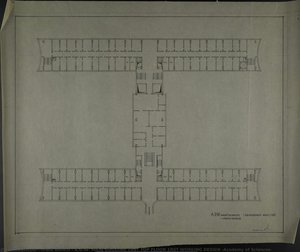
      A.D.W. MAIN BUILDING GROUND FLOOR 1RST WORKING DESIGN V.2 (Academy of Sciences, floor plan) (1976) by Franz Ehrlich
      9

      A.D.W. MAIN BUILDING GROUND FLOOR 1RST WORKING DESIGN V.2 (Academy of Sciences, floor plan)

      1976 · Drawing · Bauhaus Dessau Foundation, Dessau-Roßlau

      To gaze upon this drawing is not merely to observe lines on paper; it is to step into the very sinews of thought and collaboration. This depiction, titled A.D.W. Main Building Ground Floor 1Rst Working Design V.2, offers a meticulous glimpse into an academic heart—the Academy of Sciences. It functions as more than just a floor plan; it is a captured moment of intellectual potential, a diagram of human endeavor…

      63 - 64 (Painting with violin, New Year (1964) by Franz Ehrlich
      10

      63 - 64 (Painting with violin, New Year

      1964 · Colored Pencil · Bauhaus Dessau Foundation, Dessau-Roßlau

      This captivating piece, "63 - 64 (Painting with violin, New Year)," immediately draws the viewer into a realm of delicate fantasy. It is a truly unique confluence where the structured elegance of a musical instrument meets the unrestrained vitality of nature's bloom. At its heart lies a violin, not merely depicted, but seemingly grown—a beautiful marriage of crafted wood and organic life. The composition centers around this focal point, from…

      More Franz Ehrlich canvases, 11 to 100

      1933 (photo-sculptural advertising project) (1933) by Franz Ehrlich
      #11

      1933 (photo-sculptural advertising project)

      1933 · Bauhaus Dessau Foundation

      The image presents a black and white photograph of a work titled 1933, which functions as a photo-sculptural advertising project. The composition is centered on a clock face…

      2-family house (Floor plan) (1939) by Franz Ehrlich
      #12

      2-family house (Floor plan)

      1939 · Bauhaus Dessau Foundation

      To gaze upon this architectural rendering by Franz Ehrlich is not merely to look at lines on paper; it is to step into the very blueprint of a…

      Painting with violin (1979) by Franz Ehrlich
      #14

      Painting with violin

      1979 · Bauhaus Dessau Foundation

      A violin rests at the center of a quiet, structured world. It is a shape of curves caught within a grid of straight lines. The instrument is not…

      Floor plan Sleeping room (with interior furnishings) (1962) by Franz Ehrlich
      #16

      Floor plan Sleeping room (with interior furnishings)

      1962 · Bauhaus Dessau Foundation

      A Quiet Reflection on Space: Franz Ehrlich’s Floor Plan for “Neues Leben – Neues Wohnen” Franz Ehrlich's "Floor plan Sleeping room (with interior furnishings, for the exhibition neues…

      TABLE AND UPHOLSTERED BENCH (1955) by Franz Ehrlich
      #64

      TABLE AND UPHOLSTERED BENCH

      1955 · Bauhaus Dessau Foundation

      In the quiet precision of Franz Ehrlich’s 1955 drawing, Table and Upholstered Bench, we encounter a profound dialogue between structural integrity and domestic comfort. This graphite pencil work…

      PROF. DR. BAUMANN HOUSE EXECUTION (foundation plan) (1962) by Franz Ehrlich
      #75

      PROF. DR. BAUMANN HOUSE EXECUTION (foundation plan)

      1962 · Bauhaus Dessau Foundation

      In the quiet intersection of architecture and fine art lies the profound beauty of PROF. DR. BAUMANN HOUSE EXECUTION (foundation plan), a masterful work by the German visionary…

      SALES COUNTER (1957) by Franz Ehrlich
      #77

      SALES COUNTER

      1957 · Bauhaus Dessau Foundation

      In the delicate lines of "SALES COUNTER," created in 1957 by the visionary German artist Franz Ehrlich, we are transported to a moment frozen in time. This captivating…

      2 SINGLE BEDS B RANGE (Standardized unit furniture (1966) by Franz Ehrlich
      #78

      2 SINGLE BEDS B RANGE (Standardized unit furniture

      1966 · Bauhaus Dessau Foundation

      In the quiet, monochromatic realm of Franz Ehrlich’s 1966 drawing, 2 SINGLE BEDS B RANGE, we are invited into a space where utility and elegance exist in perfect,…

      ARMREST CHAIR (with tubular steel frame) (1970) by Franz Ehrlich
      #79

      ARMREST CHAIR (with tubular steel frame)

      1970 · Bauhaus Dessau Foundation

      Franz Ehrlich's 1970 drawing, "ARMREST CHAIR (with tubular steel frame)," isn’t merely a schematic of a chair; it’s a distilled essence of mid-century modern design philosophy. Created during…

      1970 (New Year (1970) by Franz Ehrlich
      #80

      1970 (New Year

      1970 · Bauhaus Dessau Foundation

      In the quiet intersection of memory and minimalism, Franz Ehrlich’s "1970 (New Year)" stands as a profound meditation on the passage of time. This evocative work, captured through…

      LIVING ROOM CABINET by Franz Ehrlich
      #99

      LIVING ROOM CABINET

      Bauhaus Dessau Foundation

      In the quiet intersection of functional design and artistic expression lies the Living Room Cabinet, a captivating study by the German master Franz Ehrlich. This particular piece, extracted…

      Painting with violin (1973) by Franz Ehrlich
      #100

      Painting with violin

      1973 · Bauhaus Dessau Foundation

      Painting with Violin – An Exploration of Geometric Abstraction The artwork presented here—a watercolor on paper depiction titled “Painting with Violin”—offers a glimpse into the artistic sensibilities of…

      Franz Ehrlich's canvases, period by period

      What Franz Ehrlich painted most

      The four subjects that return most often on these canvases, each with its best-loved example.

      Where Franz Ehrlich's canvases hang

      The museum that holds the most of the paintings on this page.

      Museum City Works by Franz Ehrlich Paintings from this list
      Bauhaus Dessau Foundation, Dessau-RoßlauBauhaus Dessau Foundation Dessau-Roßlau 100 3rd FLOOR (Design for a foreign representation of the GDR. Floor plan), LBH BUILDING MACHINERY WOODWORKING MACHINERY HALL 5 (Leipzig Trade Fair, plan view exhibition stand), 4 armchairs. 1 Bench. Office of the vice president (of the Academy of Sciences of the GDR in Berlin)

      Franz Ehrlich's best-loved canvas of each decade

      1. 1930s
        1933 (photo-sculptural advertising project) (1933) by Franz Ehrlich
        11 of 100

        1933 (photo-sculptural advertising project)

        Age 23 – 32 · Bauhaus Dessau Foundation

        The image presents a black and white photograph of a work titled 1933, which functions as a photo-sculptural advertising project. The composition is centered on a clock face…

      2. 1940s
      3. 1950s
      4. 1960s
      5. 1970s
      6. 1980s

      About Franz Ehrlich's canvases: your questions answered

      What is the best-known painting by Franz Ehrlich?Read the answer

      3rd FLOOR (Design for a foreign representation of the GDR. Floor plan), Bauhaus Dessau Foundation, Dessau-Roßlau. LBH BUILDING MACHINERY WOODWORKING MACHINERY HALL 5 (Leipzig Trade Fair, plan view exhibition stand) (1949) and 4 armchairs. 1 Bench. Office of the vice president (of the Academy of Sciences of the GDR in Berlin) follow.

      What are the 10 most famous paintings by Franz Ehrlich?Read the answer

      3rd FLOOR (Design for a foreign representation of the GDR. Floor plan), LBH BUILDING MACHINERY WOODWORKING MACHINERY HALL 5 (Leipzig Trade Fair, plan view exhibition stand), 4 armchairs. 1 Bench. Office of the vice president (of the Academy of Sciences of the GDR in Berlin), Bookshop Hauptstraße / Transversal section (FDGB Bookshop, The new city is built on labour... (Design for competition Dresden), CABINET DISPLAY CASE, Untitled (Leipzig Spring Trade Fair 1949, plan view exhibition stand SANAR), 110.4% plan fulfilment in Leipzig. Report by Leipzig City Council (Brochure), A.D.W. MAIN BUILDING GROUND FLOOR 1RST WORKING DESIGN V.2 (Academy of Sciences, floor plan) and 63 - 64 (Painting with violin, New Year. Each canvas in the ranking above comes with its year and its museum.

      How many works did Franz Ehrlich paint in all?Read the answer

      101 works by Franz Ehrlich are in our catalogue, dated 1933 to 1981.

      Where can I see Franz Ehrlich's most famous canvases?Read the answer

      Mostly in Bauhaus Dessau Foundation (Dessau-Roßlau); the list above names each museum and its canvases.

      When did Franz Ehrlich paint the best-loved canvases?Read the answer

      In 1960s, which gave 32 of the 100 works on this page, CABINET DISPLAY CASE among them.

      Which are Franz Ehrlich's earliest and latest famous canvases?Read the answer

      The earliest canvas here is 1933 (photo-sculptural advertising project) (1933); the latest is 1 piece filing cabinet (with tubular steel feet and marble tabletop) (1981).

      What did Franz Ehrlich paint most often?Read the answer

      Architecture (16), Floor plan (14) and Technical drawing (10), across the 100 works on this page.

      Which medium did Franz Ehrlich paint in most often?Read the answer

      Drawing, used in 12 of the 100 works on this page.

      Which movement is Franz Ehrlich's painting part of?Read the answer

      Bauhaus, as the canvases on this page show.

      Which Franz Ehrlich canvases hang at the Bauhaus Dessau Foundation?Read the answer

      The Bauhaus Dessau Foundation, Dessau-Roßlau holds 100 of the works on this page, among them 3rd FLOOR (Design for a foreign representation of the GDR. Floor plan), LBH BUILDING MACHINERY WOODWORKING MACHINERY HALL 5 (Leipzig Trade Fair, plan view exhibition stand) and 4 armchairs. 1 Bench. Office of the vice president (of the Academy of Sciences of the GDR in Berlin).

      Franz Ehrlich: a life in paint

      early life and education

      franz ehrlich, a renowned german architect, calligrapher, and graphic designer, was born in 1907. his formative years were marked by an innate inclination towards the arts, which led him to enroll at the bauhaus in dessau from 1927 to 1930. this prestigious institution played a pivotal role in shaping ehrlich's artistic perspective, introducing him to the avant-garde movements of the time.

      artistic career and communist affiliation

      ehrlich's affiliation with the communist party had a profound impact on his life and career. in 1935, he was arrested and imprisoned by the nazi regime, an event that significantly altered the trajectory of his artistic pursuits. despite these challenges, ehrlich continued to contribute to the world of art, leaving behind a legacy that is both inspiring and thought-provoking.

      notable works

      some of ehrlich's most notable works include:

      museums and collections featuring ehrlich's work

      TopImpressionists.com features an extensive collection of ehrlich's works, including those mentioned above. the bauhaus dessau foundation (dessau-roßlau, germany) is also a significant repository of his artistic endeavors.

      legacy and impact

      franz ehrlich's contributions to the world of art are multifaceted, reflecting his broad range of interests and talents. his experiences, both creatively and personally, offer valuable insights into the intersection of art and politics during a pivotal moment in german history.