Atelier — Complimentary worldwide shipping — Delivery 2–6 weeks
      Gillis Van Coninxloo, 1544 – 1607

      The 21 Most Famous Gillis Van Coninxloo Paintings, Ranked

      The best-loved painting by Gillis Van Coninxloo is Woodland with Saint Jerome (1583), which hangs in the Museum of Fine Arts Ghent (MSK), Ghent. Jonah Preaching to the Ninevites (1583) and Landscape with the judgment of Midas (1598) come next among the canvases readers know best. Our catalogue holds 22 works by Gillis Van Coninxloo: here are the 21 most famous, each with its year, its museum and what makes it memorable.

      Ranked by our popularity score, which combines the searches, visits and orders for each work. Updated November 2026. Each painting on this page can be ordered as an oil reproduction painted by hand on linen canvas, or as a fine art print, made to the size you choose.

      Portrait of Gillis Van Coninxloo
      Gillis Van Coninxloo · 1544 – 1607
      Born · died
      1544 – 1607, Antwerp
      Works in our catalogue
      22
      Most famous
      Woodland with Saint Jerome (1583)
      Most works at
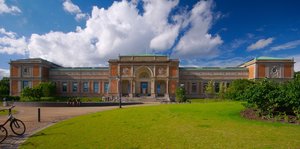
      Statens Museum For Kunst

      Top 10 Gillis Van Coninxloo paintings: the canvases everyone knows

      Woodland with Saint Jerome (1583) by Gillis Van Coninxloo
      1

      Woodland with Saint Jerome

      1583 · Oil On Panel · Museum of Fine Arts Ghent (MSK), Ghent

      Woodland with Saint Jerome is an oil painting by Gillis Van Coninxloo. Created in 1583, the work places a solitary figure, likely Saint Jerome, within a dense thicket. He rests in the mid-ground, a quiet presence amidst the heavy growth of the trees.

      Hand-painted oil reproduction from $195 39 × 26 cm (15.4 × 10.2 in) Same size as the original $300 84 × 50 cm (33.1 × 19.7 in) Order at original size →
      Jonah Preaching to the Ninevites (1583) by Gillis Van Coninxloo
      2

      Jonah Preaching to the Ninevites

      1583 · Oil On Panel · Statens Museum For Kunst, Copenhagen

      Jonah Preaching to the Ninevites by Gillis Van Coninxloo depicts a specific biblical narrative. Created about 1583, the work illustrates the prophet Jonah delivering a message to the inhabitants of Nineveh. The scene focuses on the interaction between the central figure and the gathered crowd. This subject matter is intended to convey themes of repentance and awe through the varied gestures and facial expressions of the assembly.

      Hand-painted oil reproduction from $970 36 × 28 cm (14.2 × 11 in)
      Landscape with the judgment of Midas (1598) by Gillis Van Coninxloo
      3

      Landscape with the judgment of Midas

      1598 · Oil On Canvas · Staatliche Kunstsammlungen Dresden, Dresden

      In Landscape with the judgment of Midas, Gillis Van Coninxloo organizes a vast, panoramic world through a strict three-tier landscape structure. The viewer enters through a dark, densely wooded foreground where twisting branches and heavy foliage frame the view. This shadowed threshold pushes the eye toward the middle ground, where the mythological judgment of King Midas unfolds among scattered figures and architectural elements. The scale is expansive, a Mannerist arrangement…

      Hand-painted oil reproduction from $395 41 × 24 cm (16.1 × 9.4 in) Same size as the original $1152 204 × 120 cm (80.3 × 47.2 in) Order at original size →
      Landscape with the Judgement of Paris (1610) by Gillis Van Coninxloo
      4

      Landscape with the Judgement of Paris

      1610 · Oil On Panel · National Museum of Western Art, Tokyo

      Landscape with the Judgement of Paris is a large-scale, panoramic landscape painting by Gillis Van Coninxloo. Created about 1610, the work integrates a mythological narrative into an expansive natural setting. The scene focuses on the Judgement of Paris, situating the figures within a complex, multi-layered environment.

      Hand-painted oil reproduction from $320 38 × 26 cm (15 × 10.2 in) Same size as the original $1046 185 × 127 cm (72.8 × 50 in) Order at original size →
      Wooded landscape (1600) by Gillis Van Coninxloo
      5

      Wooded landscape

      1600 · Oil On Panel · Kunsthistorisches Museum, Vienna

      A dense, enveloping canopy of trees dominates this composition, framing a recessed view into the depths of a thick woodland. The scene is defined by an intricate network of organic lines, following the gnarled, twisting forms of trunks and the overlapping silhouettes of foliage. Sunlight filters through the heavy ceiling of leaves, creating a high-contrast environment where bright highlights on leaf edges meet deep, dark shadows within the forest floor.…

      Hand-painted oil reproduction from $195 40 × 25 cm (15.7 × 9.8 in) Same size as the original $318 85 × 56 cm (33.5 × 22 in) Order at original size →
      Forest Landscape with the Expulsion of Hagar and Ishmael (1574) by Gillis Van Coninxloo
      6

      Forest Landscape with the Expulsion of Hagar and Ishmael

      1574 · Oil On Panel · Bavarian State Painting Collections, Munich

      Forest Landscape with the Expulsion of Hagar and Ishmael is a work by the Flemish landscape painter Gillis Van Coninxloo. Created in 1574, the painting reflects the artist's early development within the traditions of the Low Countries. Van Coninxloo was born in Antwerp, Belgium, into a family of painters, which provided a rigorous foundation for his later specialization in woodland environments.

      Hand-painted oil reproduction from $195 41 × 24 cm (16.1 × 9.4 in) Same size as the original $273 76 × 45 cm (29.9 × 17.7 in) Order at original size →
      Jesus and Zacchaeus (1583) by Gillis Van Coninxloo
      7

      Jesus and Zacchaeus

      1583 · Oil On Panel · Yekaterinburg Museum of Fine Arts, Yekaterinburg

      In Jesus and Zacchaeus, Gillis Van Coninxloo organizes a sprawling, panoramic landscape that integrates biblical narrative into a vast natural environment. A large, dark mass of trees on the left frames the composition, creating a heavy, organic border that directs the viewer's gaze inward. This dark foreground leads toward a brightly lit valley and a distant town situated on the right. The scene unfolds across a detailed woodland that transitions…

      Hand-painted oil reproduction from $195 41 × 24 cm (16.1 × 9.4 in) Same size as the original $842 186 × 113 cm (73.2 × 44.5 in) Order at original size →
      A River Landscape (1583) by Gillis Van Coninxloo
      8

      A River Landscape

      1583 · Oil On Panel · Statens Museum For Kunst, Copenhagen

      A River Landscape is a work by Gillis Van Coninxloo, executed in 1583. This painting offers a detailed view of a river valley, where the natural terrain meets the structured silhouettes of a hilltop fortress. The composition draws the eye through a rugged, rocky foreground toward a luminous middle ground, where a river flows beneath the shadow of a medieval castle complex.

      Hand-painted oil reproduction from $195 39 × 26 cm (15.4 × 10.2 in) Same size as the original $244 61 × 41 cm (24 × 16.1 in) Order at original size →
      Landscape with Jesus and his disciples on their way to Emmaüs (Luke 24:13-35) (1588) by Gillis Van Coninxloo
      9

      Landscape with Jesus and his disciples on their way to Emmaüs (Luke 24:13-35)

      1588 · Oil On Panel

      Landscape with Jesus and his disciples on their way to Emmaüs (Luke 24:13-35) by Gillis Van Coninxloo utilizes a classic three-tier structure to organize its vast, undulating terrain. In the dark, detailed foreground, a small group of figures walks along a path in the lower right. This immediate plane is defined by organic, fluid lines and deep shadows that contrast with the lighter elements of the landscape. The composition moves…

      Hand-painted oil reproduction from $195 37 × 27 cm (14.6 × 10.6 in) Same size as the original $366 93 × 67 cm (36.6 × 26.4 in) Order at original size →
      Forest Landscape with Hagar and the Angel (1595) by Gillis Van Coninxloo
      10

      Forest Landscape with Hagar and the Angel

      1595 · Oil On Panel · Bavarian State Painting Collections, Munich

      A dense, monochromatic woodland dominates the composition, where gnarled tree trunks and intricate foliage create a complex layering of organic forms. The perspective draws the eye from the detailed, textured foreground into the dark, receding layers of the forest. Light filters through a thick canopy from an unseen source above, casting dramatic highlights on protruding roots and leaf edges while leaving the forest floor in deep, mysterious shadow. This interplay…

      Hand-painted oil reproduction from $195 40 × 25 cm (15.7 × 9.8 in) Same size as the original $276 75 × 46 cm (29.5 × 18.1 in) Order at original size →

      More Gillis Van Coninxloo canvases, 11 to 21

      Undergrowth (1597) by Gillis Van Coninxloo
      #11

      Undergrowth

      1597 · Musée Des Beaux

      The forest breathes through Undergrowth, a work that emerges from the hand of Gillis van Coninxloo. Created about 1597, this piece captures a dense, shadowed realm where the…

      Bring this light home from $195 →
      Forest Landscape (1600) by Gillis Van Coninxloo
      #12

      Forest Landscape

      1600 · Detroit Institute of Arts

      The Forest Landscape by Gillis Van Coninxloo invites the viewer into a secluded realm of nature. Created around 1598, this work belongs to the Northern Renaissance. It captures…

      Bring this light home from $195 →
      Mountainous Landscape (1600) by Gillis Van Coninxloo
      #13

      Mountainous Landscape

      1600 · Museum Boijmans Van Beuningen

      In Mountainous Landscape, Gillis Van Coninxloo employs a classic framing technique to organize the rugged terrain. Large, detailed trees occupy the left and right foreground, creating a natural…

      Bring this light home from $195 →
      Forest Landscape (1598) by Gillis Van Coninxloo
      #14

      Forest Landscape

      1598 · Liechtenstein Museum

      The artwork titled Forest Landscape is a painting by the Flemish artist Gillis Van Coninxloo. Executed in 1598, this work is an oil on panel. The physical dimensions…

      Bring this light home from $195 →
      Landscape by Gillis Van Coninxloo
      #20

      Landscape

      Museo del Prado

      Gillis van Coninxloo’s “Landscape,” a captivating oil on copper panel, transports the viewer to a realm of serene contemplation within a meticulously rendered Flemish forest. Painted around 1598,…

      Bring this light home from $195 →

      What Gillis Van Coninxloo painted most

      The four subjects that return most often on these canvases, each with its best-loved example.

      Where Gillis Van Coninxloo's canvases hang

      The 8 museums that hold the most of the paintings on this page.

      Museum City Works by Gillis Van Coninxloo Paintings from this list
      Statens Museum For Kunst, CopenhagenStatens Museum For Kunst Copenhagen 2 Jonah Preaching to the Ninevites, A River Landscape
      Bavarian State Painting Collections, MunichBavarian State Painting Collections Munich 2 Forest Landscape with the Expulsion of Hagar and Ishmael, Forest Landscape with Hagar and the Angel
      Museum of Fine Arts Ghent (MSK), GhentMuseum of Fine Arts Ghent (MSK) Ghent 1 Woodland with Saint Jerome
      Staatliche Kunstsammlungen Dresden, DresdenStaatliche Kunstsammlungen Dresden Dresden 1 Landscape with the judgment of Midas
      National Museum of Western Art, TokyoNational Museum of Western Art Tokyo 1 Landscape with the Judgement of Paris
      Kunsthistorisches Museum, ViennaKunsthistorisches Museum Vienna 1 Wooded landscape
      Yekaterinburg Museum of Fine Arts, YekaterinburgYekaterinburg Museum of Fine Arts Yekaterinburg 1 Jesus and Zacchaeus
      Musée Des Beaux, StrasbourgMusée Des Beaux Strasbourg 1 Undergrowth

      Gillis Van Coninxloo's best-loved canvas of each decade

      1. 1570s
        Forest Landscape with the Expulsion of Hagar and Ishmael (1574) by Gillis Van Coninxloo
        Canvas 6 of 21

        Forest Landscape with the Expulsion of Hagar and Ishmael

        Age 26 – 35 · Bavarian State Painting Collections

        Forest Landscape with the Expulsion of Hagar and Ishmael is a work by the Flemish landscape painter Gillis Van Coninxloo. Created in 1574, the painting reflects the artist's…

      2. 1580s
        Woodland with Saint Jerome (1583) by Gillis Van Coninxloo
        Canvas 1 of 21

        Woodland with Saint Jerome

        Age 36 – 45 · Museum of Fine Arts Ghent (MSK)

        Woodland with Saint Jerome is an oil painting by Gillis Van Coninxloo. Created in 1583, the work places a solitary figure, likely Saint Jerome, within a dense thicket.…

      3. 1590s
        Landscape with the judgment of Midas (1598) by Gillis Van Coninxloo
        3 of 21

        Landscape with the judgment of Midas

        Age 46 – 55 · Staatliche Kunstsammlungen Dresden

        In Landscape with the judgment of Midas, Gillis Van Coninxloo organizes a vast, panoramic world through a strict three-tier landscape structure. The viewer enters through a dark, densely…

      4. 1600s
        Wooded landscape (1600) by Gillis Van Coninxloo
        5 of 21

        Wooded landscape

        Age 56 – 63 · Kunsthistorisches Museum

        A dense, enveloping canopy of trees dominates this composition, framing a recessed view into the depths of a thick woodland. The scene is defined by an intricate network…

      About Gillis Van Coninxloo's canvases: your questions answered

      What is the best-known painting by Gillis Van Coninxloo?Read the answer

      Woodland with Saint Jerome (1583), Museum of Fine Arts Ghent (MSK), Ghent. Jonah Preaching to the Ninevites (1583) and Landscape with the judgment of Midas (1598) follow.

      What age was Gillis Van Coninxloo when Woodland with Saint Jerome was painted?Read the answer

      Gillis Van Coninxloo, born in 1544, was 39 years old: Woodland with Saint Jerome dates from 1583.

      What are the 10 most famous paintings by Gillis Van Coninxloo?Read the answer

      Woodland with Saint Jerome, Jonah Preaching to the Ninevites, Landscape with the judgment of Midas, Landscape with the Judgement of Paris, Wooded landscape, Forest Landscape with the Expulsion of Hagar and Ishmael, Jesus and Zacchaeus, A River Landscape, Landscape with Jesus and his disciples on their way to Emmaüs (Luke 24:13-35) and Forest Landscape with Hagar and the Angel. Each canvas in the ranking above comes with its year and its museum.

      How many works did Gillis Van Coninxloo paint in all?Read the answer

      22 works by Gillis Van Coninxloo are in our catalogue, dated 1574 to 1600.

      Where can I see Gillis Van Coninxloo's most famous canvases?Read the answer

      Mostly in Statens Museum For Kunst (Copenhagen), Bavarian State Painting Collections (Munich) and Museum of Fine Arts Ghent (MSK) (Ghent); the list above names each museum and its canvases.

      When did Gillis Van Coninxloo paint the best-loved canvases?Read the answer

      In 1580s, which gave 5 of the 21 works on this page, Woodland with Saint Jerome among them.

      Which are Gillis Van Coninxloo's earliest and latest famous canvases?Read the answer

      The earliest canvas here is Forest Landscape with the Expulsion of Hagar and Ishmael (1574); the latest is Wooded landscape (1600).

      What did Gillis Van Coninxloo paint most often?Read the answer

      Forest (10), Trees (9) and Figures (8), across the 21 works on this page.

      Which medium did Gillis Van Coninxloo paint in most often?Read the answer

      Oil On Panel, used in 13 of the 21 works on this page.

      Which Gillis Van Coninxloo canvases hang at the Statens Museum For Kunst?Read the answer

      The Statens Museum For Kunst, Copenhagen holds 2 of the works on this page, among them Jonah Preaching to the Ninevites and A River Landscape.

      Can I buy a reproduction of a Gillis Van Coninxloo canvas?Read the answer

      Yes. Every painting on this page can be ordered from its own page as an oil reproduction painted by hand, or as a fine art print, in the size you choose.

      Gillis Van Coninxloo: a life in paint

      A Master of the Verdant Realm

      Gillis van Coninxloo stands as a pivotal figure in the evolution of Northern landscape art, serving as a vital bridge between the intricate Mannerist traditions and the burgeoning atmospheric depth of the early Baroque. Born in Antwerp, Belgium, his life was deeply intertwined with the rich artistic lineage of the Low Countries. The son of a painter, he was immersed in a world where craftsmanship and natural observation were paramount. His early training under masters such as Pieter Coecke van Aelst the Younger and Lenaert Kroes provided him with a rigorous foundation, but it was his time working in the workshop of Gillis Mostaert that truly allowed his talent to flourish, permitting him to contribute to professional works while honing his unique vision.

      His journey was one of movement and expansion, reflecting the shifting political and cultural tides of the era. While his career found its roots in Antwerp, the latter portion of his life saw him traversing much of Europe, working in Germany and eventually settling in the Dutch Republic. This nomadic existence allowed his style to absorb various regional influences, ultimately contributing to a sophisticated development of the forest landscape. He became renowned for his ability to transform a mere depiction of woodland into a profound sensory experience, where the viewer is not merely looking at trees, but is invited to step into a living, breathing ecosystem.

      The Alchemy of Light and Forest

      The true brilliance of Coninxloo lies in his unparalleled mastery of the forest landscape. He possessed a singular ability to manipulate light and shadow—a technique often associated with chiaroscuro—to sculpt the dense thickets and intertwining branches that define his compositions. In works such as his Forest Landscape, one can observe an almost obsessive attention to detail; every vein of a leaf and every texture of bark is rendered with meticulous care. He utilized the medium of oil on panel and copper to achieve a luminous quality, allowing light to filter through a canopy of various greens, creating a sense of atmospheric depth that feels both tangible and ethereal.

      Beyond the mere technical execution, his landscapes are imbued with a sense of narrative and quiet symbolism. A winding path might lead the eye toward a distant, humble village or an imposing castle on the horizon, suggesting themes of isolation, protection, or the coexistence of civilization and the wild. His work captures a transition in art history where the landscape ceased to be a mere backdrop for human drama and instead became the protagonist itself. Through his careful construction of light, shadow, and depth, Coninxloo created worlds that invite serene contemplation, leaving an indelible mark on the development of the Dutch and Flemish Golden Age.