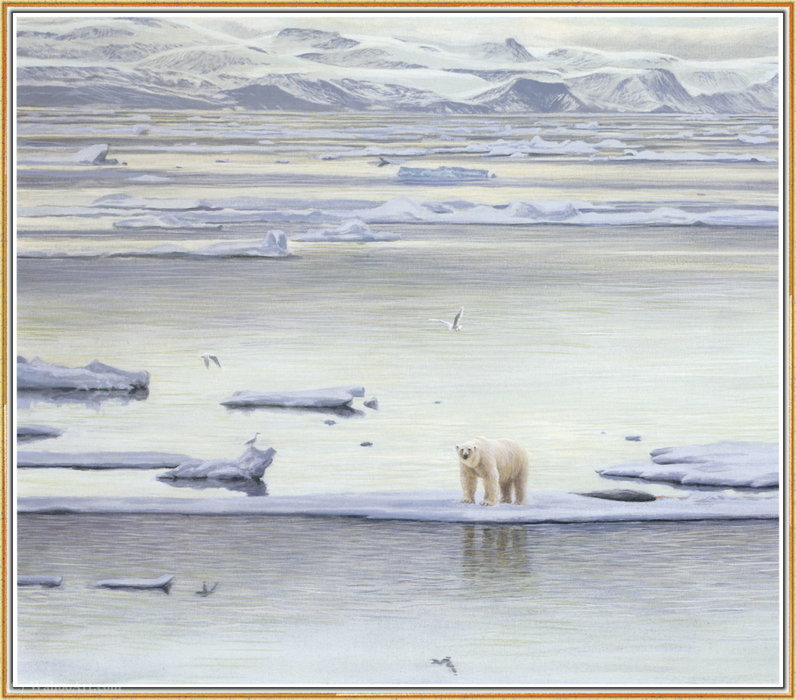
The Naturalist’s Eye: The Life and Legacy of Robert Bateman
Robert Bateman stands as a towering figure in Canadian realist painting, recognized globally for his breathtaking depictions of wildlife and landscapes. Born in Toronto, Canada, in 1930, he inherited a profound passion for botany and
natural history from his father, James Bateman, whose dedication to the gardens of Biddulph Grange served as a formative influence. This upbringing amidst scientific exploration nurtured not only exceptional observational skills but also a deep-seated appreciation for the intricate interconnectedness of life and art. From his earliest years, Bateman was captivated by the rhythms of the natural world, meticulously recording bird sightings and creating small-scale paintings that captured creatures within their authentic habitats.
While his early artistic inclinations were rooted in the observation of nature, his journey through various stylistic movements reflects a complex evolution of vision. In his formative years, Bateman found inspiration in the rugged landscapes of the
Group of Seven, yet he also experimented with more abstract approaches, influenced by the bold, gestural energy of artists like
Franz Kline. It was not until the mid-1m60s that he transitioned into the masterful
realism that would define his career. This shift marked a departure from abstraction toward a style that demanded absolute precision, where every feather, leaf, and drop of dew was rendered with scientific accuracy and profound artistic sensitivity.
Mastery of Realism and Environmental Advocacy
The hallmark of Bateman’s oeuvre is a breathtaking
realism that transcends mere imitation to achieve a sense of living presence. His technique is characterized by a masterful command of
light and shadow, creating luminous surfaces that seem to breathe within the frame. Through his use of oil and other media, he captures the textures of the wild—the weathered bark of an ancient tree, the sleek coat of a predator, or the delicate translucency of a wing. This meticulous attention to detail serves a purpose far greater than aesthetic beauty; it is an act of witness. By presenting wildlife in their true, unadorned environments, Bateman invites the viewer into a silent dialogue with the natural world, fostering a deep sense of empathy and connection.
Beyond the canvas, Bateman’s work carries a significant weight of environmental responsibility. His paintings often function as poignant narratives on the fragility of ecosystems and the urgent need for conservation. This dedication to the earth has earned him immense respect as an environmental advocate, making his art a powerful tool for ecological awareness. His ability to blend the scientific rigor of a naturalist with the soul of a poet allows his work to resonate across borders, touching the hearts of collectors and conservationists alike.
A Lasting Impact on Canadian Art
The historical significance of Robert Bateman lies in his ability to bridge the gap between
fine art and
natural history. His legacy is etched into the cultural landscape of Canada, evidenced by the many institutions that honor his contributions, including high schools named in his honor. His work has not only redefined the genre of
wildlife painting but has also elevated it to a level of profound philosophical inquiry regarding our place within the biosphere.
Key Milestones and Recognitions:
- Order of Canada: Recognized for his immense contributions to Canadian culture and the natural sciences.
- Order of British Columbia: Honored for his significant impact on the artistic community of his home province.
- Royal Canadian Academy of Arts (RCA): A distinguished member of this prestigious institution, cementing his status among Canada's elite painters.
- Global Recognition: His works are celebrated in international collections, bringing the beauty of the Canadian wilderness to a global audience.